How to Authenticate Digital Art Before Adding It to Your Collection
Buying digital art feels different from traditional collecting. There’s no physical canvas to examine, no paint texture to feel, and no gallery wall to verify. Yet authentication matters just as much, if not more. Digital files can be copied perfectly, screenshots can masquerade as originals, and fraudulent listings pop up daily on marketplaces. Knowing how to verify what you’re buying protects your investment and ensures you own the real thing.
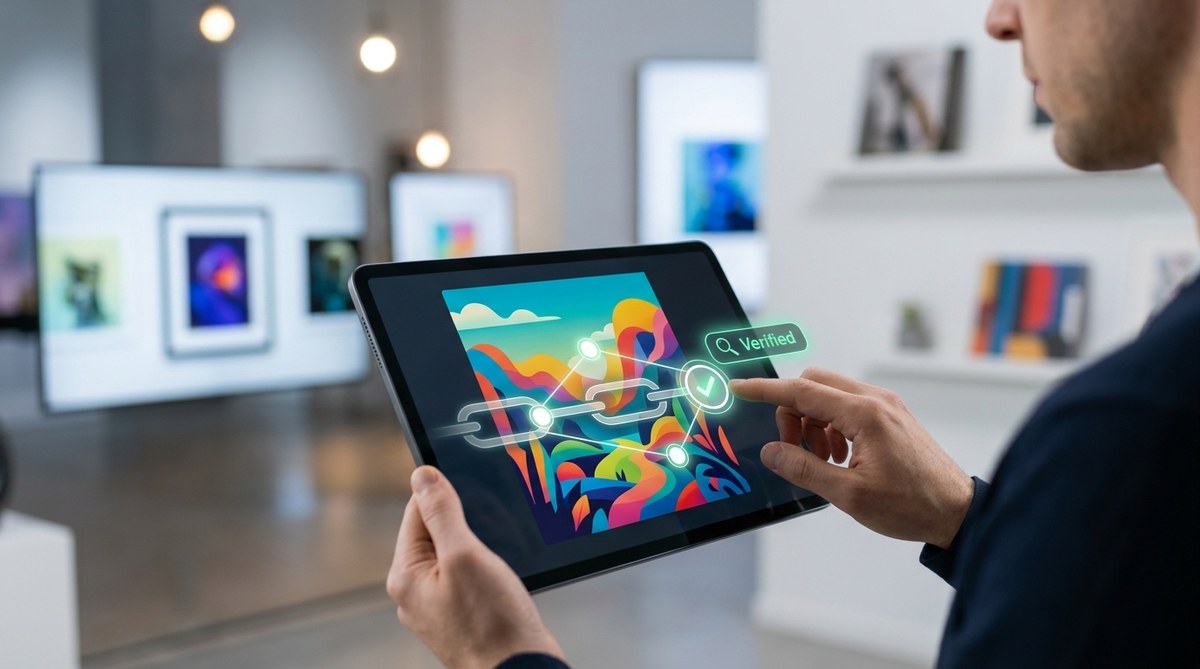
Authenticating digital art requires verifying blockchain records, examining smart contract code, checking artist verification, analyzing provenance history, and confirming marketplace legitimacy. Unlike physical art, digital pieces offer transparent ownership trails through blockchain technology, but collectors must learn to read these records correctly and spot common fraud patterns before making purchases.
Understanding digital art authentication basics
Digital art authentication works differently than traditional art verification. Instead of examining brushstrokes or canvas age, you’re checking blockchain records and cryptographic signatures.
Every legitimate NFT or digital edition lives on a blockchain. This distributed ledger records every transaction, ownership transfer, and creation event. Think of it as a permanent, public receipt that nobody can erase or fake.
The blockchain tells you three critical things. First, who created the piece and when. Second, who has owned it since creation. Third, whether the token you’re looking at is the original or a copy.
But here’s the catch. Just because something exists on a blockchain doesn’t mean it’s authentic. Scammers can mint NFTs of stolen artwork. Imposters can create collections pretending to be famous artists. The blockchain only proves that a specific token exists, not that the person who created it had the right to do so.
That’s why authentication goes beyond just checking if an NFT exists. You need to verify the entire chain of legitimacy from artist to current listing.
Verifying the artist’s official contract address
Every artist or collection has an official smart contract address. This is the source of truth for authentic pieces.
Start by finding the artist’s verified social media profiles. Look for their Twitter, Instagram, or official website. Legitimate artists post their contract addresses publicly and pin them to their profiles.
Never trust a contract address you find only on a marketplace listing. Scammers create fake listings all the time. Always cross-reference with the artist’s own channels.
Here’s how to check a contract address properly:
- Copy the contract address from the artist’s verified social profile
- Paste it into a blockchain explorer like Etherscan or Polygonscan
- Compare this address to the one shown on the marketplace listing
- Verify they match exactly, character for character
One wrong character means you’re looking at a different contract entirely. Scammers often create addresses that look similar to legitimate ones, changing just one or two characters hoping you won’t notice.
If the artist doesn’t have a verified social presence or won’t share their contract address publicly, that’s a red flag. Professional digital artists understand that transparency builds trust.
Checking marketplace verification badges
Major marketplaces like OpenSea, Foundation, and SuperRare verify popular artists and collections. These blue checkmarks matter.
A verification badge means the marketplace has confirmed the account belongs to the real artist. They’ve checked identity documents, social media, and other proof.
But verification isn’t perfect. Smaller artists might not have badges yet. Some legitimate creators work on platforms that don’t offer verification. And scammers occasionally slip through verification processes.
Use verification as one data point, not your only check. A verified badge is good. No badge isn’t automatically bad. Missing badge plus other red flags? Walk away.
Different platforms have different verification standards. OpenSea verifies collections with significant trading volume or notable creators. Foundation operates on an invite system. SuperRare curates artists individually.
Understanding these differences helps you assess risk. A piece from an unverified artist on SuperRare carries different weight than an unverified collection on OpenSea.
Analyzing the smart contract code
The smart contract determines how a digital artwork functions. Reading it tells you what you’re actually buying.
You don’t need to be a programmer to check basic contract details. Blockchain explorers show key information in readable formats.
Look for these elements:
- Total supply: How many editions exist? Is this a 1/1 or part of a larger series?
- Minting function: Can new pieces be created after you buy, diluting value?
- Royalty settings: Does the artist receive resale royalties as intended?
- Transfer restrictions: Can you freely sell the piece later?
Some contracts include hidden functions that let creators mint unlimited new copies. Others restrict transfers to specific addresses. A few even allow the creator to revoke ownership.
How smart contracts are revolutionizing art ownership and provenance explains these mechanisms in detail, but the basic principle is simple. The contract code is law. Whatever it allows can happen, regardless of what the artist promises elsewhere.
If you’re not comfortable reading contract code yourself, ask in community Discord servers or hire someone to review it. Spending $50 on contract review beats losing thousands on a flawed purchase.
Examining provenance and ownership history
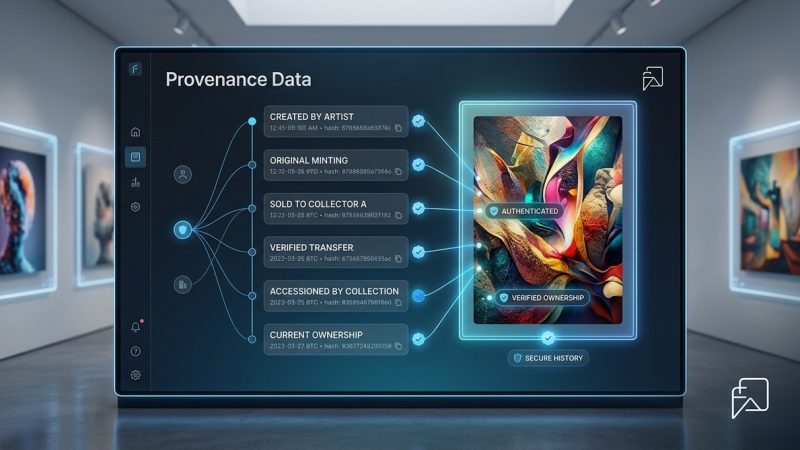
Blockchain technology makes provenance tracking transparent. Every previous owner and transaction appears in the public record.
Check the ownership trail from mint to current listing. Look for these patterns:
Clean provenance indicators:
– Direct mint to current seller
– Sales through reputable auction houses
– Ownership by known collectors or institutions
– Consistent pricing progression
Suspicious provenance patterns:
– Rapid transfers between unknown wallets
– Circular trading between related addresses
– Sudden price jumps without market explanation
– Ownership by wallets involved in previous scams
Scammers sometimes create fake trading history to make pieces look valuable. They transfer NFTs between wallets they control, recording “sales” at inflated prices. This wash trading creates an illusion of demand.
Real collectors leave traces. They hold pieces for meaningful periods. They participate in community discussions. Their wallets contain diverse collections, not just the one piece they’re selling you.
Research the current seller’s wallet address. What else do they own? How long have they held this piece? Do they have a pattern of flipping art immediately, or do they collect seriously?
Confirming metadata and file storage
Digital art consists of two parts. The blockchain token and the actual image or media file. Both need verification.
The token points to metadata, which includes the artwork file location. This metadata can be stored in different ways, each with different permanence.
Storage method comparison:
| Storage Type | Permanence | Risk Level | Common Use |
|---|---|---|---|
| IPFS | High | Low | Professional NFTs |
| Arweave | Very High | Very Low | Premium collections |
| Centralized Server | Low | High | Budget projects |
| On-chain | Permanent | None | Expensive, rare |
IPFS (InterPlanetary File System) stores files across distributed nodes. The content address never changes. If the file changes, the address changes too. This makes IPFS reliable for art storage.
Arweave offers permanent storage with a one-time fee. Files stored on Arweave should last indefinitely.
Centralized servers are risky. If the company hosting the file goes bankrupt or stops paying hosting fees, your artwork disappears. You’ll own a token pointing to nothing.
On-chain storage keeps the entire artwork inside the blockchain itself. This is the most permanent option but extremely expensive for large files. Only small projects or pixel art typically use full on-chain storage.
Check where the metadata and files live. Open the token details on a blockchain explorer. Look for the metadata URI. If it points to a regular web server (http://something.com/file.json), that’s a red flag for long-term permanence.
Spotting common fraud techniques
Scammers use predictable patterns. Learning to recognize them protects you from most fraud.
Impersonation scams involve someone creating NFTs of another artist’s work. They might screenshot a famous piece, mint it, and sell it as if they’re the original creator. Always verify the contract address matches the real artist’s official address.
Phishing contracts contain malicious code that steals other NFTs from your wallet when you interact with them. Never connect your wallet to suspicious sites or sign transactions you don’t fully understand.
Pump and dump schemes artificially inflate prices through coordinated buying, then dump holdings on unsuspecting buyers. Watch for sudden price spikes accompanied by aggressive social media promotion from new accounts.
Fake airdrops send you free NFTs that appear valuable but contain malicious contracts. Interacting with them can compromise your wallet. Don’t trust unexpected gifts.
“The best defense against digital art fraud is patience. Take 24 hours before any significant purchase. Research the artist, verify the contract, check the community response. Scammers rely on urgency. Legitimate art will still be available tomorrow.”
This advice applies double for pieces marketed as “limited time offers” or “last chance to buy.” Artificial urgency is a classic manipulation tactic.
Building your authentication checklist
Create a systematic process you follow before every purchase. Consistency prevents mistakes.
Here’s a practical workflow:
- Find the artist’s verified social media profiles
- Confirm the contract address matches their official posting
- Check the marketplace verification status
- Review the smart contract basic details
- Examine the complete ownership history
- Verify metadata and file storage methods
- Search for community discussion about the artist or collection
- Wait 24 hours and review everything again
This process takes 30 minutes for your first few pieces. After that, you’ll complete most checks in under 10 minutes.
Document your research. Take screenshots of verified contract addresses, save links to artist profiles, and note where you found key information. If questions arise later, you’ll have a paper trail.
Some collectors maintain spreadsheets tracking every piece they research, even ones they don’t buy. This builds institutional knowledge about artists, collections, and market patterns.
Learning from the collector community
Digital art collecting happens in public. Communities form around platforms, artists, and collecting philosophies.
Join Discord servers for major platforms and collections you’re interested in. Read discussions. See what experienced collectors debate and worry about.
Twitter remains the primary social hub for NFT collectors. Follow curators, critics, and active collectors. Watch what they buy and how they discuss authentication.
But remember that community consensus isn’t always correct. Popular opinion can be wrong. Hype can cloud judgment. Use community input as one data point among many.
Ask questions when you’re unsure. Most collectors remember being new and appreciate genuine curiosity. Frame questions specifically. Instead of “Is this legit?” ask “I verified the contract address matches the artist’s Twitter, but the metadata is on a centralized server. How much risk does that create?”
Specific questions get useful answers. Vague questions get vague responses.
Tools that streamline authentication
Several platforms and tools make verification easier.
Blockchain explorers like Etherscan, Polygonscan, and Solscan let you examine contracts, transactions, and wallet contents. Bookmark the explorer for whatever blockchain you’re collecting on.
Portfolio trackers like Nansen and DeBank show wallet holdings and transaction history. These help you research sellers and understand collector patterns.
Metadata viewers show you exactly what data the NFT contains and where files are stored. Most marketplaces display this information, but third-party tools sometimes show more detail.
Community databases like icy.tools and NFTGo aggregate collection data, trading patterns, and holder information. They’re useful for understanding collection dynamics.
None of these tools replace your own judgment. They provide information. You still need to interpret it correctly.
Understanding authentication for different platforms
Each blockchain and platform has unique characteristics affecting authentication.
Ethereum hosts the most established digital art market. Its long history means better tools and more public information. But gas fees make small transactions expensive.
Tezos attracts artists with lower fees and environmental concerns. Its smaller ecosystem means fewer verification tools but often tighter communities.
Solana offers speed and low costs. Its rapid growth has attracted both innovative artists and opportunistic scammers. Extra caution helps here.
Platform-specific marketplaces like Art Blocks or Async Art have built-in authentication through their curated models. If a piece appears on Art Blocks’ official site, the platform has verified it. But always check you’re on the real site, not a phishing copy.
Understanding these ecosystem differences helps you adjust your authentication approach. A piece on a curated platform needs less individual verification than one on an open marketplace.
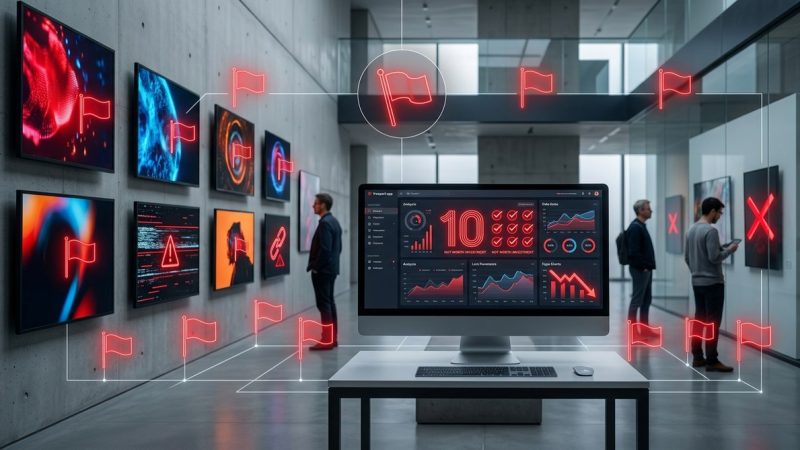
Red flags that should stop a purchase
Some warning signs should end your consideration immediately.
The seller pressures you to buy now. Legitimate art doesn’t evaporate if you think for a day.
The contract address doesn’t match any verified source. If you can’t confirm the official address, you can’t verify authenticity.
The metadata lives on a personal website or free hosting service. Professional projects use IPFS, Arweave, or on-chain storage.
The artist has no social media presence or community. Even emerging artists build some public profile.
The price seems too good. If a piece from a known artist sells for 10% of typical prices, something’s wrong.
Previous buyers have wallet addresses involved in known scams. Check recent holders on blockchain explorers.
The artwork itself is a screenshot or copy of another artist’s work. Reverse image search can catch this.
Any one of these flags warrants investigation. Multiple flags together mean walk away. Plenty of legitimate art exists. You don’t need to take risks on questionable pieces.
Developing authentication skills over time
Authentication gets easier with practice. Your first few verifications feel overwhelming. By your tenth, the process becomes routine.
Start with small purchases while you learn. Buy pieces from established artists on major platforms. This builds experience in a lower-risk environment.
Study both successful and failed authentication cases. When scams get exposed, read about how collectors got fooled and what warning signs existed.
How to build a valuable digital art collection from scratch in 2026 covers broader collecting strategies, but authentication remains foundational to everything else.
Keep learning about blockchain technology itself. You don’t need to become a developer, but understanding how transactions work, what gas fees mean, and how smart contracts function makes you a more confident collector.
Consider authentication an ongoing education, not a one-time skill to master. The technology evolves. Scammers develop new techniques. Staying current protects your growing collection.
Advanced verification for high-value purchases
Expensive pieces deserve extra scrutiny. When considering significant investments, take additional steps.
Hire a professional authentication service. Several companies specialize in NFT verification, checking contracts, provenance, and artist identity. Fees typically range from $100 to $500 depending on complexity.
Contact the artist directly if possible. Many creators welcome questions from serious collectors. Confirm they actually created the piece and authorized its sale.
Request additional documentation. Some artists provide certificates of authenticity, signed statements, or supplementary materials that add verification layers.
Consult with experienced collectors who know the artist or collection. Personal recommendations from trusted sources carry weight.
For pieces worth thousands or tens of thousands, these extra steps make sense. The cost and time investment pale compared to the risk of buying a fake.
Staying safe while authenticating
The authentication process itself carries risks if you’re not careful.
Never enter your wallet seed phrase anywhere. No legitimate authentication requires this. Anyone asking for it is trying to steal your assets.
Don’t connect your wallet to unknown sites. Stick to established platforms and tools. Bookmark legitimate sites to avoid phishing copies.
Use a separate wallet for research and purchases. Keep your main collection in a hardware wallet that stays offline except for verified transactions.
Be skeptical of direct messages offering help. Scammers monitor social media for people asking authentication questions, then DM pretending to help while actually phishing.
Enable two-factor authentication on all marketplace accounts. This prevents account takeovers even if someone gets your password.
These security practices protect you while you verify purchases. How AI generative models are reshaping digital art authentication explores emerging technologies, but fundamental security remains crucial regardless of new tools.
Making authentication part of your collecting practice
Authentication shouldn’t feel like a burden. Build it into your natural collecting rhythm.
Set aside dedicated time for research before buying. Don’t browse marketplaces when you’re tired or distracted. Authentication requires focus.
Create a personal database of verified artists and collections you trust. This reference library speeds up future purchases and helps you spot patterns.
Share knowledge with other collectors. Teaching someone else how to verify contracts or check provenance reinforces your own understanding.
Celebrate successful authentication as part of the collecting experience. Finding a legitimate piece from an artist you love, verifying its authenticity, and adding it to your collection creates satisfaction beyond just owning the art.
Why verification protects more than money
Authentication isn’t just about avoiding financial loss. It protects the entire digital art ecosystem.
When you verify purchases carefully, you reduce demand for stolen and fraudulent work. This makes scamming less profitable and protects artists whose work gets copied.
Proper authentication supports legitimate artists. Your verified purchases fund their continued creation. Your due diligence helps separate serious creators from opportunistic copycats.
Building collections of authenticated work establishes market standards. As more collectors demand verification, platforms improve their tools and processes. The entire space becomes more trustworthy.
Your authentication practices also protect future buyers. When you eventually sell pieces, your documentation of provenance and verification helps the next collector. Good practices compound across the community.
Authentication as collecting confidence
Learning how to authenticate digital art transforms you from a nervous buyer into a confident collector. You’ll stop second-guessing every purchase and start recognizing quality and legitimacy at a glance.
This confidence lets you act decisively when you find pieces you love. You can verify quickly and buy before someone else claims the work. You’ll spend less time worrying and more time enjoying your collection.
Start with one piece. Follow the authentication steps carefully. Document what you learn. Then do it again with another piece. Each verification builds skills and confidence that serve you for years of collecting ahead.