Royalties and Rights: Understanding Artist Compensation in Blockchain Art

Traditional art sales leave creators behind. You sell a painting once, and even if it resells for millions years later, you never see another cent. Blockchain technology changes that fundamental power imbalance by embedding perpetual royalty payments directly into digital artwork.
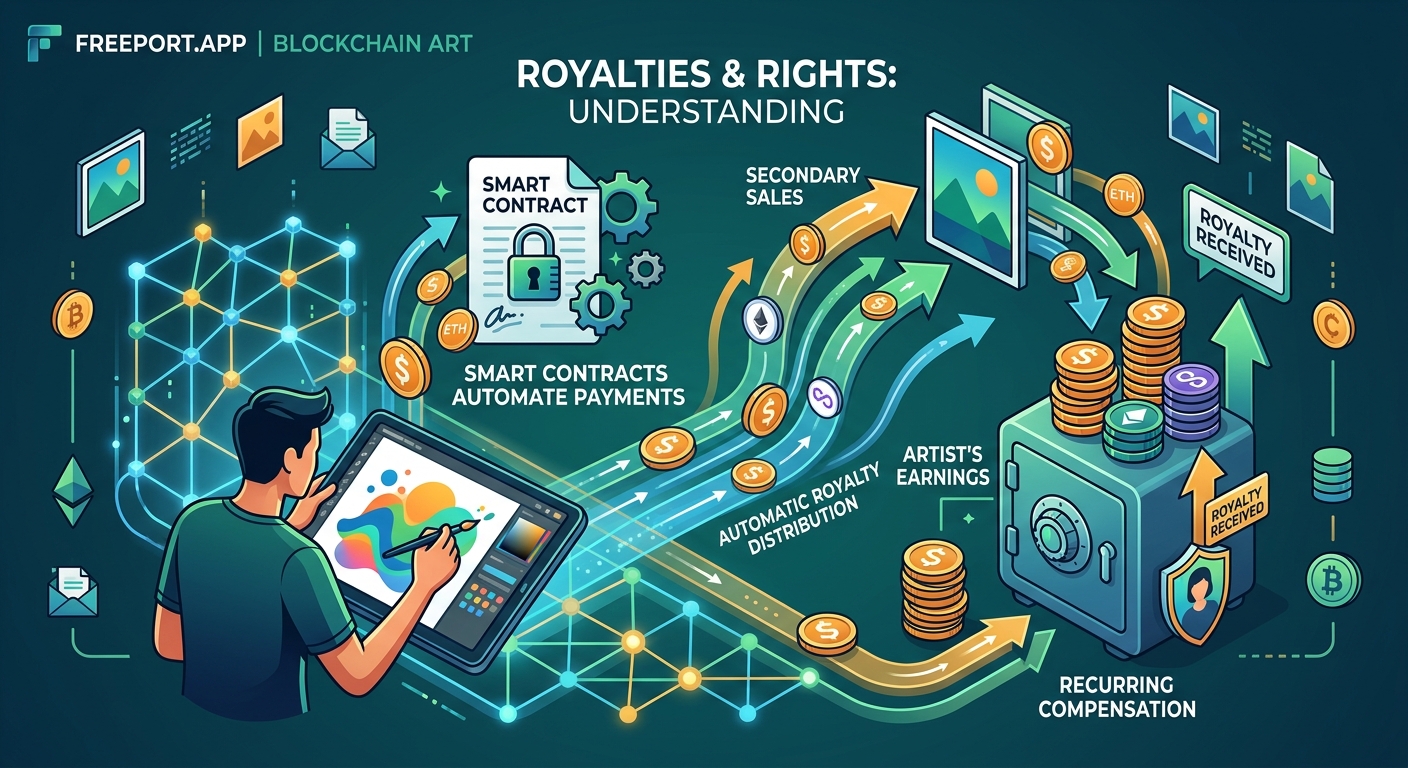
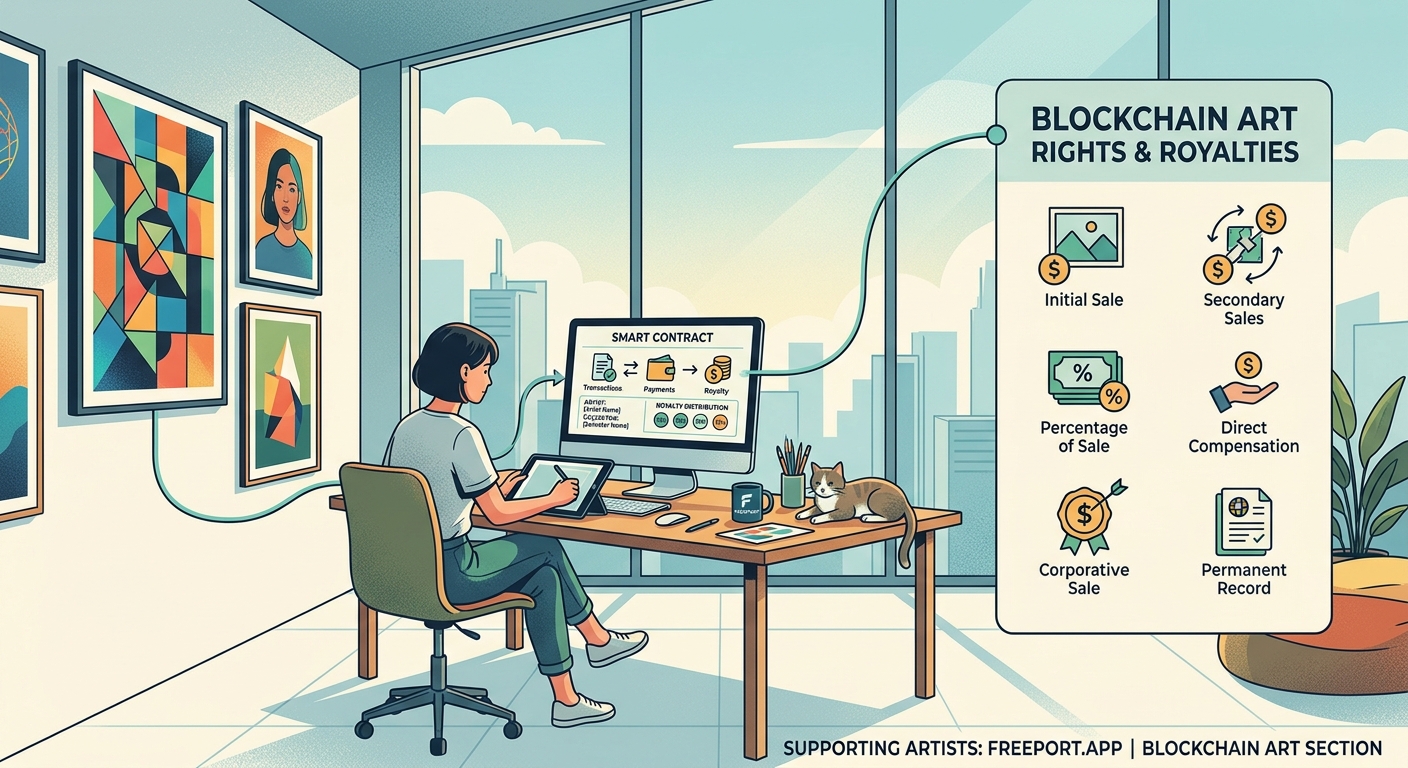
Blockchain art royalties use smart contracts to automatically pay artists a percentage every time their work resells on secondary markets. This system creates ongoing income streams that were impossible in traditional art markets, where creators typically only profit from the initial sale. Artists can set royalty rates between 5% and 15%, receiving payments directly to their wallets without intermediaries or manual enforcement.
How blockchain art royalties actually work
Smart contracts make the magic happen. When you mint artwork on a blockchain, you write royalty terms directly into the token’s code. These aren’t suggestions or handshake agreements. They’re executable instructions that run automatically whenever the artwork changes hands.
The process starts when a collector buys your piece on a secondary marketplace. The platform reads the smart contract, calculates your royalty percentage, and splits the payment. The new buyer receives the artwork. You receive your cut. The previous owner gets the remaining amount. All of this happens in a single transaction.
Most marketplaces honor these embedded royalties, but enforcement remains a technical and cultural challenge. Some platforms allow buyers and sellers to bypass royalty payments entirely, which creates friction in the ecosystem. How smart contracts are revolutionizing art ownership and provenance explains the technical mechanisms that make these systems possible.
The blockchain records every transaction permanently. You can track your artwork’s complete sales history, see who owns it now, and verify that royalty payments arrived correctly. This transparency didn’t exist in traditional art markets, where provenance often relied on paper certificates and institutional memory.
Setting up royalties when you mint
Getting your royalty structure right matters from day one. You can’t easily change these terms after minting, so careful planning pays off.
Here’s how to configure royalties properly:
- Choose your royalty percentage before minting (most artists select between 5% and 10%).
- Enter your wallet address as the royalty recipient during the minting process.
- Review the smart contract parameters to confirm everything looks correct.
- Complete the minting transaction and save the contract address.
- Test the royalty mechanism by checking the contract on a blockchain explorer.
Your wallet address becomes the permanent destination for royalty payments. If you lose access to that wallet, you lose access to future royalties. Store your recovery phrase securely and consider using a hardware wallet for valuable artwork.
Different blockchains handle royalties differently. Ethereum’s ERC-721 and ERC-1155 standards support royalty information through the EIP-2981 specification. Tezos uses different technical standards but achieves similar results. Understanding these differences helps you choose the right platform for your work.
Set your royalty rate based on your goals, not just market norms. A lower rate might encourage more trading and price discovery. A higher rate maximizes each resale but might discourage flipping. There’s no universal right answer.
Platform differences that affect your payments
Not all marketplaces treat blockchain art royalties the same way. Some enforce them strictly. Others make them optional. A few ignore them completely.
| Platform Type | Royalty Enforcement | Artist Control | Payment Speed |
|---|---|---|---|
| Curated marketplaces | Mandatory | High | Same transaction |
| Open marketplaces | Variable | Medium | Same transaction |
| Peer-to-peer transfers | None | None | N/A |
| Aggregators | Depends on source | Low | Delayed possible |
Curated platforms like SuperRare and Foundation build royalty enforcement into their infrastructure. When someone buys your art there, royalties get paid automatically. No exceptions.
Open marketplaces present more complexity. Some honor creator royalties by default but allow users to opt out. Others leave the decision entirely to buyers and sellers. This creates an environment where your royalty income depends partly on collector goodwill.
Peer-to-peer wallet transfers bypass marketplace infrastructure entirely. If someone sends your NFT directly to another wallet, no royalty payment triggers. The smart contract can’t enforce rules outside of marketplace contexts. This limitation affects all blockchain-based royalty systems currently.
The complete guide to minting your first fine art NFT covers platform selection in detail, helping you choose marketplaces that align with your royalty expectations.
The economics behind secondary sale income
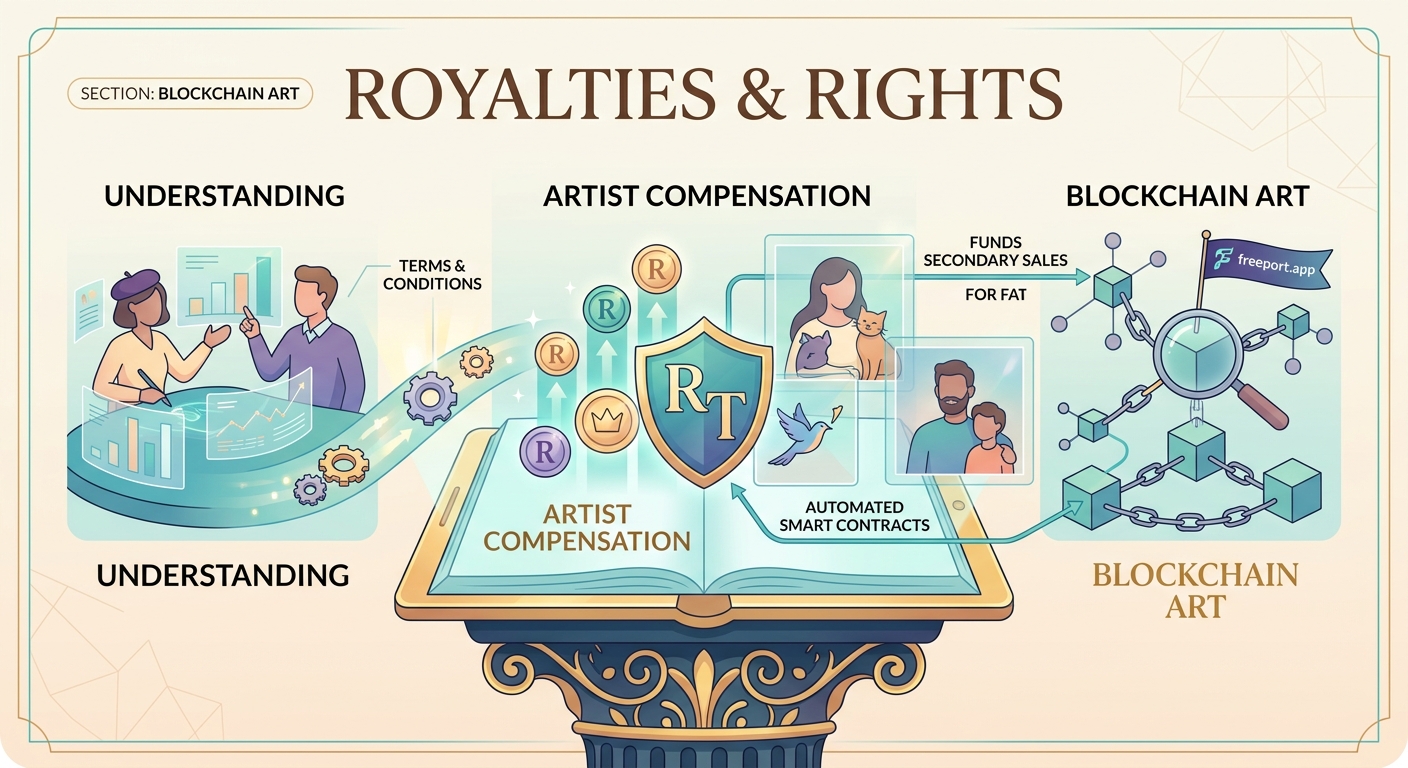
Royalties compound differently than initial sales. Your first buyer pays full price. Every subsequent buyer pays the seller plus your royalty percentage. This creates a revenue stream that can exceed your primary sale income over time.
Consider a piece you sold initially for 1 ETH with a 10% royalty. If it resells five times at increasing prices, you might earn:
- Initial sale: 1 ETH
- First resale at 2 ETH: 0.2 ETH royalty
- Second resale at 3 ETH: 0.3 ETH royalty
- Third resale at 5 ETH: 0.5 ETH royalty
- Fourth resale at 8 ETH: 0.8 ETH royalty
- Fifth resale at 10 ETH: 1 ETH royalty
Total royalties: 2.8 ETH, nearly three times your initial sale price.
Active trading benefits artists financially. Pieces that change hands frequently generate more royalty income than works that sit in cold storage. This inverts traditional art market incentives, where scarcity and hoarding drive value.
Why blue-chip NFT collections maintain value during market downturns examines how trading volume affects both collector value and artist income across market cycles.
Common royalty mistakes artists make
Setting royalties too high kills secondary market activity. Buyers factor royalty costs into their purchase decisions. A 25% royalty means every resale costs the seller a quarter of the sale price, which discourages trading and price appreciation.
Here are mistakes that hurt your long-term income:
- Using a wallet you don’t fully control as your royalty recipient
- Setting different royalty rates across multiple platforms for the same collection
- Failing to communicate your royalty expectations to collectors
- Choosing platforms with poor royalty enforcement records
- Not monitoring whether royalty payments actually arrive
- Minting before understanding how to verify smart contract parameters
The most damaging mistake is assuming royalties will simply work without verification. Always check that your wallet address is correct in the smart contract. One wrong character means payments go to someone else forever.
Some artists create multiple wallet addresses for different purposes, then forget which one receives royalties. Consolidate your approach. Use a single, well-secured wallet for all royalty income from a given collection.
Technical standards and their limitations

EIP-2981 provides a standardized way for NFTs to signal royalty information, but it doesn’t enforce payment. The standard tells marketplaces what the creator expects. Actually sending that payment remains optional.
This creates a fundamental tension in the ecosystem. Technical standards can communicate intent but can’t force compliance without centralized enforcement. Truly decentralized peer-to-peer transfers will never trigger automatic royalty payments using current technology.
Some newer standards attempt to solve this through token-level restrictions. These approaches limit who can transfer tokens or require royalty payments before transfers complete. But they introduce their own problems, including reduced composability and potential security risks.
The blockchain community continues debating whether royalties should be technically enforced or culturally encouraged. How smart contracts are revolutionizing art royalties in web3 examines emerging solutions and their trade-offs.
Tax implications of ongoing royalty income
Royalty payments create ongoing tax obligations. Each payment typically counts as ordinary income in most jurisdictions, taxed at your regular income rate rather than capital gains rates.
You need to track:
- The date and amount of each royalty payment
- The fair market value in your local currency at the time of receipt
- The blockchain transaction hash for verification
- Which artwork generated each payment
- Your total annual royalty income across all platforms
Cryptocurrency adds complexity. If you receive royalties in ETH or another token, you owe taxes on the value when you receive it. If that token appreciates before you sell it, you might owe additional capital gains tax on the increase.
Many artists underestimate their tax burden because royalty payments arrive in small amounts throughout the year. Those small payments add up. Set aside money for taxes as royalties arrive, rather than facing a surprise bill at year end.
Consult a tax professional familiar with cryptocurrency. Rules vary significantly by country and change frequently as governments adapt to blockchain technology.
Building a sustainable income strategy
Blockchain art royalties work best as part of a diversified income approach. Don’t rely solely on secondary sales to sustain your practice.
Successful artists typically combine:
- Primary sales from new work releases
- Secondary market royalties from existing pieces
- Commission work for collectors or brands
- Physical merchandise tied to digital collections
- Speaking fees and educational content
- Collaborative projects with other creators
Royalties provide baseline income that grows as your career progresses. Early works that sold for modest amounts might generate substantial royalty income years later if your reputation grows. This creates financial stability that traditional art careers rarely offer.
7 blockchain artists redefining contemporary digital art in 2026 profiles creators who’ve built sustainable practices around this model.
Release new work consistently. Each piece you mint creates another potential royalty stream. A catalog of 100 pieces with modest trading activity generates more reliable income than a single viral hit.
Platform shutdowns and royalty preservation
Marketplaces close. Platforms fail. Your royalty income shouldn’t disappear with them.
The smart contract lives on the blockchain independently of any marketplace. Even if the platform where you minted shuts down, the royalty information remains embedded in the token. New marketplaces can read and honor those terms.
This resilience has limits. If a marketplace closes and collectors move your work to platforms that don’t enforce royalties, your income stream breaks. The technical capability exists, but practical enforcement depends on where collectors trade.
What happens to your blockchain art when the platform shuts down addresses these scenarios in depth, including strategies for protecting your work and income.
Store your artwork files independently of any single platform. IPFS provides decentralized storage that persists regardless of marketplace status. Arweave offers permanent storage for a one-time fee. These solutions ensure your art remains accessible even if platforms disappear.
Future developments in royalty technology
The blockchain art space evolves constantly. New technical standards, marketplace policies, and cultural norms emerge regularly.
Several promising developments might reshape how royalties work:
- Cross-chain royalty standards that work across different blockchains
- Decentralized royalty registries that track creator preferences independently
- Improved smart contract enforcement mechanisms
- Platform cooperatives owned by artists rather than venture capital
- Integration with traditional art market infrastructure
- Legal frameworks that recognize blockchain royalties in copyright law
Some jurisdictions are considering legislation that would make royalty payments legally enforceable, not just technically possible. This would give artists legal recourse when platforms or collectors bypass royalty mechanisms.
The technology continues maturing. Early NFT standards had significant limitations. Newer approaches address many of those issues while introducing new considerations. Stay informed about technical developments that affect your work.
Generative art on the blockchain where code meets canvas explores how algorithmic artists are pushing these systems in new directions.
Why this matters for your creative practice
Blockchain art royalties represent more than a payment mechanism. They fundamentally change the relationship between artists and their work over time.
Traditional art careers peak early. You create work, sell it, and move on. Success means selling at higher prices, but you still only profit once per piece. Blockchain royalties create ongoing relationships with your entire body of work.
This changes how you think about pricing, releasing work, and building a career. You can afford to price early work more accessibly, knowing royalties will reward you if it appreciates. You benefit when collectors actively trade your work rather than hoarding it.
The system isn’t perfect. Enforcement remains inconsistent. Technical limitations exist. Tax implications complicate matters. But the core innovation stands: artists can finally capture value from secondary markets that have enriched dealers, auction houses, and collectors for centuries.
Set up your royalties thoughtfully. Choose platforms carefully. Monitor your income. Build a sustainable practice around this new reality. The technology exists today to ensure you benefit from your work’s success throughout your entire career.