7 Blockchain Artists Redefining Contemporary Digital Art in 2026
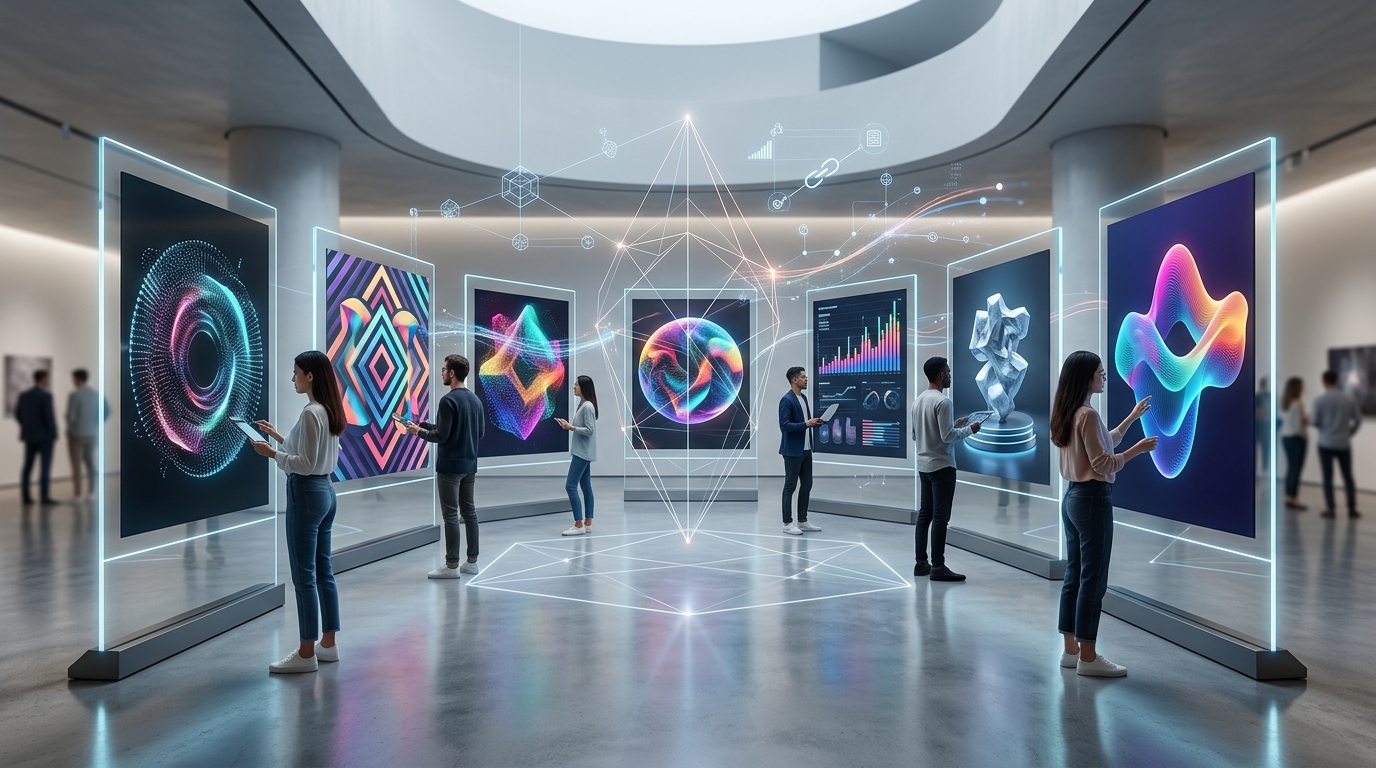
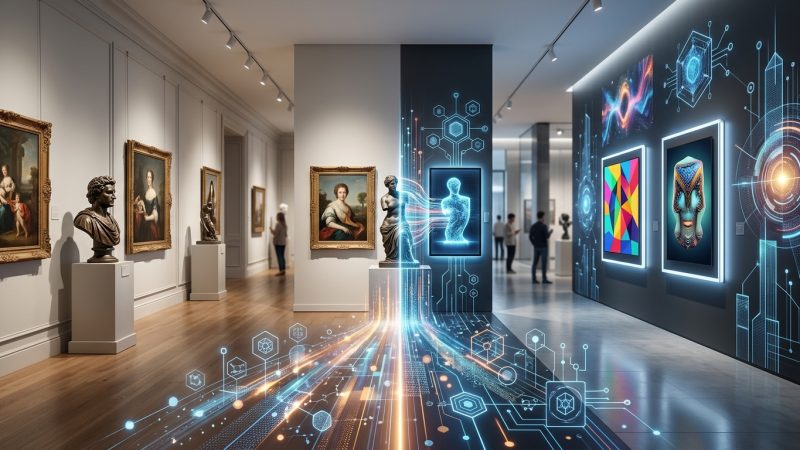
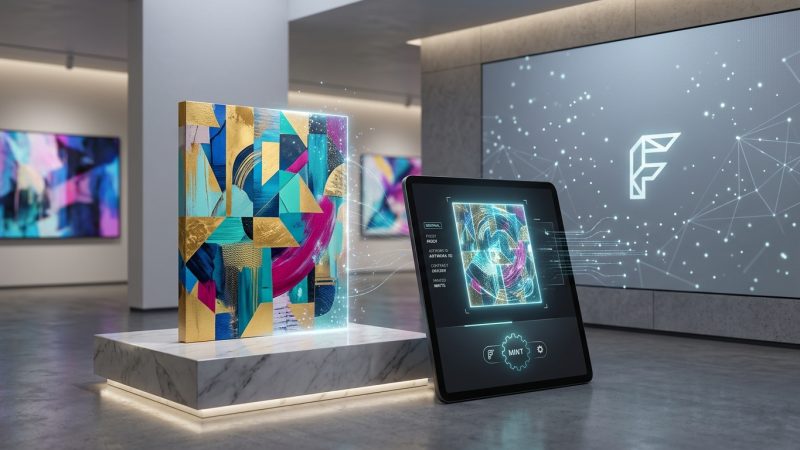
The digital art world has shifted dramatically. What started as experimental NFT drops in 2021 has matured into a sophisticated ecosystem where blockchain artists 2026 are creating museum-quality work, commanding serious prices, and building sustainable careers outside traditional galleries.
Blockchain artists in 2026 are leveraging advanced smart contracts, AI collaboration tools, and decentralized platforms to create authenticated, programmable art. Seven pioneering creators are setting new standards for digital ownership, community engagement, and artistic innovation while building valuable collections that reward early supporters through transparent royalty structures and verifiable provenance.
Why 2026 Marks a Turning Point for Blockchain Art
The infrastructure finally caught up with the vision. Gas fees dropped by 80% since 2023. Layer-2 solutions made minting affordable. Mainstream platforms integrated wallet connections without friction.
Artists who stuck around through the 2022 crash are now reaping rewards. They built communities, refined their craft, and learned what collectors actually value beyond hype cycles.
The result? A mature market where talent matters more than Twitter followers.
Seven Artists Shaping the Future
Yuki Tanaka: Programmable Sculptures
Tanaka creates 3D forms that evolve based on blockchain data. Her piece “Ethereum Heartbeat” pulses in real time with network activity. Collectors don’t just buy static images. They own living artworks that respond to the ecosystem supporting them.
Her smart contracts include time-locked reveals. Buy a piece today, and new layers unlock annually for five years. This approach rewards patient collectors and creates ongoing engagement.
Marcus Chen: Generative Landscapes
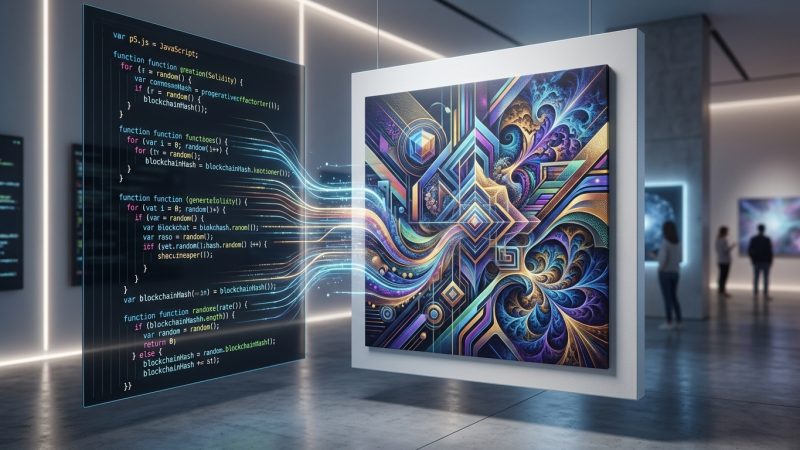
Chen’s algorithm-driven environments have sold for six figures. Each landscape generates uniquely based on the buyer’s wallet history. Your transaction patterns, holding duration, and collection diversity all influence the final piece.
He’s pioneered “collector DNA” metadata that makes every output genuinely one-of-one. Two people can mint from the same contract and receive completely different artworks.
Amara Okafor: Cultural Preservation Through NFTs
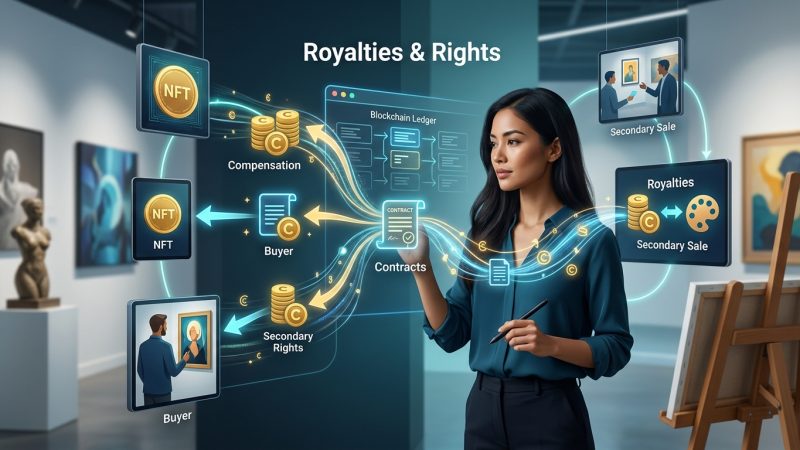
Okafor digitizes traditional African textile patterns and stores them permanently on-chain. Her work preserves endangered artistic traditions while compensating original artisans through smart contracts that handle art royalties automatically.
Each piece includes documented provenance linking back to specific communities and weavers. She’s created a model where cultural heritage becomes both preserved and profitable for its creators.
Sofia Ramirez: Interactive Poetry NFTs
Ramirez combines written verse with responsive visuals. Her poems change typography, color, and layout based on time of day, weather data, and even current events pulled from oracle feeds.
Collectors report reading the same piece dozens of times and finding new meanings. The blockchain timestamp proves you own a specific moment in the artwork’s evolution.
James Park: Photorealistic AI Collaborations
Park uses AI models as creative partners, not replacement tools. He trains custom algorithms on his photography archive, then collaborates with the AI to generate new compositions. Understanding how AI generative models work helps collectors appreciate his technical achievements.
His process is fully transparent. Every piece includes the training data, model parameters, and prompt history. This openness has made him a favorite among collectors who value authenticity.
Leila Hassan: Sound Art on the Blockchain
Hassan mints audio experiences as NFTs. Her “Desert Frequencies” series captures rare acoustic environments and pairs them with visual spectrograms. Collectors can prove ownership of specific soundscapes.
She’s also experimenting with spatial audio that adapts to your listening environment. The NFT includes multiple mix versions optimized for headphones, speakers, or concert halls.
David Kim: Fractional Masterworks
Kim creates large-scale digital installations, then fractionizes them into collectible pieces. Own one fragment, and you have governance rights over where the complete work displays. His DAO of collectors votes on museum exhibitions and public installations.
This model democratizes access while maintaining scarcity. Individual pieces remain affordable, but the complete collection is worth exponentially more.
How to Start Collecting Blockchain Art
Building a meaningful collection takes strategy. Here’s a practical framework.
1. Research the Artist’s Track Record
Check their minting history on blockchain explorers. Look for consistent output over multiple years. Avoid artists who only appeared during hype cycles.
Review secondary market performance. Are collectors holding or flipping? Strong floor prices indicate genuine appreciation, not speculation.
2. Understand the Smart Contract
Read what you’re actually buying. Some NFTs grant full commercial rights. Others restrict usage. The contract defines ownership boundaries.
Look for royalty structures that benefit artists long-term. Sustainable creators need ongoing revenue as their work appreciates. Learning how smart contracts revolutionize art ownership helps you make informed decisions.
3. Verify Authenticity
Scammers copy popular artists constantly. Always check official websites and verified social accounts for contract addresses.
Use blockchain explorers to confirm the minting wallet matches the artist’s known address. One wrong character in a contract address means you bought a worthless copy. Authenticating digital art before purchase prevents expensive mistakes.
4. Join the Community
Most serious blockchain artists maintain Discord servers or Telegram groups. Lurk first. Watch how the artist interacts with collectors.
Active, respectful communities signal healthy projects. Drama, broken promises, or absent creators are red flags.
5. Start Small and Diversify
Don’t bet your entire budget on one artist. Spread risk across multiple creators, styles, and price points.
Many successful collectors started with $100 pieces from emerging artists. Some of those early bets became worth thousands as the artists gained recognition.
What Makes Blockchain Art Valuable
Traditional art valuation criteria still apply, but blockchain adds new dimensions.
| Traditional Factor | Blockchain Enhancement |
|---|---|
| Artist reputation | Verifiable sales history on-chain |
| Scarcity | Provably limited editions in smart contracts |
| Provenance | Immutable ownership records |
| Condition | Digital files never degrade |
| Exhibition history | Wallet display in virtual galleries |
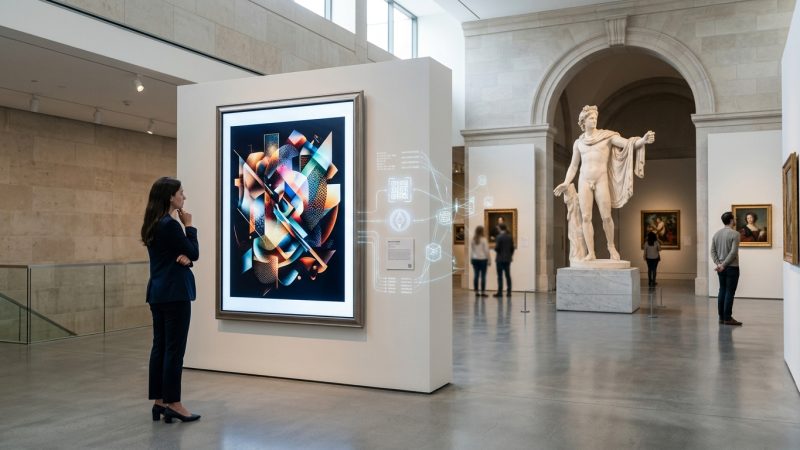
The technology eliminates forgery concerns. You can prove your piece came directly from the artist’s wallet. No authentication committees or expert opinions needed.
Smart contracts also enable new value mechanisms. Pieces that grant governance rights, unlock future content, or generate passive income through DeFi integrations offer utility beyond aesthetics.
Common Mistakes New Collectors Make
Avoid these pitfalls that drain budgets and kill enthusiasm.
-
Chasing pumps: Buying because everyone’s talking about an artist usually means you’re late. Do your own research before FOMO kicks in.
-
Ignoring gas fees: A $50 NFT can cost $100 in transaction fees during network congestion. Time your purchases for lower activity periods.
-
Skipping backups: Lose your seed phrase, lose your collection. Write it down. Store it securely. No exceptions.
-
Buying floor pieces blindly: The cheapest item in a collection often has undesirable traits. Understand rarity rankings before purchasing.
-
Neglecting tax implications: NFT sales trigger capital gains in most jurisdictions. Track your cost basis and sale prices carefully.
The Technology Behind the Art
Understanding the infrastructure helps you evaluate long-term viability.
Most blockchain artists 2026 mint on Ethereum Layer-2 networks like Arbitrum or Base. These offer the security of Ethereum with 95% lower costs. Some use Tezos for environmental sustainability or Solana for speed.
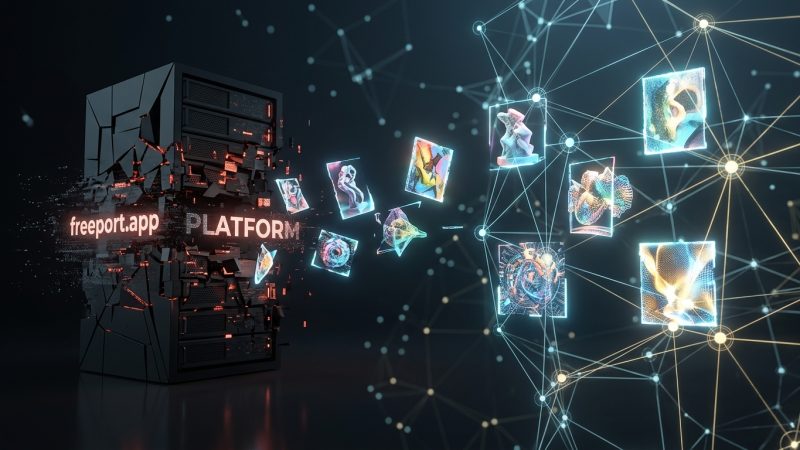
Storage matters too. Serious artists store image files on IPFS or Arweave, not centralized servers. If the hosting company goes bankrupt, your NFT shouldn’t become a broken link.
Metadata standards have improved dramatically. Modern NFTs include detailed descriptions, creation dates, file formats, and licensing terms all encoded on-chain.
“The blockchain doesn’t make bad art good, but it makes good art more accessible, verifiable, and valuable for both creators and collectors. We’re finally seeing the technology serve the art instead of overwhelming it.” – Anonymous collector with 500+ pieces
Building Your Collection Strategy
Successful collectors approach blockchain art with clear goals.
For cultural appreciation: Focus on artists whose work resonates emotionally. Buy pieces you’d display proudly regardless of resale value. Your collection should bring daily joy.
For investment: Study market trends, artist trajectories, and collector behavior. Treat it like any other asset class with research, diversification, and patience. Building a valuable digital art collection requires discipline and strategy.
For community access: Some NFTs function as membership passes. Owning certain pieces grants access to exclusive events, private Discord channels, or collaborative projects with the artist.
Most collectors blend all three motivations. You can appreciate art aesthetically while acknowledging its financial potential and enjoying community connections.
Where the Market Is Heading
Several trends are accelerating in 2026.
Physical-digital hybrids: Artists are pairing NFTs with physical objects. Buy the digital piece, receive a museum-quality print or sculpture. The NFT proves authenticity for both.
Cross-platform compatibility: Your NFT displays in virtual worlds, AR apps, and digital frames without technical hassles. Interoperability standards finally work.
Creator DAOs: Artists form collectives that share resources, cross-promote, and negotiate with platforms as a unified group. This gives individual creators more leverage.
Institutional collecting: Museums and corporations are building blockchain art collections. This legitimizes the medium and creates price floors for established artists.
Sustainable practices: Artists are demanding carbon-neutral minting options. Platforms compete on environmental credentials, not just features.
The Staying Power of Quality
Market downturns separate tourists from residents. Artists who survived 2022’s crash did so by focusing on craft over hype.
They shipped consistently. They engaged authentically. They priced fairly. They delivered value beyond speculation.
These same principles apply to collecting. Blue-chip NFT collections maintain value because they represent genuine artistic achievement, not temporary trends.
The blockchain artists 2026 worth watching aren’t the loudest voices. They’re the consistent creators building bodies of work that will matter in ten years.
Practical Steps for Your First Purchase
Ready to start collecting? Here’s your action plan.
-
Set a budget: Decide what you can afford to lose. Treat your first purchases as education, not guaranteed profits.
-
Choose a wallet: MetaMask remains the standard, but Rainbow and Coinbase Wallet offer friendlier interfaces for beginners.
-
Fund your wallet: Buy ETH on a reputable exchange and transfer it to your wallet. Start with enough for 2-3 pieces plus gas fees.
-
Follow artists: Spend a week watching creators on Twitter, Instagram, and Foundation. Note whose work you return to repeatedly.
-
Attend virtual events: Many artists host spaces, AMAs, or gallery openings in virtual worlds. These give you feel for their personality and vision.
-
Make your first purchase: Start with something affordable from an artist you genuinely like. Experience the full process before committing larger amounts.
-
Display your collection: Use platforms like Oncyber or Spatial to create virtual galleries. Share your collection and connect with other enthusiasts.
What Separates Collectors from Speculators
Collectors care about the art. They learn artist backstories. They understand creative processes. They support careers over years, not pump-and-dump schemes.
Speculators chase floor prices and trending hashtags. They flip immediately for profit. They abandon projects when hype fades.
The blockchain records everything. Artists notice who supports them early and who only shows up during pumps. Long-term collectors often receive airdrops, exclusive pieces, or early access to new collections.
Building relationships matters in this space. The best opportunities come from genuine community participation, not wallet size.
Your Role in the Ecosystem
Every purchase is a vote. You’re signaling what kind of art deserves support and funding.
Buying from diverse artists expands who gets to participate. Supporting experimental work encourages innovation. Collecting from underpriced creators helps them build sustainable practices.
The blockchain art world is still young enough that individual collectors shape its direction. Your choices today influence what thrives tomorrow.
Making Blockchain Art Part of Your Life
The technology can feel overwhelming at first. Wallets, gas fees, smart contracts, metadata standards. It’s a lot.
But the core activity is simple. You find art you love. You support artists you believe in. You build a collection that reflects your taste and values.
The blockchain just makes it verifiable, tradeable, and permanent.
Start with one piece from one artist. Learn the process. Enjoy the work. Then expand from there.
The blockchain artists 2026 are creating the cultural artifacts that will define this era. Your collection can be part of that story.