What Makes a Digital Artwork Valuable in the Long Term?
Digital art used to live in a strange limbo. Beautiful, yes. Collectible? Not really. Anyone could copy a JPEG with a single click, so how could it ever hold real value?
Then blockchain technology arrived and changed everything. Suddenly, digital artworks could be authenticated, owned, and traded just like physical paintings. But technology alone doesn’t create value. The same forces that make a Basquiat worth millions also apply to digital pieces, just with new tools and new possibilities.
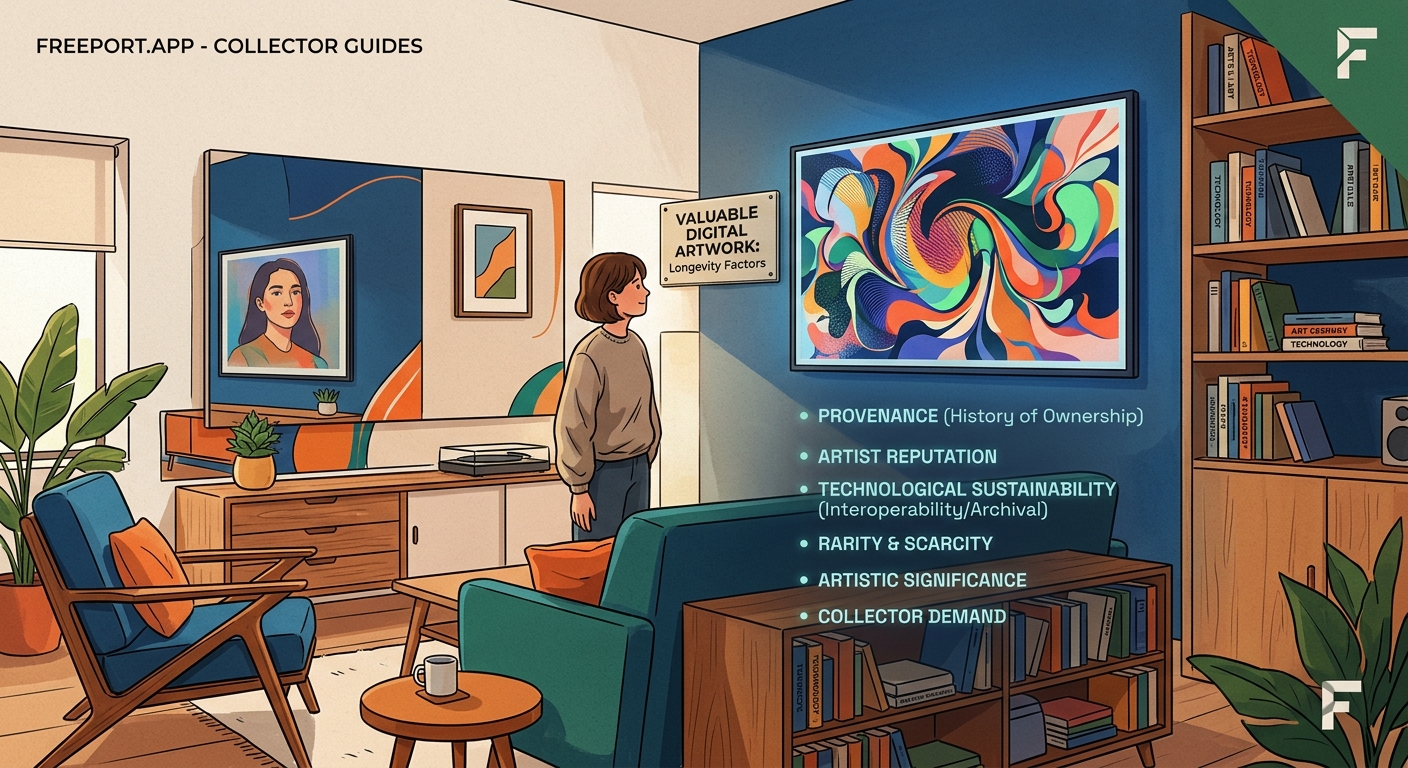
Digital art derives value from provenance verification, artist reputation, scarcity controls, cultural significance, and technical innovation. Blockchain technology enables transparent ownership records and programmable scarcity, while traditional art market principles like artist track record and institutional validation continue to drive long-term worth. Collectors assess both the creative merit and the technological infrastructure supporting each piece.
Provenance creates the foundation for digital ownership
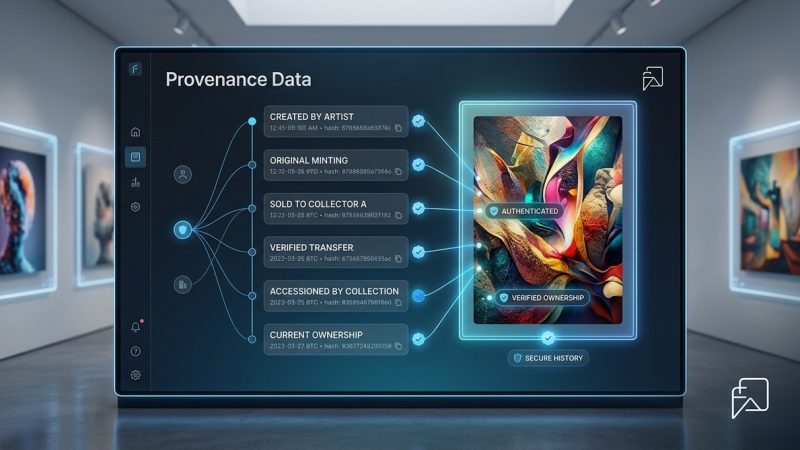
Physical art has certificates of authenticity. Digital art has blockchain records.
Every transaction gets recorded permanently. You can trace a piece back to the original creator in seconds. This transparency solves the biggest problem digital art faced before 2021: proving you own the real thing.
How smart contracts are revolutionizing art ownership and provenance shows exactly how this technology works. The blockchain acts as a permanent ledger. When an artist mints a piece, they create an immutable record. When you buy it, that transaction gets added to the chain.
Traditional art relies on paper trails, expert opinions, and sometimes faith. Digital art puts the entire history on display. Anyone can verify it. No one can fake it.
This matters because provenance directly impacts price. A piece with a clear chain of ownership from a respected artist will always outperform a work with questionable origins.
Artist reputation drives sustained value
Technology enables ownership. Artists create the actual value.
The same principle applies whether you’re buying a Monet or a generative algorithm. The artist’s body of work, exhibition history, and critical reception all contribute to how much their pieces command.
Some creators have built decades-long careers. Others emerged in the past few years but already show consistent quality and vision. 7 blockchain artists redefining contemporary digital art in 2026 profiles several who’ve established serious reputations.
Look for these signals:
- Consistent artistic evolution over time
- Recognition from established institutions
- Active participation in the broader art community
- Technical skill that pushes boundaries
- A distinct visual or conceptual style
An artist who sold one viral piece five years ago and disappeared? That’s speculation. An artist who releases thoughtful work regularly, exhibits in galleries, and earns critical praise? That’s investment potential.
Scarcity mechanisms control supply
Digital files can be copied infinitely. Digital art cannot.
This distinction confuses people new to the space. Yes, anyone can screenshot your NFT. But they can’t own it. The blockchain record proves who holds the authentic version.
Artists control scarcity through several methods:
- Limited editions: Creating only 10 or 100 copies of a work
- One-of-ones: Minting a single unique piece
- Burn mechanisms: Permanently destroying pieces to reduce supply
- Time-based releases: Limiting creation to specific windows
Each approach affects value differently. One-of-ones typically command premium prices. Limited editions offer accessibility while maintaining scarcity. The complete guide to minting your first fine art NFT explains how artists make these decisions.
Physical art has natural scarcity. An oil painting exists once. Digital art requires intentional scarcity through smart contracts and blockchain verification.
The key is authenticity, not exclusivity of viewing. Millions can see the Mona Lisa online. One institution owns it. Same principle applies here.
Cultural significance builds long-term worth
Some artworks capture moments. Others define them.
Beeple’s “Everydays: The First 5000 Days” sold for $69 million not just because of artistic merit. It marked a cultural turning point. The piece represented 13 years of daily creative practice and arrived exactly when digital art gained mainstream attention.
Cultural significance operates on multiple levels:
Historical importance: Works that document or define specific moments in digital art history hold value beyond aesthetics. The first major pieces on specific blockchains, breakthrough technical achievements, or works that sparked important conversations all gain value from their place in the timeline.
Social commentary: Art that addresses meaningful issues resonates across generations. Political statements, environmental concerns, or technological critiques can appreciate as those topics gain urgency.
Community building: Some pieces become rallying points for specific communities. Profile picture projects create shared identity. Generative art collections attract algorithm enthusiasts. Why museums are building blockchain art collections shows how institutions recognize this cultural dimension.
Cross-medium influence: Digital artworks that inspire physical exhibitions, merchandise, or other creative works demonstrate cultural penetration that supports long-term value.
The art market has always valued cultural relevance. Digital art simply expands the definition of what that means.
Technical innovation adds unique value layers
Digital art can do things physical art cannot.
Generative art on the blockchain: where code meets canvas explores pieces that generate themselves through algorithms. The code itself becomes part of the artwork. Collectors own both the visual output and the creative process.
Some pieces change over time. Weather data, blockchain activity, or owner interaction can trigger transformations. This dynamic quality creates ongoing engagement that static art cannot match.
Other innovations include:
- Programmable royalties: Artists earn from every resale automatically through royalties and rights: understanding artist compensation in blockchain art
- Fractional ownership: Multiple collectors can own shares of expensive pieces
- Interoperable assets: Art that functions across virtual worlds and platforms
- Verifiable randomness: Provably fair generation processes
Technical sophistication matters, but only when it serves artistic vision. A technically impressive piece with no aesthetic or conceptual merit won’t hold value. The sweet spot combines innovation with genuine creative accomplishment.
Market dynamics and liquidity affect pricing
Understanding value means understanding markets.
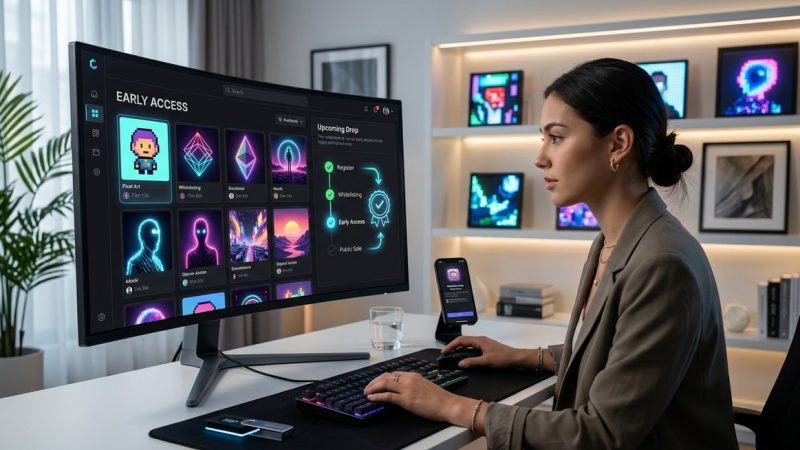
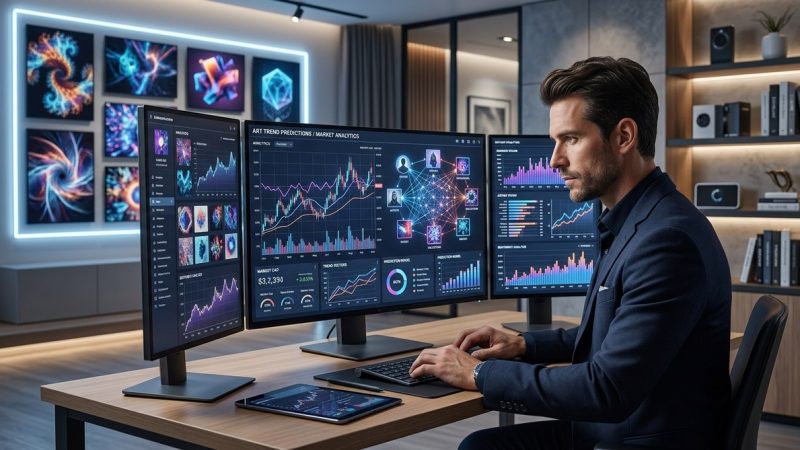
Digital art trades on platforms with transparent price histories. You can see what similar pieces sold for last week, last month, or last year. This transparency helps, but it also creates volatility.
| Factor | Impact on Value | Time Horizon |
|---|---|---|
| Platform reputation | High | Immediate |
| Transaction volume | Medium | Short-term |
| Floor price trends | High | Medium-term |
| Blue-chip status | Very high | Long-term |
| Institutional adoption | Very high | Long-term |
What makes a digital collection blue-chip? Analyzing long-term value indicators breaks down which collections maintain value through market cycles.
Liquidity matters more in digital art than physical. You can sell a digital piece in minutes if there’s demand. Physical art might take months to find the right buyer. This speed cuts both ways. It enables flexibility but also creates price swings.
Smart collectors look beyond floor prices. They assess:
- Total volume traded over time
- Number of unique holders
- Distribution of ownership
- Historical price stability
- Platform sustainability
What happens to your blockchain art when the platform shuts down? addresses a critical concern. Platform risk affects value. Pieces stored on decentralized systems with permanent storage solutions hold more long-term value than those dependent on single platforms.
Institutional validation strengthens legitimacy
Museums and galleries lend credibility.
When the Museum of Modern Art acquires digital artworks, it sends a signal. When Sotheby’s and Christie’s hold dedicated NFT auctions, the traditional art world acknowledges digital art’s legitimacy.
This institutional embrace matters for several reasons:
Preservation commitment: Museums plan for centuries. Their acquisition suggests confidence in long-term technical viability.
Expert curation: Professional curators apply rigorous standards. Their selections carry weight with serious collectors.
Educational programming: Institutions contextualize work within art history. This scholarship builds understanding and appreciation.
Market stability: Institutional collecting reduces volatility. Museums don’t flip pieces for profit.
From physical to digital: top galleries bridging traditional and blockchain art profiles galleries making this transition. Their involvement brings established collector networks into the digital space.
Institutional validation takes time. The digital art market moves faster than museum acquisition committees. But when institutions do commit, they provide lasting value support.
Building a collection requires strategic thinking
Knowing what creates value helps you collect smarter.
How to build a valuable digital art collection from scratch in 2026 offers a complete framework. The core principles include:
- Research artists thoroughly: Study their complete bodies of work, not just popular pieces
- Verify technical infrastructure: Ensure proper storage and smart contract quality
- Assess cultural relevance: Look for work that resonates beyond immediate trends
- Diversify strategically: Balance established names with emerging talent
- Plan for long-term holding: Focus on pieces you’d keep through market cycles
7 red flags every digital collector should watch for before buying helps you avoid common mistakes. Red flags include:
- Unclear ownership rights
- Centralized storage without backups
- Anonymous creators with no track record
- Artificial scarcity manipulation
- Platform lock-in without export options
“The best digital art collections combine aesthetic judgment with technical understanding. You need both to succeed long-term.” – Advice from experienced collectors
The complete guide to storage and security for high-value digital assets covers the practical side. Proper security protects your investment. Losing access to your wallet means losing your collection permanently.
Authentication separates real value from hype
Not all digital art holds equal worth.
The market includes everything from museum-quality pieces to cash grabs. How to authenticate digital art before adding it to your collection provides detailed verification steps.
Key authentication factors:
Smart contract verification: Check that the contract matches the artist’s known address. Scammers create fake versions of popular pieces.
Metadata quality: Examine how information gets stored. Pieces with on-chain metadata outlast those relying on external servers.
Artist confirmation: Verify through official channels that the piece is authentic. Many artists maintain lists of their legitimate contracts.
Community consensus: Established collectors and platforms recognize authentic works. New collectors should research before buying.
Technical audit: For complex pieces, review the underlying code. Bugs or vulnerabilities affect long-term value.
Authentication becomes easier with experience. Start with well-known artists and platforms. Build expertise before venturing into emerging markets.
Market timing influences but doesn’t determine value
Markets cycle. Quality endures.
Digital art saw explosive growth in 2021, followed by a sharp correction. Pieces that sold for six figures dropped to four. Some disappeared entirely.
But the best work held value. Artists with genuine talent and vision maintained collector interest. Technically sound pieces on stable infrastructure survived platform closures and market crashes.
Why blue-chip NFT collections maintain value during market downturns analyzes what separates lasting collections from temporary hype.
Timing your entry matters less than choosing quality. Buying a mediocre piece at market bottom won’t create value. Acquiring exceptional work at any reasonable price can.
Consider these timing factors:
- Artist career stage and trajectory
- Overall market sentiment and liquidity
- Platform health and user activity
- Institutional involvement trends
- Technical infrastructure developments
10 undervalued digital collection categories poised for growth identifies areas where quality exceeds current prices.
Patient collectors who focus on fundamentals outperform traders chasing trends. The market rewards research and conviction.
The intersection of creativity and technology
Value emerges where art meets innovation.
Digital art isn’t just traditional art in new formats. It’s a fundamentally different medium with unique possibilities. The most valuable pieces leverage those possibilities while maintaining artistic integrity.
7 emerging digital artists whose work is reshaping the secondary market showcases creators pushing boundaries. They understand code, aesthetics, and cultural context equally well.
This intersection creates opportunities traditional art cannot offer:
Global accessibility: Collectors worldwide can acquire pieces instantly without shipping or customs.
Transparent provenance: Every ownership change gets recorded permanently and publicly.
Programmable features: Art can evolve, respond, or interact based on predetermined rules.
Direct artist relationships: Blockchain enables direct sales without gallery intermediaries.
Fractional possibilities: Fractional ownership is changing digital collecting forever explains how expensive pieces become accessible.
The technology serves the art, not the other way around. Collectors who understand both dimensions make better decisions.
Why digital art value will keep evolving
The market is still young. Standards are still forming.
What seemed impossible five years ago is normal today. What seems cutting-edge now will be standard practice in five years. This evolution creates both risk and opportunity.
New developments on the horizon:
Enhanced authentication tools: AI and machine learning will make verification easier and more reliable. How AI generative models are reshaping digital art authentication explores these advances.
Improved infrastructure: Better storage solutions, more efficient blockchains, and stronger platforms will support long-term preservation.
Broader institutional adoption: More museums, galleries, and traditional collectors will enter the space, bringing capital and credibility.
Regulatory clarity: Clear legal frameworks will reduce uncertainty around ownership rights and taxation.
Cross-platform standards: Improved interoperability will let collectors move and display pieces more freely.
These changes will refine how we assess value, but the core principles remain constant. Quality, authenticity, cultural relevance, and technical soundness will always matter.
Value lives in the work itself
Technology enables digital art. Markets price it. But value starts with the creative vision.
A blockchain record means nothing if the artwork itself lacks merit. Scarcity doesn’t create worth without demand. Platform features can’t compensate for poor execution.
The most valuable digital art combines exceptional creativity with thoughtful technical implementation. It says something meaningful through a medium that enhances rather than limits expression. It engages viewers intellectually and emotionally. It stands up to repeated viewing.
These qualities transcend market cycles and platform changes. They’re what made physical art valuable for centuries. They’re what will make digital art valuable for generations to come.
Start with the work. Assess the artist. Verify the technology. Understand the market. But always return to whether the piece itself moves you, challenges you, or shows you something new.
That’s where real value lives. Everything else just helps us recognize and preserve it.