Can Blockchain Art Survive Without NFTs? Exploring Alternative Verification Methods
NFTs dominated the conversation around blockchain art for years, but they’re not the only way to prove a digital artwork is authentic. Artists and collectors are now turning to alternative verification methods that offer sustainability, accessibility, and long-term reliability without relying on traditional token standards.
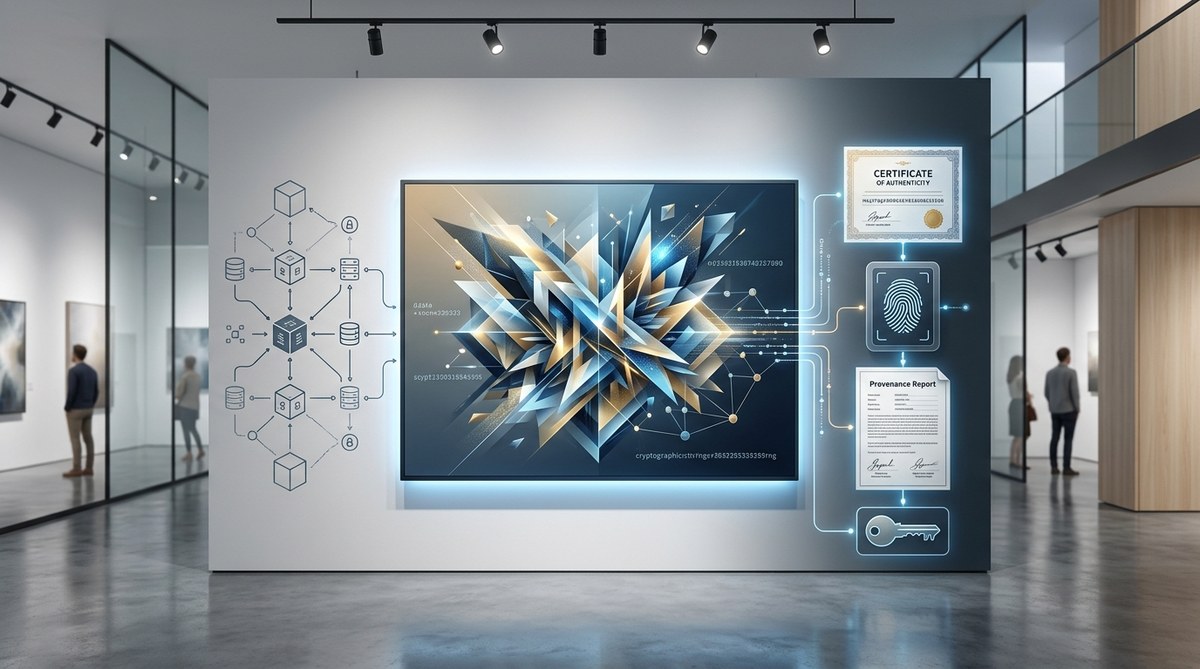
Blockchain art verification without NFTs relies on cryptographic signatures, timestamping protocols, decentralized registries, and smart contract attestations. These methods provide proof of authenticity and ownership while avoiding high gas fees, environmental concerns, and platform dependency. Artists can implement multiple verification layers to protect their work and establish provenance independently.
Why artists are moving beyond traditional NFT verification
The NFT boom brought blockchain technology to digital art, but it also revealed limitations. High minting costs push emerging artists out of the market. Environmental concerns around energy consumption create ethical dilemmas. Platform shutdowns threaten artwork accessibility.
These challenges sparked innovation in verification methods.
Artists now have options that separate authentication from tokenization. You can prove your work exists at a specific time without minting a token. You can establish ownership records without paying platform fees. You can create verifiable provenance that survives marketplace closures.
The shift represents a maturation of blockchain art infrastructure. Early adoption focused on what was possible. Current development focuses on what’s sustainable and practical.
Core verification methods that work without NFT minting
Several techniques provide robust authentication without creating traditional tokens.
Cryptographic signatures let artists sign their work using private keys. The signature proves the file came from a specific creator at a specific time. Anyone can verify the signature using the artist’s public key. No token required.
Blockchain timestamping records a hash of your artwork on-chain. The hash acts as a digital fingerprint. It proves the file existed at the block timestamp. You don’t need to store the entire artwork on-chain, just the proof it existed.
Decentralized registries maintain databases of artwork metadata. Artists register their pieces with unique identifiers. The registry provides lookup services without tokenization. Think of it as a blockchain-based catalog rather than a marketplace.
Smart contract attestations create verifiable claims about artwork without minting tokens. A contract can record that Artist A created Work B on Date C. The contract serves as a permanent witness that anyone can query.
These methods work independently or in combination. Many artists layer multiple techniques for stronger verification.
Setting up cryptographic signature verification for your artwork
This process requires basic command-line skills but no coding knowledge.
-
Generate a cryptographic key pair using tools like GPG or OpenSSL. Your private key stays secret. Your public key gets shared with collectors and platforms.
-
Create a hash of your digital artwork file. Use SHA-256 or similar algorithms. The hash changes if even one pixel changes in your file.
-
Sign the hash with your private key. This creates a signature that mathematically links your identity to the artwork hash.
-
Publish your public key and the signature alongside your artwork. Store them in accessible locations like your website, IPFS, or decentralized storage solutions.
-
Collectors verify authenticity by checking the signature against your public key and the artwork hash. If they match, the piece is authentic.
This method costs nothing except time. No gas fees. No platform cuts. The verification remains valid as long as the blockchain or storage network exists.
Understanding blockchain timestamping services
Timestamping services prove when something existed without revealing what it is.
Services like OpenTimestamps anchor data hashes to Bitcoin blocks. You submit your artwork hash. The service includes it in a Merkle tree that gets recorded in a Bitcoin transaction. The Bitcoin block timestamp proves your hash existed at that moment.
The process costs almost nothing. Multiple hashes get batched into single transactions. You can timestamp hundreds of pieces for fractions of a cent.
The verification stays valid forever. Bitcoin’s blockchain provides the timestamp proof. Even if the timestamping service disappears, your proof remains in the blockchain.
Artists should timestamp both the final artwork and preliminary sketches. This creates an audit trail showing creative development and helps prove originality in disputes.
Museums and institutions increasingly accept timestamped proofs for digital art authentication. The method provides court-admissible evidence of creation dates.
Building a decentralized registry for your art collection
Registries organize verification data in queryable databases.
Platforms like Arweave and Ceramic Network enable permanent, decentralized data storage. Artists can create registry entries containing:
- Artwork title and description
- Creation date and location
- File hashes for multiple resolutions
- Artist identity verification
- Ownership transfer records
- Exhibition history
The registry entry gets a permanent identifier. Anyone can look up the artwork using this ID. The data never disappears because it’s replicated across network nodes.
Smart contracts can interact with registry data. A marketplace could verify artwork authenticity by checking registry entries before allowing sales. A gallery could confirm exhibition history before accepting pieces.
This approach separates authentication from commerce. Your artwork verification exists independently of any single platform or marketplace.
Smart contract attestations without token creation
Smart contracts can record facts about artwork without minting tokens.
A simple attestation contract might include functions like:
- registerArtwork(hash, title, date)
- transferOwnership(artworkID, newOwner)
- addExhibition(artworkID, venue, date)
- verifyAuthenticity(artworkID)
These functions create permanent records. The contract acts as a notary, witnessing and recording events. No tokens change hands. No marketplace fees apply.
Collectors can query the contract to verify ownership chains. Provenance tracking becomes transparent and permanent. The contract provides the same verification benefits as NFTs without the tokenization overhead.
Artists can deploy these contracts on low-cost chains. Polygon, Arbitrum, and other Layer 2 solutions offer pennies-per-transaction costs. Even Ethereum mainnet becomes affordable for attestation-only contracts.
Comparing verification methods side by side
Different techniques suit different needs. This table breaks down the options.
| Method | Cost | Permanence | Privacy | Complexity |
|---|---|---|---|---|
| Cryptographic Signatures | Free | Depends on storage | High | Low |
| Blockchain Timestamping | Near-zero | Very high | High | Low |
| Decentralized Registry | Storage costs | Very high | Medium | Medium |
| Smart Contract Attestation | Gas fees | Very high | Low | Medium |
| Traditional NFT | High gas + fees | High | Low | Low |
Choose based on your priorities. Artists concerned about costs favor signatures and timestamping. Those wanting queryable databases prefer registries. Projects needing programmable verification use smart contracts.
Many successful artists combine methods. Timestamp your work for proof of creation. Use signatures for file verification. Register in a decentralized database for discoverability. Each layer adds security.
Common mistakes in non-NFT verification approaches
Artists new to alternative verification make predictable errors.
Losing private keys destroys your ability to prove ownership. Your signatures become useless if you can’t access the signing key. Back up keys in multiple secure locations. Consider using hardware security modules for valuable collections.
Using centralized storage for verification data defeats the purpose. If you store hashes on a company server, the verification dies when the company does. Always use decentralized storage or blockchain-native solutions.
Skipping redundancy leaves single points of failure. Timestamp on multiple chains. Store registry data on multiple networks. One verification method might fail, but three probably won’t.
Ignoring metadata standards makes your work harder to verify. Use consistent formats for artwork information. Follow emerging standards like Verifiable Credentials. Standardization helps automated verification tools recognize your work.
Forgetting to document the process confuses collectors. Write clear instructions for verifying your artwork. Include step-by-step guides. Make verification accessible to non-technical buyers.
These mistakes are fixable. Audit your verification setup regularly. Update documentation as tools evolve. Test the verification process from a collector’s perspective.
Integration strategies for galleries and platforms
Institutions adopting non-NFT verification need systematic approaches.
Start with artist onboarding. Collect public keys, registry identifiers, and verification documentation. Build a database linking artists to their verification methods. This enables automated authenticity checks.
Implement verification APIs. When someone submits artwork, your system should automatically check signatures, query registries, and validate timestamps. Manual verification doesn’t scale.
Display verification status prominently. Show collectors which authentication methods protect each piece. Transparency builds trust. Museums building blockchain collections increasingly demand visible verification trails.
Create fallback procedures for verification failures. Sometimes networks go down or services become temporarily unavailable. Have manual verification processes ready.
Train staff on multiple verification methods. Your team should understand how to validate signatures, check timestamps, and query registries. Technical literacy becomes a core competency.
Tools and resources for implementing verification
Several platforms simplify non-NFT verification.
OpenTimestamps provides free Bitcoin timestamping. The client software runs locally. Submit hashes through their website or API. Download proofs for permanent storage.
Keybase offers cryptographic identity verification. Artists can link their public keys to social profiles. Collectors verify signatures against proven identities.
Ceramic Network enables decentralized data storage with built-in versioning. Perfect for artwork registries that need update capabilities.
Arweave provides permanent storage with one-time payment. Upload verification data once, access it forever.
GPG/OpenPGP tools create and verify cryptographic signatures. Free, open-source, and battle-tested. Works on all operating systems.
Most tools offer both GUI and command-line interfaces. Start with graphical tools if you’re new to cryptography. Graduate to command-line tools for batch operations.
Legal and institutional acceptance of alternative verification
Courts and institutions increasingly recognize non-NFT verification methods.
Copyright offices in several countries accept blockchain timestamps as evidence of creation dates. The U.S. Copyright Office considers blockchain records in registration disputes. European courts have admitted cryptographic signatures as evidence.
Insurance companies now cover digitally verified artwork. Policies require specific verification standards. Timestamping plus cryptographic signatures often meet minimum requirements.
Auction houses are developing verification protocols. Major houses now employ blockchain specialists. They verify artwork using multiple methods before accepting consignments.
Academic institutions teach these verification techniques. Art conservation programs include digital authentication in their curricula. The next generation of curators will expect blockchain verification.
This institutional acceptance validates alternative approaches. You don’t need NFTs to participate in legitimate art markets. Proper verification using open standards provides equivalent or superior authentication.
Environmental and cost benefits over traditional NFTs
Alternative verification dramatically reduces environmental impact.
Traditional NFT minting on Ethereum consumed significant energy. Even after the merge to proof-of-stake, minting carries costs. Timestamping uses existing blockchain transactions. Signatures require no blockchain interaction at all.
The carbon footprint difference is substantial. Timestamping hundreds of pieces uses less energy than minting a single NFT. Artists concerned about sustainability find this approach more acceptable.
Cost savings benefit emerging artists most. Minting costs can exceed hundreds of dollars during network congestion. Alternative verification costs pennies or nothing. This democratizes access to blockchain authentication.
Platform independence provides long-term value. NFT marketplaces come and go. Your verification exists outside any single platform. If a marketplace closes, your authentication remains intact. This addresses concerns about what happens when platforms shut down.
Future developments in verification technology
The verification landscape continues evolving.
Zero-knowledge proofs enable private verification. Artists can prove ownership without revealing the artwork itself. Collectors can verify authenticity without exposing their holdings.
Cross-chain verification protocols are emerging. Soon you’ll verify artwork across multiple blockchains simultaneously. One signature, multiple chain confirmations.
AI-assisted verification tools are in development. Machine learning models can detect forgeries by analyzing artistic style. Combined with blockchain verification, this creates powerful authentication systems.
Decentralized identity standards will streamline artist verification. Instead of managing multiple keys and accounts, artists will have unified blockchain identities. Verification becomes automatic across platforms.
Interoperability standards will connect different verification methods. A collector could check an artwork against timestamping services, registries, and smart contracts simultaneously. One query, comprehensive verification.
Practical implementation checklist
Ready to implement non-NFT verification? Follow this list.
- Generate and securely store cryptographic key pairs
- Create a public key distribution strategy
- Set up automated hashing for new artwork
- Choose timestamping services and create accounts
- Select decentralized storage platforms for registry data
- Document your verification process for collectors
- Test verification from a collector’s perspective
- Create backup copies of all verification data
- Establish key rotation and update procedures
- Build relationships with verification-aware platforms
Start small. Verify a single piece using one method. Confirm the verification works. Then scale to your full catalog using multiple methods.
Document everything. Future you will thank present you for clear records. Collectors appreciate transparency about verification processes.
Building trust without tokens
Blockchain art verification doesn’t require NFTs. Cryptographic signatures, timestamping, decentralized registries, and smart contract attestations provide robust authentication. These methods cost less, consume less energy, and offer platform independence.
Artists gain control over their verification infrastructure. Collectors receive transparent, verifiable provenance. Institutions get court-admissible authentication. Everyone benefits from reduced costs and environmental impact.
The tools exist today. Implementation requires learning but not expertise. Start with simple timestamping. Add signatures as you grow comfortable. Build toward comprehensive verification systems that protect your work and serve your collectors.
Your art deserves verification that lasts. Choose methods that will outlive any single platform or marketplace. Build authentication into your creative practice from the beginning. The blockchain provides the foundation. You decide how to build on it.