The Ultimate Guide to Evaluating Provenance in NFT Art Markets
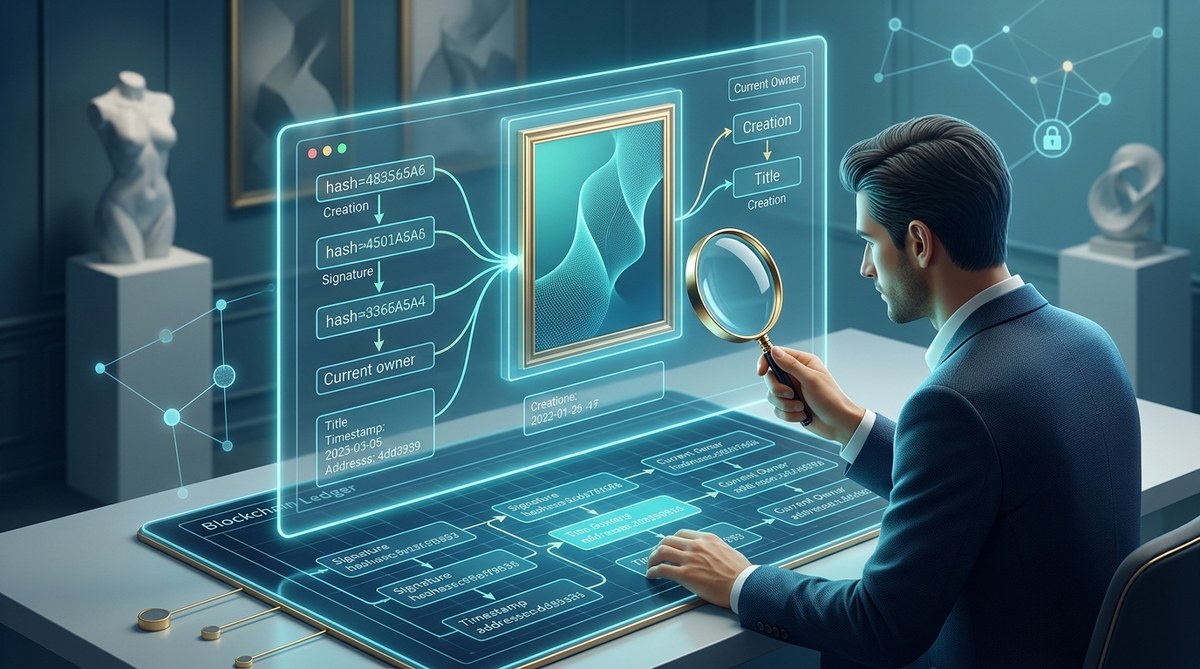
Buying an NFT without checking its provenance is like purchasing a painting without knowing if it’s an original or a fake. The blockchain promises transparency, but scammers have found ways to mint stolen art, create unauthorized copies, and manipulate metadata. Understanding how to verify NFT art provenance protects your investment and ensures you’re supporting the actual creator.
NFT art provenance verification requires checking on-chain data, confirming creator wallet addresses, reviewing transaction history, and validating metadata storage. Authentic pieces show clear minting records from verified artists, complete ownership chains, and proper decentralized storage. Skipping these steps exposes collectors to counterfeits, plagiarized work, and worthless tokens that damage both portfolios and the broader digital art ecosystem.
Understanding provenance in digital art markets
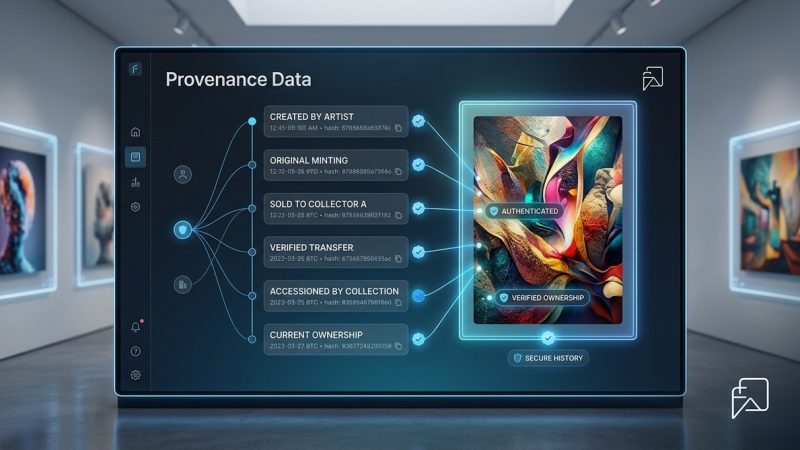
Provenance means the documented history of an artwork’s creation and ownership. In traditional art, this includes gallery records, auction receipts, and expert certificates. For NFTs, provenance lives on the blockchain as an immutable record.
Every legitimate NFT contains verifiable data about who minted it, when it was created, and every wallet that has owned it since. This transparency should make authentication easier than physical art. The problem is that anyone can mint anything.
A scammer can download an artist’s work, mint it on a different contract, and list it for sale. Without proper verification, collectors might buy these fakes thinking they’re originals. The blockchain only proves that someone minted the token. It doesn’t automatically prove who should have minted it.
Why traditional authentication doesn’t work for NFTs
Physical art authentication relies on experts examining brushstrokes, materials, and chemical composition. None of that applies to digital files. A perfect copy of a digital artwork is identical to the original at the file level.
What matters for NFTs is the smart contract address and the wallet that deployed it. An artwork minted by Beeple’s verified wallet has value. The same image minted by a random address does not. This shifts authentication from the artwork itself to the blockchain record.
The challenge is that blockchain data can be confusing. Contract addresses look like random strings of characters. Transaction histories span multiple platforms. Metadata might be stored off-chain. Collectors need a systematic approach to verify what they’re buying, which is where understanding how smart contracts are revolutionizing art ownership and provenance becomes essential.
Step-by-step provenance verification process
Follow these steps every time you consider purchasing an NFT:
- Identify the artist’s verified wallet address through their official website or social media profiles.
- Check the NFT’s contract address and compare it to known legitimate contracts for that artist or platform.
- Review the complete transaction history to confirm the token was minted by the correct wallet.
- Verify that metadata and image files are stored on decentralized systems like IPFS or Arweave, not centralized servers.
- Cross-reference the listing platform with the artist’s announced sales channels.
- Look for verification badges on major marketplaces, but don’t rely on them exclusively.
This process takes time, but it’s faster than recovering from buying a counterfeit. Each step eliminates a category of fraud.
Reading blockchain data like a collector
Block explorers like Etherscan show you everything about an NFT’s history. The “From” address on the minting transaction should match the artist’s known wallet. If it doesn’t, you’re looking at an unauthorized copy.
Check when the token was minted. If an artist only started creating NFTs in 2024, a token minted in 2021 claiming to be their work is fake. Timestamps don’t lie.
Look at the token’s transfer history. A piece that has changed hands multiple times through legitimate sales has stronger provenance than one sitting in the minting wallet. However, be cautious of wash trading, where the same entity transfers tokens between wallets they control to fake activity.
The contract itself matters too. Established artists often use the same contract for entire collections. A single piece minted on a different contract should raise questions. Platforms like Art Blocks and Foundation have recognizable contract patterns that help with verification.
Common provenance verification mistakes
| Mistake | Why It Happens | How to Avoid It |
|---|---|---|
| Trusting marketplace verification alone | Platforms can be fooled or hacked | Always check blockchain data directly |
| Assuming identical images are authentic | Digital files copy perfectly | Verify the minting wallet address |
| Ignoring metadata storage location | Centralized storage can disappear | Confirm IPFS or Arweave usage |
| Skipping social media confirmation | Scammers create fake profiles | Cross-check multiple official channels |
| Not checking contract deployment dates | Old contracts can be reused maliciously | Compare deployment time to artist timeline |
These mistakes cost collectors thousands. The blockchain provides the tools to avoid them, but you have to use those tools.
Red flags that signal provenance problems
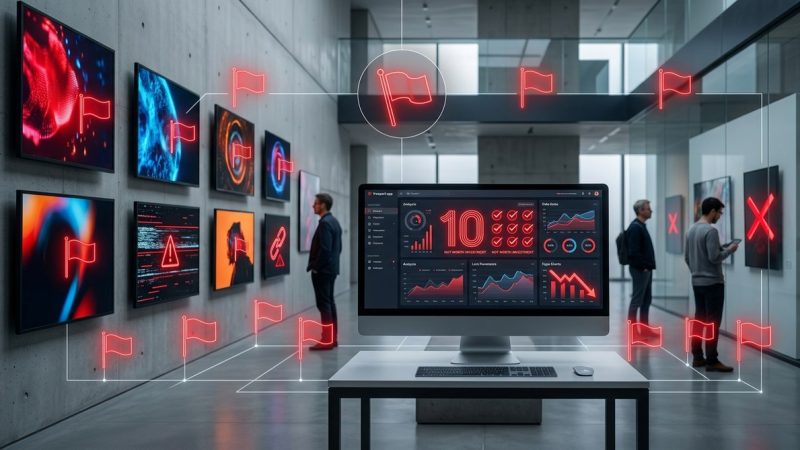
Certain warning signs should stop you from purchasing immediately. If the seller can’t or won’t provide the contract address, walk away. Legitimate sellers understand that transparency builds trust.
Mismatched creation dates are another major red flag. An artist who only joined Twitter in 2025 shouldn’t have NFTs minted in 2023. Check the artist’s earliest verifiable online presence against the token’s mint date.
Be suspicious of prices far below market value. If similar pieces from an artist sell for 5 ETH and someone offers one for 0.5 ETH, it’s likely counterfeit. Scammers price low to move fakes before buyers verify them. For more guidance on spotting issues, review these red flags every digital collector should watch for before buying.
Multiple listings of supposedly unique pieces indicate problems. If you find three different wallets selling “1 of 1” editions of the same artwork, at least two are fakes.
Tools and platforms for provenance research
Several services help collectors verify NFT authenticity. OpenSea shows verification badges for known artists and collections. These badges aren’t perfect, but they’re a useful starting point.
Etherscan and other block explorers let you trace any token’s complete history. You can see every transaction, every owner, and the original minting event. Learning to read these tools is like learning to read a car’s title history.
Some platforms specialize in authentication. Services analyze contract code, compare metadata, and flag suspicious patterns. They’re particularly useful for high-value purchases where professional verification justifies the cost.
Artist databases and registries are emerging to catalog verified creator wallets. These centralized resources help, but remember that decentralization means you shouldn’t rely on any single authority. Cross-reference multiple sources.
Metadata and storage verification
The image you see on a marketplace might not be permanently stored. Many early NFTs pointed to centralized servers that could go offline. Proper NFT art provenance includes verifying how the actual artwork is stored.
Check the token’s metadata to find the image URL. If it starts with “https://”, the file lives on a traditional web server. That server could shut down, taking the image with it. Better NFTs use IPFS addresses starting with “ipfs://” or Arweave addresses.
Decentralized storage means the file exists across multiple nodes, not on a single server. Even if the original creator disappears, the artwork persists. This permanence is part of what you’re paying for. Understanding what happens to your blockchain art when the platform shuts down highlights why storage matters.
Some NFTs store metadata on-chain, meaning all information lives directly in the blockchain. This is the most secure option but costs more in gas fees. Generative art projects often use this method because the code that creates the image can be stored as part of the token.
Verifying artist identity across platforms
Artists maintain presence on multiple platforms. Their official website, Twitter, Instagram, and Discord should all link to the same wallet address. Scammers create fake accounts that look similar but use different wallets.
Check the artist’s verification status on each platform. A blue checkmark on Twitter doesn’t guarantee the wallet address in their bio is correct if their account was recently hacked. Look for consistency across time.
Many artists sign messages with their wallet to prove ownership. They might post a signed message on Twitter that says “This is my official wallet: 0x123…” You can verify these signatures using blockchain tools. A signature proves the wallet holder controls the private key.
Join official Discord servers or Telegram groups where artists announce drops. Scammers create fake communities to distribute false contract addresses. The real community will have history, active moderators, and verifiable links to the artist’s other platforms.
Smart contract analysis for collectors
The smart contract code determines what your NFT actually does. Most collectors don’t read Solidity, but you can still verify basic contract properties without coding knowledge.
Check if the contract is verified on Etherscan. Verified contracts show their source code publicly. Unverified contracts hide their code, which is suspicious for legitimate art projects.
Look at the contract’s creation date and creator address. The wallet that deployed the contract should match the artist’s known address. If a collection claims to be from a famous artist but the contract was deployed by an unknown wallet, something’s wrong.
Review the contract’s functions. Legitimate art contracts typically include standard ERC-721 or ERC-1155 functions for minting and transferring. Unusual functions might indicate hidden mechanics like the ability to change the token’s metadata after purchase.
Some contracts include royalty mechanisms that pay the artist on secondary sales. Checking if these are implemented and functioning shows the artist’s long-term commitment to the work. You can learn more about how smart contracts are revolutionizing royalties for digital collectors and creators.
Building a verified collection strategy
Experienced collectors develop systems to streamline verification. Create a checklist that you follow for every purchase. This reduces the chance of missing a step when you’re excited about a piece.
Maintain a database of verified artist wallets and contract addresses. When you verify an artist once, you can reference that verification for future purchases from the same creator. Update this database as artists create new collections.
“Provenance isn’t just about proving authenticity. It’s about understanding the complete story of how an artwork came to exist and who valued it enough to own it. That story is part of what you’re collecting.”
Network with other collectors who share your interests. Community knowledge helps identify fakes faster than individual research. When someone spots a counterfeit collection, they often warn others through social media or collector forums.
Consider focusing on building a valuable digital art collection from scratch by establishing relationships with artists directly. Buying from primary sales eliminates many provenance concerns because you’re getting the work straight from the creator.
Platform-specific verification methods
Different marketplaces have different verification systems. OpenSea uses blue checkmarks for verified collections but has been fooled before. Foundation requires artists to be invited by existing members, creating a curated network.
Art Blocks has rigorous standards for generative artists and hosts the smart contracts themselves. Pieces from Art Blocks have strong provenance because the platform’s reputation depends on authenticity.
SuperRare operates as a curated platform where artists must apply and be accepted. This gatekeeping reduces counterfeits but doesn’t eliminate them entirely. Always verify even on curated platforms.
Some artists sell exclusively through their own websites using custom smart contracts. These direct sales offer the strongest provenance if you verify the website is legitimate. Check the domain registration date and SSL certificate.
Long-term provenance preservation
Your responsibility for provenance doesn’t end at purchase. Proper storage and documentation ensure future buyers can verify your piece’s authenticity.
Keep records of your purchase, including transaction hashes, the marketplace listing, and any communication with the artist. Screenshots of verification steps you took provide evidence of due diligence.
Store your NFTs in secure wallets with clear ownership history. Transferring between multiple wallets you control can confuse future buyers about provenance. Minimize unnecessary transfers.
If you’re serious about collecting, consider storage and security best practices for high-value digital collections to protect both the tokens and their provenance records.
Document any exhibitions, publications, or notable events involving your piece. This cultural provenance adds value beyond the blockchain record. A piece featured in a major digital art show has richer history than one that sat in a wallet.
Authentication challenges with emerging artists
Established artists have known wallets and verification systems. Emerging creators present different challenges. They might not have verification badges, extensive transaction history, or widespread community recognition.
For new artists, focus on consistency. Their wallet should be linked from multiple social profiles created over time. A Twitter account started last week isn’t reliable verification, but one with years of posts showing artistic development is stronger.
Look for early collectors and community engagement. Artists building legitimate careers interact with collectors, share works in progress, and participate in the broader digital art community. Scammers rarely invest in this relationship building.
Consider the artist’s broader portfolio. Do they have work on multiple platforms? Have they participated in group shows or collaborations? Real artists leave traces across the ecosystem. When researching new talent, these guides on how to research emerging digital artists worth collecting can help.
Cross-chain provenance tracking
Art exists on multiple blockchains now. A piece might be minted on Ethereum, bridged to Polygon, and displayed on Solana. Each chain has its own explorers and verification methods.
Cross-chain bridges create new provenance challenges. The token’s history on the original chain is clear, but bridge transactions can obscure ownership. Verify that bridges used are legitimate and that the token wasn’t duplicated in the process.
Some artists mint the same work on multiple chains. This isn’t necessarily fraud if they’re clear about it, but collectors should know if they’re buying an edition rather than the only version. Check the artist’s announcements about multi-chain releases.
Different blockchains have different storage norms. Solana NFTs often store more data on-chain than Ethereum NFTs due to lower costs. Understanding these technical differences helps you evaluate provenance quality across ecosystems. Comparing Ethereum, Solana, and Tezos for collectors reveals these nuances.
When provenance disputes arise
Sometimes legitimate questions emerge about an NFT’s authenticity even after purchase. The artist might claim their wallet was compromised during minting. A platform might discover they verified a fake collection.
Document everything if you suspect provenance problems. Blockchain records are permanent, but marketplace listings and social media posts can be deleted. Screenshot evidence while it exists.
Contact the artist directly through verified channels. Many provenance issues result from miscommunication or technical errors rather than fraud. Artists want to protect their reputation and often help resolve disputes.
Major marketplaces have dispute resolution processes. If you bought through OpenSea or Foundation and discover provenance problems, report them immediately. Platforms can delist fake collections and sometimes facilitate refunds.
Legal recourse exists but is complicated. Blockchain’s pseudonymous nature makes pursuing scammers difficult. Prevention through thorough verification is far better than trying to recover from fraud.
Institutional standards for provenance
Museums building blockchain art collections set high standards for provenance verification. Their processes offer lessons for individual collectors.
Institutions typically require:
* Direct artist confirmation of wallet addresses
* Complete chain-of-custody documentation
* Technical analysis of smart contracts
* Legal verification of intellectual property rights
* Permanent storage solutions for artwork files
These standards might seem excessive for a personal collection, but they represent best practices. The more valuable your collection becomes, the more important rigorous verification grows.
Institutional collectors also consider cultural provenance. Who owned the piece before? Was it part of an important collection or exhibition? This social history complements the blockchain record.
Making verification part of your collecting practice
Provenance research shouldn’t feel like a chore. It’s part of understanding and appreciating what you collect. The history of who created a piece, when, and why adds depth to ownership.
Build verification into your buying process from the start. Before you even consider price, confirm authenticity. This discipline prevents impulse purchases of questionable pieces.
Share what you learn with other collectors. The community benefits when everyone raises their verification standards. Scammers succeed when buyers skip due diligence.
Remember that perfect provenance verification isn’t always possible, especially for older NFTs or experimental projects. Use your judgment about acceptable risk levels. A piece from a verified artist with minor metadata storage concerns might be worth buying. A piece with multiple red flags isn’t.
Your provenance checklist protects more than your investment
Every time you verify NFT art provenance before purchasing, you do more than protect your money. You support legitimate artists by refusing to fund scammers. You raise standards across the market by demanding transparency. You preserve the integrity of digital art as a medium.
The blockchain gives us unprecedented tools for authentication. Use them. Check wallet addresses. Review transaction histories. Verify metadata storage. Confirm artist identity across platforms. These steps take minutes but prevent disasters.
Start with your next purchase. Open the block explorer. Trace the minting transaction. Confirm the contract address. Make verification automatic, not optional. Your collection’s value depends on it.