Generative Art on the Blockchain: Where Code Meets Canvas
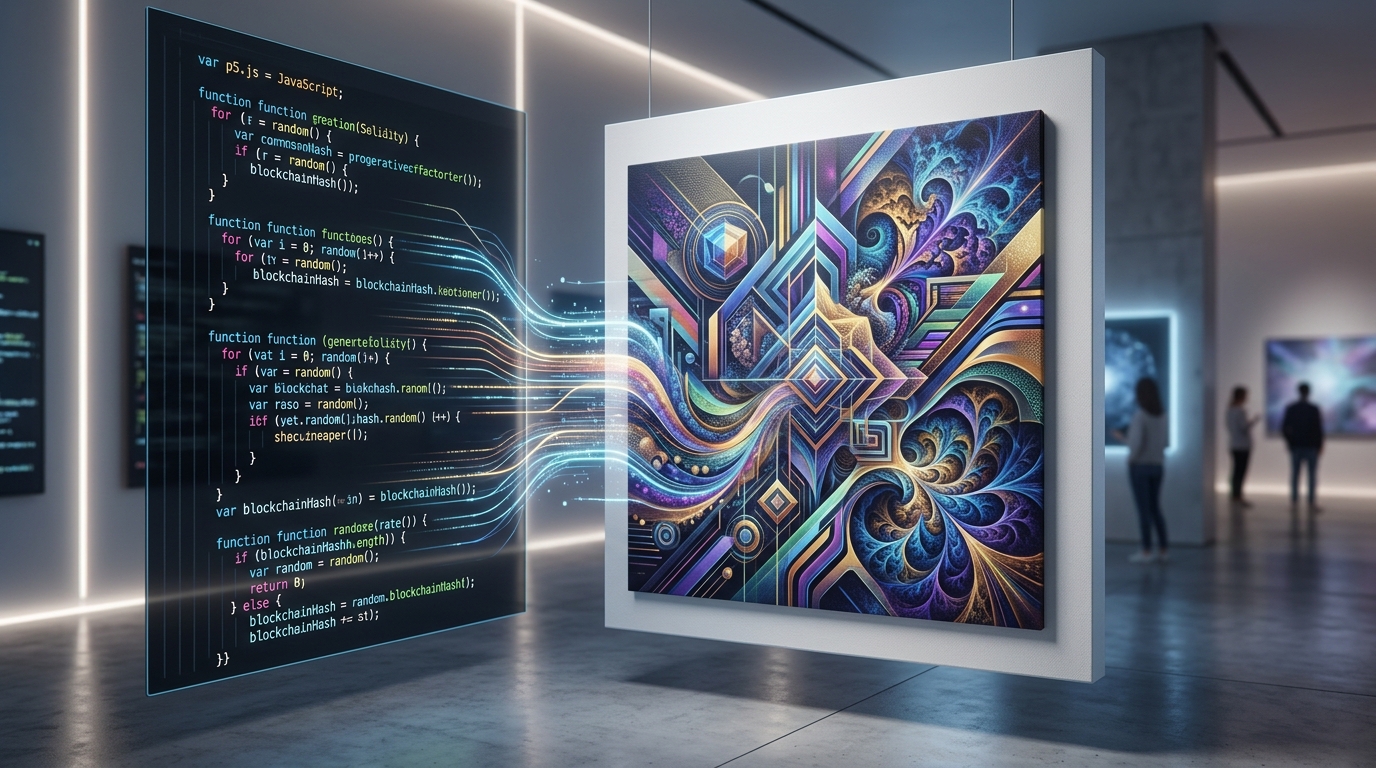
Algorithmic art has found its perfect home on blockchain networks. Artists write code that generates unique visual outputs, then mint these pieces as NFTs with permanent ownership records. This fusion of programming and creative expression has created a new category of digital art that’s verifiable, tradable, and increasingly valuable.
Generative art on blockchain combines algorithmic code with distributed ledgers to create verifiable digital artworks. Artists use programming languages to define rules that generate unique visual outputs, then mint these pieces as NFTs. Smart contracts ensure authenticity, enable royalties, and create transparent ownership records that traditional digital art cannot match.
What makes generative art different from traditional digital art
Traditional digital artists use tools like Photoshop or Procreate to manually create each piece. Generative artists write algorithms that produce artwork autonomously or semi-autonomously.
The code becomes the creative medium. An artist might define parameters for color palettes, geometric shapes, or movement patterns. The algorithm then generates outputs based on these rules, often producing hundreds or thousands of variations from a single codebase.
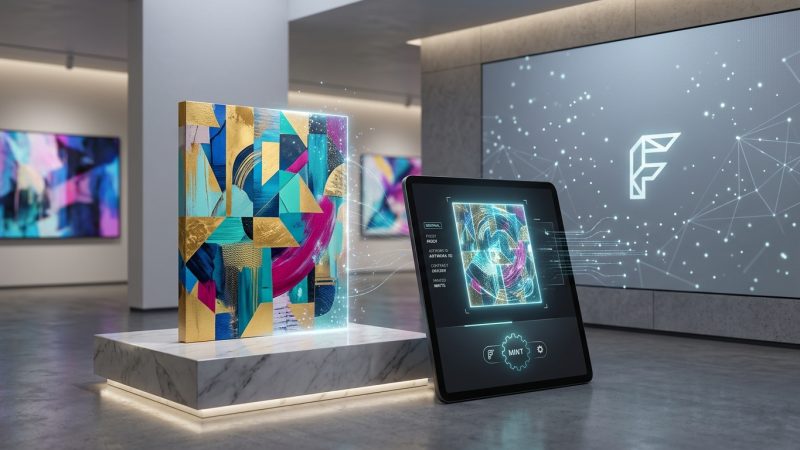
When you mint generative art on blockchain, you’re not just saving an image file. You’re recording the algorithm’s output as a unique token with provable scarcity. Each piece gets a permanent record of creation, ownership history, and authenticity verification.
This changes the economics entirely. Physical art requires storage, insurance, and careful handling. Digital files can be copied infinitely. Blockchain generative art sits between these extremes, offering digital convenience with verifiable uniqueness.
How artists create algorithmic art for blockchain platforms
Creating generative art requires both artistic vision and technical skill. Here’s the typical workflow:
-
Choose your programming environment. Popular options include Processing, p5.js, and JavaScript libraries designed for visual output. Some platforms like Art Blocks provide their own frameworks.
-
Define your creative parameters. Decide what variables will change between outputs. This might include color schemes, shape densities, rotation angles, or randomness seeds.
-
Write the generative algorithm. Code the rules that transform parameters into visual output. Test extensively to ensure the range of possible outputs aligns with your artistic vision.
-
Prepare for blockchain minting. Most platforms require specific technical specifications. You’ll need to package your code, set edition sizes, and configure metadata.
-
Deploy to a blockchain platform. Choose between curated platforms like Art Blocks, open marketplaces like OpenSea, or custom smart contract deployment.
The technical barrier is real but surmountable. Many artists start with tutorials and gradually build coding skills. Some collaborate with developers, bringing artistic direction while a technical partner handles implementation.
How smart contracts are revolutionizing art ownership and provenance plays a central role here. The contract doesn’t just record ownership. It can execute the generative code on-chain, ensuring the artwork lives permanently on the blockchain itself.
Platform options and their technical requirements
Different platforms serve different needs. Your choice affects everything from technical requirements to potential audience.
| Platform Type | Code Requirements | Curation Level | Best For |
|---|---|---|---|
| Art Blocks | JavaScript, specific framework | Highly curated | Established generative artists |
| fx(hash) | p5.js or vanilla JS | Open submission | Experimental work |
| OpenSea | Pre-rendered outputs | No curation | Complete creative control |
| Foundation | Various formats | Invite-based | Collector relationships |
Art Blocks remains the gold standard for on-chain generative art. Your code runs when collectors mint, generating unique outputs in real-time. This requires strict adherence to their technical specifications and passing their curation process.
Platforms like fx(hash) offer more accessibility. Artists can publish without approval, though this means more competition for attention. The technical requirements are similar but slightly more flexible.
Some artists prefer the complete guide to minting your first fine art NFT approach, pre-generating outputs and minting them as standard NFTs. This sacrifices the on-chain execution aspect but removes technical barriers.
Understanding on-chain versus off-chain storage
This distinction matters more than most newcomers realize.
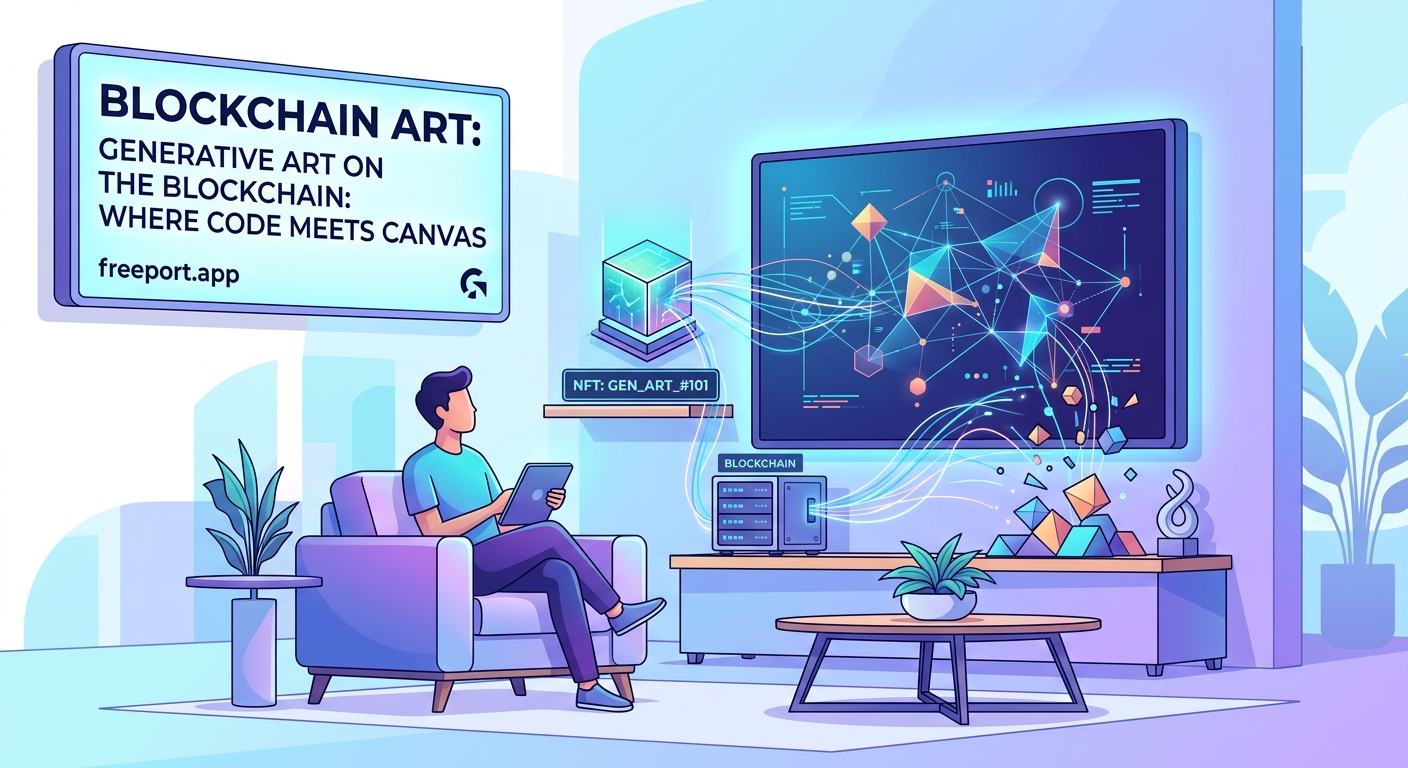
On-chain storage means your generative code lives directly on the blockchain. When someone views the artwork, the blockchain executes the code and renders the output. This ensures permanent availability. Even if every website disappears, the art can be reconstructed from blockchain data.
Off-chain storage keeps code and assets on external servers or decentralized storage like IPFS. The blockchain only stores a reference link. This is cheaper and allows larger file sizes, but introduces dependency on external infrastructure.
What happens to your blockchain art when the platform shuts down? becomes a real concern with off-chain approaches. If the hosting service fails and no one maintains backups, the artwork could become inaccessible.
True generative art on blockchain ideally stores everything on-chain. The code, the random seed, and the metadata all live in the smart contract. This maximizes permanence but requires compact, efficient code due to blockchain storage costs.
Key features collectors look for in generative projects
Not all algorithmic art succeeds in the marketplace. Collectors evaluate several factors:
- Algorithmic complexity: Simple randomization rarely impresses. Sophisticated systems that create genuinely varied outputs command attention.
- Aesthetic coherence: The range of possible outputs should feel unified by a clear artistic vision, not chaotic.
- Rarity distribution: Smart parameter design creates natural rarity tiers without feeling forced or gimmicky.
- Technical innovation: Novel approaches to rendering, interaction, or on-chain execution generate excitement.
- Artist reputation: Track record matters. Collectors research previous work and community engagement.
The most successful projects balance accessibility with depth. Casual viewers should immediately appreciate the visual appeal. Dedicated collectors should discover layers of complexity upon closer examination.
7 blockchain artists redefining contemporary digital art in 2026 demonstrates how established artists approach these challenges. They develop signature styles while continuously pushing technical boundaries.
“The best generative art feels inevitable yet surprising. The algorithm should produce outputs that look intentional, not random, while still surprising the artist who wrote the code.” — Tyler Hobbs, generative artist
Common technical challenges and how to solve them
Artists transitioning to blockchain face predictable obstacles.
Gas costs can make minting prohibitively expensive. Ethereum mainnet fees fluctuate wildly. Solutions include deploying on Layer 2 networks like Arbitrum or Optimism, choosing platforms that batch transactions, or timing deployment during low-traffic periods.
Code optimization becomes critical. Blockchain execution has strict limits. Inefficient algorithms might exceed gas limits or storage constraints. Profile your code ruthlessly. Simplify calculations. Use lookup tables instead of complex math where possible.
Randomness requires special handling. Standard programming random functions don’t work on blockchain. You need deterministic randomness from block hashes or chainlink VRF. This ensures outputs remain consistent when re-rendered.
Browser compatibility varies. Your code might render perfectly in Chrome but fail in other browsers. Test across platforms. Avoid cutting-edge JavaScript features without polyfills.
Metadata standards matter. Follow OpenSea and platform-specific metadata requirements exactly. Incorrect formatting can break marketplace displays or filtering.
Many artists underestimate the testing phase. Generate hundreds of outputs. Check for edge cases. Ensure no combination produces broken or offensive results. Once deployed, you cannot easily fix bugs.
Building a collector base for your generative work
Technical excellence alone doesn’t guarantee success. You need audience development.
Start by sharing your creative process. Post work-in-progress renders. Explain your algorithmic approach in accessible terms. Collectors appreciate understanding the “why” behind creative decisions.
Engage with the generative art community. Comment thoughtfully on other artists’ work. Participate in Twitter Spaces and Discord discussions. Authentic relationships matter more than promotional posts.
Consider releasing smaller collections first. A successful 100-piece drop builds credibility for larger projects. It also lets you refine your process without enormous pressure.
How to build a valuable digital art collection from scratch in 2026 explains collector psychology. Apply these insights to your release strategy. Understand what motivates purchases beyond speculation.
Transparency builds trust. Share your contract address. Explain your royalty structure. Be clear about edition sizes and any future plans. Collectors remember artists who communicate honestly.
Smart contract features that enhance generative art
Modern smart contracts do more than record ownership. They can enhance the artistic experience.
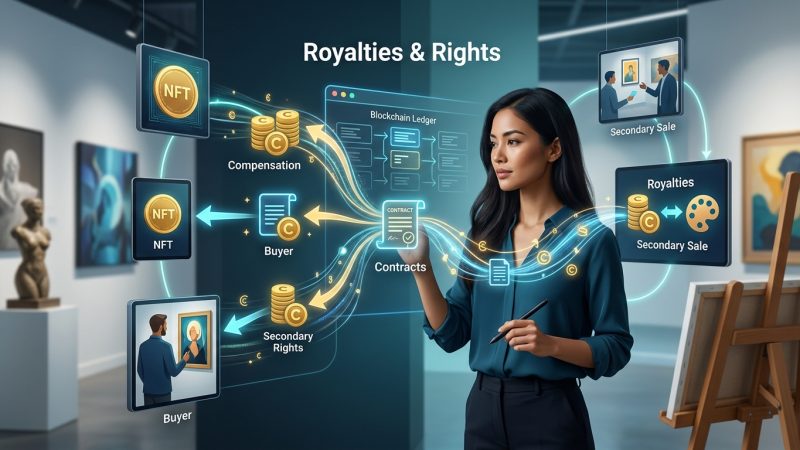
Programmable royalties ensure artists earn from secondary sales. Set your percentage carefully. Industry standard hovers around 5-10%. Higher percentages might discourage trading.
Dynamic metadata allows artwork to evolve over time. Your contract can change visual outputs based on external data, ownership duration, or blockchain events. This creates living artworks that develop alongside their collectors.
Interaction mechanisms let owners influence their pieces. Some projects allow holders to “reroll” outputs, adjust parameters, or combine pieces. This transforms passive ownership into active participation.
Provenance tracking becomes automatic. Every transfer, every price change, every interaction gets recorded permanently. This creates rich histories that increase cultural value over time.
How smart contracts are revolutionizing art royalties in web3 covers the financial implications. These mechanisms fundamentally change artist economics compared to traditional markets.
Authentication and verification for collectors
Collectors need confidence they’re buying authentic work. Blockchain provides tools traditional markets lack.
Check the contract address against official sources. Artists should prominently display their verified contract addresses on their websites and social media. Never trust addresses shared only in Discord or Telegram.
Verify the creator’s identity through multiple channels. Look for verified accounts on Twitter, established website domains, and consistent cross-platform presence. Impersonators often have subtle username variations.
How to authenticate digital art before adding it to your collection provides detailed verification steps. This matters especially for high-value acquisitions.
Examine the smart contract code if you have technical skills. Look for standard patterns and red flags like hidden minting functions or unusual ownership controls. Many collectors use services that analyze contract security.
Review the blockchain history. When was the contract deployed? Does the timeline match the artist’s announcements? Scammers often deploy contracts hastily after announcing legitimate projects.
Long-term value considerations and market dynamics
Generative art markets follow different patterns than traditional NFT speculation.
Quality projects tend to appreciate slowly and steadily. Unlike profile picture projects that pump and dump, generative art attracts collectors who value artistic merit. This creates more stable floor prices but potentially slower initial gains.
Why blue-chip NFT collections maintain value during market downturns applies here. Established generative artists maintain collector interest even when broader NFT markets struggle.
Rarity matters but differently than in other NFT categories. The most valuable pieces often combine aesthetic appeal with unusual parameter combinations. Pure statistical rarity without visual interest rarely commands premiums.
Artist development affects value trajectories. Collectors watch for consistent output, technical growth, and community engagement. Artists who disappear after one project rarely see sustained appreciation.
Institutional interest is growing. Why museums are building blockchain art collections signals broader cultural acceptance. This legitimizes generative art beyond crypto-native circles.
Technical resources and learning paths
Breaking into generative art requires specific skills. Here’s where to build them.
For visual artists learning code:
– Start with Processing or p5.js. These environments are designed for artists.
– Work through Daniel Shiffman’s Coding Train tutorials. They’re accessible and comprehensive.
– Join the Processing Foundation forums. The community welcomes beginners.
For developers learning artistic direction:
– Study color theory and composition fundamentals. Code skills mean nothing without aesthetic sense.
– Analyze successful generative projects. Reverse-engineer their approaches.
– Experiment constantly. Generate thousands of outputs. Develop your eye for what works.
For blockchain integration:
– Learn Solidity basics even if you’re not writing contracts. Understanding smart contract capabilities informs artistic possibilities.
– Study existing generative art contracts. Art Blocks and fx(hash) contracts are open source.
– Test on testnets extensively before mainnet deployment. Mistakes are expensive on production blockchains.
How AI generative models are reshaping digital art authentication represents emerging territory. The intersection of AI and algorithmic art is evolving rapidly.
Where generative art and blockchain technology are heading
The field continues developing in several directions.
Cross-chain compatibility is improving. Projects increasingly deploy on multiple blockchains or use bridging technology. This expands potential audiences and reduces dependence on single networks.
Interactive and responsive art pushes boundaries. Pieces that respond to wallet activity, market conditions, or real-world data create new artistic possibilities.
Collaborative generation lets multiple artists or collectors contribute to single pieces. Smart contracts coordinate these interactions, creating artworks no individual could produce alone.
Physical integration connects blockchain art to tangible objects. Some projects use NFT ownership to control physical displays, sculptures, or installations.
Environmental concerns are being addressed. Proof-of-stake blockchains dramatically reduced energy consumption. Artists increasingly consider environmental impact when choosing platforms.
The technology enables art forms impossible in traditional media. Code-based creation, verifiable scarcity, programmable behavior, and transparent provenance combine in ways that expand what art can be.
Making your first steps as a generative artist
You don’t need to master everything before starting. Begin with small experiments.
Write simple algorithms that generate interesting patterns. Don’t worry about blockchain integration initially. Focus on developing your creative voice through code.
Share works-in-progress on social media. Tag them appropriately. Engage with feedback. The generative art community is remarkably supportive of newcomers showing genuine effort.
Study successful projects not to copy but to understand principles. What makes certain outputs compelling? How do artists balance randomness with control?
When you’re ready to mint, start small. A limited edition on an accessible platform teaches you the process without enormous risk. Learn from that experience before attempting larger releases.
Connect with other artists at your skill level. Share resources, troubleshoot problems together, and celebrate each other’s progress. These relationships often prove more valuable than any tutorial.
The intersection of code and canvas creates possibilities that expand with every technological advancement. Your unique perspective as an artist-programmer has value. The blockchain provides infrastructure to share that value with collectors worldwide.