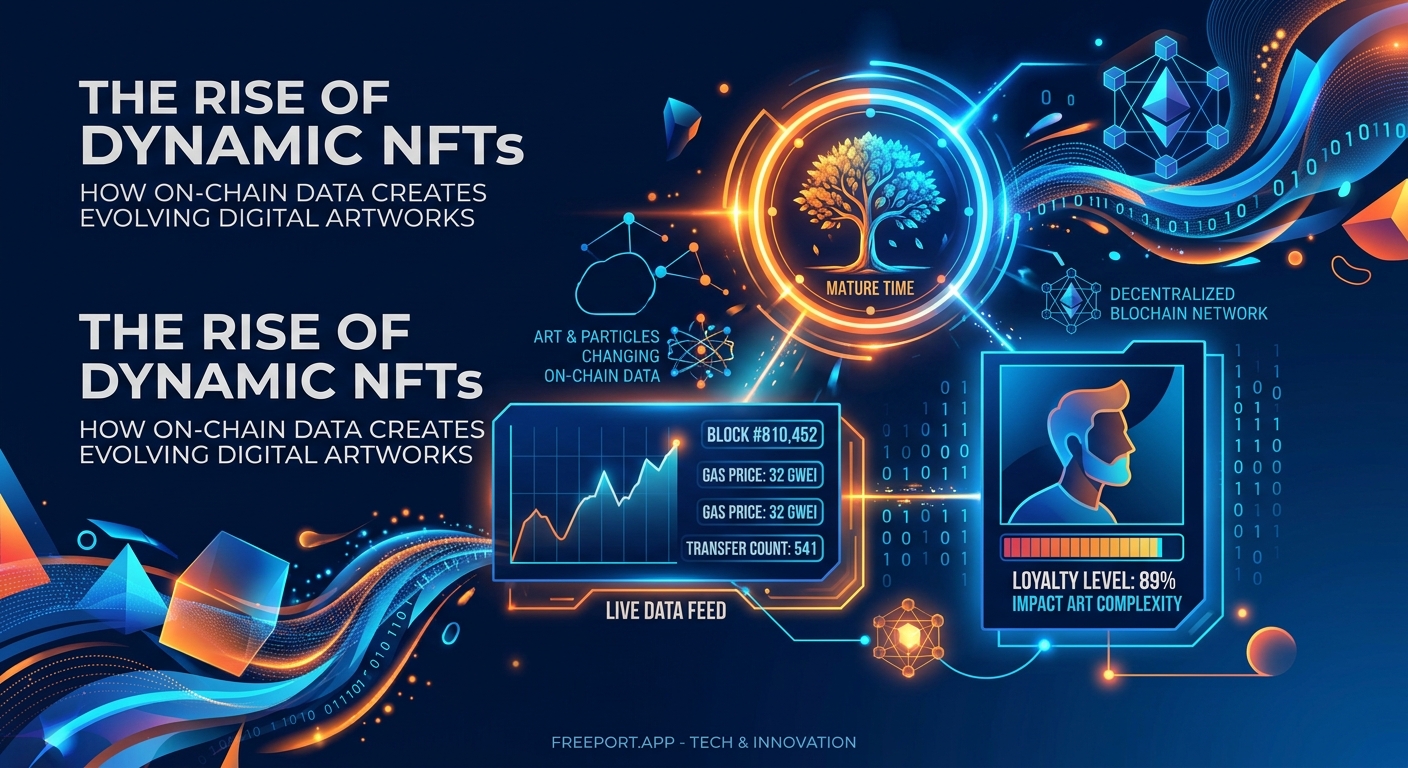
The Rise of Dynamic NFTs: How On-Chain Data Creates Evolving Digital Artworks
Most NFTs sit frozen in time. A static image. A fixed attribute. Nothing changes after you mint it.
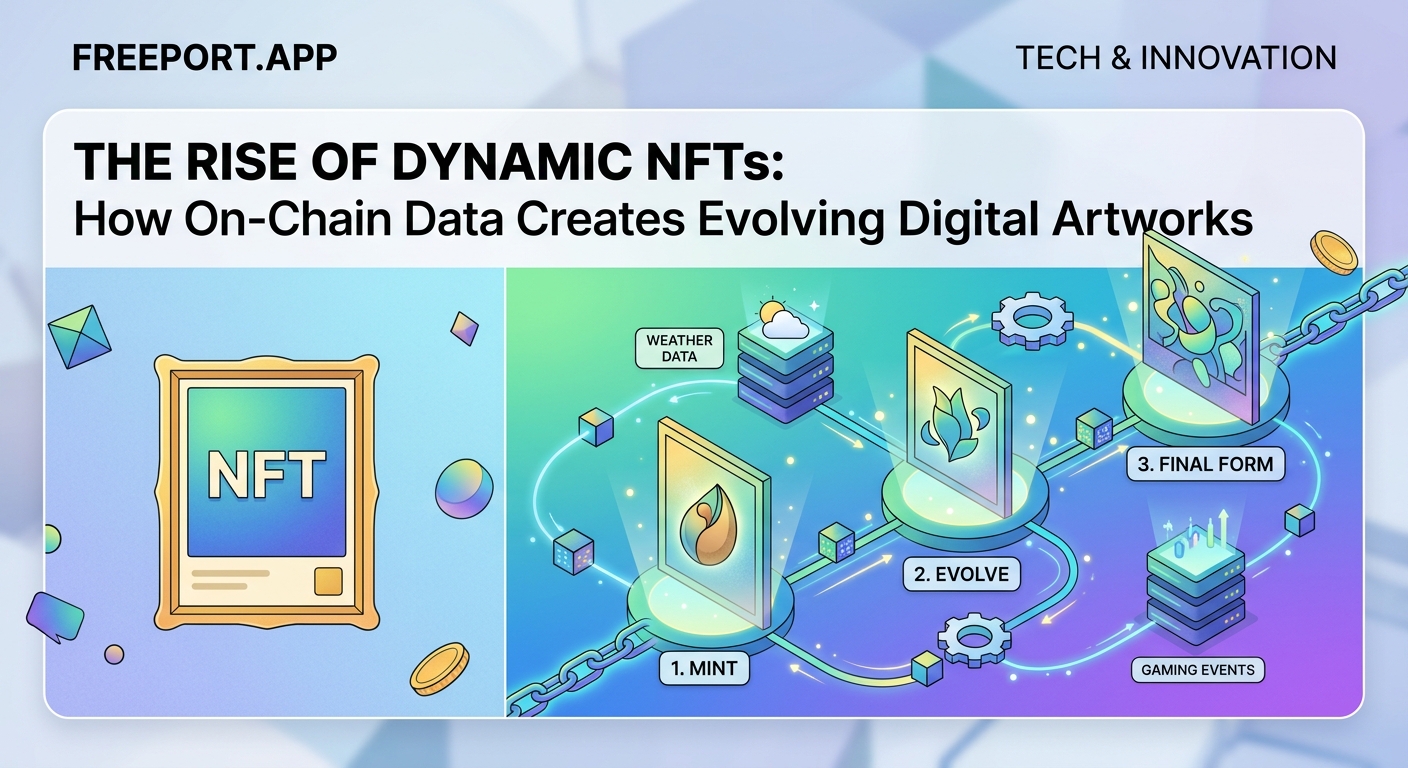
Dynamic NFTs break that mold completely. They evolve, adapt, and respond to real-world data or on-chain events. Your token might change appearance based on the weather, your wallet activity, or even the current price of Ethereum. The artwork you own today could look completely different tomorrow.
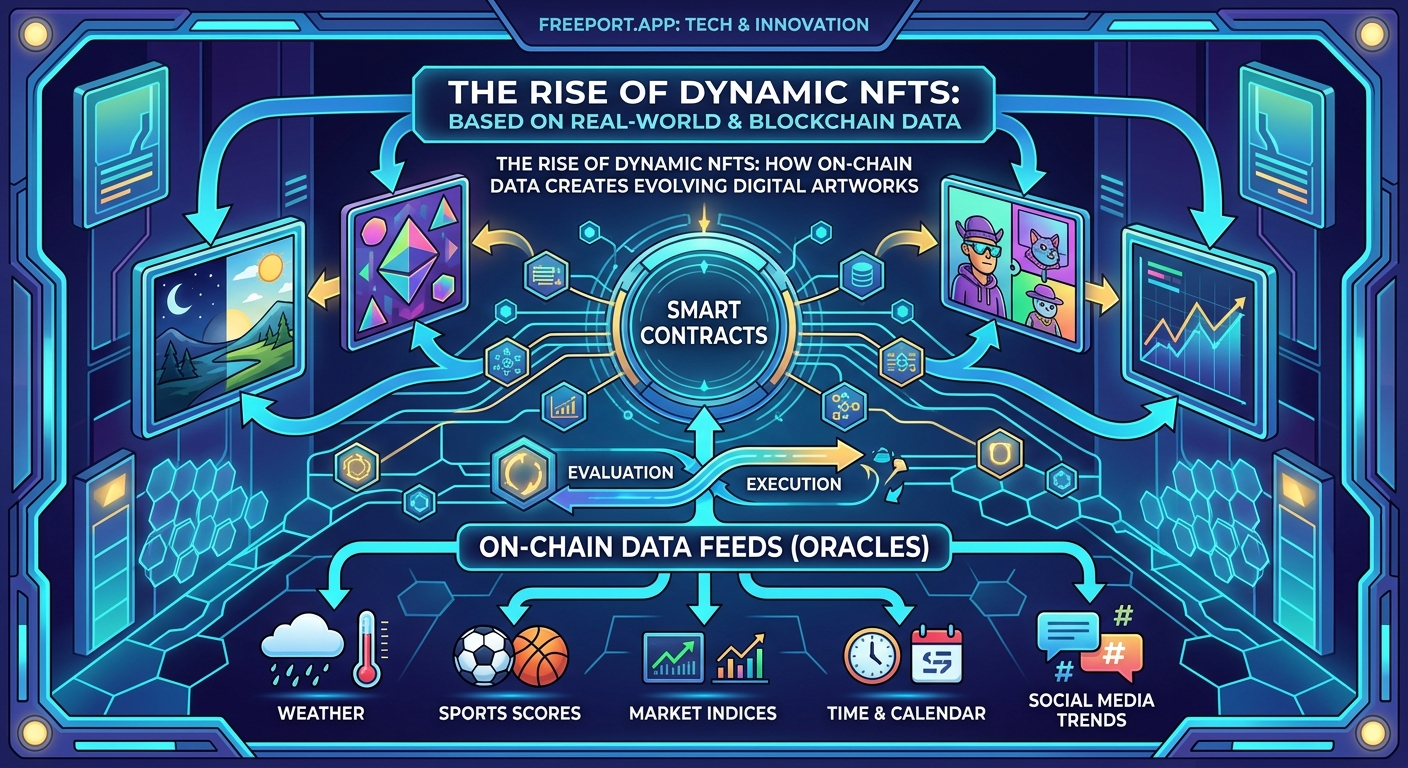
Dynamic NFTs use smart contracts and oracles to update metadata or visual properties based on external triggers like time, weather, user behavior, or blockchain events. Unlike static tokens that never change, dynamic NFTs create living artworks and utility tokens that respond to real-world conditions, opening new possibilities for gaming items, collectibles, and interactive art experiences that evolve alongside their owners.
Understanding the core mechanics of dynamic NFTs
A traditional NFT points to a single metadata file. That file contains information about the image, traits, and properties. Once minted, it stays exactly the same forever.
Dynamic NFTs work differently. The smart contract includes logic that updates the token’s metadata based on specific conditions. When those conditions are met, the token automatically changes.
Think of it like a weather app for your NFT. The contract checks an external data source (called an oracle), receives updated information, and modifies the token accordingly. The change happens on-chain, permanently recorded on the blockchain.
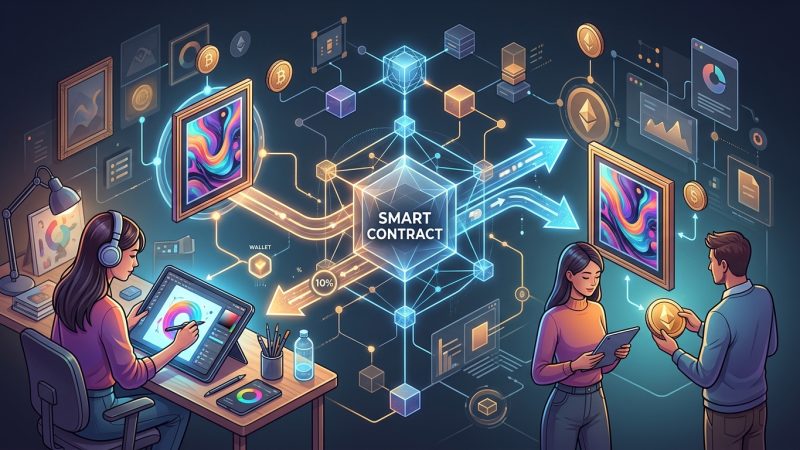
How smart contracts are revolutionizing art ownership and provenance explains the underlying technology that makes these updates possible without compromising security or ownership rights.
Three types of triggers that make NFTs dynamic
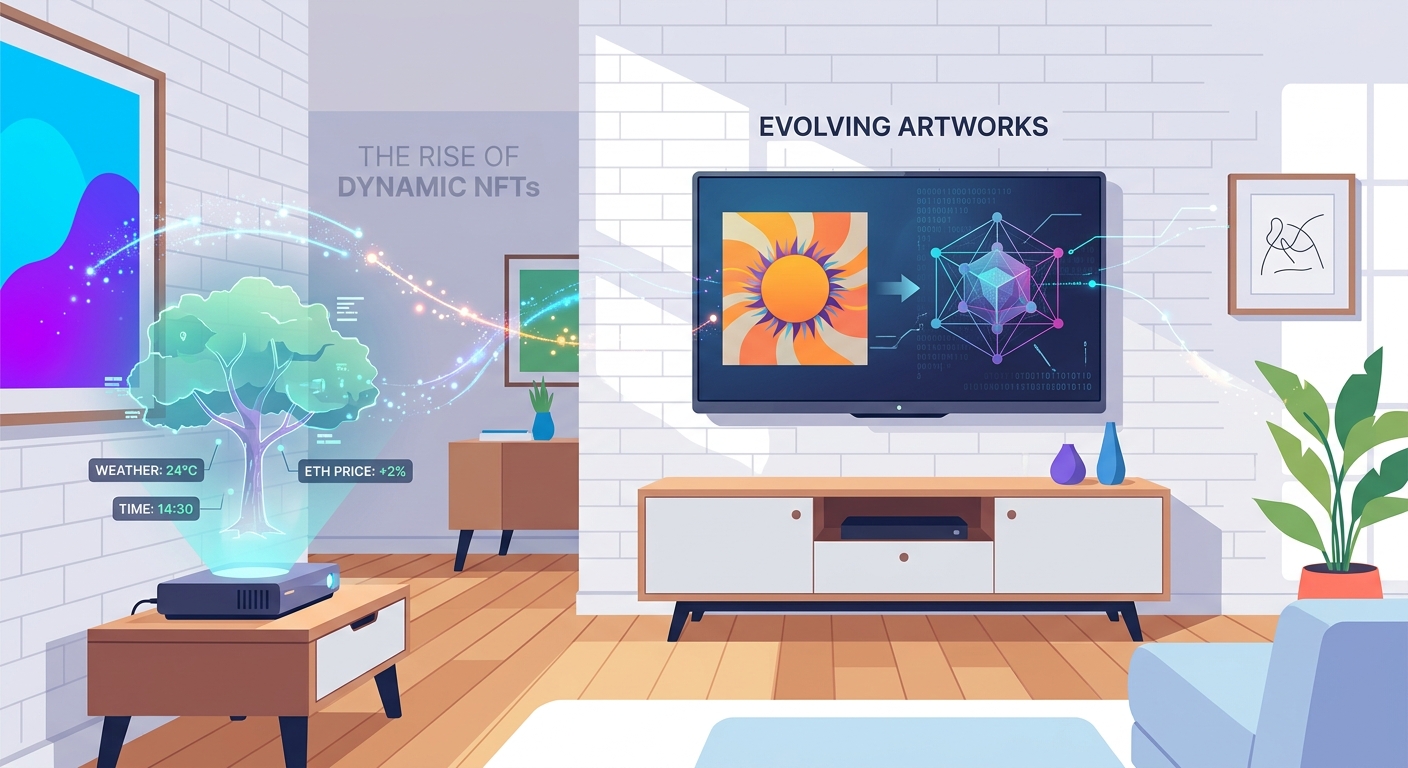
Dynamic NFTs respond to different kinds of data inputs. Understanding these trigger types helps you recognize how various projects implement evolving tokens.
Time-based changes
The simplest dynamic NFTs change based on time. A token might display different artwork during morning, afternoon, and evening. Or it could evolve through seasons, showing spring blossoms in March and autumn leaves in October.
Some projects use block numbers instead of actual timestamps. Every X blocks, the NFT updates to a new state. This approach keeps everything on-chain without relying on external time servers.
External data feeds
More sophisticated dynamic NFTs pull information from outside the blockchain. Weather conditions, stock prices, sports scores, or election results can all trigger visual or metadata changes.
These implementations require oracles like Chainlink to feed verified real-world data onto the blockchain. The smart contract reads this data and executes the programmed transformation.
User interaction and ownership history
Your actions can shape how your NFT evolves. Holding a token for six months might unlock new traits. Transferring it between wallets could reset certain properties. Staking it in a protocol might gradually enhance its rarity.
Gaming NFTs often use this approach. Your character’s equipment improves as you complete quests. Your virtual pet grows stronger the longer you care for it.
How dynamic NFTs differ from static tokens
| Feature | Static NFTs | Dynamic NFTs |
|---|---|---|
| Metadata | Fixed at mint | Updates based on triggers |
| Visual appearance | Never changes | Evolves over time |
| Smart contract complexity | Simple storage | Includes update logic |
| Oracle dependency | None | Often required |
| Gas costs | One-time mint | Periodic update transactions |
| Rarity | Predetermined | Can shift dynamically |
The technical implementation requires more sophisticated contract design. Developers must account for update mechanisms, data validation, and fail-safes if external feeds go offline.
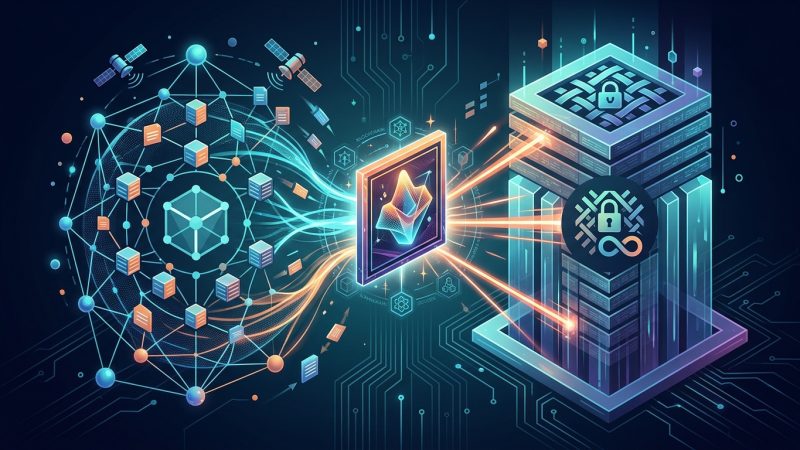
Storage also differs significantly. Static NFTs typically store image files on IPFS or Arweave. Dynamic NFTs might store multiple image layers, generative code, or just parameters that render differently based on current conditions.
Real-world applications transforming digital collecting
Dynamic NFTs solve problems that static tokens cannot address. They bring utility and engagement that goes beyond simple ownership.
Gaming and metaverse items represent the most obvious use case. Your sword shouldn’t look identical whether you’re level 1 or level 50. Dynamic NFTs let in-game items reflect actual usage and achievement.
Sports and trading cards benefit from live stat tracking. Imagine owning a basketball player NFT that updates with their current season stats, recent game highlights, or playoff performance. The token becomes a living record of their career.
Loyalty and membership programs use dynamic NFTs to show tenure and benefits. Your membership token might gain new visual elements after one year, five years, or ten years of continuous holding. Airlines and hotel chains are testing these for frequent customer rewards.
Environmental and charity projects track real-world impact. A reforestation NFT could show how many trees have actually been planted. A clean water initiative token might display the number of wells built. The visual evolves as the project progresses.
Why museums are building blockchain art collections highlights how institutions are beginning to experiment with these evolving formats for exhibitions and permanent collections.
Setting up a dynamic NFT from scratch
Creating your first dynamic NFT requires planning the trigger mechanism before writing any code.
-
Define your update conditions clearly. Will your NFT change based on time, external data, or user actions? Write out exactly what triggers each transformation and what the new state should look like.
-
Choose your oracle solution if needed. Chainlink dominates the oracle space for pulling off-chain data. Set up your data feeds and test them thoroughly on testnet before deploying to mainnet.
-
Design your metadata structure. Plan how your JSON metadata will change. Will you swap entire image URLs, or will you update individual trait values that affect a generative rendering?
-
Write and test your smart contract. Build in the update functions, access controls (who can trigger updates?), and safety mechanisms. Deploy to testnet and run multiple update cycles to catch bugs.
-
Create your visual assets or generative code. If your NFT changes appearance, prepare all the necessary image files, layers, or rendering algorithms. Store them on decentralized storage if possible.
-
Deploy and verify your contract. Once testing is complete, deploy to mainnet. Verify your contract on Etherscan or the relevant block explorer so collectors can review the update logic.
The biggest mistake new creators make is overcomplicating the update mechanism. Start simple. A time-based change is easier to implement and debug than a multi-oracle system pulling live data from five different sources. Build complexity gradually as you learn what works.
The complete guide to minting your first fine art NFT covers the foundational minting process before you add dynamic features.
Common mistakes that break dynamic NFT projects
Even experienced developers run into issues when building evolving tokens. Avoiding these pitfalls saves time and protects your collectors.
Centralized update controls defeat the purpose of blockchain ownership. If only the project creator can trigger updates, collectors don’t truly own a decentralized asset. Build automatic triggers or community governance into your update mechanism.
Ignoring gas costs for updates creates unsustainable economics. If each update costs $50 in gas fees, your project won’t survive long-term. Consider Layer 2 solutions or batch updates to reduce costs.
Layer 2 solutions: why Ethereum artists are migrating to Polygon and Arbitrum explains how scaling solutions make frequent updates economically viable.
Failing to preserve history removes value from dynamic tokens. Collectors want to see how their NFT evolved over time. Store previous states or maintain an event log that shows the transformation timeline.
Oracle failures without fallbacks can freeze your entire collection. What happens if your weather data feed goes offline? Build in backup oracles or default states so tokens continue functioning even when external data becomes unavailable.
Poor documentation leaves collectors confused about when and why their tokens change. Create clear explanations of your update logic. Show examples of different states. Make the dynamic behavior a feature, not a mystery.
Technical considerations for developers
Building dynamic NFTs requires balancing on-chain logic with off-chain storage and rendering.
Metadata updates can happen two ways. You can change the tokenURI to point at a new metadata file, or you can host dynamic metadata that reads current blockchain state and returns different JSON based on conditions. The second approach keeps everything responsive without requiring contract transactions.
Event emissions help track changes over time. Emit detailed events whenever an NFT updates. This creates an auditable history and enables marketplaces to display transformation timelines.
Rendering options vary by complexity. Simple dynamic NFTs swap between pre-rendered images. Advanced projects use on-chain SVG generation or algorithmic rendering where the visual output is calculated when viewed, not stored as a fixed file.
Generative art on the blockchain: where code meets canvas covers how algorithmic rendering works for dynamic visual outputs.
Security audits become more critical with dynamic functionality. More code means more attack surface. Have your contracts professionally audited before mainnet deployment, especially if update logic involves value transfers or privilege escalation.
Collecting and valuing dynamic NFTs
Evaluating dynamic NFTs requires different criteria than static tokens. Rarity isn’t fixed at mint. Traits can change. Future states might be more or less desirable than current ones.
Understand the update schedule before buying. Does the NFT change daily, monthly, or only under rare conditions? Frequent changes might be exciting or annoying depending on your collecting style.
Check the oracle dependencies and their reliability. Is the project using established oracle networks with proven uptime? What happens if the data feed disappears?
Review the smart contract for update permissions. Can anyone trigger updates, or does the creator retain control? Centralized update mechanisms introduce counterparty risk.
How to authenticate digital art before adding it to your collection provides additional verification steps for any NFT purchase.
Consider the long-term viability of the dynamic mechanism. Will this project still function in five years? Are update costs sustainable? Does the team have a clear maintenance plan?
Track historical states if possible. Some dynamic NFTs become more valuable based on their evolution history. A token that survived rare conditions or achieved specific milestones might command premium prices.
Storage and preservation challenges
Dynamic NFTs introduce unique preservation concerns. Traditional NFT archiving assumes static content. Evolving tokens need different approaches.
Decentralized storage becomes more complex when metadata changes. You need versioned storage that preserves each state while allowing the current version to update. Some projects use IPFS with content addressing for each state, maintaining a linked history.
Decentralized storage wars: IPFS vs Arweave for long-term NFT preservation compares storage solutions for evolving content.
Platform dependencies create risks. If your dynamic NFT relies on a specific platform’s API to render properly, what happens when that platform shuts down? Building rendering logic into the contract itself or using standardized protocols reduces this risk.
What happens to your blockchain art when the platform shuts down? addresses platform dependency concerns for all NFT types.
Future compatibility matters for long-term collecting. Will wallets and marketplaces in 2030 properly display your 2026 dynamic NFT? Using established standards like ERC-721 with well-documented extensions improves the odds.
The intersection with DeFi and utility tokens
Dynamic NFTs are merging with decentralized finance to create new hybrid assets. These tokens don’t just change appearance. They modify actual utility and financial properties.
Collateral NFTs adjust their loan-to-value ratios based on market conditions or holder behavior. Your NFT might offer better borrowing terms if you’ve held it for six months without defaulting on previous loans.
Staking rewards visualization turns boring yield farming into visual progression. Your staked position NFT grows more elaborate or rare as you accumulate rewards, creating emotional attachment beyond pure APY numbers.
Fractional ownership shares represented as dynamic NFTs could show your percentage of the total, update with dividend distributions, or reflect governance voting history.
Fractional ownership is changing digital collecting forever explores how shared ownership models work with NFT technology.
Insurance policies as dynamic NFTs update premiums, coverage amounts, and claim history directly on the token. The NFT becomes a living record of your insurance relationship.
Building communities around evolving tokens
Dynamic NFTs create natural engagement loops that static tokens cannot match. Collectors check back regularly to see how their tokens have changed.
Shared experiences emerge when tokens update simultaneously. Everyone’s NFT changes during the same event, creating collective moments that strengthen community bonds. Sports seasons, holidays, or project milestones become shared touchstones.
Competition and rankings develop around dynamic attributes. Who has the highest-level character? Whose token has survived the most rare conditions? These natural leaderboards drive engagement without forced gamification.
Collaborative evolution happens when community actions influence token states. If the community collectively stakes a certain amount, all tokens unlock new traits. This creates alignment between individual and group incentives.
7 blockchain artists redefining contemporary digital art in 2026 profiles creators using community interaction to shape their dynamic works.
Historical narratives build over time. Long-term holders develop stories about how their tokens evolved, what rare states they witnessed, and what the journey meant to them. These narratives add emotional and cultural value beyond the technical implementation.
Why dynamic NFTs represent the next evolution
Static NFTs served an important purpose. They proved digital ownership and scarcity work on blockchain. They created new markets for artists and collectors.
But static tokens only scratch the surface of what’s possible. Real-world objects change over time. Experiences evolve. Relationships deepen. Dynamic NFTs bring these temporal dimensions to digital ownership.
The technology is still early. Gas costs remain high on mainnet Ethereum. Oracle infrastructure continues maturing. Standards for dynamic behavior are still emerging.
Yet the potential is undeniable. Gaming will never return to static in-game items. Loyalty programs will demand evolving membership tokens. Art collectors will expect pieces that respond to their world.
How to build a valuable digital art collection from scratch in 2026 includes strategies for incorporating both static and dynamic pieces into a balanced collection.
The collectors and creators who understand dynamic NFTs now will shape how this technology develops. They’ll set the standards for what makes a good implementation versus a gimmick. They’ll build the communities that prove evolving tokens create lasting value.
Start small if you’re new to this space. Buy a simple time-based dynamic NFT and watch it change. Experiment with creating a basic evolving token on testnet. Learn the mechanics before committing serious resources.
The future of digital ownership isn’t frozen in time. It breathes, grows, and responds to the world around it. Dynamic NFTs are just getting started.