What Happens to Your Blockchain Art When the Platform Shuts Down?
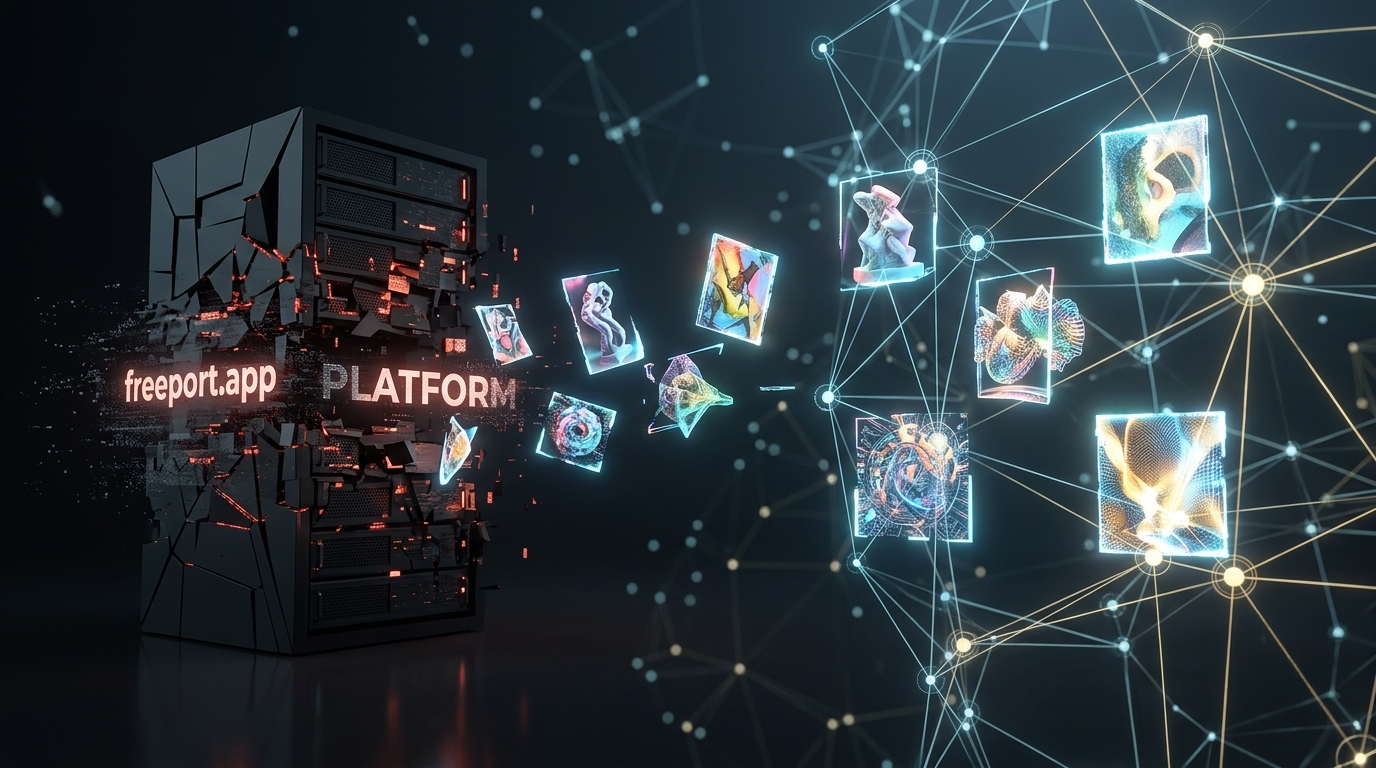
You spent thousands on a digital artwork. The platform where you bought it just announced they’re closing. Your heart sinks. What happens to your NFT now?
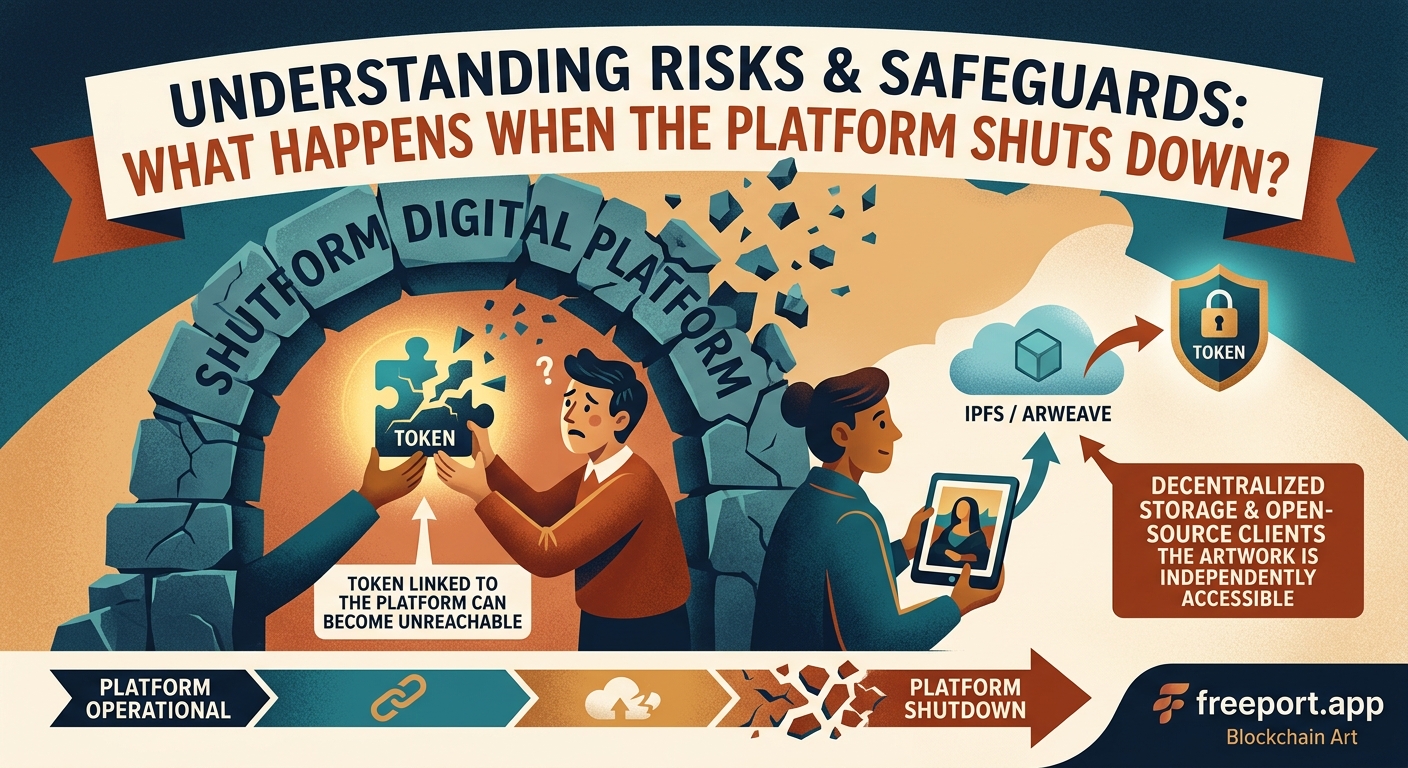
When an NFT platform shuts down, your token ownership remains on the blockchain permanently. However, the artwork image and metadata often live on separate servers that can disappear. Your NFT survives, but without proper decentralized storage like IPFS or Arweave, you may own a token that points to nothing. Understanding this distinction protects your investment.
Understanding What Actually Lives on the Blockchain
Most collectors believe their entire NFT lives on the blockchain. That’s not quite right.
The blockchain stores a token with a unique ID. That token proves you own something. But the actual artwork? The high-resolution image you admired? Those files are usually too large and expensive to store directly on-chain.
Instead, your NFT contains a pointer. Think of it like a web address. That address tells your wallet where to find the actual image and information about your artwork.
This matters enormously when platforms shut down.
If the platform hosted those images on their own servers, those servers might disappear. Your token remains. Your proof of ownership stays intact. But the thing you own might become invisible.
The Three Layers of Your NFT
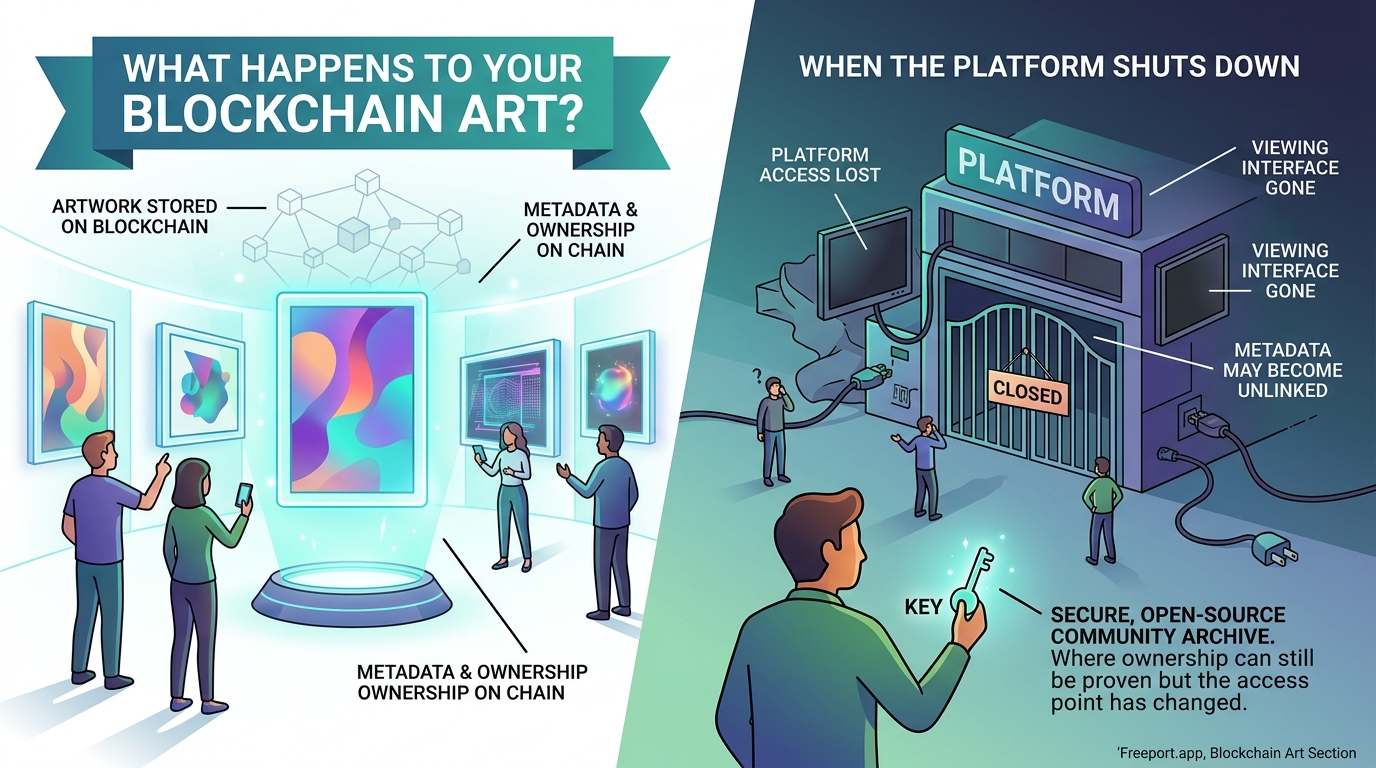
Every NFT has three distinct components that live in different places.
The token itself lives on the blockchain. Ethereum, Polygon, Tezos, or whichever network minted it. This part is permanent and decentralized. No company can delete it.
The metadata describes your NFT. It includes the title, artist name, description, and crucially, the location of the artwork file. Some platforms store this on-chain. Many don’t.
The actual media file is the image, video, or 3D model you see. This lives wherever the creator or platform decided to host it.
When a platform shuts down, only the first layer is guaranteed safe.
What Happens During a Platform Shutdown
Let’s walk through a typical shutdown scenario.
- The platform announces closure and stops accepting new transactions
- They may provide a grace period for users to download files or migrate assets
- Their web interface goes offline, making it harder to view your collection
- Their servers eventually shut down, potentially taking hosted images with them
- Your tokens remain on the blockchain, but may point to dead links
The outcome depends entirely on where your NFT’s components were stored.
If your artwork used IPFS (InterPlanetary File System), the image likely survives. IPFS distributes files across multiple nodes. Even if the platform’s node goes offline, other nodes can serve the file.
If the platform used centralized storage like AWS S3 buckets or their own servers, your image probably disappears when they stop paying hosting bills.
Storage Methods That Protect You
Not all NFT storage is created equal. Here’s how different methods hold up when platforms vanish.
| Storage Method | Survives Platform Closure | Accessibility | Cost |
|---|---|---|---|
| On-chain (full) | Yes | Always available | Very expensive |
| IPFS | Usually | Requires pinning services | Moderate |
| Arweave | Yes | Permanent by design | One-time fee |
| Centralized servers | No | Gone when platform closes | Cheapest initially |
| Hybrid (metadata on-chain, media IPFS) | Partially | Metadata safe, media depends | Balanced |
Projects that prioritized decentralization from the start fare better. How smart contracts are revolutionizing art ownership and provenance often includes discussion of storage choices that protect collectors.
The best NFT projects treat storage as seriously as they treat the artwork itself. If a creator won’t commit to permanent storage, they’re not thinking long-term about collectors.
Real-World Platform Closures
Several platforms have already shut down, giving us case studies.
Nifty Gateway faced criticism when collectors realized their NFTs pointed to Nifty’s servers, not decentralized storage. When concerns arose about platform longevity, the company had to reassure users and migrate storage.
Cent, an early NFT platform, stopped most operations in 2022. NFTs minted there still exist on-chain, but the platform interface for viewing them disappeared.
Foundation, while still operating, experienced server issues that temporarily made NFTs invisible. Collectors panicked. The tokens were fine, but the images couldn’t load.
These incidents taught the market hard lessons about infrastructure dependency.
How to Check Your NFT’s Storage Right Now
Don’t wait for a crisis. You can verify where your NFTs live today.
- Open your NFT on a blockchain explorer like Etherscan
- Find the “Token URI” or metadata link
- Check if it starts with “ipfs://” (good) or “https://” (potentially risky)
- Follow the metadata link to see where the actual image is stored
- If using IPFS, verify the content is pinned on multiple nodes
For Ethereum NFTs, paste your contract address into Etherscan. Look at any token from the collection. The metadata structure reveals everything.
If you see URLs pointing to a specific company’s domain, that’s a red flag. Your NFT depends on that company staying in business and maintaining those servers.
Steps to Protect Your Collection Before Disaster Strikes
You can take action now to safeguard your assets.
Download high-resolution copies of every piece you own. Store them locally with the token ID and contract address. This won’t help with resale, but preserves the art itself.
Use IPFS pinning services like Pinata or Infura. If your NFT already uses IPFS, you can pin the content yourself. This ensures the file stays available even if the original pinner stops.
Document everything. Save screenshots of the original listing, artist information, and any platform-specific details. This metadata might disappear.
Verify storage before buying. Make it part of your collection process. How to authenticate digital art before adding it to your collection should include storage verification.
Choose platforms wisely. Platforms committed to decentralization cost more upfront but protect you long-term. Why blue-chip NFT collections maintain value during market downturns often correlates with proper infrastructure choices.
The Difference Between Losing Access and Losing Ownership
Here’s the critical distinction that confuses many collectors.
You never lose ownership when a platform shuts down. Your token, your proof of ownership, lives on the blockchain forever. You can still transfer it, sell it, or prove you own it.
What you might lose is access to the experience. The ability to easily view your art. The metadata that explains what it is. The community features that made it special.
It’s like owning a rare book in a language you can’t read after the only translator dies. You own it. You can sell it. But the experience is diminished.
Some projects have addressed this by building redundancy. They store metadata on-chain and use multiple decentralized storage solutions. This costs more but provides peace of mind.
What Platforms Can Do Better
Responsible platforms take several steps to protect collectors.
They use decentralized storage from day one. IPFS at minimum, Arweave for critical projects. They don’t cut corners to save hosting costs.
They store metadata on-chain whenever possible. This ensures basic information survives even if everything else fails.
They provide migration tools before shutting down. If closure is inevitable, they give collectors time and resources to move assets or preserve files.
They communicate honestly about infrastructure. Terms of service should clearly state where files live and what happens in various scenarios.
Building a valuable digital art collection from scratch in 2026 means choosing platforms that prioritize these practices.
The Role of Smart Contracts in Survival
Smart contracts determine how resilient your NFT is.
Well-designed contracts store critical data on-chain. They might include the full metadata, not just a link to it. They use standardized formats that work across platforms.
Poorly designed contracts outsource everything. They rely entirely on external services. When those services disappear, the contract becomes a hollow shell.
Some contracts include fallback mechanisms. If the primary metadata source fails, they point to a backup. This redundancy costs more gas to deploy but provides insurance.
The contract code is permanent. Once deployed, it can’t be changed. This immutability protects you from platform interference but also means mistakes last forever.
Viewing Your NFTs After Platform Closure
You still have options for viewing and managing your collection when platforms disappear.
Blockchain explorers like Etherscan show your tokens. They can usually display metadata and images if the storage still exists.
Universal wallets like MetaMask, Rainbow, or Coinbase Wallet attempt to render NFTs from any platform. They read the contract and fetch the media directly.
Alternative marketplaces can list your NFTs. OpenSea, Rarible, and others aggregate NFTs from across the blockchain. Your piece doesn’t disappear just because one platform closed.
Self-hosted galleries let you display your collection. Services like Oncyber or custom websites can showcase NFTs you own, pulling data directly from the blockchain.
The key is that ownership and display are separate. You don’t need the original platform to prove or show what you own.
Insurance and Recovery Options
The industry is developing solutions for storage failures.
Pinning services offer paid plans to keep IPFS content available indefinitely. You can pin content you don’t control, ensuring it stays accessible.
Archival projects like the NFT Archive Initiative work to preserve cultural significant pieces. They maintain copies and metadata for important collections.
Smart contract upgrades through proxy patterns allow some projects to update storage locations. This is controversial because it reduces immutability but can save collections.
Community preservation happens organically. Dedicated collectors sometimes band together to maintain storage for beloved projects.
What to Do If Your Platform Just Announced Closure
Time to act fast but thoughtfully.
Check the announcement for timelines and resources. Platforms often provide data export tools or migration assistance during wind-down periods.
Download everything immediately. Full-resolution files, metadata, transaction history, anything the platform offers. Storage is cheap compared to losing irreplaceable art.
Verify your blockchain ownership. Make sure your wallet still shows the tokens. Screenshot your collection from multiple sources.
Research storage solutions. If the platform used centralized hosting, find where else those files might exist. Check IPFS, contact the artists, look for community archives.
Consider selling if appropriate. If a collection’s value depends heavily on platform features, the shutdown might impact prices. Make informed decisions about whether to hold or sell.
Connect with the community. Other collectors face the same situation. Share information, pool resources, coordinate preservation efforts.
The Future of NFT Infrastructure
The market is learning from failures and building better systems.
More projects use permanent storage solutions like Arweave, which charges a one-time fee for perpetual hosting. This aligns incentives better than subscription models.
Layer 2 solutions make on-chain storage more affordable. What once cost thousands in gas fees might soon cost dollars.
Standardization efforts aim to make NFTs more portable. Better standards mean less platform dependency and easier migration.
Artists redefining contemporary digital art in 2026 increasingly demand proper infrastructure as a baseline, not a luxury.
Questions to Ask Before Buying Any NFT
Protect yourself by asking these questions every time.
- Where is the actual image or media file stored?
- Is the metadata on-chain or off-chain?
- What happens to the files if the platform shuts down?
- Does the project use IPFS, Arweave, or centralized storage?
- Has the creator committed to maintaining storage long-term?
- Are there backup storage solutions in place?
- Can I access my NFT through other platforms or wallets?
If the seller can’t answer these questions, that’s a warning sign. Serious projects understand and communicate their infrastructure choices.
Why This Matters for Digital Art Value
Storage decisions directly impact long-term value.
Collectors increasingly price in infrastructure quality. An NFT with robust, decentralized storage commands a premium over one dependent on a single company’s servers.
Institutional collectors won’t touch pieces with questionable storage. Museums and galleries need confidence that acquisitions will remain accessible for decades.
Insurance and lending protocols require reliable storage. You can’t use an NFT as collateral if it might disappear.
The market is maturing. Early collectors might have overlooked storage. Today’s sophisticated buyers make it a primary consideration.
Your NFT Survives, But in What Form
The blockchain guarantees your token exists forever. Nothing changes that fundamental truth.
What changes is the richness of that existence. A token pointing to active, decentralized storage gives you full access to the artwork, metadata, and experience. A token pointing to a dead server gives you proof of ownership and little else.
Both scenarios mean you still own the NFT. You can still sell it, transfer it, or hold it. But the practical value differs enormously.
Think of it like owning a house versus owning a deed to a house that burned down. Legally, you own the property. Practically, the experiences are nothing alike.
Smart collectors plan for both scenarios. They choose projects with solid infrastructure. They back up what they can. They understand the risks and make informed decisions.
The platforms that survive and thrive will be those that take storage seriously. The collections that maintain value will be those built on solid technical foundations. And the collectors who sleep soundly will be those who verified where their art actually lives.
Your NFT doesn’t disappear when platforms shut down. But whether it remains a vibrant piece of digital art or becomes a ghost in the machine depends entirely on choices made before you ever clicked “buy.”