Why Blue-Chip NFT Collections Maintain Value During Market Downturns
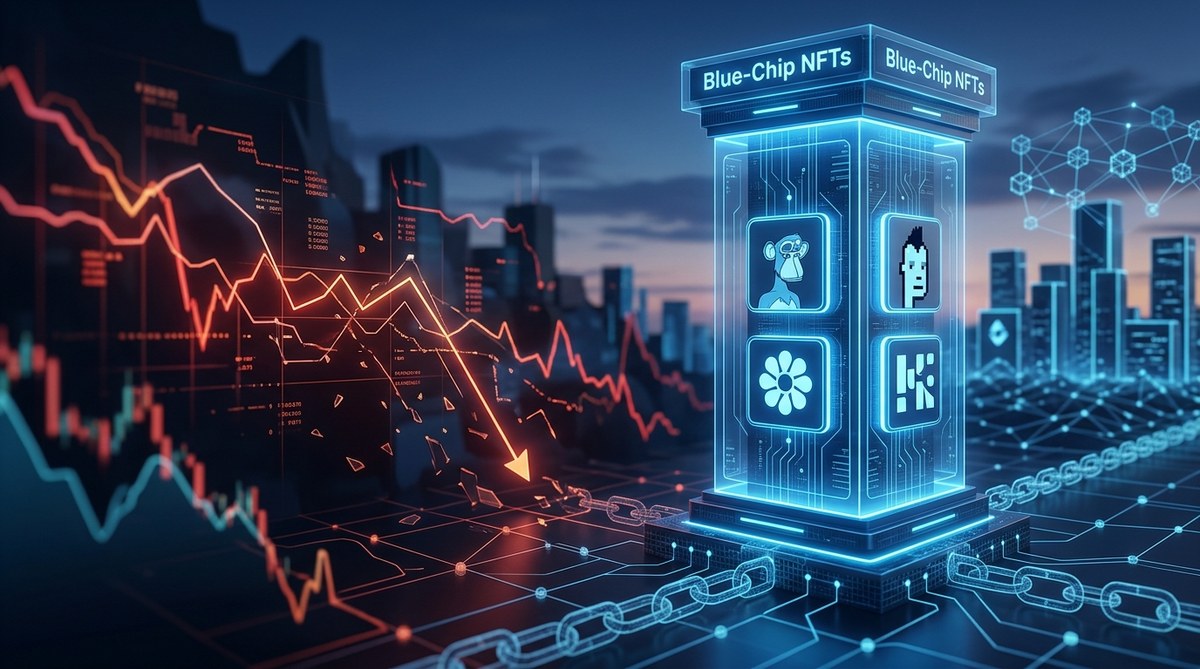
When crypto markets crash and trading volumes dry up, most NFT collections vanish into irrelevance. Yet a handful of projects not only survive but maintain significant floor prices and active communities. These are the blue chips, and understanding what keeps them afloat during downturns can save you from costly mistakes.
Blue chip NFTs maintain value during market downturns through strong brand recognition, engaged communities, proven utility, transparent leadership, and established cultural significance. Unlike speculative projects, these collections build sustainable ecosystems that extend beyond blockchain hype. Collectors treat them as long-term holdings rather than trading vehicles, creating price stability when broader markets collapse. Understanding these resilience factors helps investors identify which digital assets can weather volatility.
Brand Recognition Acts as a Protective Moat
The most resilient NFT collections have transcended their blockchain origins to become recognized brands. CryptoPunks and Bored Ape Yacht Club didn’t just create digital art. They built cultural artifacts that people outside crypto can identify.
This recognition matters during downturns. When speculative buyers exit the market, brand strength keeps collectors engaged. A CryptoPunk holder isn’t just holding a pixelated image. They own a piece of digital art history that museums have displayed and major publications have covered.
Brand value accumulates slowly. Projects that rushed to market during bull runs lack this foundation. They have no story beyond “we launched when things were hot.” Blue chips spent years building legitimacy through consistent messaging, strategic partnerships, and cultural relevance.
Traditional luxury goods follow the same pattern. A Rolex maintains value not because it tells time better than a $50 watch, but because decades of brand building created perceived scarcity and status. Blue chip NFTs operate on identical principles, just compressed into a shorter timeline.
Community Strength Provides Demand Stability
Active communities create natural price floors. When markets decline, blue chip holders tend to hold rather than panic sell. This behavior stems from genuine engagement, not just financial speculation.
Look at how Pudgy Penguins recovered from early mismanagement. The community rallied around new leadership and helped rebuild the project’s reputation. That kind of loyalty doesn’t exist in collections where holders barely interact.
Strong communities generate several stabilizing effects:
- Members buy dips to lower their average cost
- Long-term holders refuse to sell at losses
- Community funds and treasuries can support floor prices
- Social pressure discourages panic selling
- Active Discord and Twitter spaces maintain engagement
These dynamics create what economists call “sticky prices.” Sellers won’t accept low offers because community sentiment reinforces value. Buyers know they’re joining an active group, not buying a dead asset.
Compare this to failed projects where Discord servers go silent and Twitter accounts stop posting. Without community engagement, there’s no reason to hold through downturns. The asset becomes purely speculative, and speculation evaporates when markets turn bearish.
Proven Utility Extends Beyond Speculation
Blue chip NFTs offer tangible benefits that persist regardless of market conditions. These utilities give holders reasons to keep their assets even when prices drop.
The utility hierarchy looks like this:
| Utility Type | Example | Downturn Resilience |
|---|---|---|
| Access rights | Members-only events, spaces | High |
| Commercial licensing | Merchandise, media rights | High |
| Governance power | DAO voting, treasury decisions | Medium |
| Gaming integration | Play-to-earn, metaverse assets | Medium |
| Future airdrops | Token distributions, new mints | Low |
Access rights and commercial licensing provide the strongest value retention. Bored Ape holders can use their ape’s likeness to create products and businesses. This right has real monetary value independent of floor prices.
Projects promising future benefits struggle during downturns. Roadmaps full of “coming soon” features lose credibility when teams face funding pressure. Collectors learn to discount promises and value delivered utility.
How smart contracts are revolutionizing art ownership and provenance plays a role here. Blue chips use smart contracts to enforce utility automatically. Access tokens, royalty distributions, and membership verification happen on-chain without requiring trust in a central team.
Transparent Leadership Builds Trust
Blue chip projects have identifiable teams with track records. When markets crash, anonymous founders often disappear. Known leaders with reputations at stake tend to keep building.
Yuga Labs, the team behind Bored Ape Yacht Club, maintained transparency about their business operations, funding, and strategic decisions. This openness created trust that sustained the project through multiple market cycles.
Contrast this with the thousands of projects launched by anonymous teams during bull markets. When prices dropped, many simply abandoned their communities. No accountability, no consequences, no reason to continue.
“In bear markets, you see which teams are building businesses versus which ones were just riding hype. The projects with real leadership don’t disappear when trading volume drops.” – Veteran NFT collector
Leadership transparency includes:
- Regular communication about project status
- Clear financial disclosures and treasury management
- Honest acknowledgment of challenges and setbacks
- Consistent presence across market cycles
- Professional partnerships and business development
These factors matter more during downturns than bull runs. Anyone can look competent when prices only go up. True leadership emerges when maintaining community morale requires actual skill and commitment.
Established Provenance Creates Historical Value
The oldest blue chip NFTs benefit from being “firsts” in their categories. CryptoPunks launched in 2017 as one of the earliest NFT projects on Ethereum. That historical significance creates value independent of current market sentiment.
Collectors treat these pieces as digital artifacts. They represent specific moments in blockchain history. This positioning parallels how traditional art markets value historical pieces differently than contemporary works.
Historical significance compounds over time. A CryptoPunk from 2017 will always be from 2017. As the NFT space matures, early artifacts gain importance. Future collectors will want pieces from crypto’s formative period.
Newer projects can’t manufacture this advantage. They might build strong communities and deliver utility, but they’ll never be “the first” or represent a pivotal historical moment. This creates a natural moat around established blue chips.
Provenance also includes ownership history. NFTs previously held by celebrities, major collectors, or significant wallets carry premium value. This social layer adds depth beyond the asset itself.
Financial Backing and Treasury Management
Blue chip projects often have substantial treasuries and backing from major investors. This financial cushion allows them to weather downturns without desperate measures.
Well-managed treasuries enable:
- Continued development during low revenue periods
- Strategic acquisitions and partnerships
- Marketing and community initiatives
- Liquidity provision for trading pairs
- Emergency support for floor prices if needed
Projects that spent all their funds during bull markets face existential threats when markets turn. They can’t afford developers, can’t maintain infrastructure, and can’t fund community programs. The project slowly dies from resource starvation.
Major institutional backing also signals credibility. When established venture capital firms invest in an NFT project, they conduct due diligence that retail collectors can’t match. Their continued involvement during downturns suggests long-term viability.
However, institutional involvement cuts both ways. Heavy institutional ownership can create selling pressure if funds need liquidity. The key is balanced ownership between institutions, whales, and retail collectors.
Cultural Integration and Mainstream Recognition
Blue chips that penetrate mainstream culture gain resilience from outside the crypto ecosystem. When traditional media covers a collection, when celebrities display their NFTs publicly, when museums include them in exhibitions, the project transcends pure speculation.
This cultural integration creates awareness among potential future buyers who aren’t currently in crypto. When markets recover, these aware outsiders become new demand sources. Projects known only within crypto circles lack this expansion potential.
Bored Apes appeared in music videos, on merchandise, and in mainstream news coverage. This visibility built brand value that persists even when crypto markets crash. Someone who saw an ape in a music video two years ago might enter the market during the next bull run specifically seeking that collection.
Cultural moments also create emotional attachment. Collectors remember where they were when they minted, what the community felt like during key moments, and how the project evolved. This emotional layer makes selling feel like abandoning a shared experience, not just liquidating an asset.
Liquidity and Market Infrastructure
Blue chip NFTs maintain deeper liquidity than other collections. More buyers and sellers mean tighter spreads and easier transactions. This liquidity itself becomes a form of value during downturns.
When you need to sell, blue chip collections offer realistic exit options. You might not get your desired price, but you can find buyers. Lesser collections might have zero bids, making them effectively worthless regardless of theoretical value.
Market infrastructure supports blue chips differently:
- Major marketplaces feature them prominently
- Lending protocols accept them as collateral
- Derivatives and financial products reference them
- Price oracles and data providers track them closely
- Media and analysts cover them regularly
This infrastructure creates feedback loops. Better data attracts more sophisticated traders. More liquidity enables financial products. Financial products increase utility. Increased utility attracts more holders.
Projects outside the blue chip tier lack this infrastructure. They trade on fewer platforms, have worse data quality, and can’t be used as collateral. These disadvantages compound during downturns when liquidity matters most.
Lessons for Identifying Future Blue Chips
Understanding why current blue chips hold value helps identify which newer projects might achieve similar status. Not every successful project will become a blue chip, but certain patterns increase the odds.
Look for these indicators when building a valuable digital art collection from scratch in 2026:
- Team identity and professional backgrounds
- Utility delivered before promises
- Organic community growth without excessive marketing
- Clear revenue models beyond mint proceeds
- Strategic partnerships with established entities
- Cultural relevance beyond crypto circles
- Technical innovation or unique positioning
- Transparent governance and decision-making
Avoid projects that rely entirely on:
- Anonymous teams with no track record
- Roadmaps full of future promises
- Aggressive marketing and influencer campaigns
- Derivative concepts copied from successful projects
- Unsustainable token economics
- Hype-driven community engagement
The difference between blue chips and failed projects often comes down to fundamentals. Blue chips build sustainable businesses and communities. Failed projects optimize for short-term hype and exit liquidity.
The Psychology of Blue Chip Holders
Blue chip holders think differently than speculators. They view their NFTs as long-term holdings, similar to how people hold real estate or fine art. This psychological shift creates behavioral patterns that stabilize prices.
Long-term holders develop attachment beyond financial metrics. They participate in community governance, attend events, and integrate their NFTs into their digital identity. Selling means losing these intangible benefits, not just liquidating an asset.
This psychology creates what economists call “strong hands.” During downturns, strong hands don’t panic. They might even accumulate more at lower prices. This behavior creates natural support levels that prevent catastrophic price collapses.
Compare this to speculative holders who check floor prices constantly and sell at the first sign of trouble. When a collection consists primarily of speculators, downturns trigger cascading selloffs. No one wants to hold, so prices crater.
Blue chip collections cultivate strong hands through consistent value delivery and community building. Each positive experience reinforces the holder’s decision to keep their asset. Over time, this creates a base of committed collectors who won’t sell regardless of market conditions.
Risk Factors Even Blue Chips Face
Understanding resilience doesn’t mean ignoring risks. Even blue chip NFTs face threats that can undermine their value during extended downturns.
Key risks include:
- Regulatory changes that restrict NFT trading or ownership
- Technical vulnerabilities in smart contracts or underlying blockchains
- Leadership changes or team departures
- Community fragmentation or internal conflicts
- Competitive pressure from newer, better projects
- Macroeconomic conditions that reduce luxury spending
- Platform risk from marketplace closures or policy changes
The strongest blue chips actively manage these risks. They diversify across multiple marketplaces, maintain legal compliance, invest in security audits, and build governance structures that can survive leadership transitions.
However, no project is immune to existential threats. The NFT space remains young and volatile. What seems like a blue chip today might fade if it fails to adapt to changing market conditions.
Smart collectors diversify across multiple blue chips rather than concentrating in one project. This strategy provides exposure to the asset class while managing project-specific risks.
Building Value Through Market Cycles
Blue chip status isn’t achieved overnight. Projects earn it by surviving multiple market cycles and consistently delivering value. Each downturn that a project survives strengthens its blue chip credentials.
The cycle typically looks like this:
- Launch during any market condition
- Build initial community and deliver early utility
- Survive first downturn through fundamentals
- Gain recognition as a resilient project
- Attract institutional and serious collector interest
- Weather subsequent downturns with stronger foundation
- Achieve blue chip status through proven longevity
Projects currently in steps one through three might become future blue chips. But they need to prove themselves through adversity first. Bull market success means little. Bear market survival means everything.
This is why experienced collectors pay premium prices for established blue chips. They’re not just buying current utility. They’re buying proven resilience and reduced risk. The premium represents insurance against the project disappearing during the next downturn.
Why This Matters for Your Collection Strategy
Understanding why blue chip NFTs hold value should inform your collection strategy. Whether you’re building a portfolio from scratch or evaluating current holdings, these principles help separate sustainable assets from speculative gambles.
During bull markets, everything seems valuable. Projects with weak fundamentals can maintain high prices through momentum and hype. But downturns reveal truth. Projects without strong communities, real utility, transparent leadership, and cultural relevance collapse.
If you’re holding through a downturn, focus on projects with blue chip characteristics. If you’re buying during a downturn, target collections that demonstrated resilience while others failed. If you’re building for the long term, prioritize fundamentals over hype from the start.
The NFT space will continue evolving. New projects will emerge. Some current blue chips might fade. But the principles that create resilience remain constant. Strong communities, real utility, transparent leadership, and cultural significance will always matter more than temporary hype.
Your collection should reflect these values. Own pieces you’d be proud to hold through multiple market cycles. Join communities you actually want to participate in. Support projects building sustainable businesses, not just selling digital images. That’s how you build a collection that maintains value regardless of market conditions.
