Why Museums Are Building Blockchain Art Collections
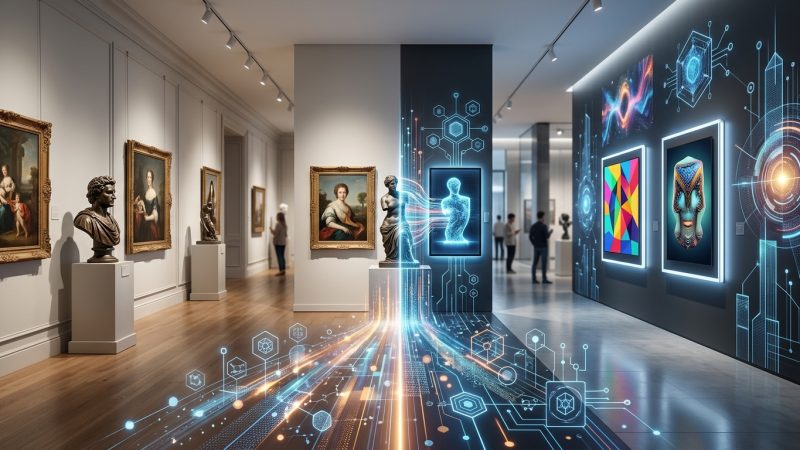
Major cultural institutions are making permanent acquisitions of blockchain-based artworks. The British Museum, MoMA, and the Centre Pompidou have all added digital pieces to their permanent collections. This isn’t experimental anymore. Museums are treating blockchain art with the same curatorial rigor they apply to traditional media.
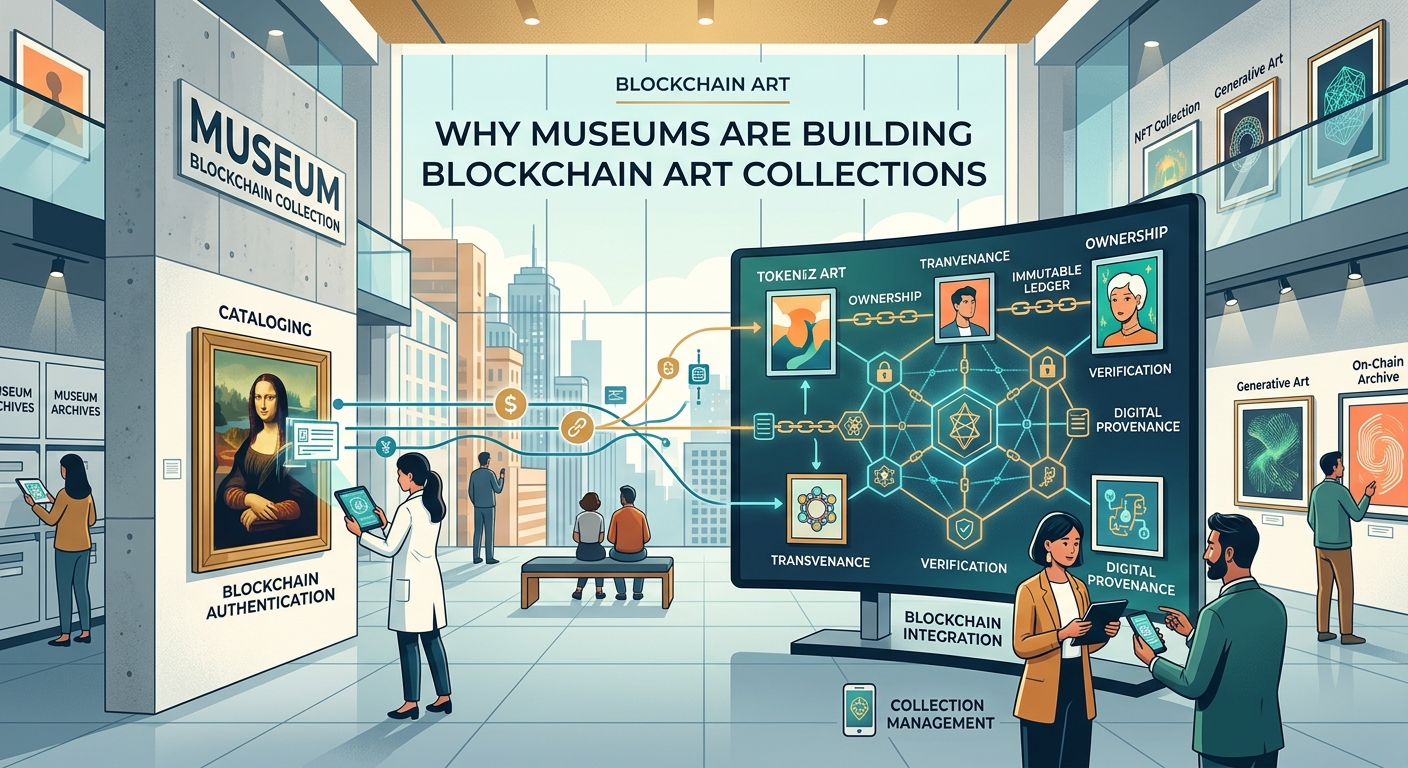
Museums are building blockchain art collections to preserve digital culture, expand audience reach, and secure provenance records. Institutions face technical challenges around storage, display, and long-term preservation, but early adopters are establishing acquisition frameworks that balance artistic merit with technological sustainability. Success requires collaboration between curators, technologists, and conservation specialists.
Why cultural institutions are acquiring digital artworks on blockchain
Museums exist to preserve culture for future generations. Digital art has existed for decades, but preservation was always problematic. Files degrade. Formats become obsolete. Authenticity gets murky.
Blockchain solves several of these problems at once.
The technology provides immutable provenance records. Every transaction, every owner, every transfer gets recorded permanently. For institutions that spend enormous resources on authentication and provenance research, this is transformative.
How smart contracts are revolutionizing art ownership and provenance has changed how museums think about digital acquisitions. The contract itself becomes part of the artwork’s documentation.
Museums also recognize that digital native art represents a significant cultural movement. Ignoring blockchain art would be like ignoring photography in the 1850s or video art in the 1960s. Cultural institutions document their time, and blockchain art is part of our current moment.
Younger audiences engage with digital art differently than traditional media. Museums building blockchain art collections can reach demographics that rarely visit physical galleries. This matters for institutions thinking about relevance twenty years from now.
The acquisition process for blockchain artworks
Museums can’t just buy blockchain art the same way they acquire paintings. The process requires new protocols.
Here’s how leading institutions approach acquisitions:
-
Curatorial review and artistic merit assessment. The acquisition committee evaluates the work using traditional criteria like artistic significance, cultural relevance, and alignment with collection goals. Blockchain is the medium, not the justification.
-
Technical due diligence and sustainability review. IT staff and conservators examine the blockchain platform, smart contract code, and storage mechanisms. They assess long-term viability and preservation risks.
-
Legal review and rights verification. Legal teams verify ownership rights, licensing terms, and any restrictions embedded in smart contracts. They ensure the institution can display and preserve the work according to mission requirements.
-
Acquisition and secure storage setup. The institution acquires the work through appropriate channels, establishes secure wallet infrastructure, and documents all technical specifications for future conservators.
-
Documentation and metadata creation. Staff create comprehensive records that include transaction hashes, wallet addresses, smart contract details, and preservation instructions. This documentation becomes part of the permanent archive.
The process takes longer than traditional acquisitions. But museums are building expertise. Each acquisition teaches lessons that improve the next one.
Technical infrastructure museums need
You can’t display blockchain art without proper infrastructure. Museums are investing in systems that didn’t exist five years ago.
Secure wallet management is fundamental. Institutions need cold storage solutions, multi-signature security, and clear protocols for key management. Losing access to a wallet means losing the artwork permanently.
Display technology presents unique challenges. Some blockchain artworks are static images. Others are generative, changing based on blockchain data or external inputs. Museums need flexible display systems that can handle various formats.
What happens to your blockchain art when the platform shuts down? is a question every museum acquisition committee must address. Institutions are developing backup strategies that preserve both the artwork and its blockchain context.
Here are the core technical components museums are implementing:
- Dedicated secure wallets with institutional-grade custody solutions
- Climate-controlled hardware storage for private keys and backup systems
- Display infrastructure capable of rendering various digital formats
- Archival systems that capture artwork states and blockchain data
- Documentation platforms that link physical records to on-chain data
- Staff training programs for curators, conservators, and technical teams
Some institutions partner with specialized firms for custody and technical management. Others build in-house capabilities. The approach depends on budget, existing expertise, and collection scale.
Preservation challenges that keep conservators awake
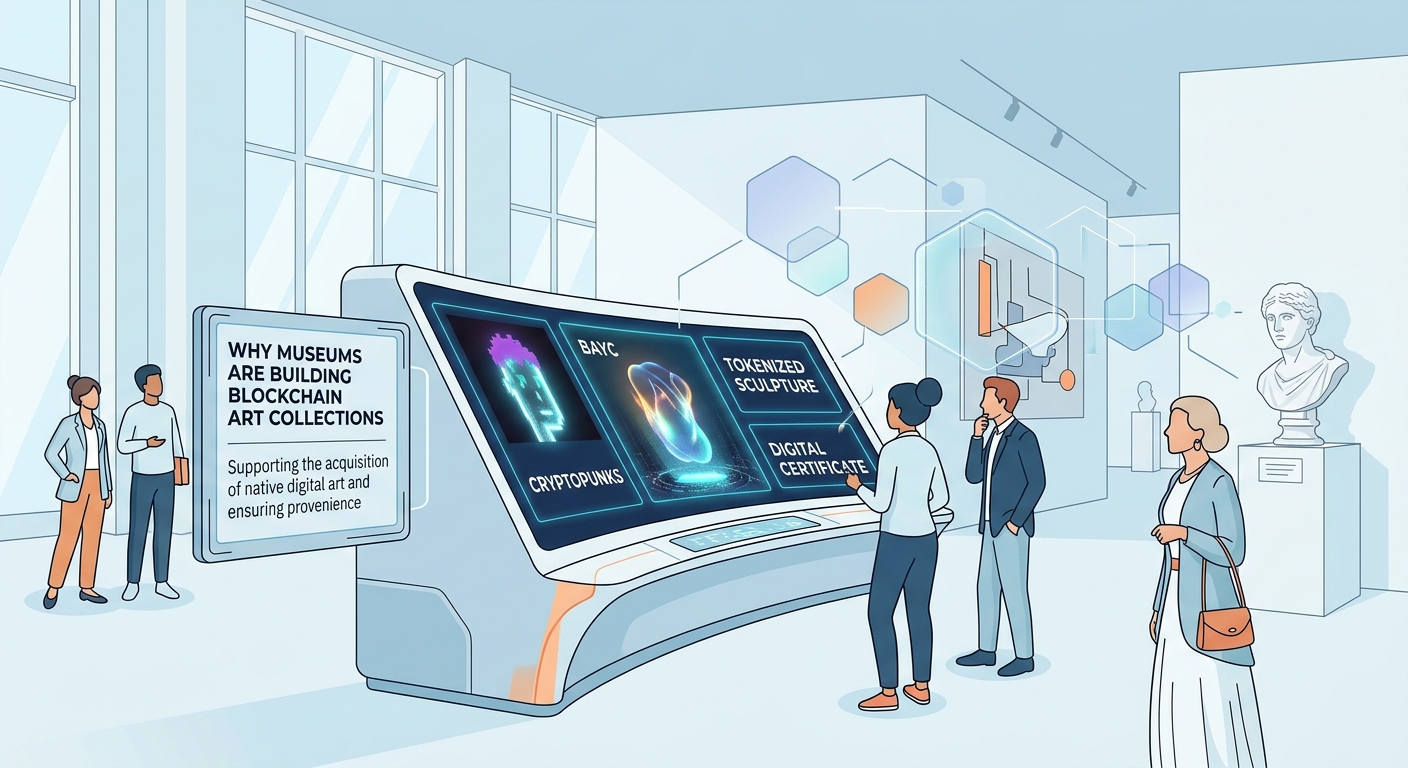
Traditional art conservation is well understood. You control temperature, humidity, and light exposure. You use tested materials for restoration.
Digital preservation is different.
File formats become obsolete. Software stops being supported. Hardware fails. Blockchain adds another layer of complexity because the artwork exists partially on-chain and partially off-chain.
Museums are developing new conservation protocols:
| Challenge | Traditional Approach | Blockchain Art Solution |
|---|---|---|
| Provenance documentation | Paper records, catalog entries | On-chain transaction history, smart contract records |
| Authentication | Expert analysis, scientific testing | Cryptographic verification, blockchain validation |
| Format obsolescence | Physical object remains stable | Emulation strategies, format migration, metadata preservation |
| Display degradation | Controlled environment, limited exposure | Digital files don’t degrade, but display technology evolves |
| Ownership transfer | Legal documents, physical delivery | Wallet transfers, on-chain records, institutional protocols |
The biggest preservation question is long-term blockchain sustainability. What happens if Ethereum fundamentally changes? What if the blockchain hosting the artwork stops being maintained?
Museums are creating redundant preservation strategies. They maintain local copies of artwork files. They document smart contract code. They archive blockchain states. The goal is ensuring future conservators can reconstruct the artwork even if the original blockchain becomes inaccessible.
How to authenticate digital art before adding it to your collection has become required reading for museum staff working with blockchain acquisitions.
How institutions are displaying blockchain art to the public
A blockchain artwork sitting in a wallet isn’t accessible to museum visitors. Institutions are getting creative with display strategies.
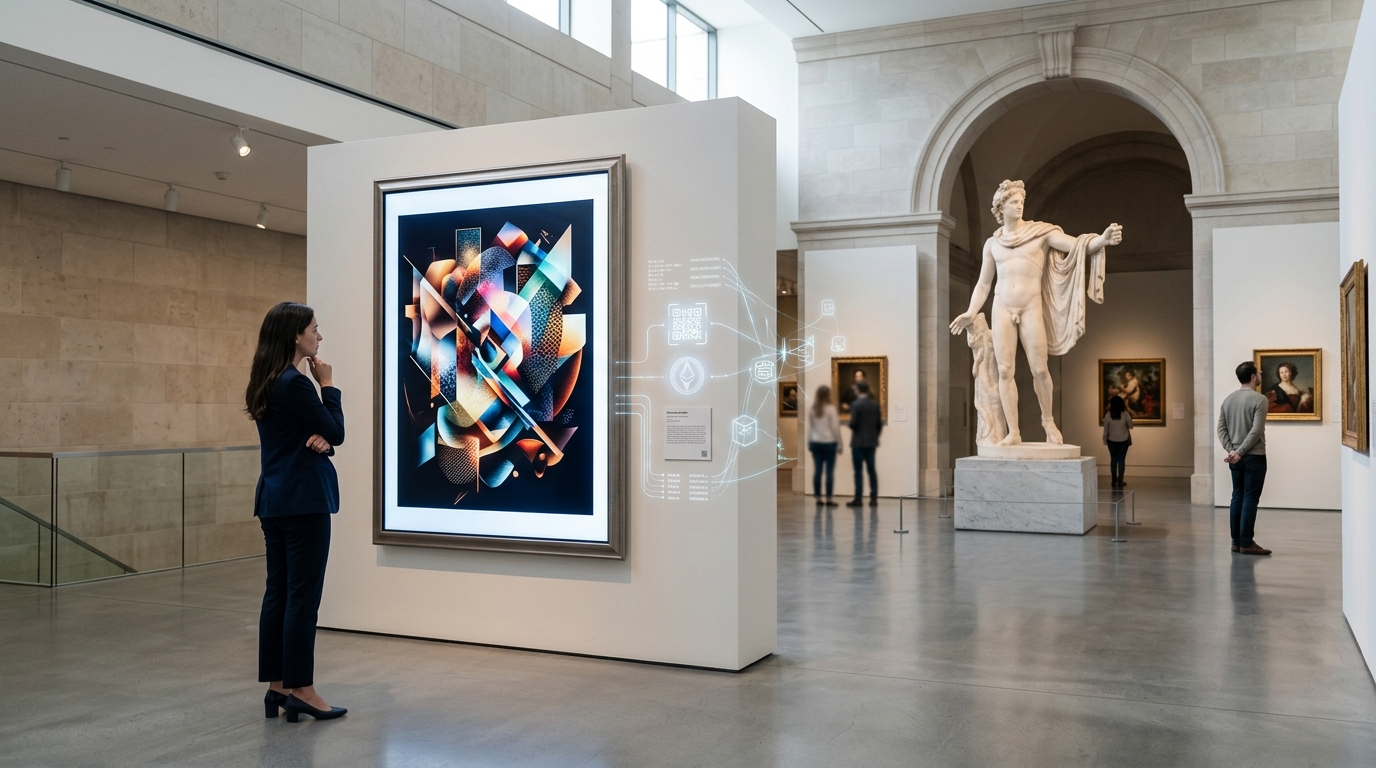
Some museums use large-format screens in traditional gallery spaces. The artwork displays alongside explanatory text that includes blockchain addresses, transaction history, and artist statements. Visitors can scan QR codes to view the work on-chain.
Others create dedicated digital galleries with multiple screens showing different works simultaneously. These spaces often include educational components explaining blockchain technology and its relevance to art.
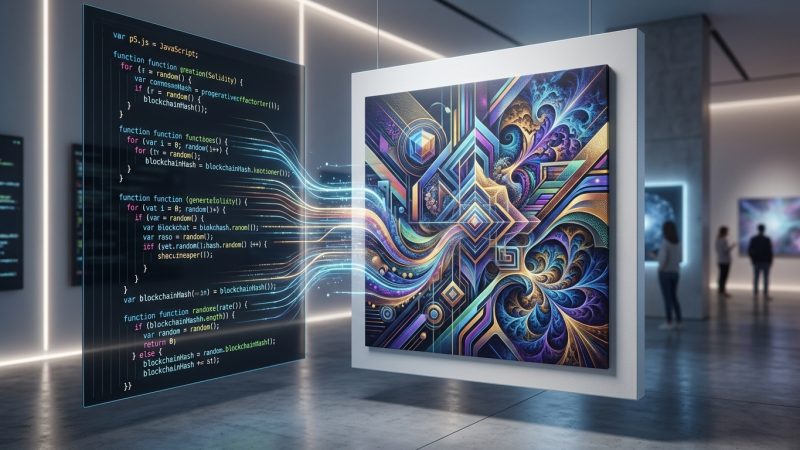
Generative artworks present special opportunities. Some pieces change based on blockchain data, time, or viewer interaction. Museums can display these works in ways that highlight their dynamic nature, something impossible with static media.
“We’re not just collecting digital files. We’re preserving cultural artifacts that exist at the intersection of art, technology, and economics. Our responsibility is ensuring future generations can experience these works in their full context.” (Chief Curator, major European institution)
Physical presentations of digital works remain controversial. Some institutions create limited-edition prints or physical installations that reference the blockchain artwork. Others insist the work must be experienced digitally to maintain integrity.
There’s no consensus yet. Museums are experimenting, documenting results, and sharing best practices across institutions.
The artists museums are collecting
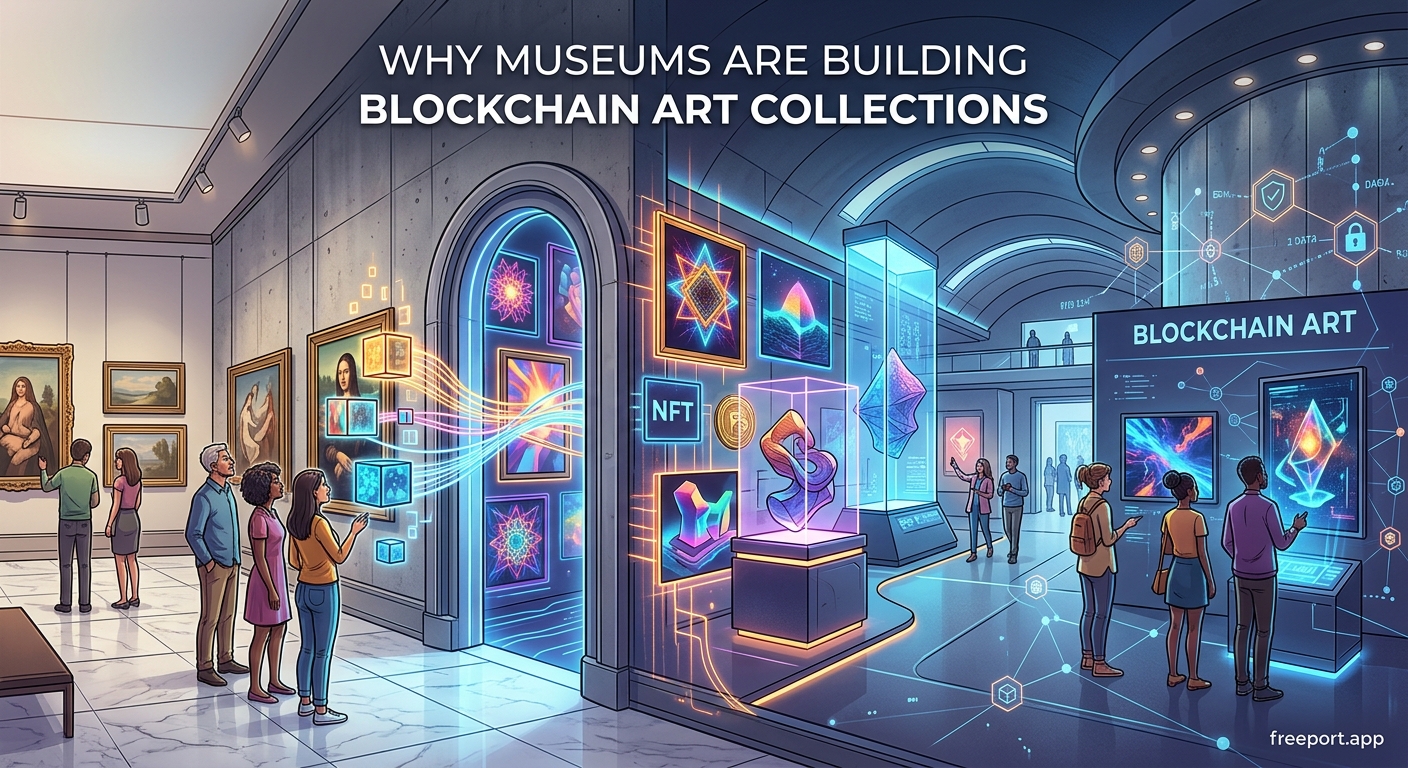
Not all blockchain art makes it into museum collections. Institutions apply the same rigorous standards they use for any medium.
7 blockchain artists redefining contemporary digital art in 2026 represents the caliber of work museums are considering. These artists have established practices, critical recognition, and cultural significance beyond the blockchain space.
Museums prioritize artists who:
- Demonstrate technical mastery and conceptual depth
- Engage meaningfully with blockchain as medium, not just distribution channel
- Have exhibition history and critical discourse around their work
- Create works that advance digital art practice
- Address cultural, social, or technological themes with relevance
Early blockchain art acquisitions focused on historically significant works. The first generative art projects. Pioneering uses of smart contracts. Works that defined the medium.
Now institutions are building more comprehensive collections. They’re acquiring works across various approaches, from purely aesthetic pieces to conceptually driven projects that critique blockchain culture itself.
Some museums commission new works specifically for their collections. These commissions often push technical boundaries because institutions can provide resources and expertise individual collectors can’t match.
Budget considerations and funding sources
Blockchain art prices vary enormously. Some works cost a few hundred dollars. Others sell for millions.
Museums face the same budget constraints with blockchain art as with traditional acquisitions. They need to justify expenditures, compete for limited funds, and demonstrate value to boards and donors.
Funding sources for blockchain art acquisitions include:
- Traditional acquisition budgets reallocated to include digital works
- Special grants from foundations interested in digital culture preservation
- Donor contributions, sometimes from collectors who made fortunes in cryptocurrency
- Partnerships with technology companies interested in supporting cultural institutions
- Revenue from deaccessioning less significant works from existing collections
Some institutions have received donated blockchain artworks. Collectors who want tax deductions and permanent homes for significant pieces approach museums directly. These donations require the same curatorial review as purchased works.
Why blue-chip NFT collections maintain value during market downturns matters to acquisition committees evaluating long-term collection value. Museums think in decades and centuries, not market cycles.
Price volatility creates challenges. A work might be worth $100,000 at acquisition and $20,000 two years later. Or vice versa. Museums are learning to focus on cultural significance rather than market value, but boards and donors still notice price fluctuations.
Legal and ethical considerations
Blockchain art raises legal questions museums haven’t faced before.
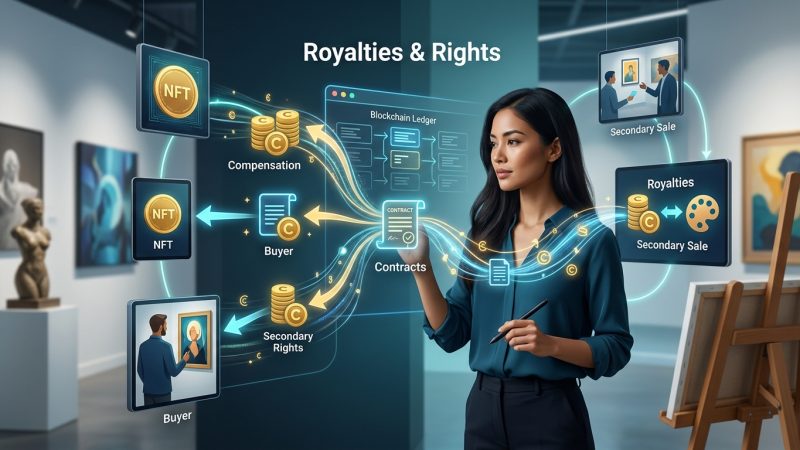
Ownership rights can be complex. The blockchain token might convey ownership, but copyright often remains with the artist. Display rights, reproduction rights, and derivative work rights need explicit clarification.
Smart contracts sometimes include terms that conflict with museum practices. A contract might require royalty payments on every transfer. Or restrict how the work can be displayed. Museums need legal frameworks for negotiating these terms before acquisition.
Environmental concerns around blockchain energy consumption create ethical dilemmas. Some institutions only acquire works on proof-of-stake blockchains or carbon-neutral platforms. Others accept works on any blockchain but offset environmental impact through other initiatives.
Cultural appropriation and representation issues apply to blockchain art just as they do to traditional media. Museums are working to build diverse collections that represent various perspectives, not just works by wealthy collectors or technically savvy artists.
Here’s a comparison of common mistakes versus better approaches:
| Common Mistake | Better Approach |
|---|---|
| Acquiring works without technical documentation | Creating comprehensive technical records including smart contract code, metadata, and preservation requirements |
| Focusing solely on market hype and prices | Evaluating artistic merit, cultural significance, and alignment with collection goals |
| Ignoring long-term preservation planning | Developing redundant storage strategies and format migration plans before acquisition |
| Treating blockchain art as separate from main collection | Integrating digital works into existing curatorial frameworks and exhibition programs |
| Acquiring works on unstable or experimental platforms | Prioritizing established blockchains with strong developer communities and long-term viability |
Collaboration between institutions
Museums are sharing knowledge about blockchain art acquisitions. The field is too new for any single institution to have all the answers.
Professional organizations are creating working groups focused on digital art preservation. Conservators from different museums meet regularly to discuss technical challenges and solutions.
Some institutions are building shared infrastructure. Collaborative custody solutions. Shared display technology. Joint research projects on preservation techniques.
This collaboration benefits everyone. Smaller museums gain access to expertise and resources they couldn’t develop independently. Larger institutions benefit from diverse perspectives and distributed problem-solving.
How to build a valuable digital art collection from scratch in 2026 offers principles that apply to institutional collecting as well as individual efforts.
Educational programming around blockchain collections
Museums aren’t just collecting blockchain art. They’re educating the public about it.
Gallery talks explain how blockchain technology works. Workshops teach visitors about digital wallets and on-chain verification. Educational materials break down complex technical concepts into accessible language.
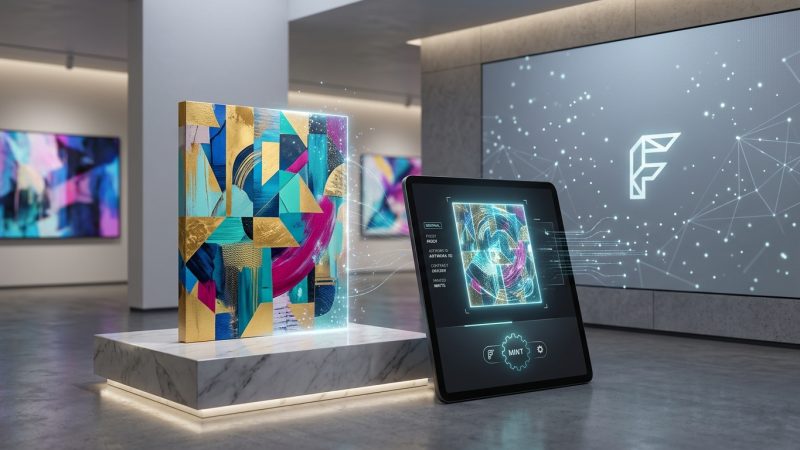
Some institutions offer programs where visitors can mint their own simple blockchain artworks. These hands-on experiences demystify the technology and make it tangible.
Schools bring students to see blockchain art collections. Museums develop age-appropriate materials explaining digital ownership, cryptographic security, and decentralized systems. These concepts have relevance far beyond art.
Public programming also addresses controversial aspects. Environmental impact. Speculation and financialization. Questions about what constitutes “real” art. Museums create space for nuanced discussion rather than promoting uncritical enthusiasm.
The future of museums and blockchain technology
Museums are thinking beyond art acquisitions. Blockchain technology has applications throughout institutional operations.
Some museums are tokenizing their existing collections, creating digital records that improve provenance tracking and authentication. Others are experimenting with blockchain-based membership programs and donor recognition systems.
Virtual exhibitions using blockchain verification allow museums to loan digital works without physical shipping. The receiving institution can prove they’re displaying the authentic work, not a copy.
How AI generative models are reshaping digital art authentication intersects with blockchain verification to create more robust authentication systems for both digital and physical works.
Decentralized autonomous organizations (DAOs) are influencing how some museums think about governance and community engagement. While few institutions are ready to implement DAO structures, the concepts are sparking conversations about democratizing cultural institutions.
Museums are also considering how blockchain might preserve cultural heritage in conflict zones or areas threatened by climate change. Digital records and tokenized artifacts could survive when physical objects are destroyed.
What museum professionals should do now
If you work at a cultural institution, you don’t need to rush into blockchain art acquisitions. But you should start building knowledge and infrastructure.
Attend conferences where digital art preservation is discussed. Read case studies from institutions that have made blockchain acquisitions. Talk to conservators who are working with digital media.
Build relationships with artists working in blockchain. Understand their practices, their concerns, and their visions for the medium. Curatorial expertise still matters more than technical knowledge, but you need both.
Start small. A single well-chosen acquisition teaches more than endless theoretical discussion. Document everything. Share what you learn with colleagues at other institutions.
Consider forming advisory committees that include technologists, artists, collectors, and conservators. Multiple perspectives improve decision-making and reduce blind spots.
Budget for ongoing technical support, not just acquisition costs. Blockchain art requires maintenance, monitoring, and occasional intervention. Factor these costs into long-term planning.
Museums are preserving digital culture for future generations
Cultural institutions have always adapted to new media. Photography, film, video, and digital art all faced skepticism before gaining acceptance. Blockchain art is following the same path.
The museums building blockchain art collections now are establishing frameworks that will guide institutions for decades. They’re solving preservation challenges, developing best practices, and demonstrating that digital culture deserves the same care as traditional media.
This work matters because culture increasingly exists in digital spaces. Future historians will study our era partly through blockchain artworks, just as we study previous eras through their cultural artifacts.
Your institution doesn’t need to become a blockchain art specialist. But understanding how this technology intersects with cultural preservation will help you serve your mission better. The artists creating significant work today deserve to have their contributions preserved for future generations. Museums building blockchain art collections are making that preservation possible.