Smart Contract Royalties Explained: Protecting Artist Revenue in Secondary Sales

Traditional art sales left creators out in the cold after the first transaction. You sold a painting, and every future sale enriched collectors and galleries while you earned nothing. Smart contract royalties changed that equation forever by embedding payment rules directly into the code that governs digital artwork ownership.
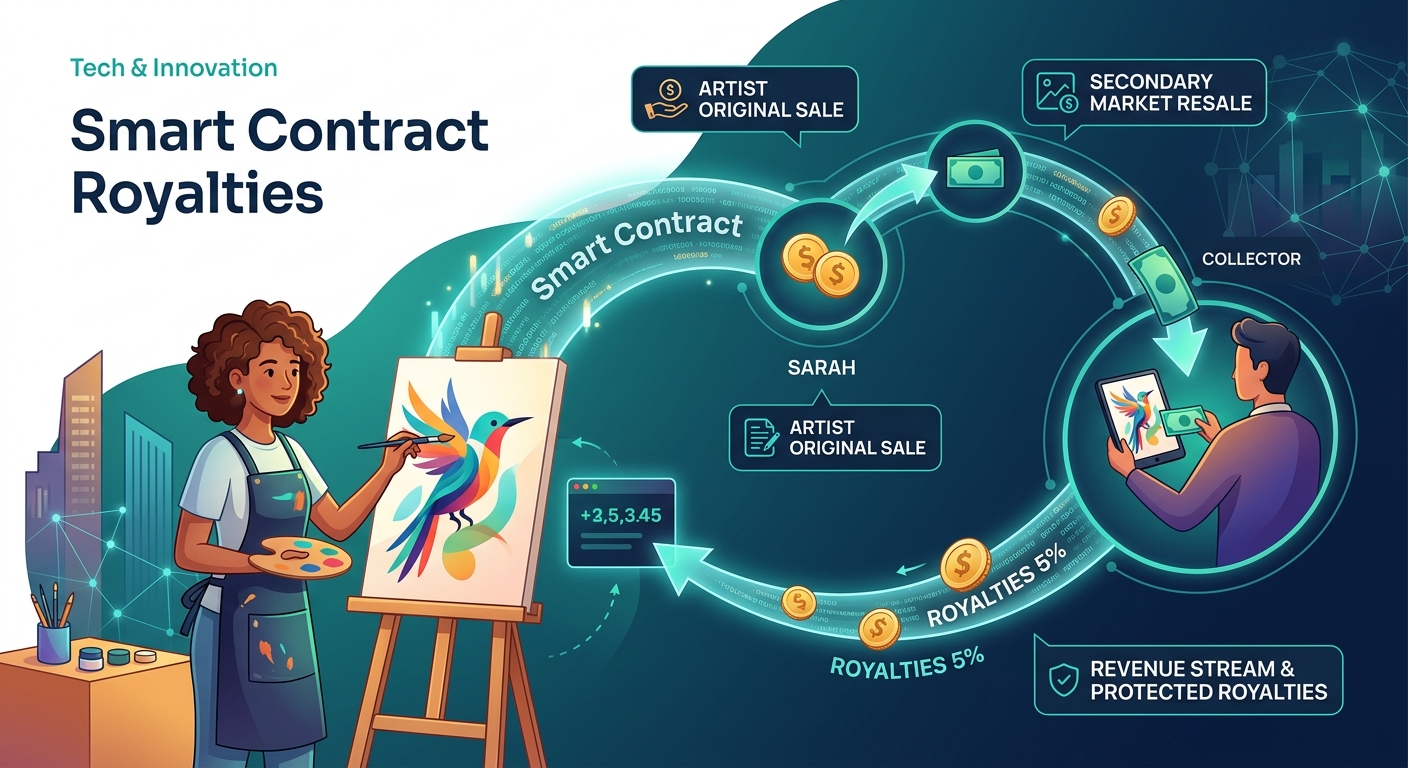
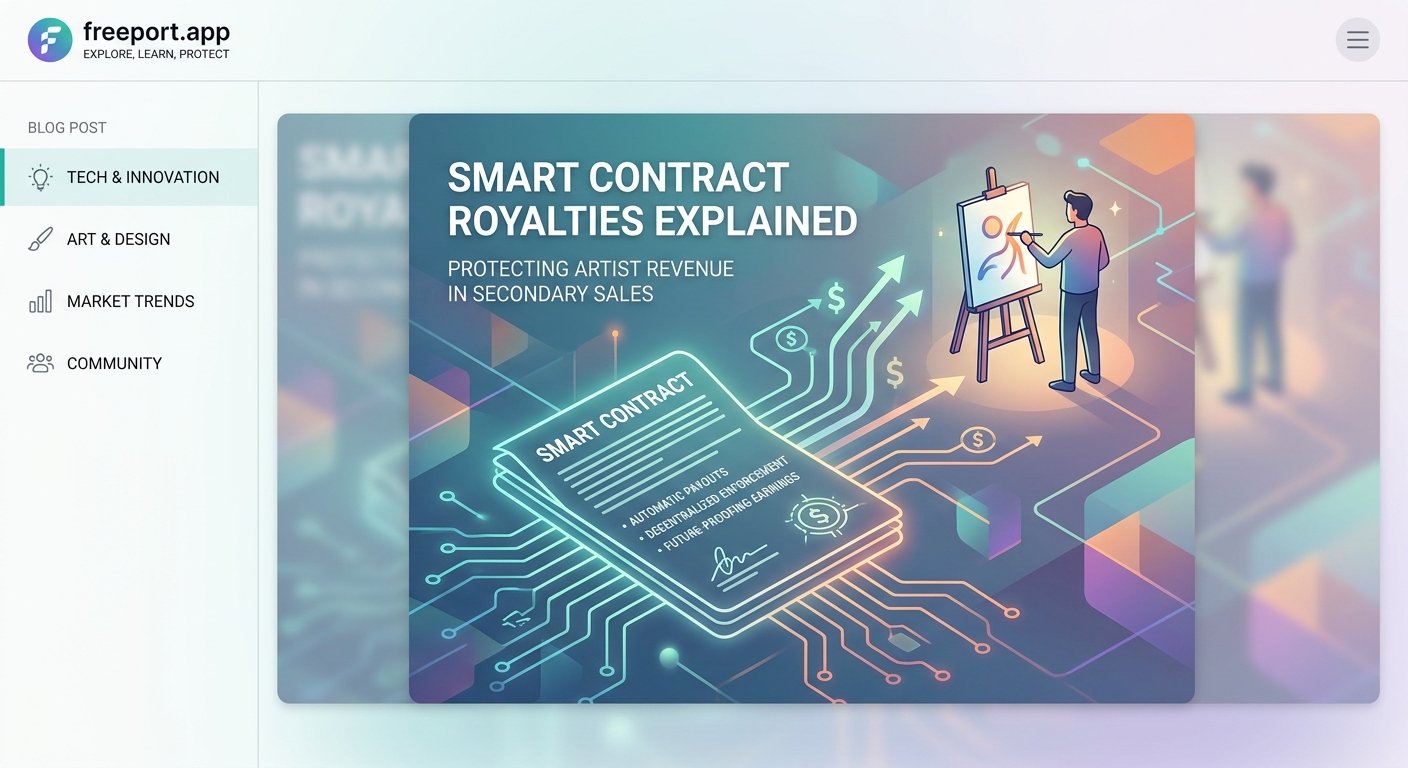
Smart contract royalties are automated payment mechanisms coded into blockchain-based artwork that trigger every time a piece sells on secondary markets. Artists typically earn 5-10% from each resale without intermediaries or manual tracking. However, enforcement depends entirely on marketplace cooperation, blockchain standards, and how you configure your initial mint settings.
What Smart Contract Royalties Actually Do
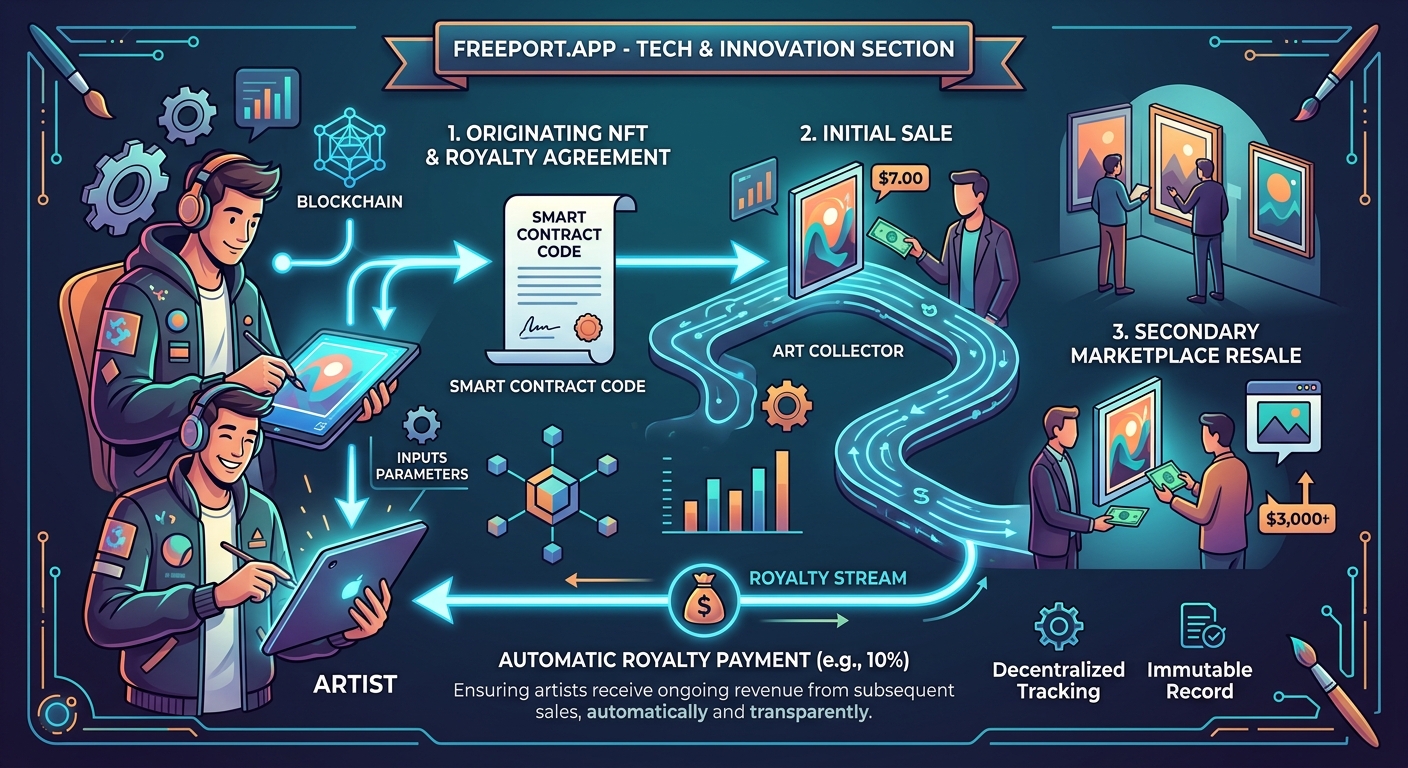
A smart contract is executable code living on a blockchain. When you mint digital art as an NFT, you’re creating a token with embedded rules about ownership transfers.
Royalty logic sits inside that code. Every time someone buys your work from another collector, the contract automatically splits the payment. The seller gets most of the proceeds. You get your predetermined percentage. The marketplace might take a fee.
No lawyers. No paperwork. No chasing down galleries for statements.
The payment happens in seconds, settling directly to your wallet address. You can watch transactions in real time on blockchain explorers like Etherscan.
This automation matters because secondary markets generate enormous value. A piece you sold for $500 might resell for $50,000. Traditional systems gave you zero from that $49,500 gain. Smart contracts give you a programmed cut.
How Artists Configure Royalty Percentages
When you’re ready to mint your first fine art NFT, most platforms ask you to set a royalty rate during the creation process.
Here’s how to think through that decision:
-
Research platform standards by checking what successful artists in your category typically charge. Most digital creators set rates between 5% and 15%.
-
Consider your audience and whether higher percentages might discourage trading. Collectors who flip work frequently prefer lower royalty burdens.
-
Factor in blockchain costs since some networks charge gas fees that eat into small royalty payments. A 5% royalty on a $100 sale might net you almost nothing after transaction costs.
-
Set your rate permanently because many contracts don’t allow post-mint adjustments. Choose carefully before you publish.
-
Document your reasoning so you can explain your choice to collectors who ask. Transparency builds trust.
Different platforms handle this setup differently. Some offer slider controls. Others require manual percentage entry. A few provide tiered options based on sale price ranges.
The technical implementation varies by blockchain standard. Ethereum uses ERC-721 and ERC-1155 token standards, which support royalty extensions through EIP-2981. Other chains have their own approaches.
Platform Cooperation Makes or Breaks Enforcement
Here’s the uncomfortable truth: smart contract royalties only work when marketplaces choose to honor them.
The code can suggest a royalty payment. But if a marketplace builds its interface to ignore that suggestion, sellers and buyers can complete transactions without triggering your cut.
This happened at scale in 2022 when several major platforms made royalties optional. Artists watched their recurring revenue streams dry up overnight as traders migrated to zero-fee venues.
Some marketplaces now offer different models:
- Mandatory royalties where the platform refuses to process sales without paying creators
- Optional royalties where buyers can choose whether to honor them
- Creator earnings where the platform itself pays artists from its own fees
- Blocklist systems that prevent trading on non-compliant venues
Understanding how smart contracts are revolutionizing art ownership and provenance helps you see why enforcement remains technical and social rather than purely automatic.
You need to research where your work trades and which platforms actually pay.
Blockchain Standards That Support Royalties
Different token standards handle royalty data in different ways. The technology underneath your art determines what’s possible.
| Standard | Blockchain | Royalty Support | Adoption Level |
|---|---|---|---|
| ERC-721 | Ethereum | Via EIP-2981 extension | Very high |
| ERC-1155 | Ethereum | Via EIP-2981 extension | High |
| SPL Token | Solana | Native in Metaplex standard | High |
| FA2 | Tezos | Via TZIP-12 extension | Medium |
| NEP-171 | NEAR | Built into standard | Growing |
EIP-2981 became the dominant Ethereum royalty standard because it provides a simple interface for marketplaces to query royalty information. The contract returns a recipient address and percentage when asked.
But standards only matter if platforms implement them. That’s why understanding artist compensation in blockchain art requires looking beyond just the technical specs.
Solana’s Metaplex standard took a different approach by baking royalty enforcement directly into the token program itself. This makes it harder (though not impossible) for marketplaces to bypass payments.
Some artists now mint on multiple chains to maximize reach. Others stick to networks with stronger royalty cultures.
Common Mistakes That Cost Artists Money
New creators make predictable errors when setting up royalty systems. Avoid these:
- Setting royalties too high and discouraging secondary trading entirely
- Forgetting to verify the recipient wallet address before minting
- Assuming all marketplaces will honor your settings automatically
- Ignoring gas fees that make small royalty payments uneconomical
- Failing to monitor where your work actually trades
- Not reading platform terms about royalty policy changes
- Minting on chains without mature royalty infrastructure
One artist I know set a 25% royalty rate thinking it would maximize earnings. Instead, collectors avoided reselling because the burden felt excessive. The work barely traded, generating almost no royalty income.
Another creator copied a wallet address incorrectly. Hundreds of dollars in royalties went to a random stranger before they noticed the error months later.
“The biggest mistake artists make is treating royalties as guaranteed income rather than platform-dependent features. Always verify that the venues where your collectors trade actually enforce payments.”
That advice comes from creators who learned expensive lessons during the 2022 royalty wars.
Tracking Your Royalty Payments
Once your work starts trading, you need systems to monitor incoming payments. Blockchain transparency makes this easier than traditional art markets.
Most artists use a combination of tools:
- Wallet notifications that alert you to incoming transactions
- Portfolio trackers that categorize royalty payments separately from sales
- Blockchain explorers where you can manually verify payment history
- Platform dashboards that show earnings from specific marketplaces
- Spreadsheet logs for tax reporting and income analysis
Set up a dedicated wallet just for royalty income if you’re serious about tracking. This separates recurring revenue from primary sales and makes accounting cleaner.
Some platforms provide detailed analytics showing which pieces generate the most secondary market activity. This data helps you understand what collectors value and trade most actively.
Tax implications vary by jurisdiction, but most countries treat royalty income as taxable revenue. Keep records of every payment with timestamps and USD values at the time of receipt.
Protecting Your Revenue Streams
Artists can take specific actions to defend their royalty income even as platform policies shift.
Choose royalty-friendly platforms for your initial mints. Research each venue’s policy history. Platforms that eliminated royalties once might do it again.
Build direct relationships with collectors who understand and support creator compensation. Engaged communities often pressure marketplaces to maintain royalty enforcement.
Mint on blockchains with stronger technical enforcement if recurring revenue matters more to you than maximum reach. Some networks make bypassing royalties technically harder.
Diversify across multiple chains so policy changes on one platform don’t eliminate your entire royalty stream. Many blockchain artists redefining contemporary digital art now maintain presences on three or four networks.
Consider alternative models like bonding curves or staking mechanisms that create ongoing value exchange between artists and collectors beyond simple resale royalties.
Stay vocal about royalty importance in community discussions. Platform decisions respond to user pressure, and silent artists get ignored.
Document your expectations clearly in your artist statements and collection descriptions. Set the cultural norm that your work includes royalty obligations.
Alternative Revenue Models Beyond Resale Royalties
Smart contracts enable compensation structures that go far beyond simple percentage cuts of secondary sales.
Some artists now experiment with:
- Access tokens that grant holders ongoing benefits like exclusive drops or community membership
- Staking rewards where collectors earn tokens by holding artwork long-term
- Derivative rights that pay you when collectors create commercial products using your work
- Time-based unlocks that reveal additional content to long-term holders
- Fractional ownership structures where you retain partial ownership of sold pieces
These models recognize that fractional ownership is changing digital collecting forever and smart contracts can encode much more complex relationships than traditional art markets allowed.
One creator I follow issues “patronage tokens” to collectors who buy their work. Token holders vote on future projects and receive airdrops of new pieces. This creates ongoing engagement that transcends single transactions.
Another artist programs escalating royalties that increase if a piece resells within 30 days but decrease for long-term holders. This discourages flipping while rewarding patient collectors.
The technology allows you to get creative about value exchange. You’re not limited to static percentages.
The Role of Decentralized Marketplaces
Centralized platforms can change royalty policies with a simple announcement. Decentralized alternatives encode rules into immutable smart contracts.
Protocols like Zora and Manifold give artists more control by making royalty enforcement part of the core trading mechanism rather than a platform feature. When you mint through these systems, the royalty logic lives in your contract, not the marketplace’s code.
This doesn’t make enforcement perfect. Traders can still use peer-to-peer transfers or non-compliant venues. But it shifts power toward creators by making royalty bypass require active evasion rather than passive platform policy.
Some decentralized marketplaces also experiment with on-chain governance where artists and collectors vote on policy changes. This prevents unilateral decisions that harm creators.
The tradeoff is often lower liquidity and smaller audiences compared to major centralized platforms. You gain control but might sacrifice reach.
Many artists now use hybrid strategies, minting on decentralized protocols but promoting work through larger platforms that drive more traffic.
Royalties Across Different Blockchain Networks
Each blockchain ecosystem has developed its own royalty culture and technical capabilities.
Ethereum offers the most mature infrastructure but suffers from high gas fees that make small royalty payments expensive. Layer 2 solutions like Polygon and Arbitrum reduce costs while maintaining compatibility.
Solana built strong royalty norms early, with Metaplex making enforcement relatively robust. The network’s low fees mean even small payments remain economical.
Tezos attracted artists partly through its energy efficiency and strong royalty support. The community tends to respect creator compensation culturally.
Bitcoin-based platforms like Ordinals have minimal royalty infrastructure since the network wasn’t designed for complex smart contracts. Most royalties happen through social norms rather than code.
Understanding why artists are migrating to Polygon and Arbitrum helps you choose networks that balance your needs for reach, cost, and royalty reliability.
Some creators mint the same work on multiple chains to test which ecosystems generate better long-term royalty income. The data often surprises them.
What Happens When Platforms Shut Down
Royalty payments depend on active marketplaces facilitating trades. But what happens to your blockchain art when the platform shuts down affects your revenue streams too.
If a marketplace closes, your royalty code remains in the smart contract. But you only earn when trades happen on other platforms that honor those settings.
This is why minting on open standards matters. ERC-721 tokens work across hundreds of marketplaces. Proprietary formats lock you into single platforms.
Some artists now include backup royalty recipient addresses in their contracts, allowing them to update payment destinations if their primary wallet becomes compromised or inaccessible.
Others maintain relationships with multiple marketplaces so platform closures don’t eliminate all trading venues for their work.
The blockchain preserves your ownership and royalty settings permanently. But actual payments require active, compliant marketplaces where collectors trade.
Building Collections That Generate Royalty Income
Not all digital art generates significant secondary market activity. Strategic choices during creation affect your long-term royalty potential.
Pieces that tend to generate more resales and royalty income share certain characteristics:
- Strong visual identity that makes the work instantly recognizable
- Limited editions that create scarcity and trading motivation
- Active communities around the artist or collection
- Utility or access that gives collectors reasons beyond speculation
- Clear provenance that builds confidence in authenticity
- Appropriate pricing that leaves room for value appreciation
Understanding what makes a digital collection blue-chip helps you create work that collectors want to trade rather than just hold.
Royalty income compounds over time as your reputation grows and early works appreciate. A piece that generates $50 in royalties this year might generate $5,000 annually once your career matures.
Think of royalties as long-term career infrastructure rather than immediate income.
Your Ongoing Relationship With Collectors
Smart contract royalties create a permanent financial connection between you and everyone who trades your work. This changes the artist-collector relationship fundamentally.
Every resale becomes a small partnership. Collectors benefit from price appreciation. You benefit from ongoing royalty streams. Both parties want the work to maintain and grow in value.
This alignment of incentives didn’t exist in traditional art markets where artists and collectors had opposing interests after the initial sale.
Some artists now offer special benefits to collectors who have paid them the most in cumulative royalties. This might include priority access to new drops, exclusive physical prints, or invitations to private events.
Others use royalty payment data to identify their most active supporters and build deeper relationships with those community members.
The blockchain makes these interactions transparent and verifiable in ways that were impossible before.
Securing Your Future Revenue
Smart contract royalties represent a fundamental shift in how artists earn from their work. But the technology alone doesn’t guarantee income.
You need to actively choose platforms that enforce payments, set appropriate rates, monitor where your work trades, and build communities that value creator compensation.
The landscape keeps changing. Platforms update policies. New blockchains emerge with different technical capabilities. Market dynamics shift.
Stay informed about these changes. Participate in discussions about royalty standards. Support venues that respect artists. Build work that collectors want to trade.
Your royalty income five years from now depends on decisions you make today about where you mint, how you price, and which communities you engage.
The technology gives you tools that previous generations of artists never had. Use them strategically.