What Institutional Investors Look for When Acquiring Digital Art Collections

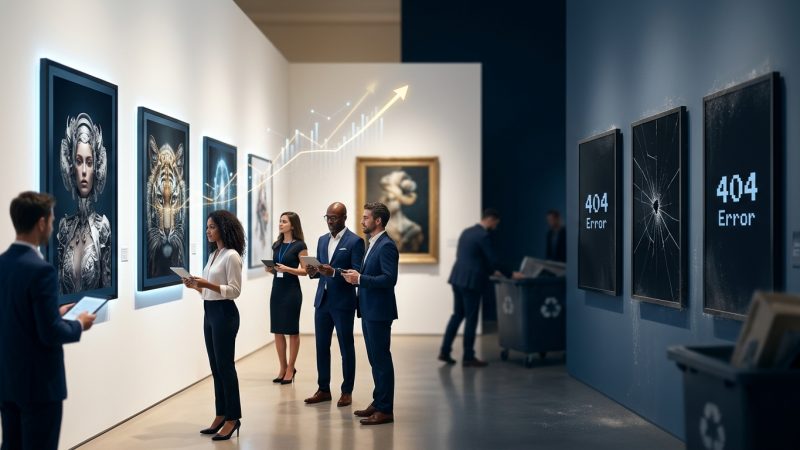
Institutional capital is reshaping the digital art market. Family offices, pension funds, and investment managers now allocate meaningful portions of their portfolios to blockchain-based artworks. The shift isn’t speculative anymore. It’s strategic, methodical, and grounded in frameworks that mirror traditional art acquisition but account for the unique attributes of on-chain assets.
Institutional investors evaluate digital art through rigorous due diligence that includes smart contract audits, provenance verification, storage infrastructure, liquidity analysis, and regulatory compliance. Success requires understanding both traditional art market fundamentals and blockchain-specific technical considerations. The institutions building lasting portfolios prioritize transparency, security, and long-term value preservation over short-term speculation.
Provenance verification becomes the foundation
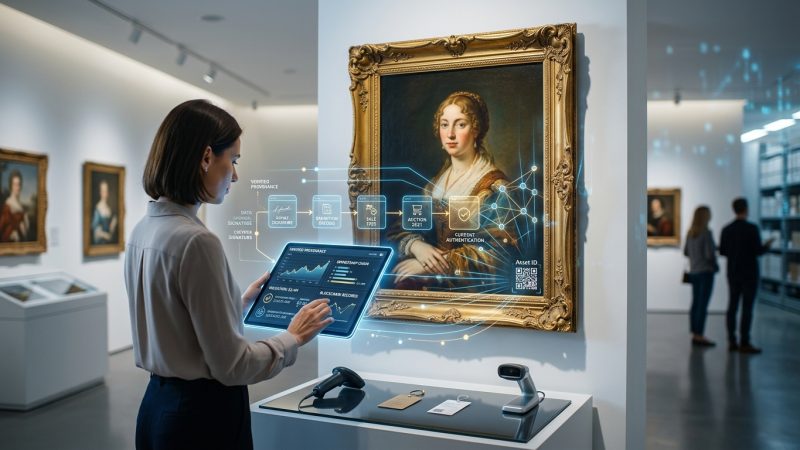
Traditional art collectors examine ownership history through paper trails, auction records, and expert authentication. Digital art demands the same scrutiny, but the evidence lives on-chain.
Institutional buyers verify every transfer from the original creator’s wallet to the current holder. They examine transaction hashes, timestamps, and wallet addresses to confirm authenticity. A single break in the chain raises red flags.
How provenance tracking is transforming art authentication and valuation has become standard practice for serious collectors. Smart contract deployment addresses matter just as much as the artwork itself.
The best institutions employ blockchain analysts who can read smart contract code. They verify that the contract matches the artist’s verified wallet. They check for secondary market activity patterns that might indicate wash trading or artificial price inflation.
Metadata storage location matters too. Assets stored entirely on-chain carry less risk than those relying on centralized servers or unverified IPFS links.
Smart contract architecture undergoes technical audit
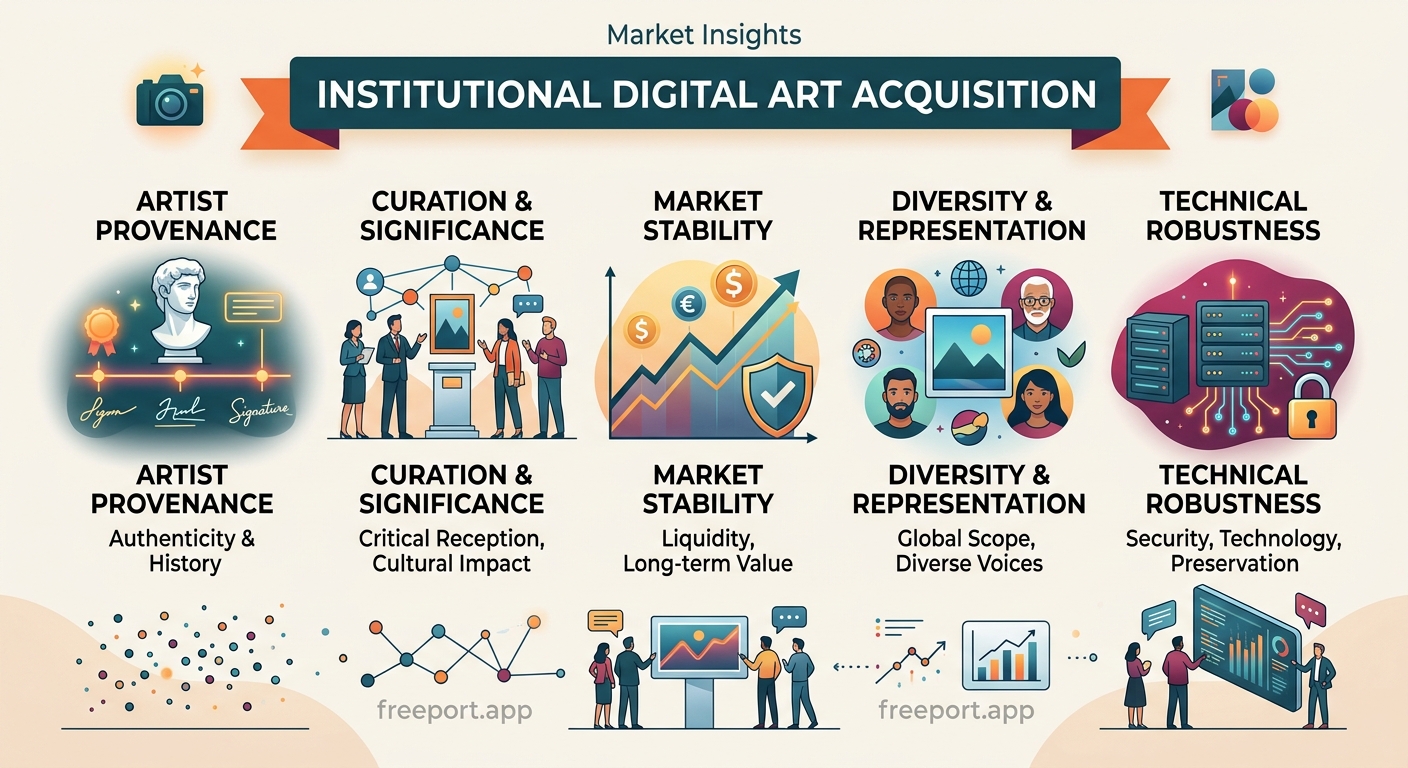
Investment committees don’t just buy art anymore. They acquire executable code that governs ownership, royalties, and transferability.
Professional auditors review the smart contract for vulnerabilities, backdoors, or unusual permissions. They look for:
- Minting functions that could create unlimited editions
- Admin keys that allow contract modification after deployment
- Royalty mechanisms that might fail during transfers
- Upgrade patterns that introduce security risks
How smart contracts are revolutionizing art ownership and provenance explains why technical due diligence has become non-negotiable for institutional buyers.
A properly audited contract includes immutable edition counts, transparent royalty splits, and no hidden minting privileges. Institutions reject contracts with centralized control mechanisms that could devalue their holdings overnight.
Storage infrastructure determines long-term viability
The art itself must exist somewhere. Institutional investors scrutinize where and how the visual asset is stored.
On-chain storage offers maximum permanence but comes with cost constraints. Generative art that lives entirely in smart contract code faces no storage risk. Generative art on the blockchain where code meets canvas represents the gold standard for institutional permanence.
For larger files, storage method matters enormously:
| Storage Method | Permanence | Cost | Institutional Preference |
|---|---|---|---|
| On-chain | Highest | Very High | Preferred for small files |
| Arweave | Very High | Moderate | Strong preference |
| IPFS (pinned) | Moderate | Low | Acceptable with verification |
| Centralized servers | Low | Very Low | Generally rejected |
Decentralized storage wars IPFS vs Arweave for long-term NFT preservation breaks down the technical trade-offs that influence institutional decisions.
Institutions verify that IPFS content identifiers match the actual file hash. They confirm Arweave transaction IDs and check payment status for permanent storage. They reject artworks where the visual component could disappear if a startup shuts down.
Liquidity analysis shapes portfolio allocation
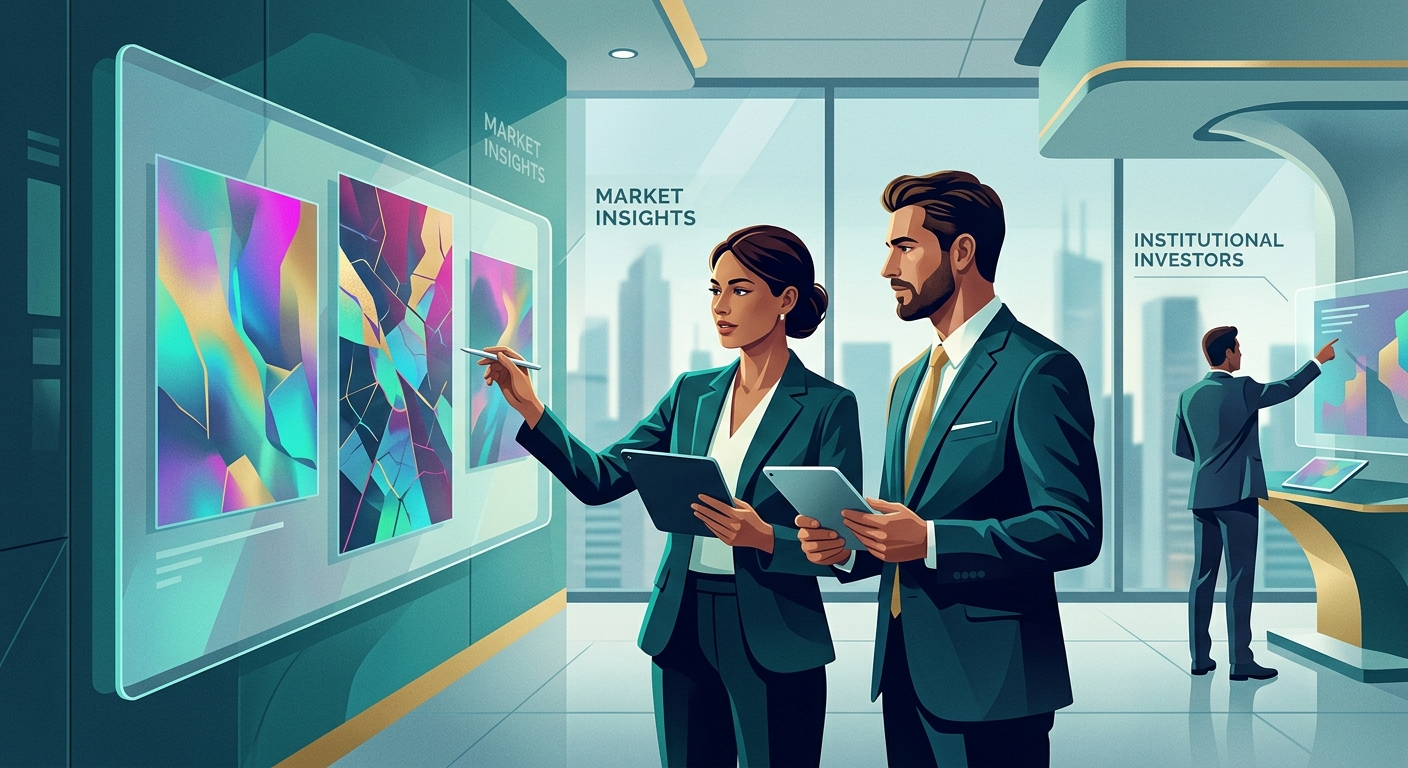
Unlike private art collections that might sit in storage for decades, institutional investors need exit strategies.
They analyze historical trading volume across multiple marketplaces. They examine bid-ask spreads and order book depth. They calculate how much capital would be required to move the market price by 10%.
A work by an established digital artist might trade dozens of times per month across three platforms. An emerging artist’s work might see one sale every quarter. That difference affects position sizing dramatically.
Institutions also evaluate:
- Number of active collectors for a given artist or collection
- Geographic distribution of buyers and sellers
- Correlation between the asset and broader crypto market movements
- Historical price stability during market downturns
Why blue-chip NFT collections maintain value during market downturns provides context for how professional buyers assess risk-adjusted returns.
The most sophisticated funds build proprietary databases tracking every sale, transfer, and listing. They identify patterns that indicate genuine collector interest versus speculative flipping.
Artist reputation extends beyond social metrics
Social media followers don’t impress institutional committees. Exhibition history, critical recognition, and artistic evolution do.
Professional art advisors research the artist’s background, training, and trajectory. They examine whether the artist has shown work in recognized galleries or museums. They assess whether art critics and curators take the work seriously.
7 blockchain artists redefining contemporary digital art in 2026 highlights creators who meet institutional criteria for serious consideration.
Institutions favor artists who:
- Maintain consistent creative output over multiple years
- Evolve their practice rather than repeating formulas
- Engage with art historical context and contemporary discourse
- Show work in both digital and traditional art spaces
A 22-year-old with 100,000 Twitter followers but no exhibition history gets passed over. A mid-career artist with museum shows and critical essays gets serious attention.
Regulatory compliance determines feasibility
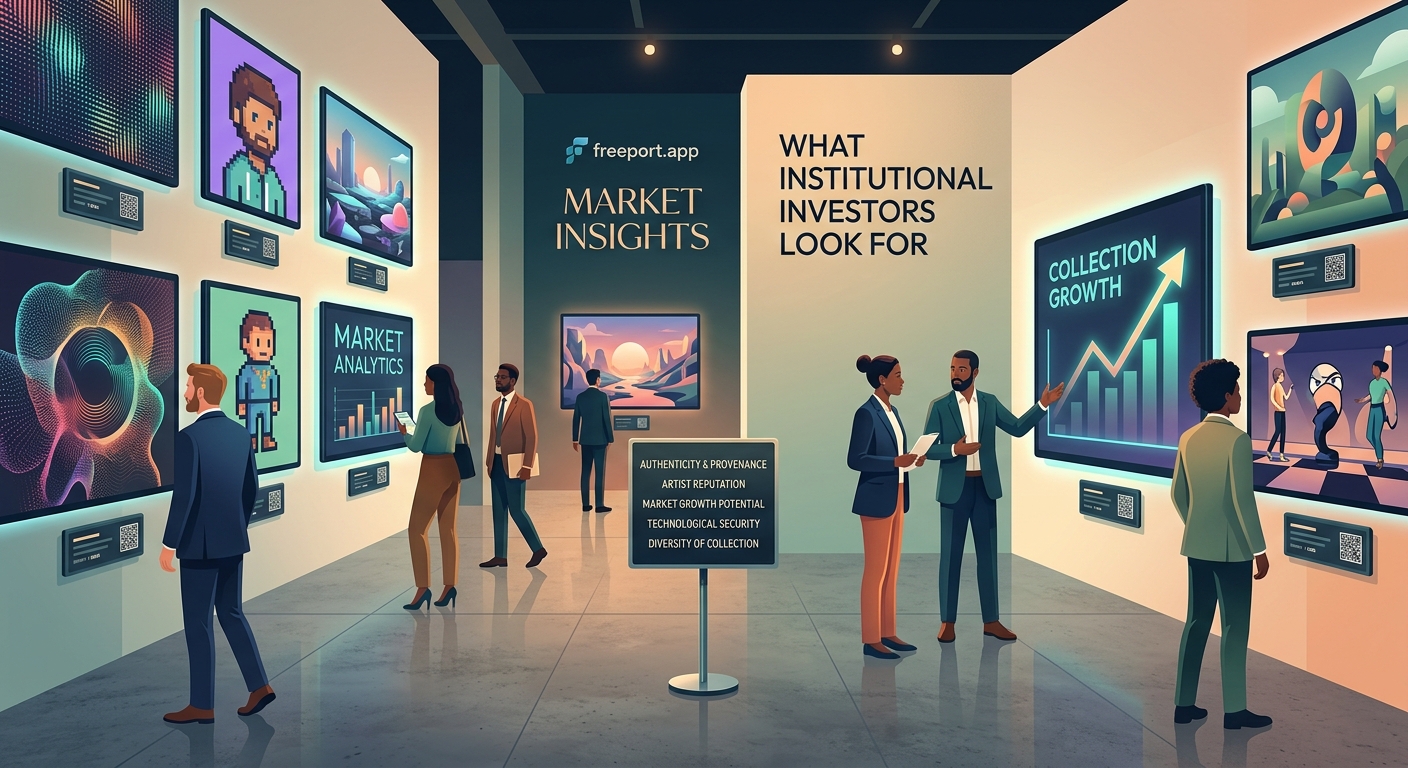
Legal departments review every acquisition for securities law implications, tax treatment, and custody requirements.
Some digital artworks might be classified as securities depending on how they’re marketed and structured. Institutions avoid anything that promises returns, offers profit-sharing, or includes investment-like features.
Tax treatment varies by jurisdiction. Some countries classify digital art as collectibles subject to higher capital gains rates. Others treat them like traditional art. Professional buyers model tax implications before committing capital.
Custody solutions must meet institutional standards. Self-custody through hardware wallets works for individuals but fails institutional risk management requirements. Professional buyers use:
- Multi-signature wallets with geographic key distribution
- Institutional custody services with insurance coverage
- Cold storage with documented access procedures
- Regular security audits and penetration testing
The complete guide to storage and security for high-value digital assets covers the technical requirements that institutional buyers demand.
Platform risk assessment prevents catastrophic loss
The marketplace or platform where art was minted carries its own risk profile.
Institutions evaluate platform longevity, financial stability, and technical infrastructure. They ask what happens if the platform disappears. What happens to your blockchain art when the platform shuts down addresses the scenarios that keep risk managers awake at night.
Smart contracts deployed to public blockchains survive platform failures. Artworks that rely on platform-specific infrastructure face existential risk.
The best institutional buyers verify that:
- Smart contracts are deployed directly to mainnet blockchains
- Metadata and visual assets exist independently of the platform
- No platform-specific dependencies exist in the contract code
- Alternative marketplaces can display and trade the asset
Platform concentration risk matters too. If 80% of an artist’s sales occur on one marketplace, that platform’s health affects the entire market for that artist’s work.
Valuation methodology combines multiple frameworks
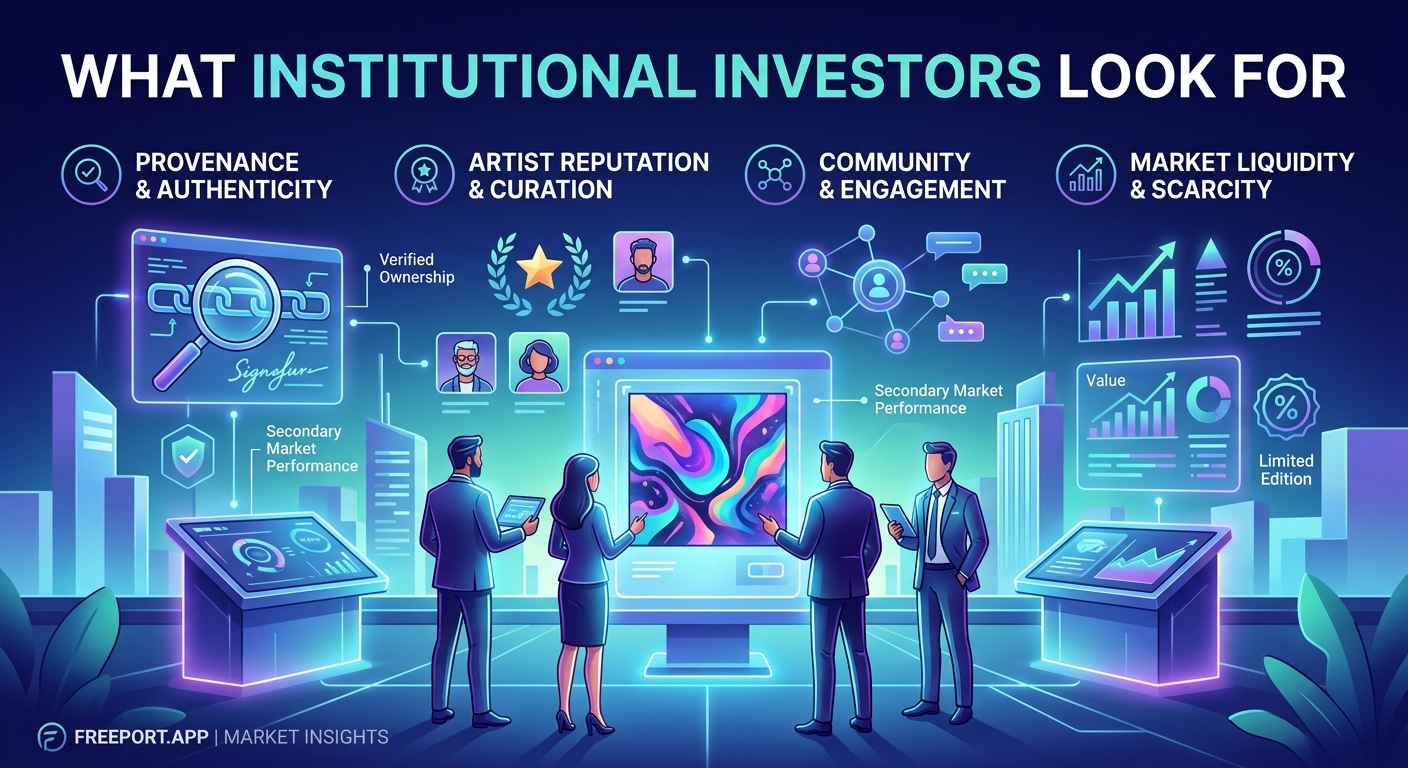
Pricing digital art requires blending traditional art market analysis with crypto-native metrics.
Institutions start with comparable sales data, just like traditional art appraisers. They adjust for edition size, sale timing, and market conditions. They build price databases tracking every transaction for relevant artists and collections.
But they also incorporate blockchain-specific factors:
- Gas fees paid for minting (indicating creator commitment)
- Wallet quality of current holders (institutional vs. retail)
- On-chain activity patterns (long-term holding vs. flipping)
- Smart contract features (royalties, unlockables, utilities)
“We value digital art using a hybrid model that weights traditional comparables at 60%, on-chain activity at 25%, and technical infrastructure at 15%. The exact mix shifts based on the artist’s career stage and the work’s age.” – Chief Investment Officer, digital art fund
What makes a digital collection blue-chip analyzing long-term value indicators explains the frameworks that professional investors apply.
The most sophisticated buyers build regression models incorporating dozens of variables. They backtest their models against historical data to validate predictive power.
Due diligence timelines reflect investment size
Small acquisitions might clear compliance in days. Major positions require months of analysis.
For purchases under $100,000, institutions typically conduct:
- Basic provenance verification (2-3 days)
- Smart contract review (1-2 days)
- Artist background check (3-5 days)
- Legal compliance review (5-7 days)
For seven-figure acquisitions, the process expands:
- Comprehensive provenance audit with third-party verification (2-3 weeks)
- Full smart contract security audit by specialized firm (2-4 weeks)
- Artist career analysis including interviews with curators and critics (3-4 weeks)
- Detailed legal opinion from blockchain-specialized counsel (2-3 weeks)
- Market analysis including liquidity modeling (1-2 weeks)
- Board-level approval process (1-2 weeks)
The timeline reflects the permanence of blockchain transactions. Once purchased, institutional-scale positions can’t be easily unwound without market impact.
Portfolio construction balances multiple objectives
Institutional investors rarely buy single works. They build diversified portfolios across artists, styles, and blockchain networks.
A typical institutional digital art portfolio might allocate:
- 40% to established artists with 5+ years of exhibition history
- 30% to emerging artists showing strong trajectory
- 20% to blue-chip collections with proven secondary markets
- 10% to experimental or cutting-edge practices
Geographic diversification matters too. Institutions spread risk across artists from different countries and cultural contexts.
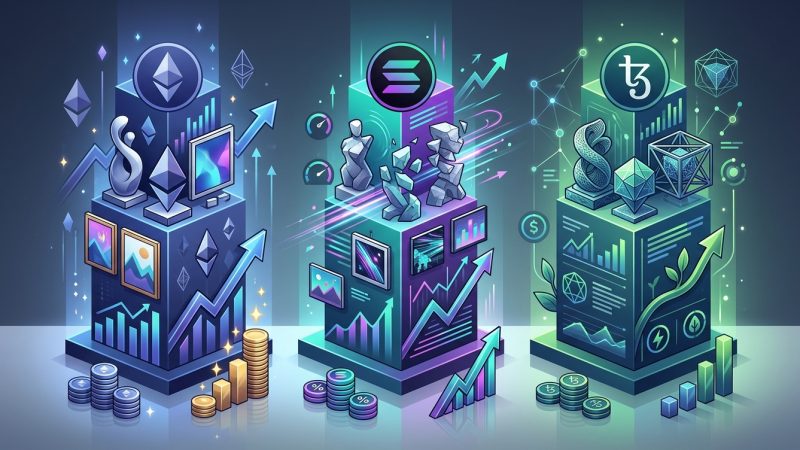
Blockchain diversification has become standard practice. Ethereum dominates institutional holdings, but layer 2 solutions why Ethereum artists are migrating to Polygon and Arbitrum shows how professional buyers are expanding to reduce concentration risk.
Some institutions also diversify by artistic medium within digital art. They might hold generative art, digital photography, 3D sculpture, and AI-assisted works in different proportions.
Fractional ownership enables larger positions
Single artworks priced at millions of dollars exceed many institutional risk limits for individual positions.
Fractional ownership is changing digital collecting forever has opened new strategies for institutional buyers. They can acquire meaningful exposure to blue-chip works without concentrating too much capital in one asset.
Professional buyers evaluate fractional ownership platforms using the same rigor they apply to whole artworks. They examine:
- Smart contract governance for fraction holders
- Liquidity mechanisms for buying and selling fractions
- Decision-making processes for the underlying artwork
- Legal structure and regulatory compliance
- Platform solvency and insurance coverage
The best platforms provide clear documentation, transparent governance, and institutional-grade custody.
Authentication processes prevent costly mistakes
Fake artworks and fraudulent contracts cost collectors millions annually.
Institutional buyers verify artist identity through multiple channels. They check verified social media accounts, official websites, and gallery representations. They confirm wallet addresses through multiple independent sources.
How to authenticate digital art before adding it to your collection outlines the verification steps that prevent expensive errors.
Professional authentication includes:
- Direct communication with the artist or their gallery
- Verification of contract deployment from known artist wallets
- Comparison against official artist catalogs or registries
- Third-party authentication services when available
- Cross-reference with museum or gallery records
Some institutions maintain relationships with artists’ studios or galleries to streamline verification for future purchases.
Market timing considerations differ from traditional art
Traditional art collectors can wait months or years to find the right acquisition opportunity. Digital art markets move faster.
Institutional buyers monitor on-chain activity in real time. They set alerts for specific artists or collections. They track wallet movements that might signal upcoming sales.
But they also recognize that blockchain transparency creates information advantages. Every collector can see the same data simultaneously. Edge comes from analysis, not access.
The best institutional buyers focus on long-term value rather than short-term price movements. They build positions over time, averaging into favorable opportunities rather than trying to time exact bottoms.
They also recognize that digital art markets correlate with broader crypto markets. They adjust position sizing and timing based on overall market conditions.
Building institutional-grade digital art positions
The institutions succeeding in digital art combine traditional art world expertise with blockchain-native technical knowledge. They hire teams that include art historians, blockchain developers, and risk managers.
They build proprietary tools for tracking, analyzing, and valuing digital artworks. They establish relationships with artists, galleries, and platforms. They participate in the ecosystem as collectors, not just investors.
Most importantly, they approach digital art with the same seriousness and rigor they bring to any other asset class. The technology is new, but the principles of careful analysis, thorough due diligence, and long-term thinking remain timeless.
Your institution’s entry into digital art should start with education, proceed through careful pilot acquisitions, and scale only after establishing robust processes. The opportunity is real, but so are the risks. The winners will be those who do the work.