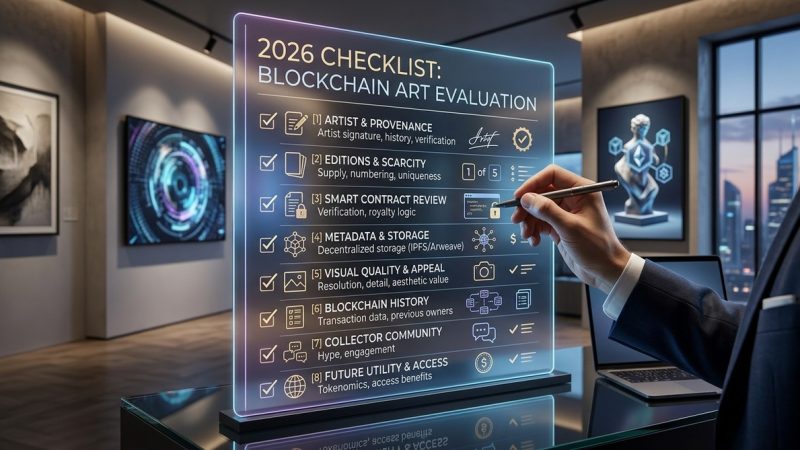
How to Authenticate Blockchain Art Without an Expert: 5 DIY Verification Tools

You found a piece of blockchain art you love. The colors are right. The artist’s name carries weight. But before you hit “buy,” a small voice asks: Is this really what it claims to be?
For years, verifying a digital artwork meant hiring a pricey expert or hoping the platform’s seal of approval was enough. That era is over. In 2026, anyone with a wallet and a browser can authenticate blockchain art in minutes. You do not need a certification from a gallery. You do not need a forensic lab. You just need the right tools and a little know-how.
This guide walks you through five DIY verification methods that put the power back in your hands. No fluff. No gatekeeping. Just practical steps to protect your collection.
Authenticating blockchain art without an expert is not only possible, it is becoming standard practice for savvy collectors. By using block explorers, metadata checkers, reverse image tools, wallet analysis, and smart contract audits, you can verify provenance, detect forgeries, and confirm an artwork’s legitimacy before spending a single dollar. These five DIY tools turn you into your own authentication department.
Why DIY Authentication Matters More Than Ever
The blockchain art market has matured. More collectors means more opportunities, but also more bad actors. In 2025, a wave of sophisticated forgeries hit major marketplaces. Scammers copied popular collections, tweaked a few pixels, and listed them as originals. Even experienced buyers got fooled.
That is where DIY authentication becomes your superpower. The blockchain is public by design. Every transaction, every mint, every transfer leaves a permanent record. You just need to know where to look. These tools let you read that record yourself, without relying on a middleman.
Tool 1: The Block Explorer
A block explorer is your first and most powerful ally. Think of it as a search engine for the blockchain. You can paste any wallet address, transaction hash, or token ID and see the full history.
How to use it for authentication:
- Copy the NFT’s contract address or token ID from the marketplace listing.
- Paste it into Etherscan (for Ethereum), Solscan (for Solana), or the appropriate explorer for your chain.
- Look for the “Minted By” or “Creator” field. This should match the known wallet of the artist.
- Check the transfer history. Was the token minted directly by the artist, or did it appear out of nowhere six months later?
- Verify the token standard. ERC-721 and ERC-1155 are the most common for art. If you see something unusual, proceed with caution.
A genuine artwork will show a clean chain of custody from the artist’s wallet to the current owner. If the trail starts with a random wallet you have never seen, that is a red flag.
Tool 3: Reverse Image Search for Visual Copies
Blockchain records do not care about visual duplication. A scammer can mint a perfect copy of a famous artwork and list it with a different token ID. The blockchain will not flag it because the metadata is technically valid. You need your eyes and a search engine.
Steps to run a visual check:
- Download the image or capture a screenshot of the artwork.
- Upload it to Google Images or TinEye.
- Look for the earliest appearance of that image on the web.
- If the same image shows up on a different collection page or an artist’s personal site, you need to compare the token IDs.
This method catches “copy-mint” scams where the forger did not create anything new. They just copied an existing file and minted it as their own.
Tool 4: Wallet History Analysis
The artist’s wallet tells a story. A legitimate creator will have a history that makes sense. They minted their first pieces months or years ago. They interacted with known galleries and platforms. Their transactions follow a pattern.
What to look for in a wallet:
- Age of the wallet. A brand new wallet with a single high-value NFT is suspicious.
- Consistency of style. Does the wallet hold other pieces that match the artist’s known body of work?
- Interaction with verified contracts. Has the wallet minted on well-known platforms like Foundation, SuperRare, or known generative art engines?
- Sales history. Are previous sales recorded at reasonable prices, or do they show wash trading patterns?
You can use tools like Dune Analytics or Nansen (if you have access) to get a broader view. But even a manual scroll through Etherscan can reveal a lot.
Tool 5: Smart Contract Audit for Hidden Rules
The smart contract is the DNA of the NFT. It defines who can mint, how royalties work, and whether the token can be frozen or burned. Most collectors skip this step. That is a mistake.
How to check a smart contract yourself:
- On the block explorer, find the “Contract” tab.
- Look for the “Read Contract” section.
- Check functions like
owner(),royaltyInfo(), andisApprovedForAll(). - Verify that the contract includes proper royalty enforcement. A legitimate art contract usually has a royalty percentage (often 5% to 10%) set for the creator.
- Look for any functions that allow the contract owner to pause trading, freeze tokens, or mint unlimited copies.
If the contract has a function called mint() that anyone can call without restriction, that is a warning sign. It means someone could flood the collection with extra copies after you buy.
Common Mistakes When Authenticating Blockchain Art
Even with the right tools, collectors make errors. Here is a table of the most frequent mistakes and how to avoid them.
| Mistake | Why It Happens | How to Avoid It |
|---|---|---|
| Trusting the marketplace badge | Marketplaces do not always verify every collection. Some badges are self-applied. | Always cross-reference the contract address on the block explorer. |
| Ignoring the metadata URI | The metadata link might point to a centralized server that could change later. | Check if the metadata is stored on IPFS or Arweave for permanence. |
| Confusing collection with edition | A generative collection might have thousands of pieces. A 1/1 is unique. Both can be authentic, but they have different value structures. | Read the token standard and total supply on the contract. |
| Only checking the image | The image file can be swapped after minting if the contract allows it. | Verify the token URI points to immutable storage. |
| Skipping the artist’s socials | A fake might use a stolen artist name. | Cross-check the wallet address with the artist’s official Twitter or website. |
A Practical Workflow for Every Purchase
You do not need to run every tool on every piece. But for any purchase over a few hundred dollars, this workflow will save you from regret.
- Start with the marketplace. Copy the contract address and token ID.
- Open the block explorer. Confirm the creator wallet matches the artist.
- Run a reverse image search. Make sure the visual is unique to this token.
- Scan the wallet history. Does the artist’s wallet look legitimate?
- Read the contract. Check for royalties and any dangerous functions.
This process takes about ten minutes. Ten minutes can save you from losing thousands of dollars on a forgery.
“In the traditional art world, authentication relied on a small group of experts who could be fooled. On the blockchain, the truth is public. The challenge is not access to information. It is knowing how to read it.”
* Anonymous digital art curator, 2026
Your Role as a Self-Sufficient Collector
The blockchain art market is still young. Standards evolve. Platforms come and go. But one thing remains constant: the data is there for you to verify. By learning these five DIY tools, you move from being a passive buyer to an active investigator.
You do not need a certification from a museum. You do not need a third-party appraiser. You need curiosity and a willingness to look under the hood. Every piece you authenticate yourself becomes a lesson. Over time, you will spot patterns. You will recognize safe contracts. You will develop an instinct for what looks right.
Start with one tool. Run it on a piece you already own. Then try it on a piece you are considering. Build the habit. Your collection will be stronger for it, and you will sleep better knowing every piece in your wallet has passed your own inspection.