Why NFT Collectors Need a Custody Plan for Every Crypto Asset They Hold
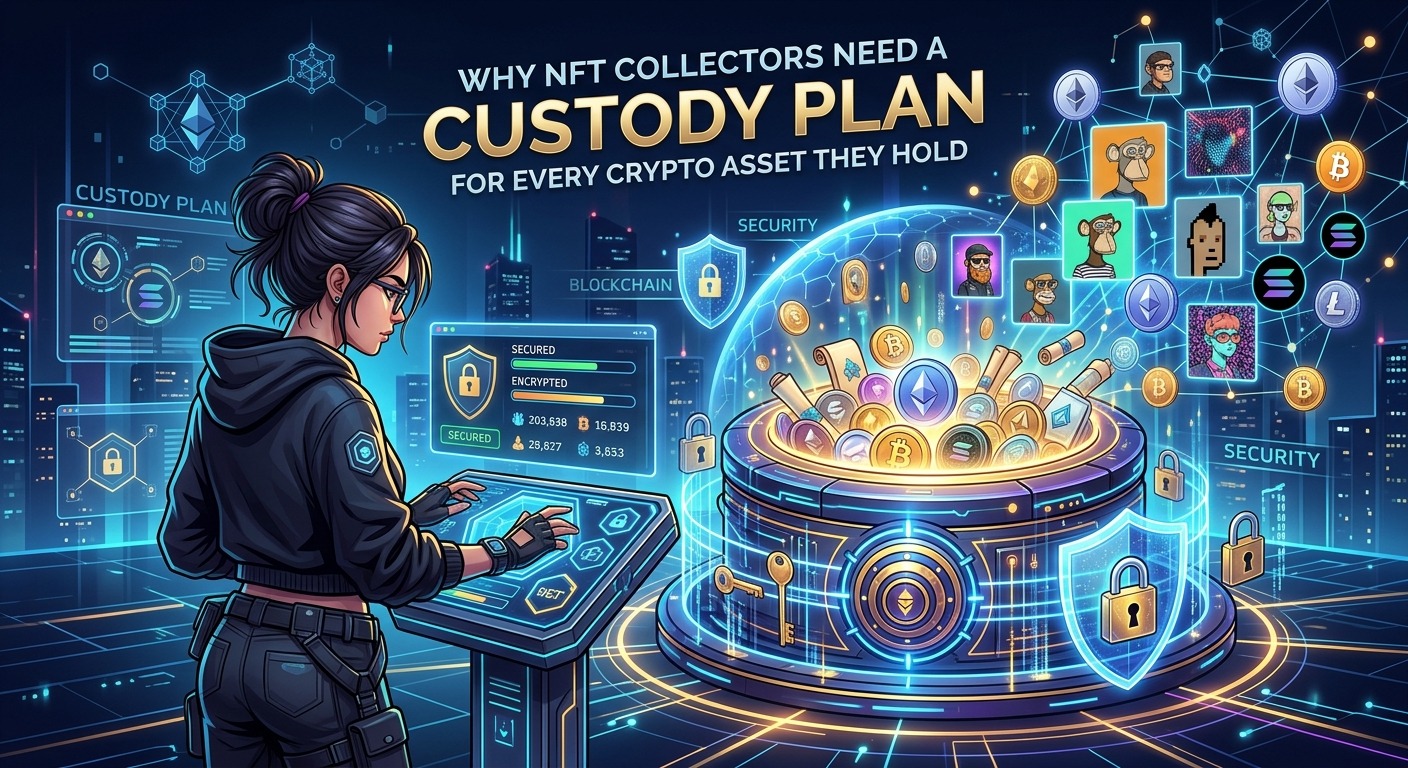
You spent three days researching a drop before placing a single bid. You double-checked your hardware wallet connection, verified the contract address, and declined every DM that looked slightly off. Your NFT security habits are sharp. But the Bitcoin and Ethereum you’re holding between purchases, the capital that actually funds your collecting, has probably never received the same level of scrutiny. That gap is not a small thing. For active on-chain buyers, it’s often the biggest unaddressed risk in the entire stack.
Collector’s Security Check
Most NFT collectors have locked down the art. The NFTs get cold storage. The gas fees get a hot wallet. But the BTC and ETH held as reserve capital, sometimes a significant portion of a collector’s net worth, often sit in accounts that were chosen for convenience rather than security. A real custody plan gives those reserve assets the same intentional treatment as the pieces they’re meant to fund.
The Blind Spot in Most Collector Security Setups
The NFT community has done a genuine job of normalizing hardware wallet use for digital art. If you’ve been collecting for more than a year, you likely own a Ledger or Trezor and use it for anything you actually care about holding. The problem surfaces a layer below the art itself.
Collectors tend to sort their holdings by function rather than by risk. The ETH in MetaMask is for bidding. The NFT on the cold storage device is the art. Everything else, the BTC held as a longer-term reserve, the ETH that accumulated after a sale, the stablecoin position waiting for the right opportunity, often ends up wherever was most convenient to put it at the time. That is not a deliberate security decision. It is a default, and defaults tend to be insecure.
Once the value of your crypto reserves starts approaching or matching the value of your collection, a convenience-first custody setup begins carrying real consequences. A single compromised exchange account or phished MetaMask session can wipe out months of accumulated capital with no recourse. Unlike a bank, there is no dispute process. There is no support ticket that gets you your funds back.
Why Hot Wallets Belong in Your Strategy but Not at the Center
Hot wallets are a necessary part of an active collector’s toolkit. You need them for immediate access during drops, Dutch auctions, and rapidly shifting floors. A hardware wallet that requires a physical confirmation step slows you down in exactly the moments when timing matters most. Nobody wants to miss a secondary listing because they had to locate their cold storage device.
The right mental model for a hot wallet is a petty cash account. It holds only what you need for current activity, covering anticipated bids and a reasonable gas buffer, and nothing more. The moment funds in a hot wallet exceed what you would realistically spend in the next week or two, that excess belongs somewhere with stronger protection.
Treating a hot wallet as a holding account for idle reserves is one of the most common security mistakes active collectors make. The larger the balance, the more attractive the target becomes. Hot wallets by definition are always connected and always exposed to anything that touches your browser or operating system. A poorly timed compromised extension or a malicious site interaction can move fast.
Hardware Wallets and the Case for Separating Your NFT Storage
A hardware wallet keeps private keys off your computer entirely. Transactions are signed on the physical device and broadcast through software, meaning a compromised machine cannot drain your wallet without physical access to the device and its PIN. For NFTs worth more than a few hundred dollars, this is the baseline security floor, not a premium option for serious collectors only.
The refinement that fewer collectors make is separating NFT holdings from other assets on their hardware setup. Mixing long-term art holdings with frequently traded assets on the same seed phrase means a single mistake in one context carries risk to everything else on that wallet. A practical approach puts high-value NFTs on one dedicated device and more frequently accessed holdings on a separate setup with its own seed phrase. The friction of maintaining that separation is the point. It limits the damage when something goes wrong.
Labeling your devices clearly and maintaining a private record of what lives where reduces the confusion that can follow an incident. The goal is not just protecting assets under normal conditions. It is knowing exactly what to check and contain under the worst ones.
Securing BTC Reserves with the Rigor Your Art Already Gets
Bitcoin is part of the collecting picture for more buyers than you might expect. Some hold BTC as a reserve currency, converting to ETH before making a purchase. Others accumulate it separately as a long-term store of value that sits alongside, rather than inside, their collection strategy. Either way, Bitcoin held for any meaningful duration warrants its own deliberate custody thinking, separate from both your NFT setup and your active trading accounts.
Bitcoin has a mature, well-developed ecosystem of self-custody tooling that the NFT space is still building toward. The principles behind Bitcoin self-custody have been refined over more than a decade, covering seed phrase backup strategies, hardware wallet best practices, and more advanced configurations like multisignature setups that eliminate single points of failure. Those same principles apply directly to how collectors should treat their BTC reserves.
A dedicated hardware wallet for Bitcoin, completely separate from your NFT wallet and your hot wallet, is the starting point for anyone holding a meaningful BTC position. Once reserves reach a level you would genuinely feel the loss of, a multisig configuration adds a meaningful layer of redundancy. It requires more than one key to authorize any transaction, which means a single compromised device or stolen seed phrase does not result in a total loss.
How to Structure a Custody Stack That Actually Holds Together
A functional custody framework for NFT collectors operates across three distinct layers, each with a clear purpose and defined limits on what belongs there.
The first layer is your operational hot wallet. Its only job is to hold enough ETH for current bidding activity and gas. No long-term reserves, no accumulated funds waiting for future deployment. If the wallet were drained tomorrow, the loss should sting but not devastate your position or halt your collecting activity.
The second layer is cold storage dedicated to NFTs. A hardware wallet, ideally one that exists purely for your art holdings, stores the pieces you’ve acquired. This device should not double as a trading account or a parking spot for excess ETH between purchases. Its purpose is singular: protecting what you’ve already bought.
The third layer is reserve custody. BTC and ETH held as longer-term capital belong in dedicated cold storage with proper backup procedures. That means seed phrases stored physically and securely offline, at minimum across two separate locations. It means periodic checks to confirm the setup still functions as expected. And it means treating those reserves as just as irreplaceable as the pieces in your collection, because they are what funds the next acquisition.
The friction of moving funds between layers is intentional. It forces a pause before large transfers and creates a natural moment to verify you are doing exactly what you think you are doing. In a space where irreversible transactions complete in seconds, that friction is a feature, not an inconvenience.
When Your Security Setup Finally Matches the Value of What You’re Protecting
The collectors who suffer the worst losses are rarely the ones who clicked a bad link on a fake mint site. They are often the ones who built strong habits around their art and let the infrastructure holding their reserves slide. A collection worth six figures, funded by poorly secured assets, is a six-figure vulnerability sitting in plain sight.
Building a real custody stack does not require deep technical knowledge. It requires treating every asset you hold with the same intentionality you already apply to your acquisition decisions. The questions are straightforward: where is this asset stored, who can access it, what happens if that access point fails, and what is the backup plan?
If you can answer those questions confidently for every NFT in your collection, you can answer them for every BTC and ETH position you hold. The framework is the same. The tools are available and more approachable than they were even a few years ago. What is missing for most collectors is simply the decision to apply consistent standards across the full stack, not only to the pieces they can display on their profile.
Your reserves are not a secondary concern. They are the engine behind everything else you collect. Treat them accordingly.