How to Evaluate Blockchain Art Before Buying: A Collector’s 2026 Checklist
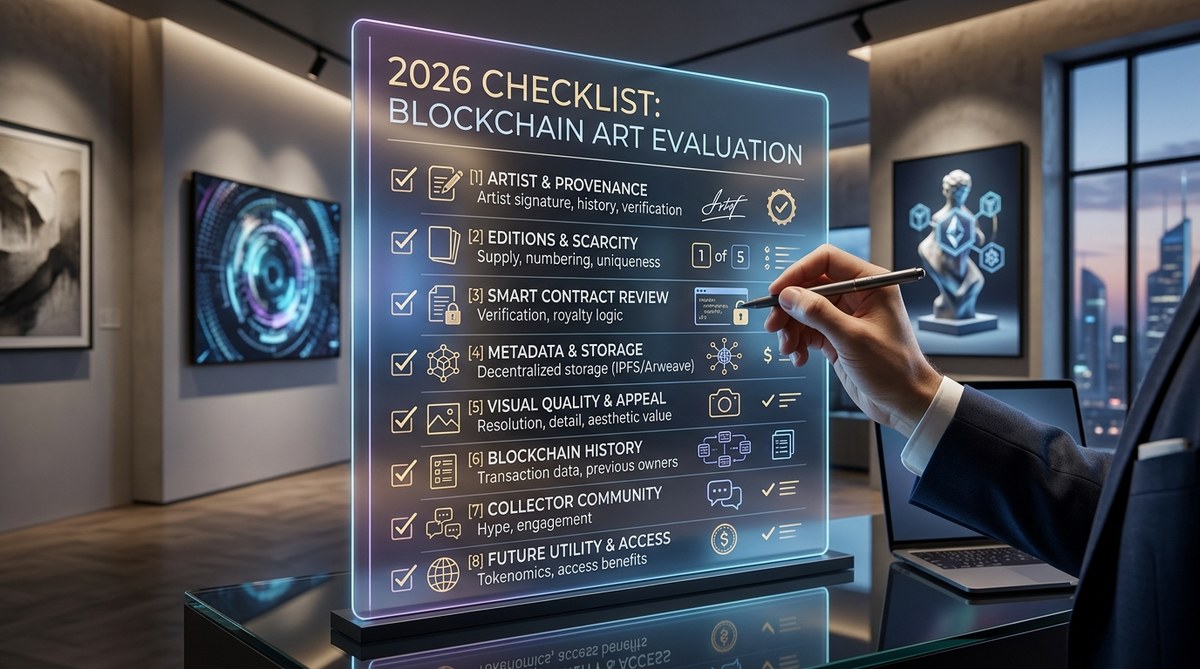
So you are scrolling through a marketplace, and an artwork catches your eye. The colors are striking, the description mentions a well-known generative artist, and the price feels reasonable. But how do you know if it is genuinely valuable? The blockchain solves many trust issues of the traditional art world, but it also introduces new layers of complexity. In 2026, evaluating digital art requires more than just an eye for aesthetics. You need a systematic approach to verify authenticity, understand provenance, and separate a worthwhile piece from a potential trap.
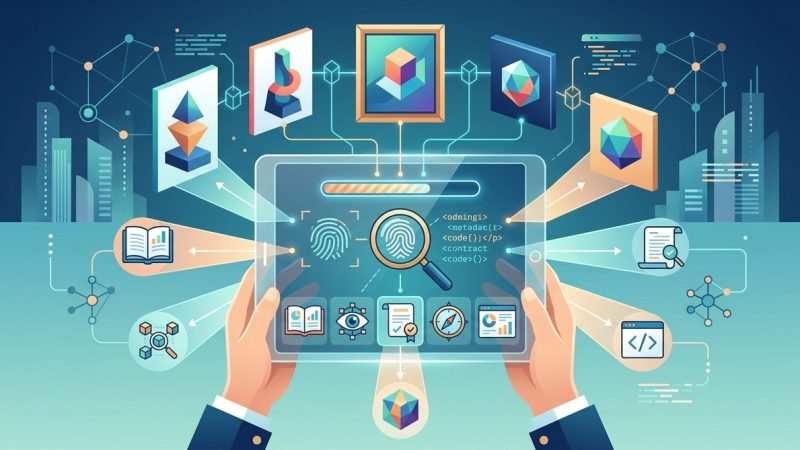
Evaluating blockchain art is a multidimensional process. Start by researching the artist and their history on the blockchain. Then verify the smart contract and metadata for authenticity. Check the artwork’s storage method (IPFS vs. Arweave vs. centralized server) and assess the project’s community health and secondary market liquidity. Use on-chain data tools to spot suspicious trading patterns. Finally, align your purchase with your long-term collection goals, not hype.
Start With the Artist, Not the Image
Blockchain art is still deeply personal. The artist’s reputation, career trajectory, and consistency matter more than any single piece. Before you even look at a specific artwork, search for the creator’s broader body of work. Have they been minting for at least a year? Do they have a recognizable style that other collectors value? A strong artist brand often correlates with long-term appreciation.
Here are the essential pieces of due diligence to perform:
- Look up the artist’s social media presence and see if they engage genuinely with their audience.
- Check their wallet history on an explorer like Etherscan or Solscan. See if they have sold work to known collectors or institutions.
- Verify the artist’s identity. Are they doxxed (public name, website, physical gallery representation) or pseudonymous? Pseudonymous artists can still be credible, but you should look for a track record of transparency.
- Read interviews or articles about their practice. For example, you can see our list of 7 blockchain artists redefining contemporary digital art in 2026 to see who is making waves.
- Look at the artist’s previous sales on secondary markets. Have their pieces held value or appreciated? A steady floor price for similar works is a good sign.
“In 2026, the collector who does the most on-chain homework wins. I spend more time looking at wallet histories and community Discord channels than I do looking at the artwork itself.” — Jamila Kowalski, digital art collector and curator.
Verify the On-Chain Authenticity
Once you are confident in the artist, turn to the token itself. A piece of blockchain art is only as authentic as the smart contract and the metadata it points to. The blockchain gives you a public ledger, but you still need to read it correctly.
Use this table to compare common verification techniques:
| Technique | What It Checks | Why It Matters |
|---|---|---|
| Smart contract address | Whether the NFT belongs to the original collection | Copycats use similar names but different contract addresses. Always match the contract address to the artist’s official site or marketplace verified badge. |
| Token ID and metadata | The specific artwork’s image URI and attributes | Metadata can be frozen or mutable. Frozen metadata guarantees the artwork won’t change, while mutable metadata leaves room for alteration. |
| Provenance history | All previous owners and transaction dates | A clean chain of custody with reputable holders increases trust. Watch for wash trading patterns (the same wallet selling to itself repeatedly). |
| Storage method (IPFS, Arweave, or on-chain) | Where the actual image file lives | If the image is stored on a centralized server, it could disappear. Projects using IPFS or Arweave are more resilient. On-chain storage is the gold standard. |
If the metadata points to an IPFS hash, you can verify the file directly. Services like Pinata or web3.storage let you check if the file is still pinned. For Arweave, use the permaweb to confirm the image is permanently stored. Learn more about the tradeoffs in our comparison of decentralized storage wars: IPFS vs Arweave for long-term NFT preservation.
A Five-Step Checklist Before You Click “Buy”
Now that you have the big picture, follow this numbered process for each potential purchase:
-
Inspect the wallet of the seller. Use a tool like Nansen or Dune Analytics (or even a free explorer) to see how long the seller has held the token. Was it bought recently and immediately listed? That could signal a flipper, not a collector. Also check if the seller has a history of selling counterfeit items. If their wallet is brand new with no previous sales, proceed with caution.
-
Verify the smart contract is the official one. Go to the project’s official website or the artist’s verified social channels and copy the contract address. Compare it to the address on the marketplace listing. A single character difference could mean a fake token.
-
Check the royalty enforcement. In 2026, many marketplaces still enforce creator royalties at the smart contract level. Without enforced royalties, artists may not receive a cut on resales, which can hurt long-term project sustainability. You can see how royalties affect valuations in our analysis of royalty enforcement after OpenSea: what creator fees mean for collection valuations.
-
Assess the community health. Look at the project’s Discord or X (formerly Twitter) account. Is moderation active? Are collectors discussing the art, or only price speculation? A strong community often supports floor prices during downturns.
-
Estimate your total cost. Gas fees, marketplace commissions, and potential currency exchange costs can add 10 to 30 percent to the listed price. Use a tool like the one in our guide on gas fees explained: what digital art buyers actually pay on different blockchains to avoid surprises.
Watch for These Red Flags
Blockchain art markets still have scams, even in 2026. Here are the most common warning signs:
- Zero trading volume or a single buyer. If a collection has thousands of pieces but only one wallet has ever traded it, the floor price is artificial.
- Overly polished marketing without substance. Beware of projects that promise “the next CryptoPunks” but have no artist background or on-chain history.
- Images stored on a Google Drive or Dropbox link. If the metadata points to a URL you can change, the artwork can vanish when the link breaks.
- No royalty mechanism at the contract level. This often indicates a cash-grab project that does not support the artist long-term.
If you spot even one of these, step back. There are many genuine treasures out there, but patience is your best defense. For a deeper dive, read our full list of 7 red flags every digital collector should watch for before buying.
Long-Term Value Indicators
You are not just buying a digital file. You are buying a piece of art history, and some factors matter more than others for sustained value. Compare these criteria:
| Value Indicator | Strong (Green) | Weak (Red) |
|---|---|---|
| Artistic innovation | The piece pushes the medium forward, uses generative code in a new way, or tells a unique story. | Derivative work that mimics popular styles without adding anything. |
| Rarity and edition size | True one-of-ones or small editions (under 10) with clear reasoning. | Unlimited editions or artificially inflated counts. |
| Market depth | Multiple holders with consistent trading over months. | Only one or two holders, or wash trading spikes. |
| Curation by respected platforms | Featured on SuperRare, Foundation, or known museum digital art programs. | Only listed on a low-traffic marketplace with no curation. |
| Artist’s career trajectory | Showing at major institutions, collaborating with blue-chip artists, or winning awards. | No gallery representation, no press coverage, no growth over time. |
When you combine these indicators, you get a much clearer picture of an artwork’s potential to become a blue-chip asset. Our article on what makes a digital collection blue-chip? analyzing long-term value indicators goes deeper into these metrics.
Storage and Platform Dependency
One of the most overlooked aspects of evaluating blockchain art is understanding where the artwork will live after you buy it. Even if the token is safe on the blockchain, the image file might not be. Always ask: is the art stored on a decentralized network, or does it rely on a single company’s servers?
If the platform that minted the piece shuts down, you could lose access to the high-resolution file. For example, several early NFT projects stored images on the platform’s own servers, and when those platforms closed, the artworks became unviewable. This is why many serious collectors now require on-chain or Arweave storage. Check our guide on what happens to your blockchain art when the platform shuts down to avoid becoming a cautionary tale.
Additionally, use a self-custodial wallet to store your assets. Exchanges and custodial wallets introduce counterparty risk. If the exchange is hacked, your art could be lost. The ecosystem is moving toward self-custody, as explained in why serious art collectors are moving to self-custodial solutions.
Building a Sustainable Evaluation Habit
You do not need to be a blockchain developer to make informed purchases. Start by running the checklist I have shared here for every potential acquisition. Over time, these checks will become second nature. Join Discord communities that focus on art curation rather than flipping. Follow artists whose work genuinely moves you. And always remember: the blockchain records everything, but only you can decide what deserves a place in your collection.
The market will have ups and downs, but a disciplined evaluation process protects you from the worst mistakes and helps you discover the pieces that truly matter. Begin your next purchase with this checklist, and you will buy with confidence, not fear.