What Are NFT Royalty Contracts Really Worth? A Deep Dive into Earning Passive Income from Blockchain Art
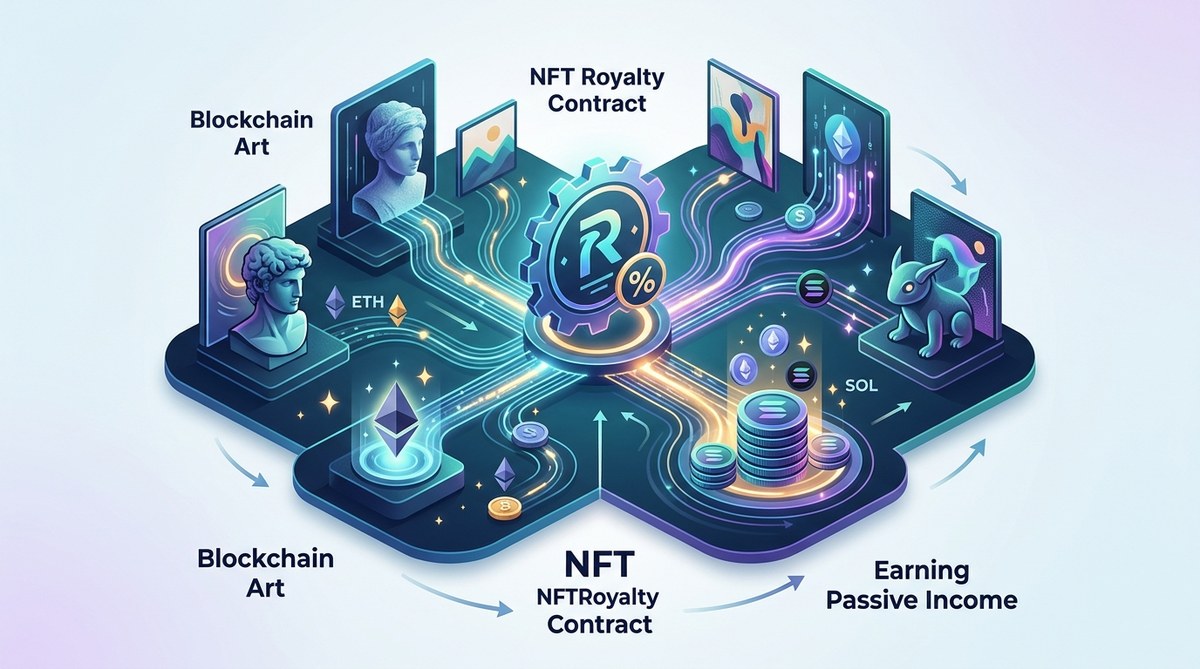
If you create digital art or invest in NFTs, you have heard about royalties. They sound like a dream. You sell a piece once and keep earning from every future trade. But the reality is more complex. NFT royalties are not guaranteed by the blockchain itself. They depend on marketplace policies, smart contract design, and the goodwill of buyers. In 2026, the landscape has shifted dramatically. Some platforms enforce royalties strictly. Others treat them as optional tips. So what are NFT royalty contracts really worth for building passive income?
NFT royalties can generate meaningful passive income for artists, but their real value depends on smart contract enforcement, marketplace policies, and collector demand. In 2026, royalties are not automatic. You must choose platforms that honor creator fees, design contracts with on-chain enforcement, and build a collector base that supports your work over the long term. When done right, royalties create a lasting revenue stream that grows as your collection gains value on the secondary market.
How NFT Royalties Work Under the Hood
An NFT royalty is a percentage of the sale price that goes back to the original creator every time the token changes hands. This happens through smart contract logic coded at the time of minting. The most common standard for setting royalties is EIP-2981, which lets artists define a royalty percentage and a payment address.
But here is the catch. The blockchain only stores the royalty rule. It cannot force any marketplace to pay it. In practice, royalties rely on marketplace compliance. Some platforms like OpenSea and Rarible have enforced royalties for years. Others like Blur have made them optional. In 2026, the trend is shifting back toward enforcement, especially for high-value art collections.
To secure your royalties, you need more than just a line of code. You need a marketplace that agrees to honor it. This is why many artists now prefer curated platforms that specialize in digital art rather than general trading hubs.
Why Royalty Contracts Matter for Your Income
For traditional artists, the sale of a painting is a one-time event. If the work later sells for ten times the original price at auction, the artist sees none of that upside. NFT royalties change this. They turn a single transaction into a lifelong revenue stream.
Consider a digital artist who mints an edition of 100 pieces at 0.5 ETH each. With a 10% royalty, every secondary sale returns 10% of the sale price to the artist. If the collection gains value and pieces start trading at 2 ETH, the artist earns 0.2 ETH per sale. Over hundreds of trades, those royalties add up to a significant income.
This model aligns incentives. Artists benefit when their work appreciates. So they have reason to stay engaged, build their brand, and support their collector community. That is good for everyone.
Here is a practical process for setting up royalties that actually pay out:
- Choose a marketplace that enforces creator fees for art NFTs. Look for platforms that use on-chain enforcement rather than optional honor systems.
- Set your royalty percentage between 5% and 15%. Most blue-chip collections use 10%. Higher percentages can discourage resale, so find a balance.
- Implement EIP-2981 in your smart contract. This standard is widely recognized and makes your royalty request visible to all compatible marketplaces.
- Include a blocklist or allowlist mechanism to control which marketplaces can trade your work while respecting your royalty terms.
- Communicate with your collector base. Let them know your royalty policy and why it matters. Informed collectors are more likely to support it.
What Makes an NFT Royalty Contract Valuable?
Not all royalty contracts are created equal. Some are enforceable on chain. Others are merely suggestions. The difference matters for your bottom line.
| Royalty Type | Enforceability | Best For | Risk Level |
|---|---|---|---|
| On-chain enforcement (EIP-2981 + blocklist) | High | Fine art, 1/1 pieces | Low |
| Marketplace honor system | Medium | Profile picture projects, large editions | Medium |
| No royalty contract | None | Anything traded on optional platforms | High |
| Hybrid (partial enforcement) | Variable | Collections testing new models | Medium |
The most valuable royalty contracts are those with on-chain enforcement. They use smart contract logic to restrict trading on marketplaces that do not honor the royalty. This is the closest thing to a guaranteed royalty stream in the current ecosystem.
Common Pitfalls That Undermine Royalty Income
Even with a solid contract, royalties can fail. Here are the most common issues to watch for:
- Minting on a platform that does not enforce royalties at the contract level
- Setting royalties too high, which pushes traders to unenforced marketplaces
- Forgetting to set a fallback receiver address in your smart contract
- Using an outdated standard that newer marketplaces do not recognize
- Failing to monitor marketplace policy changes over time
“Royalties are not set and forget. You need to check in on your collections regularly, see where they are trading, and confirm the platform is sending your share. I have seen too many artists assume royalties are automatic and miss out on hundreds of ETH.” — Jamie Chen, digital artist and collector since 2021
How to Evaluate Royalty Contracts Before You Mint
Before you mint a new collection, take time to review the royalty terms. This is true whether you are an artist launching your own work or an investor evaluating a project.
First, check the smart contract. You can use a block explorer like Etherscan to verify that the contract includes EIP-2981 support. Look for the royaltyInfo function. If it is missing, royalties are not enforced on chain.
Second, confirm which platforms honor the contract. Some marketplaces only pay royalties for collections minted after a certain date. Others cap royalties at a maximum percentage. You can find this information in the platform documentation or by asking in community forums.
Third, think about the collector experience. A 15% royalty on a $10,000 sale means the buyer pays $1,500 in creator fees on top of gas and marketplace fees. That might be fine for a one-of-a-kind artwork, but it can feel steep for a mass-produced profile picture.
For a deeper look at how smart contracts protect your revenue, read our guide on smart contract royalties explained. It covers the technical details of enforcement and what to look for when auditing a contract.
If you are buying art from other creators, understanding their royalty structure helps you evaluate the long-term value of the piece. Collections with sustainable royalty models tend to have more engaged artists who continue to promote the work. That benefits holders. Our article on understanding royalties and resale rights in your digital art purchases walks through what collectors should look for.
The Shifting Landscape of Royalty Enforcement in 2026
The debate over NFT royalties is not settled. In 2022 and 2023, many major marketplaces moved to optional royalties, which caused a drop in creator income. But the pendulum has swung back. In 2026, several leading art-focused platforms have reintroduced mandatory royalties with on-chain enforcement.
This change happened because collectors and artists demanded it. When royalties are optional, the incentive structure breaks down. Artists stop creating. Collectors lose trust. The market becomes a casino rather than a creative economy.
For investors, this shift matters. Collections with enforced royalties tend to hold value better over time. The artist has a stake in the secondary market, so they continue to build the brand and support the community. That is a positive signal for long-term holding.
If you want to learn more about how royalty enforcement affects collection valuations, check out our piece on royalty enforcement after OpenSea.
Building a Passive Income Strategy Around Royalties
Royalties alone will not replace a full time income for most artists. But they can become a meaningful part of your revenue mix. The key is to treat them as one piece of a larger strategy.
Here is a realistic approach:
- Mint on platforms with strong royalty enforcement for art NFTs
- Set royalties between 5% and 10% to encourage healthy secondary trading volume
- Build a brand that drives demand for your work over time
- Engage with your collector community to keep them excited about your future
- Track your royalty income monthly and adjust your strategy as needed
For collectors, royalties are a cost of doing business. But they also signal quality. An artist who invests in proper royalty infrastructure is likely serious about their career. That is worth paying for.
To see how the top digital artists are approaching royalties in 2026, take a look at our feature on 7 blockchain artists redefining contemporary digital art in 2026.
Where NFT Royalties Are Headed Next
The technology is still evolving. New standards are being developed that make royalty enforcement more robust across all marketplaces. Zero-knowledge proofs and tokenbound accounts could also change how royalties are collected and distributed.
One exciting development is the idea of dynamic royalties. Instead of a fixed percentage, the royalty could adjust based on market conditions, holding time, or the relationship between buyer and seller. This could create more flexible and fair systems for everyone.
Another trend is the use of DAOs to manage royalty pools. Instead of paying royalties to individual wallets, some projects send them to a treasury that funds ongoing development, marketing, and community rewards. This can increase the value of the entire ecosystem.
For a look at how smart contracts are changing art ownership more broadly, read our guide on how smart contracts are revolutionizing art ownership and provenance.
Making Royalties Work for You in Practice
The bottom line is that NFT royalties are not magic. They are a tool. Used well, they create lasting income and align incentives across the market. Used poorly, they become an empty promise.
If you are an artist, start by choosing the right platform and smart contract. If you are a collector, factor royalties into your purchase decisions and support artists who respect the system. The health of the digital art economy depends on both sides working together.
For more on how artist compensation works in blockchain art, check out our article on royalties and rights in blockchain art.
Royalty contracts are worth real money when they are enforced, respected, and supported by the community. In 2026, that is more true than ever. Take the time to set yours up right, and it can pay dividends for years to come.