Why the Best Digital Collections Are Starting to Look Like Venture Capital Portfolios
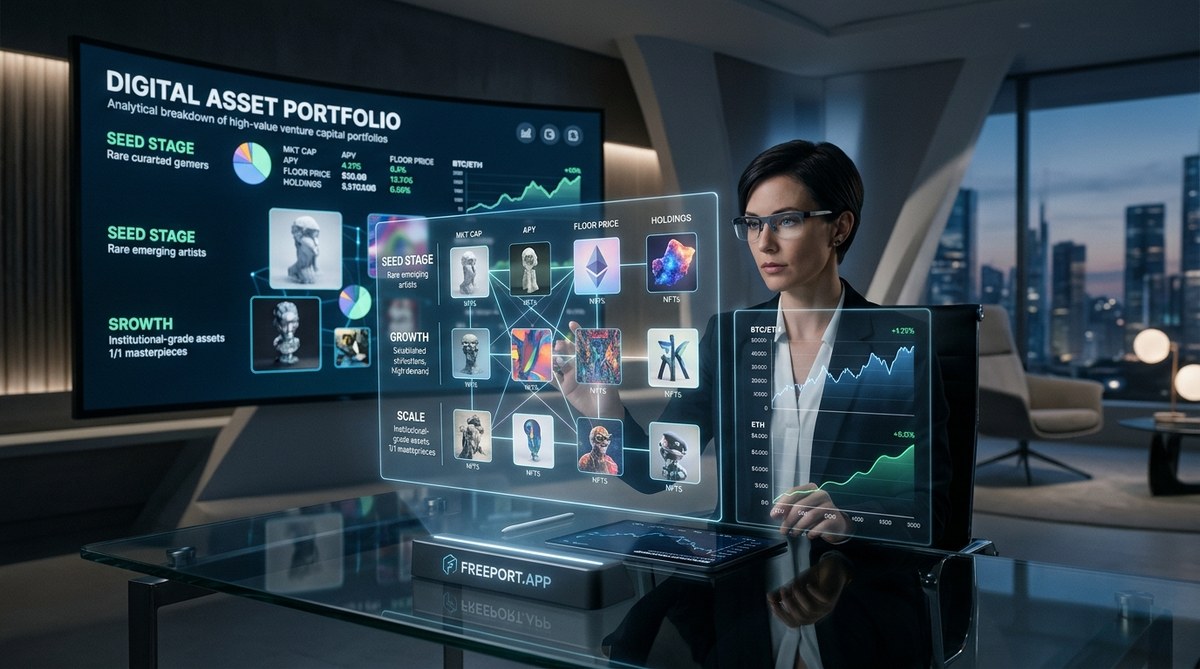
The line between collecting digital art and managing a venture capital portfolio is fading. In 2026, the most successful digital collectors are no longer just passionate art lovers. They are strategists. They approach acquisitions with the same discipline a VC uses to pick startups. They look for signals, not just aesthetics. They diversify across categories, not just artists. And they measure performance, not just personal taste.
If you have been building a digital collection for a while, you have probably felt the shift. The market is maturing. The days of buying anything with a cool profile picture are over. Now, the question is: can you build a collection that holds value through market cycles? The answer lies in thinking like an investor.
The best digital collections in 2026 mirror venture capital portfolios because they prioritize strategic allocation, data-driven curation, and risk management. Collectors who treat their assets like an investment thesis, with clear categories for blue-chip, growth-stage, and experimental works, consistently outperform those who collect by impulse alone. This framework protects value during downturns and captures upside during rallies.
Why Venture Capital Thinking Works for Digital Art
Venture capitalists do not bet on a single company. They build a thesis around a sector, then place multiple bets within that thesis. They expect some investments to fail. They bank on a few generating outsized returns.
Digital collectors are starting to adopt this same mindset. Instead of buying one expensive piece and hoping it appreciates, they build a portfolio with layers.
A typical VC-style digital collection in 2026 might look like this:
- Blue-chip anchors: Works by established artists with proven secondary market performance. These are the “safe” bets.
- Growth-stage picks: Mid-career artists with rising auction results and growing institutional interest.
- Emerging experiments: Early works from unknown artists, often bought cheap. High risk, high potential reward.
- Thematic clusters: Groups of works that share a concept, medium, or technology. These create narrative value and attract curator attention.
This structure is not random. It is intentional. Each category plays a role in the overall health of the collection.
The Three Pillars of a VC-Style Digital Collection
To build a collection that behaves like a venture capital portfolio, you need to focus on three core areas.
1. Allocation Strategy
You cannot buy everything. You need a framework for where your capital goes. Most successful collectors in 2026 follow a rough allocation model:
| Category | Percentage of Portfolio | Goal |
|---|---|---|
| Blue-chip digital works | 40 to 50 percent | Stability and long-term appreciation |
| Growth-stage artists | 25 to 30 percent | Moderate returns with manageable risk |
| Emerging and experimental | 10 to 15 percent | High upside potential |
| Thematic or niche clusters | 10 to 15 percent | Narrative cohesion and market differentiation |
This is not a rigid formula. You can adjust it based on your risk tolerance and budget. But the principle is clear: spread your bets across different risk levels.
2. Data-Driven Curation
VCs do not invest based on gut feelings alone. They analyze traction, team strength, market timing, and competitive landscape. Digital collectors are doing the same.
In 2026, tools like on-chain analytics platforms let you track an artist’s sales history, wallet concentration, and secondary market velocity. You can see if a collection is being held by long-term owners or flipped repeatedly. You can check if an artist’s community is growing or stagnating.
Learn more about the metrics that matter in our guide on what makes a digital collection blue-chip.
3. Active Portfolio Management
A VC does not buy shares and forget them. They monitor, support, and sometimes exit. The same applies to digital collections.
This means:
- Reviewing your collection quarterly. Which pieces are gaining traction? Which are losing momentum?
- Setting exit triggers. Decide in advance what conditions would make you sell a piece.
- Rebalancing over time. As some assets appreciate, they may take up too much of your portfolio. You might sell part of a position to lock in gains.
How to Apply VC Principles to Your Collection
If you want to start treating your digital collection like a venture capital portfolio, here is a practical process to follow.
-
Write your investment thesis. Before you buy anything, write down what your collection is about. Is it focused on generative art? Conceptual blockchain projects? Works from a specific geographic region? Your thesis guides every decision.
-
Set a budget for each category. Decide how much capital you will allocate to blue-chip, growth, and emerging works. Stick to it.
-
Research before you buy. Use on-chain tools to check an artist’s sales history and holder behavior. Look for red flags like wash trading or concentrated ownership.
-
Buy with intent, not emotion. If a piece excites you, that is great. But ask yourself: does it fit my thesis? Does it fill a gap in my portfolio?
-
Track performance over time. Keep a simple spreadsheet or use a portfolio tracker. Note purchase price, date, and any notable events like gallery shows or museum acquisitions.
-
Review and rebalance quarterly. Compare your collection’s performance to your thesis. Adjust as needed.
For a deeper look at avoiding costly mistakes, check out our list of 7 red flags every digital collector should watch for before buying.
Common Mistakes That Derail VC-Style Collections
Even experienced collectors slip up. Here are the most common errors when trying to build a portfolio like a venture capitalist.
| Mistake | Why It Hurts |
|---|---|
| Overconcentrating in one artist or style | If that market cools, your whole portfolio suffers |
| Ignoring liquidity | Some works are hard to sell. Always consider exit options |
| Buying only what you like personally | Passion matters, but it should not override strategy |
| Neglecting provenance and storage | A piece without clear ownership history loses value |
| Chasing hype without research | FOMO leads to overpaying for assets with weak fundamentals |
“The collectors who outperform the market are not the ones with the most money. They are the ones with the clearest thesis and the discipline to follow it.” This observation from a 2026 industry report captures the shift perfectly.
The Role of Community and Curation
VCs rely on networks. They share deal flow, co-invest, and learn from each other. Digital collectors are building similar structures.
In 2026, community-curated collections are gaining traction. Groups of collectors pool their knowledge and capital to acquire works they believe in. DAOs focused on digital art collecting allow members to vote on acquisitions. This spreads risk and brings diverse perspectives into the decision-making process.
If you are collecting alone, consider joining a collector community. You will gain access to deals, insights, and feedback that improve your portfolio.
For more on this trend, read about why community-curated digital collections outperform solo curation in 2026.
Building a Collection That Lasts
The venture capital approach is not about being cold or clinical. It is about being intentional. It is about respecting your capital and the artists you support. A well-structured collection can weather market downturns and still come out ahead.
Think of it this way: the digital art market is still young. Cycles of hype and correction are normal. A VC-style portfolio gives you a framework to stay calm during the dips and strategic during the peaks.
Start small. Write your thesis. Allocate your first batch of capital. Track everything. Adjust as you learn.
Your Collection as a Living Investment
The best digital collections in 2026 are not static. They evolve. They adapt to market shifts, new artist discoveries, and changing tastes. That is the venture capital mindset in action.
You do not need a seven-figure budget to use this approach. You just need a plan. Even a collection of ten works can be structured with intention. The discipline you build now will serve you for years.
If you are ready to take the next step, explore our guide on how to build a valuable digital art collection from scratch in 2026. It walks through the exact process used by top collectors today.
Your collection is more than a hobby. It is a portfolio. Treat it like one, and it will reward you.