Why Community-Curated Digital Collections Outperform Solo Curation in 2026
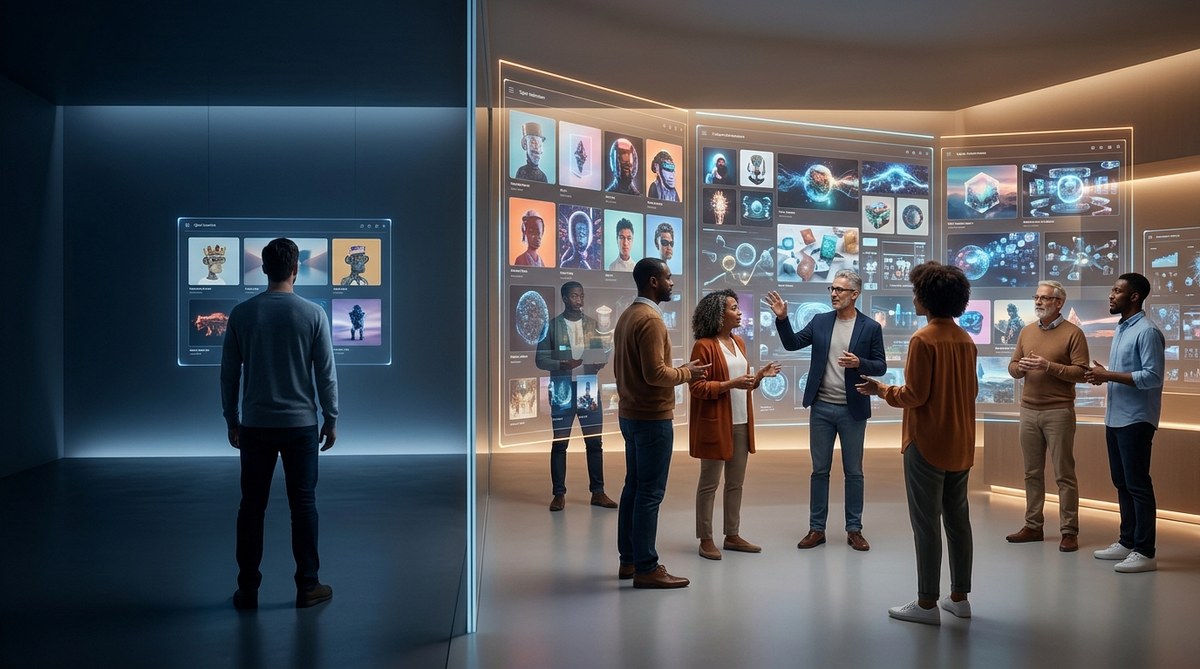
The most valuable digital collections being built right now share a secret. They are not the product of a single visionary eye. They are the result of hundreds of eyes working together. In 2026, the question is no longer whether community curation vs solo curation 2026 is a fair fight. It is simply not a contest anymore. Community curation wins on every metric that matters: signal quality, cultural relevance, and long-term value retention. The myth of the lone genius curator is fading fast. What replaces it is something far more resilient.
Community curation uses distributed expertise to filter noise and surface hidden gems. It builds collections that reflect true collective intelligence. Unlike solo curation, which relies on one person’s viewpoint, community-driven models are self-correcting and more resilient to market manipulation. For digital curators in 2026, understanding this shift is essential for building culturally relevant collections that retain long-term value and collector trust over time.
## The Solo Curation Trap
Solo curators have an impossible job. They must be experts in aesthetics, market timing, provenance, and technology all at once. Nobody is that good. The cognitive load of evaluating thousands of new artworks each month leads to burnout and blind spots.
The data from 2026 shows that solo-curated collections tend to narrow in focus over time. They become monuments to a single taste rather than mirrors of a dynamic culture. This aligns with our research on [What Makes a Digital Collection Blue-Chip](https://freeport.app/what-makes-a-digital-collection-blue-chip-analyzing-long-term-value-indicators/). A single point of view creates a single point of failure. When the market shifts, solo collections struggle to adapt.
There is also a hidden cost: time. A solo curator spends most of their day filtering noise. They chase dead ends. They miss emerging artists because they were looking in the wrong place. In 2026, attention is the scarcest resource. No one can afford to waste it on curation methods designed for a slower, smaller internet.
## The Rise of Collective Signal in 2026
Community curation is not just a feel-good philosophy. It is a superior mechanism for handling information overload. Think of it like a immune system for your collection. Bad actors get flagged immediately. Forgeries are identified through pooled knowledge. Market manipulators find it much harder to fool a thousand people than they do to fool one.
In 2026, there are thousands of new digital artworks minted daily. No single human can evaluate them all. Communities, on the other hand, operate in parallel. One member spots a rising artist on Solana. Another verifies the contract on Ethereum. A third dives into the artist’s history to confirm they are legitimate.
> “Solo curation in 2026 is not just inefficient. It is a liability. The volume and velocity of the digital art market demand collective intelligence. Communities act as a decentralized quality filter that no single expert can match.”
>
For a deeper look at identifying quality, read our guide on [How to Authenticate Digital Art Before Adding It to Your Collection](https://freeport.app/how-to-authenticate-digital-art-before-adding-it-to-your-collection/). The core insight is simple: more eyes mean fewer mistakes.
## How Community Curation Actually Works
Understanding the mechanics helps you choose the right model for your collection. Here is a practical process that successful community-curated collections follow in 2026:
1. **Submit and Signal:** Members nominate works for consideration, often paired with a small stake or essay explaining the pick.
2. **Vote and Discuss:** The community debates the submission. Voting weight might be tied to expertise, reputation, or holdings. The discussion is transparent.
3. **Execute and Record:** Smart contracts execute the final decision. The rationale is recorded on-chain for future collectors to see.
4. **Revisit and Reappraise:** Community curation is not static. Collections are reviewed periodically to ensure they align with the curatorial thesis.
This workflow turns curation from a solo guess into a transparent, auditable process. Curators are increasingly organizing into [Decentralized Autonomous Organizations for Art Collectors](https://freeport.app/decentralized-autonomous-organizations-for-art-collectors-a-beginner-s-guide/) to formalize these structures.
| Curation Technique | Solo Approach | Community Approach | Common Mistake (Solo) / How Community Fixes It |
|—|—|—|—|
| Trend Spotting | Relies on personal network | Aggregates signals from hundreds of eyes | Solo gets slow / Community catches early whispers |
| Valuation | Subjective gut feel | Pooled historical and market data | Solo overpays / Community establishes fair market floor |
| Verification | Manual checking | Automated on-chain provenance verification | Solo misses fakes / Community flags anomalies |
| Narrative Building | Single curatorial voice | Multi-perspective context and essays | Solo feels flat / Community creates rich, layered stories |
We break these mechanics down further in [Mastering Digital Art Portfolio Curation for Web3 Collectors](https://freeport.app/mastering-digital-art-portfolio-curation-for-web3-collectors/).
## Why Traditional Gatekeepers Are Failing
Museums and legacy institutions move slowly. Their acquisition processes are built for a world where art changes hands once every few years. By the time a solo curator at a major institution approves an acquisition, the market has already moved on.
Community-curated platforms operate at the speed of culture. A community can evaluate, vote on, and acquire a piece within hours. This agility matters in a market where emerging artists can go from unknown to blue-chip in a single season.
This is why we are seeing more museums partner with DAOs and digital communities to source their collections. The institutional world is waking up to the reality that [Why Museums Are Building Blockchain Art Collections](https://freeport.app/why-museums-are-building-blockchain-art-collections/) is directly tied to the power of community intelligence.
## Actionable Strategies for Curators in 2026
If you are a digital content curator or manager looking to shift from solo to community curation, here is your playbook:
– **Participate before you curate.** Spend time in communities like Freeport or specialized curation DAOs before trying to lead one. Understand the culture first.
– **Use on-chain data ethically.** Analyze voting patterns and staking behaviors to understand community sentiment without manipulating it.
– **Invite friction.** Disagreement within a community often signals a healthy, divergent collection strategy. Avoid echo chambers.
– **Build feedback loops.** Share your curatorial thesis and let the community challenge it. The strongest theses survive the strongest scrutiny.
– **Stay humble.** The best curators in 2026 see themselves as stewards, not owners. Your role is to facilitate collective taste, not impose your own.
A practical resource for building from scratch is [How to Build a Valuable Digital Art Collection from Scratch in 2026](https://freeport.app/how-to-build-a-valuable-digital-art-collection-from-scratch-in-2026/). The principles there apply whether you are building for yourself or for a community.
## The Proof Is in the Portfolio Performance
Let’s look at the data. Collections built on community curation models in 2026 have shown lower volatility and stronger floor prices during market corrections. This is not an accident. When a community has ownership over the curation process, they are more invested in the long-term health of the collection.
Solo-curated collections often suffer from founder syndrome. If the founder loses interest or makes a bad bet, the entire collection suffers. Community-curated collections distribute that risk. They are antifragile. They get stronger when challenged.
This aligns with our findings in [Why Blue-Chip NFT Collections Maintain Value During Market Downturns](https://freeport.app/why-blue-chip-nft-collections-maintain-value-during-market-downturns/). The common thread is governance. Decentralized decision-making creates more stable outcomes over time.
## Your Next Move as a Curator
You do not have to abandon your taste to embrace community curation. You just have to trust that your taste gets better when it is tested against others. The best curators in 2026 are not the ones with the strongest opinions. They are the ones who build the strongest systems for collective decision-making.
Start small. Join a curatorial board. Propose a thesis. See how the community strengthens it. That friction is where the signal lives. The information landscape is too vast and too fast for any single person to master alone.
The best collection you build in 2026 will not be the one you build alone. It will be the one you build together.