Zero-Knowledge Proofs Are Enabling Private Art Collections On Public Blockchains
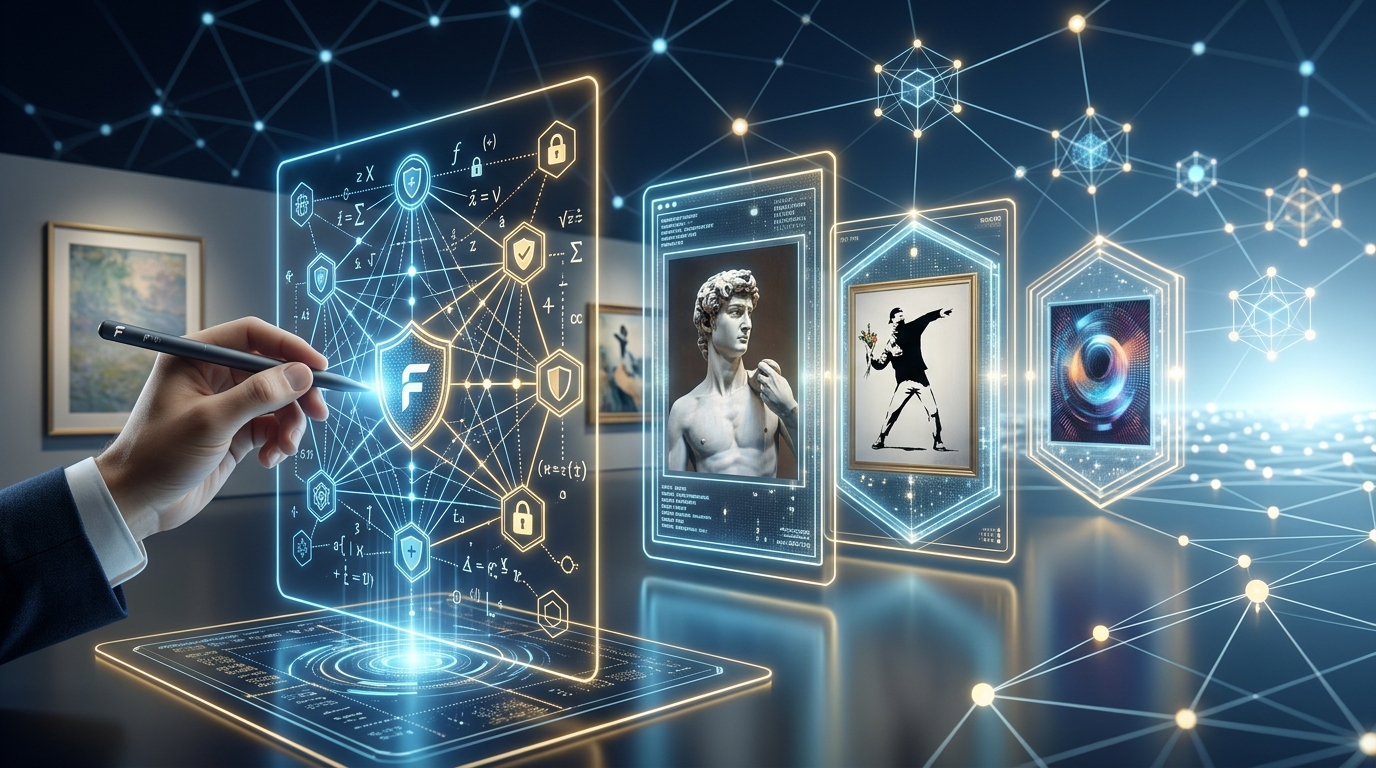
Blockchain’s transparency is both its greatest strength and most challenging limitation. Every transaction sits visible on a public ledger for anyone to inspect. But what if you could prove ownership of a valuable digital art piece without revealing which piece you own, how much you paid, or where it’s stored?
That’s exactly what zero knowledge proofs make possible.
Zero knowledge proofs blockchain technology allows users to verify information without exposing the underlying data. This cryptographic method enables private art collections, confidential transactions, and secure identity verification on public networks. Collectors can prove ownership and authenticity while keeping collection details, purchase prices, and wallet addresses completely hidden from public view.
Understanding how zero knowledge proofs work on blockchain
Zero knowledge proofs let you prove a statement is true without revealing any information beyond the validity of that statement itself.
Think of it like proving you’re old enough to enter a venue without showing your actual birthdate. You demonstrate you meet the requirement without exposing unnecessary personal details.
On blockchain networks, this technology creates a mathematical proof that validates transactions or ownership without broadcasting sensitive data to the entire network.
The proof consists of three key properties:
- Completeness: If the statement is true, an honest verifier will be convinced by an honest prover
- Soundness: If the statement is false, no cheating prover can convince the verifier it’s true
- Zero knowledge: The verifier learns nothing except that the statement is valid
For digital art collectors, this means you can verify you own a specific piece without revealing your wallet address, purchase history, or the exact item in your collection.
Why privacy matters for blockchain art collectors
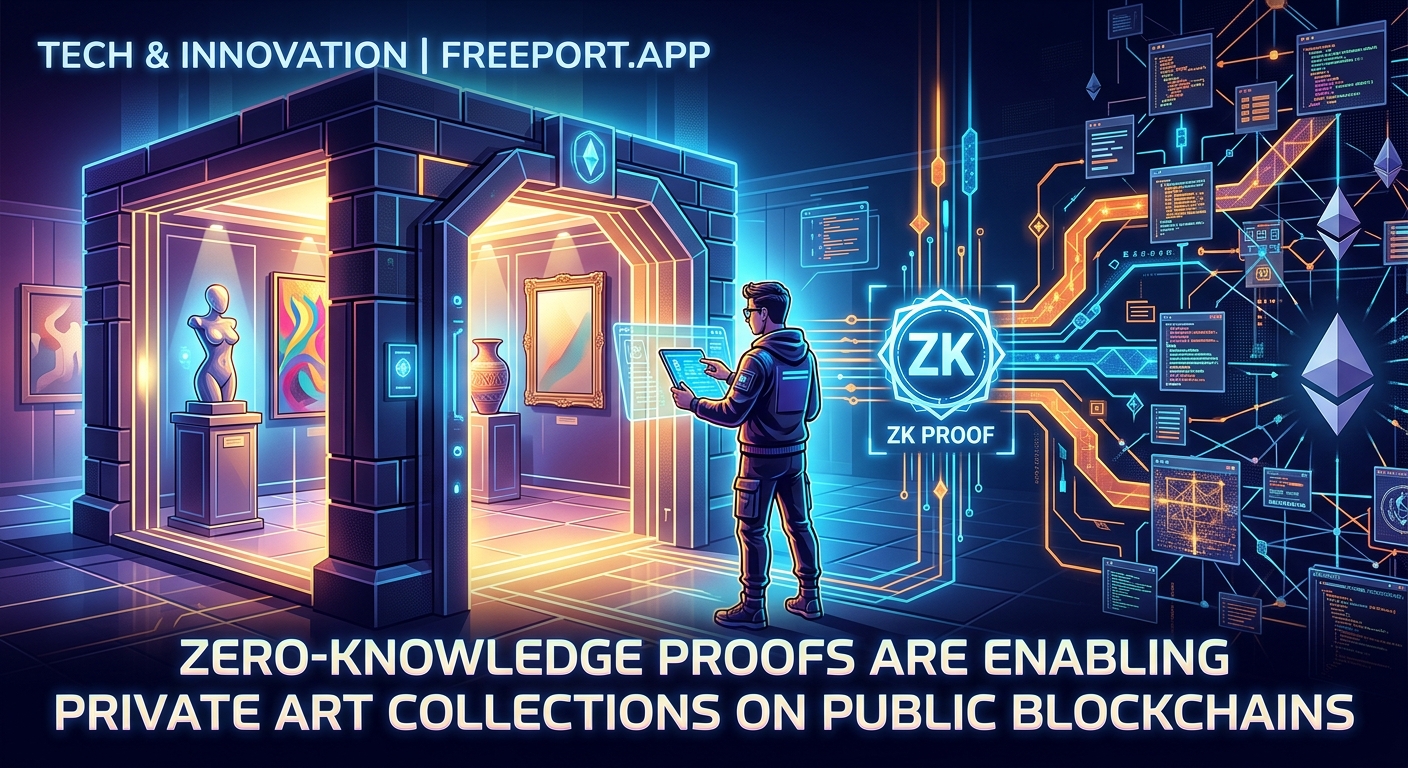
Public blockchains record every transaction permanently. Anyone can trace your entire collection history, see what you paid, track your selling patterns, and identify your wallet across platforms.
This creates several real problems.
High-value collectors become targets. Thieves know exactly which wallets hold the most valuable pieces. Social engineering attacks become easier when attackers can see your complete financial history.
Competitive collectors lose their edge. When building a collection around a specific artist or theme, broadcasting every purchase telegraphs your strategy to competitors who might front-run your acquisitions.
Artists face pricing pressure. When collectors can see exactly what others paid, it creates anchoring effects that can suppress prices or create unrealistic expectations.
How smart contracts are revolutionizing art ownership and provenance addresses some ownership challenges, but privacy requires cryptographic solutions.
Three types of zero knowledge proofs used in blockchain
Different proof systems offer varying tradeoffs between privacy, speed, and complexity.
zk-SNARKs
Zero-Knowledge Succinct Non-Interactive Arguments of Knowledge create tiny proofs that verify almost instantly. The “succinct” part means proof size stays small regardless of computation complexity. “Non-interactive” means you don’t need back-and-forth communication between prover and verifier.
Zcash pioneered zk-SNARKs for private cryptocurrency transactions. The technology requires a trusted setup ceremony where initial parameters get generated. If these parameters are compromised, someone could theoretically create false proofs.
The proofs verify in milliseconds and take up minimal blockchain space, making them ideal for high-throughput applications.
zk-STARKs
Zero-Knowledge Scalable Transparent Arguments of Knowledge eliminate the trusted setup requirement. They’re “transparent” because anyone can verify the cryptographic parameters without trusting a setup ceremony.
The tradeoff is proof size. zk-STARKs generate larger proofs than zk-SNARKs, consuming more blockchain space and bandwidth. But they scale better for complex computations and offer stronger security guarantees against quantum computers.
StarkWare uses this technology to build Layer 2 scaling solutions that bundle thousands of transactions into single proofs.
Bulletproofs
These proofs don’t require trusted setups and create relatively compact proofs for range proofs and other specific applications. They verify more slowly than zk-SNARKs but faster than early zk-STARK implementations.
Monero uses Bulletproofs to hide transaction amounts while keeping blockchain size manageable.
| Proof Type | Proof Size | Verification Speed | Trusted Setup Required | Best For |
|---|---|---|---|---|
| zk-SNARKs | Smallest | Fastest | Yes | High-throughput applications |
| zk-STARKs | Largest | Fast | No | Maximum security and transparency |
| Bulletproofs | Medium | Moderate | No | Range proofs and amount hiding |
Building private art collections with zero knowledge technology
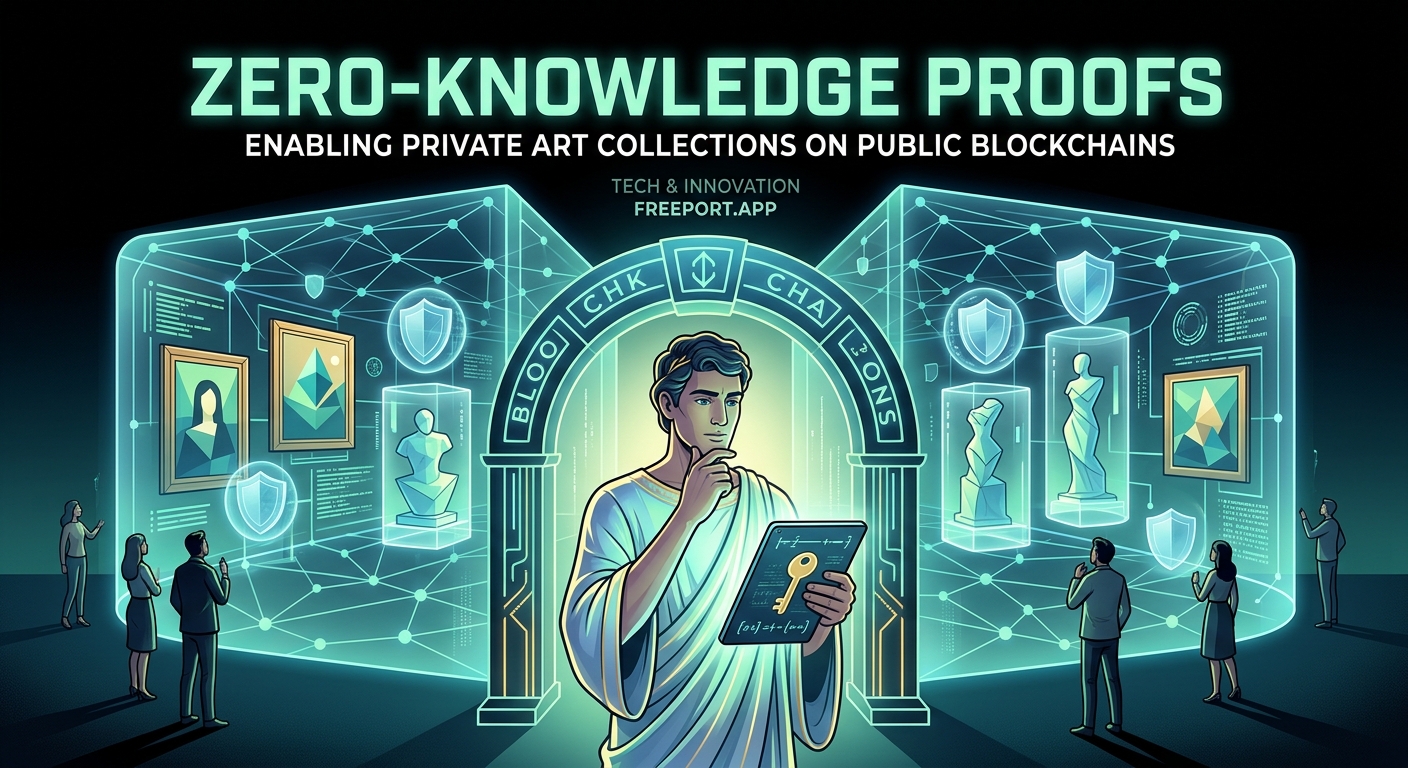
Several platforms now implement zero knowledge proofs blockchain systems for private NFT ownership and trading.
Here’s how the process works in practice:
-
Mint your art piece privately: The NFT gets created with encrypted metadata. Only you hold the decryption keys. The blockchain records that a valid NFT exists without revealing its contents.
-
Generate ownership proofs: When you want to prove ownership (for gallery display, lending, or verification), you create a zero knowledge proof. This demonstrates you control the private keys associated with the NFT without exposing your wallet address or transaction history.
-
Transfer privately: When selling or gifting the piece, both parties generate proofs confirming the transaction is valid. The blockchain records the transfer occurred without broadcasting sender, receiver, or price details.
-
Verify authenticity: Buyers can verify the piece is genuine and hasn’t been double-spent without seeing the seller’s full collection or purchase history.
The complete guide to storage and security for high-value digital assets covers additional security considerations beyond privacy.
Real-world applications transforming digital collecting
Zero knowledge proofs blockchain implementations are already changing how collectors, galleries, and artists interact.
Private auction houses use zk-proofs to verify bidders have sufficient funds without revealing their exact balances. This prevents bid sniping while maintaining financial privacy.
Institutional collectors can prove they meet regulatory requirements or insurance conditions without exposing their entire portfolio to auditors or the public.
Artist royalty systems verify secondary sales occurred and calculate royalties without broadcasting sale prices or buyer identities. Smart contract royalties explained: protecting artist revenue in secondary sales covers the technical implementation details.
Fractional ownership platforms use zero knowledge proofs to verify share distributions and voting rights while keeping individual shareholder positions private.
Cross-chain bridges employ zk-proofs to verify assets on one blockchain while minting representations on another without exposing transaction details. Cross-chain bridges: moving your digital art collection between blockchains safely explains the mechanics.
“Zero knowledge proofs finally give blockchain the privacy layer it always needed. We can now build systems that are both transparent in their rules and private in their execution. That’s transformative for high-value art markets where discretion matters as much as provenance.”
Common implementation mistakes to avoid
Even experienced developers make critical errors when implementing zero knowledge systems.
Leaking metadata: The proof itself might be private, but timestamps, gas fees, and transaction patterns can reveal information. If you always transact at 2 AM your local time, pattern analysis can narrow down your location and identity.
Insufficient randomness: Zero knowledge proofs rely on cryptographically secure random numbers. Weak randomness can make proofs predictable or reversible.
Trusted setup compromise: For zk-SNARKs, the initial parameter generation ceremony must be conducted with extreme care. If even one participant in a multi-party setup is honest and destroys their portion of the “toxic waste,” the system remains secure.
Proof verification shortcuts: Some implementations skip full verification to save gas costs. This creates vulnerabilities where invalid proofs might be accepted.
Privacy set too small: If only three people use a private transaction system, each transaction likely belongs to one of those three. Privacy requires sufficient anonymity set size.
7 red flags every digital collector should watch for before buying includes warning signs about platforms with weak privacy implementations.
Performance and scalability considerations
Zero knowledge proofs require significant computational resources to generate, though verification stays lightweight.
Proof generation might take seconds or even minutes depending on complexity. This creates user experience challenges for real-time applications.
Several solutions address these limitations:
Recursive proofs allow you to prove that you correctly verified another proof. This enables batching thousands of transactions into a single proof that verifies in constant time.
Proof aggregation combines multiple proofs into one, reducing blockchain space requirements and verification costs.
Specialized hardware like GPUs and FPGAs accelerate proof generation. Some services offer proof-generation-as-a-service, though this introduces trust assumptions.
Layer 2 solutions move proof generation off-chain while keeping verification on-chain. Layer 2 solutions: why ethereum artists are migrating to polygon and arbitrum covers migration strategies.
Regulatory compliance with private transactions
Privacy and compliance aren’t mutually exclusive. Zero knowledge proofs can satisfy regulatory requirements while protecting user privacy.
Selective disclosure lets you prove specific attributes to authorized parties without revealing everything. You might prove to a tax authority that you reported all transactions above a certain threshold without exposing your entire trading history.
Regulatory compliance proofs demonstrate you followed know-your-customer (KYC) procedures without broadcasting customer data on-chain.
Audit trails can be designed so regulators can verify compliance without gaining access to commercial sensitive information or personal details.
Geographic restrictions can be enforced privately. An NFT marketplace might verify a user isn’t in a restricted jurisdiction without learning their exact location.
The key is designing systems where compliance verification and privacy protection work together rather than competing.
Setting up your first private collection
Ready to implement zero knowledge privacy for your digital art collection? Here’s a practical roadmap:
-
Choose your platform carefully: Research which marketplaces and wallets support zero knowledge features. Look for established implementations with security audits, not experimental protocols.
-
Start small: Test the technology with lower-value pieces before moving significant assets. Understand the user experience, transaction costs, and recovery procedures.
-
Backup your keys properly: Private collections require extra care with key management. If you lose access to your decryption keys, your private NFTs become permanently inaccessible even to you.
-
Document your holdings: Keep encrypted records of your private collection details. While the blockchain maintains ownership records, you need your own documentation of what you actually own.
-
Plan for inheritance: Private assets require special estate planning. Your heirs need access to both your wallet keys and the information needed to decrypt and access private holdings.
-
Understand the costs: Zero knowledge transactions typically cost more in gas fees than standard transactions due to computational complexity. Factor this into your collecting budget.
How to build a valuable digital art collection from scratch in 2026 provides broader collection strategy guidance.
The future of private blockchain art
Zero knowledge technology continues evolving rapidly. Several developments will reshape digital collecting over the next few years.
Universal privacy will become standard rather than optional. New blockchain architectures build privacy in from the ground up rather than adding it as an afterthought.
Interoperable privacy will let you move private assets between different blockchains while maintaining confidentiality. Current implementations often lock you into a single ecosystem.
Improved user experience will hide the cryptographic complexity. You won’t need to understand zk-SNARKs any more than you need to understand TCP/IP to browse the web.
Regulatory frameworks will mature as governments develop clearer guidelines for privacy-preserving blockchain systems. This will reduce uncertainty for institutional collectors.
Hardware acceleration will make proof generation nearly instantaneous, enabling real-time private transactions.
Why museums are building blockchain art collections discusses institutional adoption trends that will drive privacy technology development.
Privacy as a competitive advantage
The collectors and platforms that master zero knowledge proofs blockchain technology today will dominate tomorrow’s digital art markets.
Privacy isn’t about hiding illegal activity. It’s about protecting competitive strategy, preventing targeted attacks, and maintaining the discretion that high-value art markets have always required.
Traditional art collectors don’t broadcast their purchases to the world. Digital collectors deserve the same privacy. Zero knowledge proofs finally make that possible while preserving blockchain’s core benefits of transparency, immutability, and decentralization.
Start experimenting with private transactions now. The technology is ready. The tools exist. The only question is whether you’ll use them before your competitors do.