How to Identify Undervalued Digital Collections Before They Trend

The best NFT investments happen before everyone else notices. By the time a collection trends on social media or gets covered by major outlets, the entry price has already multiplied. The collectors who profit most are the ones who develop a system for evaluating projects early, before hype cycles begin.
Identifying undervalued NFTs requires analyzing creator reputation, community engagement metrics, contract quality, and market positioning. Successful collectors use a repeatable framework combining on-chain data, social signals, and technical evaluation to spot projects before they gain mainstream attention. This systematic approach reduces emotional buying and improves long-term portfolio performance significantly.
Understanding What Creates Value in Digital Collections
Value in NFTs doesn’t come from hype alone. It emerges from a combination of artistic merit, technical execution, community strength, and utility. The projects that maintain value over time usually excel in multiple areas, not just one.
Start by examining the creator’s background. Artists with established portfolios, whether in traditional or digital mediums, bring credibility. Check their previous work, exhibition history, and professional connections. A creator who has shown at galleries or collaborated with recognized institutions carries more weight than an anonymous account with no track record.
Technical quality matters more than most collectors realize. Review the smart contract code if you have the skills, or use tools that flag common vulnerabilities. Projects built on solid technical foundations are less likely to face exploits or minting issues. How smart contracts are revolutionizing art ownership and provenance explains why this technical layer is fundamental to long-term value.
The artistic vision should be distinctive. Collections that copy existing successful projects rarely maintain value. Look for unique aesthetic approaches, innovative use of medium, or conceptual frameworks that stand apart. Generative art on the blockchain: where code meets canvas showcases how technical innovation can create entirely new artistic categories.
Analyzing On-Chain Metrics That Signal Opportunity
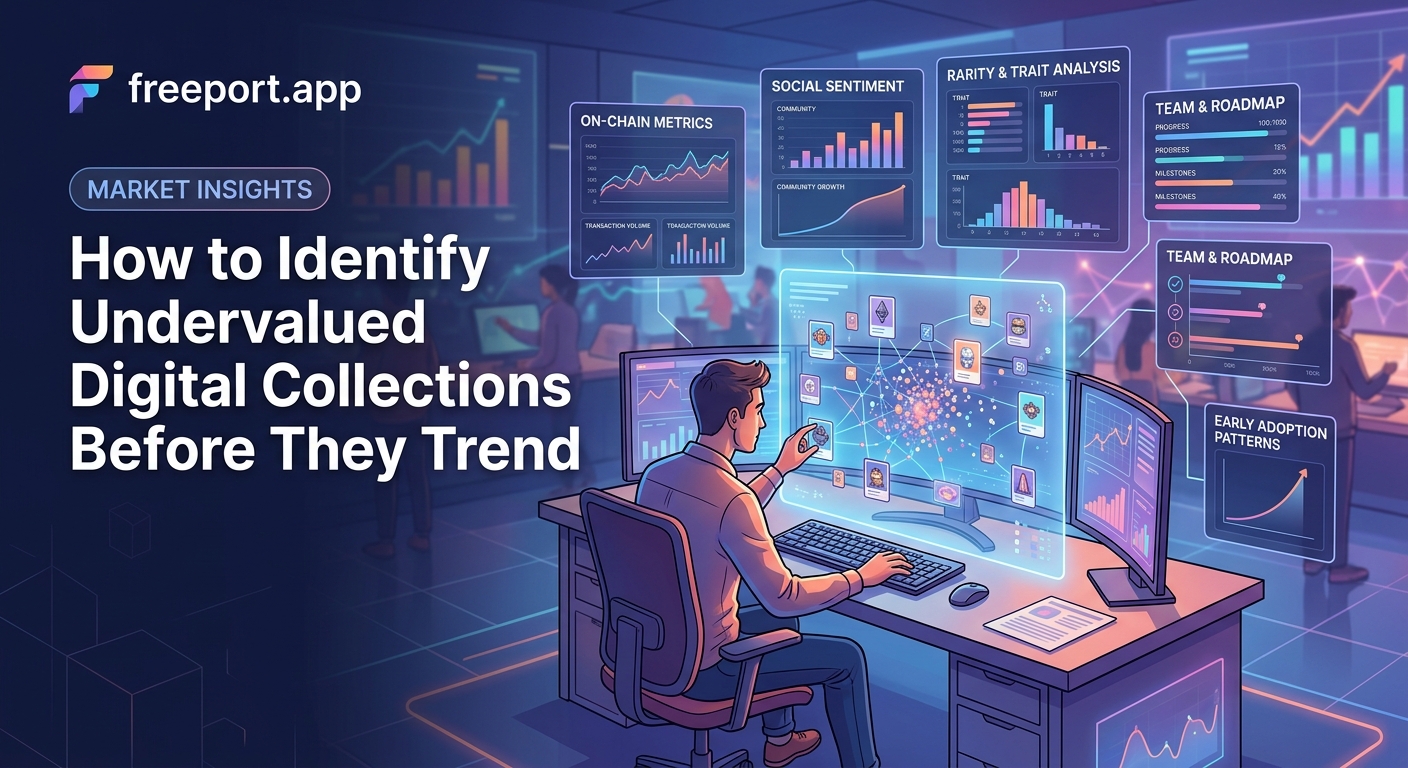
On-chain data reveals what marketing copy cannot hide. These metrics show actual behavior, not promises.
Track holder distribution first. A healthy collection has diverse ownership rather than concentration in a few wallets. When 80% of supply sits in five wallets, price manipulation becomes easy. Tools like Etherscan show exactly who holds what.
Monitor trading volume patterns. Organic growth shows steady, increasing volume over time. Sudden spikes followed by silence often indicate wash trading or coordinated pumps. Compare 24-hour, 7-day, and 30-day volumes to spot sustainable trends.
Watch the holder count trajectory. Collections gaining new holders consistently demonstrate real demand. A project adding 50-100 new holders weekly, even at modest prices, often outperforms collections with explosive but brief attention.
Examine secondary market activity. How many pieces change hands daily? What’s the floor price trend? Are sales happening at asking prices or only after significant discounts? These patterns reveal true collector interest versus speculative flipping.
The best time to acquire pieces from a collection is when holder count is growing steadily but floor price hasn’t moved much. This gap between accumulation and price recognition creates opportunity.
Evaluating Community Strength and Engagement
Communities drive long-term value more than any other single factor. A strong community supports floor prices during downturns and amplifies visibility during growth phases.
Join the project’s Discord or Telegram. Spend time reading conversations. Are members discussing the art and vision, or just price speculation? Communities focused on the creative work tend to be more resilient.
Check social media engagement quality. High follower counts mean nothing if posts get minimal interaction. A project with 5,000 engaged followers outperforms one with 50,000 passive accounts. Look at reply quality, not just like counts.
Assess how the team interacts with holders. Do they respond to questions? Share development updates? Host events or AMAs? Teams that build relationships with their community create stickiness that supports value.
Notice who’s talking about the project. Are established collectors or respected voices in the space showing interest? Early support from credible figures often precedes broader recognition. 7 blockchain artists redefining contemporary digital art in 2026 highlights creators whose endorsements carry weight.
Red Flags That Should Stop You From Buying
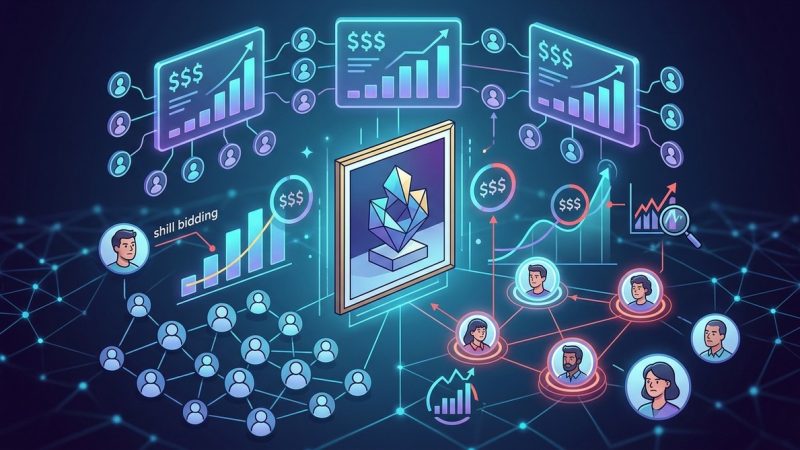
Some warning signs are absolute deal breakers. Recognizing them saves money and frustration.
Anonymous teams with no track record present major risk. While pseudonymity is common in crypto, complete opacity about who’s building a project makes accountability impossible. At minimum, the creator should have a documented history under their pseudonym.
Unrealistic roadmaps promise everything. When a project claims it will deliver a metaverse, gaming platform, token, and physical merchandise within six months, skepticism is warranted. Overpromising usually leads to underdelivering.
Copied artwork or derivative concepts rarely succeed long-term. If a collection looks suspiciously similar to an existing successful project, it’s probably riding coattails rather than building something sustainable.
Aggressive marketing with little substance indicates trouble. Projects spending heavily on influencer promotions while showing minimal actual development often collapse after the initial mint. 7 red flags every digital collector should watch for before buying provides a comprehensive checklist.
Locked or suspicious smart contracts deserve scrutiny. If the contract allows the team to change metadata after minting, or includes unusual functions, proceed with extreme caution. Contract audits from reputable firms provide some assurance, though they’re not foolproof.
Building Your Evaluation Framework
Create a repeatable system for assessing projects. This removes emotion and creates consistency.
Step-by-Step Assessment Process
-
Initial screening: Review the creator’s background, artistic quality, and basic project information. Eliminate anything that fails to meet minimum standards for originality and technical competence.
-
On-chain analysis: Pull holder distribution, volume trends, and transaction patterns. Compare these metrics against similar projects at comparable stages.
-
Community evaluation: Spend at least a week observing community channels. Note engagement quality, team responsiveness, and overall sentiment.
-
Technical review: Examine the smart contract, metadata storage solution, and any utility features. Verify nothing raises security concerns.
-
Competitive positioning: Identify similar projects and understand how this one differentiates. Determine if the market has room for another entrant in this category.
-
Risk assessment: List all potential failure points. Consider what could go wrong and how likely each scenario seems.
Key Metrics Comparison Table
| Metric | Undervalued Signal | Overvalued Signal |
|---|---|---|
| Holder Growth | Steady 5-10% monthly increase | Stagnant or declining |
| Volume Trend | Consistent with occasional spikes | Erratic or wash trading patterns |
| Community Size | Growing organically | Purchased followers, low engagement |
| Floor Price | Stable or slowly rising | Extreme volatility |
| Team Activity | Regular updates, responsive | Silent periods, vague responses |
| Smart Contract | Audited, standard functions | Unaudited, unusual permissions |
Timing Your Entry for Maximum Upside
Even great projects can be poor investments if you buy at the wrong time. Entry timing significantly impacts returns.
The ideal entry point comes after initial mint excitement fades but before broader recognition arrives. This often happens 2-4 weeks post-mint for projects with solid fundamentals. Early minters take profits, creating temporary price dips despite strong underlying metrics.
Watch for accumulation patterns. When holder count increases while price remains flat or declines slightly, informed collectors are likely building positions. This divergence between accumulation and price creates opportunity.
Avoid buying during obvious hype cycles. When a project suddenly appears everywhere on social media, you’re probably late. The best gains happen before widespread awareness, not during it.
Consider broader market conditions. During overall NFT market downturns, even quality projects see depressed prices. These periods offer exceptional entry points for collectors with patience. Why blue-chip NFT collections maintain value during market downturns explains how top projects behave differently in bear markets.
Categories Worth Watching in 2026
Certain categories show stronger fundamentals than others right now. Understanding where opportunity clusters helps focus your research.
-
Established artist transitions: Traditional artists moving into blockchain space bring existing audiences and credibility. Their learning curve with the medium often creates undervaluation early in their NFT journey.
-
Institutional-grade collections: Projects attracting museum interest or institutional collectors tend to be undervalued by retail markets initially. Why museums are building blockchain art collections details this trend.
-
Technical innovation showcases: Collections demonstrating new technical capabilities, like dynamic NFTs or novel on-chain rendering, often take time for the market to appreciate.
-
Cultural preservation projects: Artists documenting specific cultures, histories, or communities create lasting value beyond speculation.
-
Cross-chain pioneers: As blockchain interoperability improves, projects building for multi-chain futures position themselves well.
10 undervalued digital collection categories poised for growth provides deeper analysis of emerging opportunities.
Common Mistakes That Cost Collectors Money
Learning from others’ errors saves expensive lessons.
Buying based purely on social media hype leads to overpaying. By the time everyone’s talking about a project, early holders are often exiting. Do your own research before following crowd sentiment.
Neglecting proper storage and security creates catastrophic risk. Even the best collection becomes worthless if stolen. The complete guide to storage and security for high-value digital assets covers essential protection measures.
Ignoring the team’s ability to execute dooms many promising concepts. Great ideas mean nothing without competent execution. Assess whether the team has skills and resources to deliver on their vision.
Failing to verify authenticity before purchase causes painful losses. Scammers create fake listings for legitimate projects. Always verify contract addresses and use official marketplace links. How to authenticate digital art before adding it to your collection walks through verification steps.
Overconcentrating in a single project or category amplifies risk. Diversification across multiple collections, artists, and styles protects against individual project failures.
Tools and Resources for Research
Effective evaluation requires the right tools. These resources streamline your research process.
Blockchain explorers like Etherscan, Solscan, or Tezblock show complete on-chain history. Learn to read transaction patterns and holder distributions directly from blockchain data.
Analytics platforms such as Dune Analytics provide pre-built dashboards tracking collection metrics. These visualizations make pattern recognition easier than raw data analysis.
Rarity tools help understand trait distribution and relative scarcity within collections. While rarity doesn’t guarantee value, it informs pricing within a collection.
Social listening tools track mentions, sentiment, and conversation volume across platforms. These help gauge growing interest before it becomes obvious.
Portfolio trackers aggregate your holdings and show performance over time. Understanding your own results helps refine your evaluation criteria.
Building a Balanced Collection Strategy
Your overall collection strategy should balance conviction plays with diversification.
Allocate the majority of your budget to projects meeting all your evaluation criteria. These core holdings represent your highest conviction opportunities. They should be pieces you’d be comfortable holding for years.
Reserve a smaller portion for higher-risk, higher-reward opportunities. These might be very early-stage projects with exceptional upside but greater uncertainty. Limit exposure so that losses won’t significantly impact your overall portfolio.
Include some established blue-chip pieces for stability. While these offer less dramatic upside, they provide portfolio ballast during volatile periods. What makes a digital collection blue-chip? Analyzing long-term value indicators explains characteristics of stable holdings.
Consider pieces you genuinely appreciate aesthetically, even if investment potential seems modest. Collections built purely on speculation often lead to regret. Owning pieces you actually enjoy provides value beyond financial returns.
Regularly review and rebalance. As projects mature and market conditions shift, your allocation should evolve. Successful collectors continuously reassess holdings against new opportunities.
Putting Your Research Into Practice
Knowledge without action produces no results. Start small and refine your process over time.
Begin by paper trading. Track projects you evaluate without buying. Record your assessment and reasoning, then monitor how they perform. This builds pattern recognition without financial risk.
When ready to invest, start with modest amounts. Your first few purchases will teach lessons that theory cannot. Better to learn from small mistakes than large ones.
Document your decision process for each acquisition. Note what factors influenced your choice and what price you paid. Reviewing these notes later reveals which evaluation criteria actually predict success.
Connect with other thoughtful collectors. Join communities focused on serious analysis rather than price speculation. Discussing evaluation frameworks with peers sharpens your thinking.
Stay patient. The best opportunities require waiting for the right combination of quality and price. Forcing purchases because you feel like you should be buying usually leads to regret.
Finding Value Before the Crowd Arrives
The collectors who consistently identify undervalued NFTs before they trend share common habits. They research deeply rather than broadly. They trust data over hype. They maintain discipline during FOMO moments.
Building this skill takes time and deliberate practice. Each project you evaluate teaches lessons applicable to the next. Each mistake reveals gaps in your framework. Each success validates effective criteria.
The market will always create new opportunities for those who know how to recognize them. Your job is developing the judgment to separate signal from noise, and the patience to act only when conditions align. Start building that judgment today.