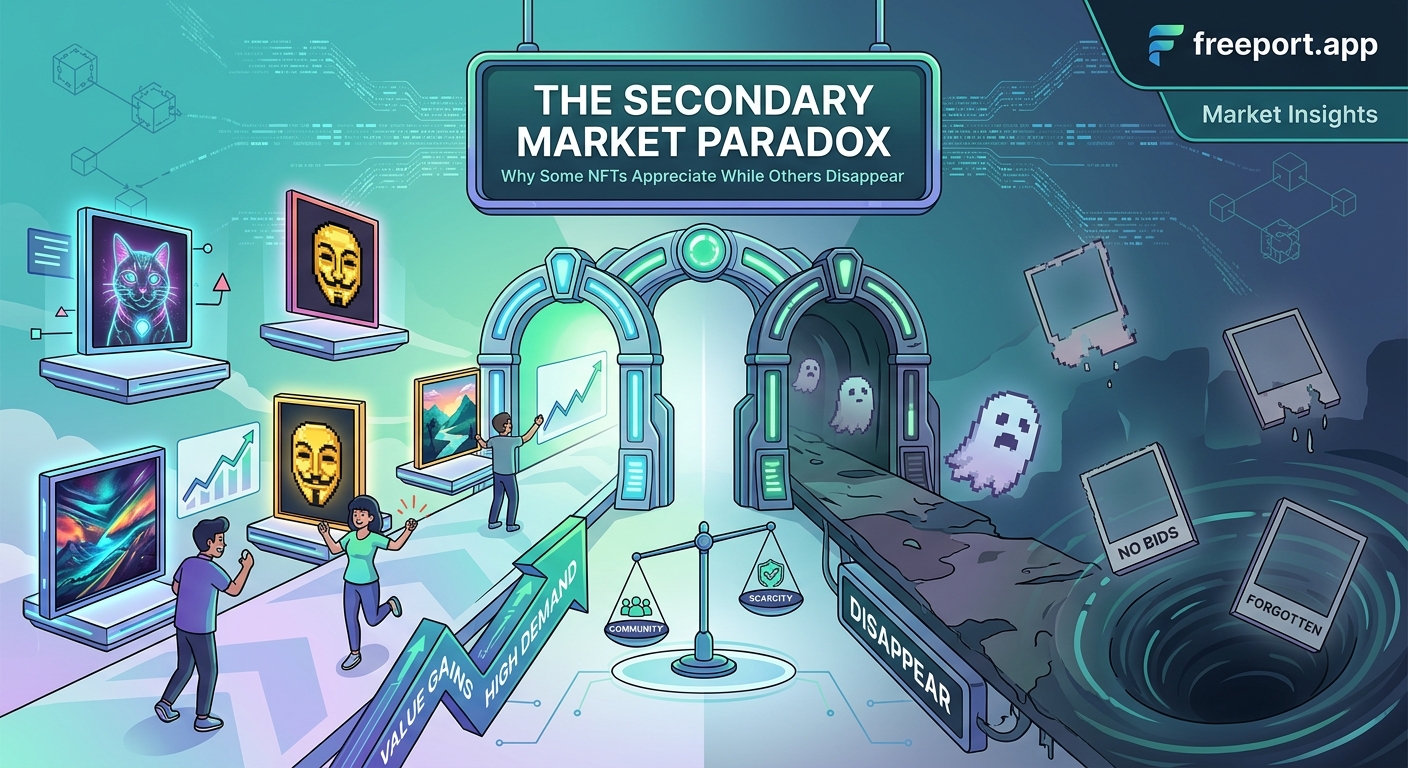
The Secondary Market Paradox: Why Some NFTs Appreciate While Others Disappear

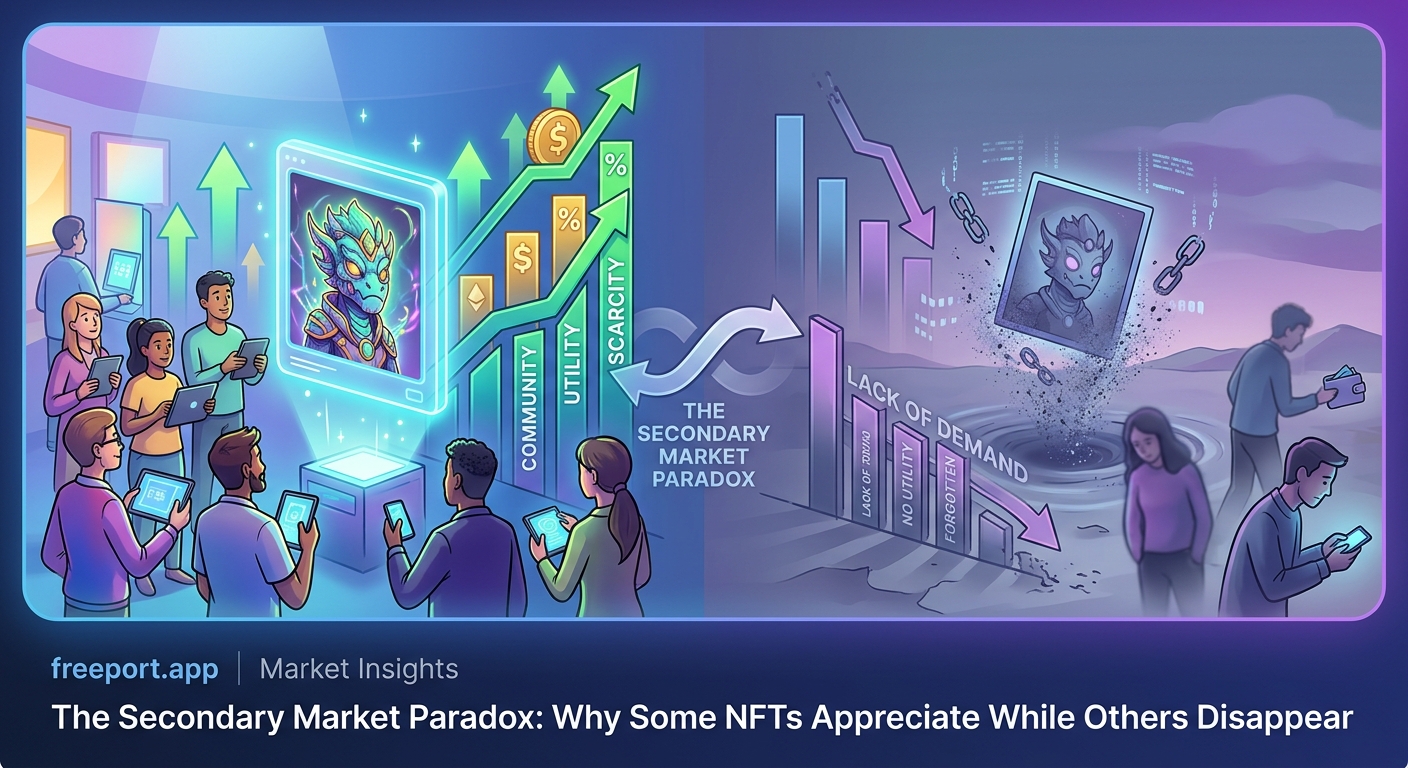
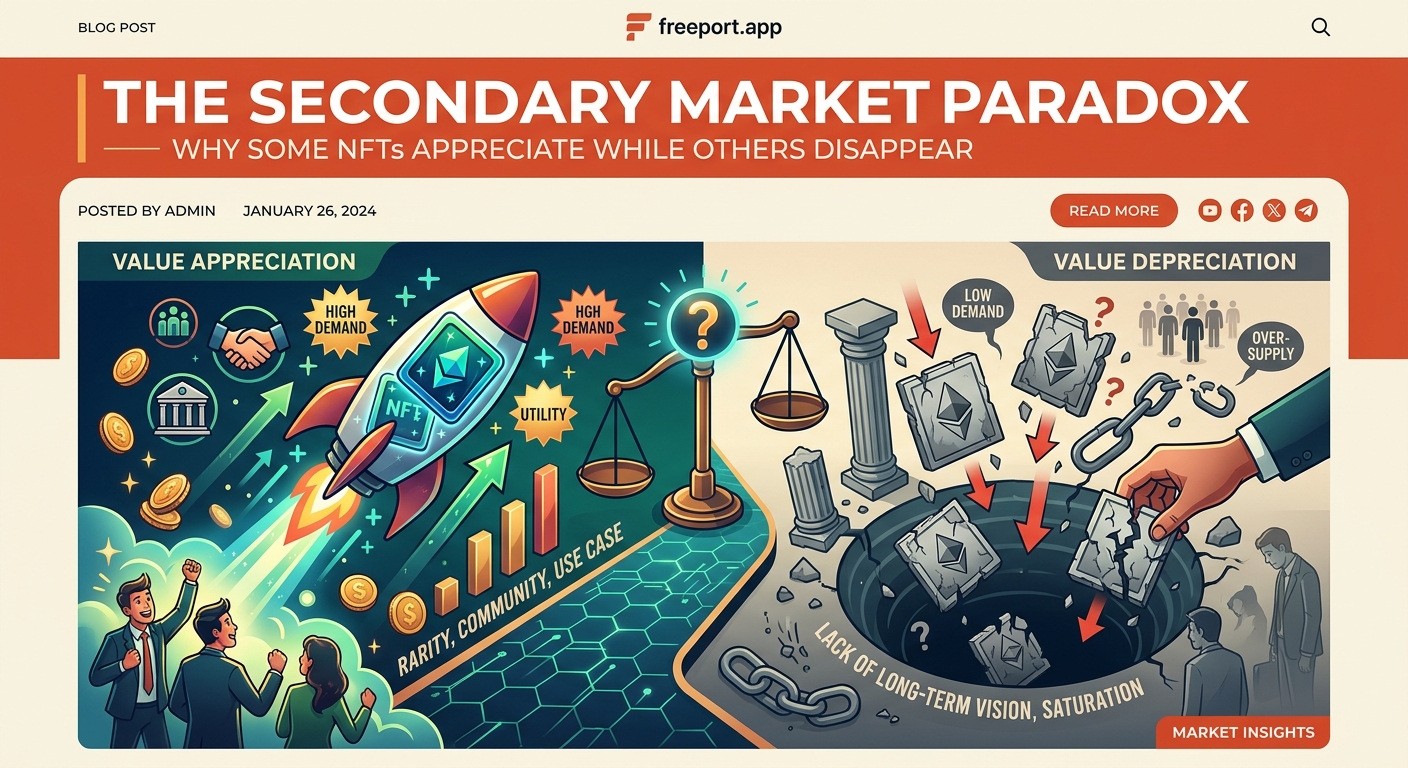
The NFT market has witnessed spectacular rises and devastating falls. Collections that sold for thousands now trade for pennies, while others continue appreciating years after launch. Understanding why some NFTs lose value while others thrive isn’t just academic. It’s essential knowledge for anyone holding or considering digital assets.
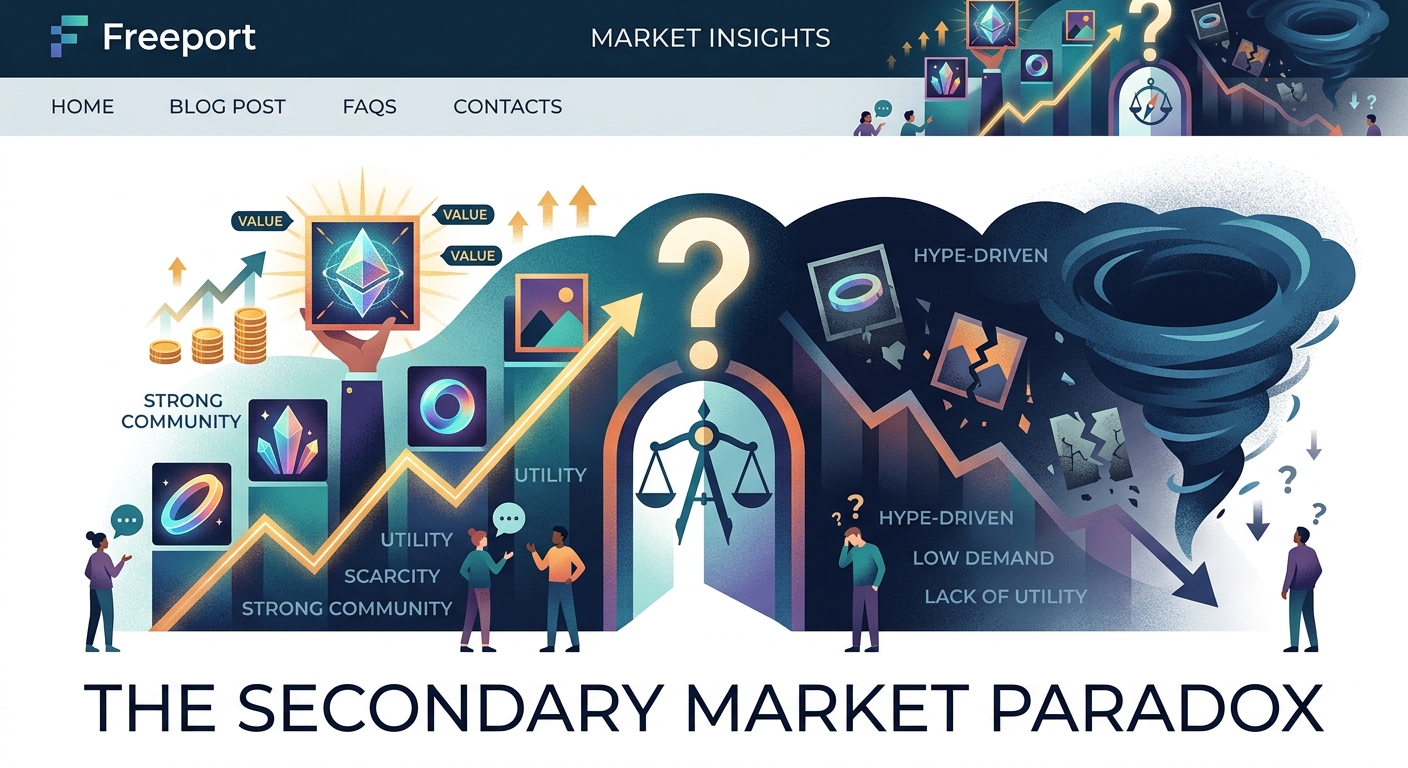
NFTs lose value due to weak community engagement, poor utility, oversupply, platform instability, and lack of artistic merit. Successful projects combine strong fundamentals, active communities, sustainable tokenomics, and genuine cultural relevance. Value retention depends on factors beyond initial hype, including long-term roadmap execution, [smart contract security](https://freeport.app/how-smart-contracts-are-revolutionizing-art-ownership-and-provenance/), and authentic creator reputation. Understanding these dynamics helps collectors make informed decisions and avoid common pitfalls that lead to portfolio depreciation.
The community collapse effect
Strong communities sustain NFT values through bear markets. Weak ones evaporate overnight.
Projects that fail to build genuine engagement see rapid value decline. Discord servers filled with bot activity and forced positivity indicate trouble. Real communities discuss art, share experiences, and organize events without constant prodding from moderators.
Look at projects that maintained value through 2022’s downturn. They had active holders creating derivative works, hosting meetups, and building subcultures around the collection. The NFTs became identity markers, not just speculative assets.
When community activity drops below a critical threshold, liquidity disappears. Sellers outnumber buyers. Floor prices crater. The death spiral begins.
Projects without regular community updates, transparent roadmaps, or responsive teams lose holder confidence. People stop believing in long-term value. They exit positions. New buyers stay away.
Utility promises that never materialize
Many projects promise revolutionary utility during mint. Few deliver.
The pattern repeats across collections. Roadmaps promise metaverse integration, physical merchandise, exclusive events, token airdrops, and gaming functionality. Months pass. Nothing ships. Holders grow frustrated.
Utility that actually matters includes:
- Verifiable access to exclusive content or experiences
- Functional integration with established platforms
- Recurring benefits that compound over time
- Transparent delivery timelines with accountability
Projects that treat utility as marketing rather than product development face value erosion. Holders eventually realize they paid for promises, not products.
Some collections launch with zero utility beyond art and community. They succeed by being honest about what they offer. Others make grandiose claims they can’t fulfill. The market punishes dishonesty.
Supply dynamics and artificial scarcity
Collection size directly impacts value retention. Oversupply kills prices.
A 10,000-piece collection needs 10,000 engaged holders to maintain floor price stability. Most projects struggle to build communities that large. When supply exceeds genuine demand, prices fall.
Projects that mint unlimited editions or continue releasing new collections dilute value. Holders watch their assets depreciate as creators flood the market with alternatives.
| Collection Size | Community Required | Liquidity Challenge |
|---|---|---|
| 100-500 pieces | Tight-knit, highly engaged | Low volume, high volatility |
| 1,000-5,000 pieces | Active core community | Moderate trading activity |
| 10,000+ pieces | Large, sustained engagement | Requires constant new buyers |
Successful projects carefully manage supply. They resist the temptation to mint additional collections that compete with existing holders. They understand that building a valuable digital art collection requires respecting scarcity.
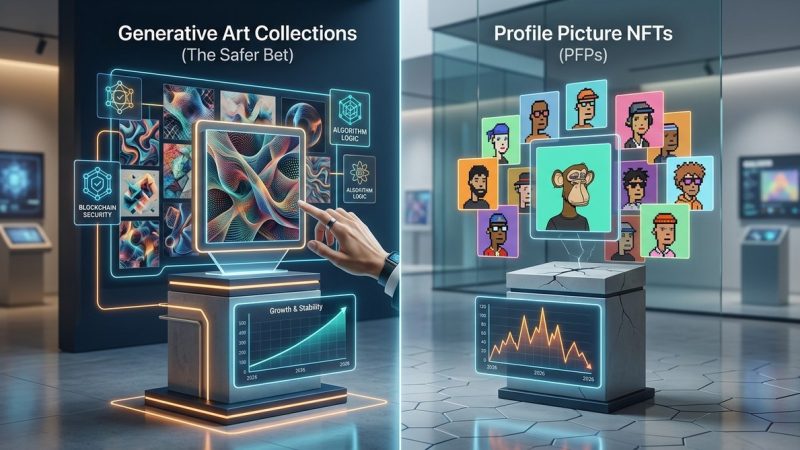
Limited editions from established artists often hold value better than massive generative collections. The math is simple. Fewer pieces means less selling pressure.
Platform risk and technical vulnerabilities
Your NFT’s value depends on infrastructure you don’t control.
Projects built on centralized platforms face existential risk. When the platform shuts down, what happens to your assets? Platform shutdowns have wiped out entire collections.
Technical issues that destroy value include:
- Metadata stored on centralized servers that disappear
- Smart contracts with exploitable vulnerabilities
- Reliance on single points of failure for image hosting
- Poor storage solutions that compromise long-term preservation
Projects using IPFS without pinning services risk losing media files. Those storing metadata on private servers create ticking time bombs. When servers go offline, NFTs become broken links.
Smart contract security matters enormously. Exploits that allow unauthorized minting or transfers destroy trust instantly. Projects that skip audits gamble with holder value.
The blockchain itself must remain viable. Collections on abandoned chains face liquidity death. Cross-chain compatibility becomes crucial as the ecosystem fragments.
Artistic merit and cultural relevance
Not all digital art deserves preservation or appreciation.
Collections lacking artistic vision or cultural significance struggle to maintain value. The market eventually separates derivative work from genuine innovation.
Projects that simply clone successful formulas without adding value face competition from hundreds of similar collections. Why hold a knockoff when you can own the original?
Blockchain artists redefining contemporary digital art create work that stands independent of market hype. Their pieces maintain value because they represent genuine artistic achievement.
Collections that capture cultural moments, push technical boundaries, or establish new aesthetic categories build lasting value. Those that chase trends without substance become forgotten.
The NFTs that appreciate over time tell stories, establish movements, or represent technical breakthroughs. Everything else is noise competing for attention in an oversaturated market.
Consider how traditional art markets value work. Provenance matters. Artist reputation matters. Historical significance matters. The same principles apply to digital assets.
The hype cycle and market timing
Most NFT buyers purchase at exactly the wrong time.
The typical pattern starts with organic growth among early adopters. Word spreads. FOMO kicks in. Prices spike as mainstream attention arrives. Late buyers purchase at peak prices. Then reality sets in.
Projects minted during market euphoria face steeper depreciation. Buyers who purchased at floor prices of 5 ETH when ETH traded at $4,000 watched both crypto and NFT values collapse. Double depreciation destroys portfolios.
Understanding market cycles helps avoid value destruction:
- Identify projects building during bear markets rather than launching during peaks
- Assess whether current prices reflect genuine value or temporary mania
- Consider whether you’re buying art you love or chasing returns
- Evaluate if the project can survive 18-24 months without new buyers
Collections that maintain value through multiple cycles demonstrate resilience. Those that only existed during one hype wave disappear when attention moves elsewhere.
Creator reputation and long-term commitment
Anonymous teams with no track record rarely deliver lasting value.
Projects led by doxxed creators with established reputations face accountability. They can’t disappear without consequences. Anonymous teams can abandon projects without repercussions.
Research creator backgrounds before buying. Have they delivered on previous projects? Do they have skills relevant to their roadmap promises? Can they fund development without relying solely on mint revenue?
Projects that treat NFT sales as exit liquidity rather than funding for development betray holders. Those that view mints as the beginning of multi-year journeys build sustainable value.
Creator commitment shows through:
- Regular communication about progress and challenges
- Transparent treasury management
- Continued development during market downturns
- Willingness to adapt based on community feedback
Teams that disappear after minting destroy value instantly. Those that remain engaged through difficult periods earn holder loyalty.
Tokenomics and incentive alignment
Poorly designed economic models guarantee value destruction.
Projects that concentrate ownership among small groups create manipulation risk. Whales can crash floor prices by dumping holdings. Distribution matters enormously.
Royalty structures affect secondary market health. Excessive royalties discourage trading and reduce liquidity. Zero royalties eliminate creator funding for ongoing development. Understanding royalty mechanisms helps evaluate sustainability.
Projects that incentivize holding through staking, airdrops, or exclusive benefits reduce selling pressure. Those without holding incentives face constant downward pressure as traders flip for profit.
Vesting schedules for team allocations prevent insider dumping. Projects without lockups allow teams to exit before delivering value.
Red flags that predict value collapse
Certain warning signs consistently precede NFT depreciation.
Red flags every digital collector should watch for include aggressive marketing without substance, promises of guaranteed returns, celebrity endorsements from people with no crypto experience, and rushed timelines that prioritize speed over quality.
Projects that spend more on marketing than development rarely deliver. Those that promise specific price targets engage in securities violations and unrealistic expectations.
Collections that launch without clear artistic vision, technical innovation, or community purpose struggle to justify valuations. Hype fades. Fundamentals matter.
Watch for these additional warning signs:
- Team members selling their allocations immediately after launch
- Roadmap changes that remove promised features
- Community management that silences criticism
- Declining social media engagement despite team claims of growth
Projects exhibiting multiple red flags simultaneously face near-certain value destruction. Smart collectors exit before the collapse becomes obvious to everyone.
What separates survivors from failures
Projects that maintain value share common characteristics.
They deliver on promises. They build genuine communities. They create art or utility worth preserving. They manage treasuries responsibly. They adapt to changing market conditions without abandoning core values.
Blue-chip NFT collections demonstrate these qualities consistently. They survive multiple market cycles. They maintain active trading volume. They attract institutional interest.
Successful projects also benefit from:
- Clear value propositions that extend beyond speculation
- Sustainable business models that don’t rely on constant new buyer inflows
- Technical excellence in contract design and metadata storage
- Cultural relevance that transcends temporary trends
Collections that become cultural touchstones, establish new artistic movements, or solve genuine problems maintain value. Those that simply exist as tradeable tokens without purpose fade away.
Making smarter collection decisions
Understanding depreciation factors transforms how you evaluate NFTs.
Before purchasing any NFT, assess fundamentals rather than hype. Does the project have genuine artistic merit? Is the team credible and committed? Does the community show organic engagement? Are tokenomics sustainable?
Compare potential purchases against long-term value indicators rather than current floor prices. A cheap NFT from a failing project offers no value. An expensive piece from a thriving ecosystem might appreciate.
Diversification across different project types, blockchains, and artistic styles reduces portfolio risk. Concentration in a single collection or trend amplifies both gains and losses.
Authenticating digital art before purchase prevents buying counterfeit or unauthorized pieces. Verification protects value.
Consider whether you’re collecting art you genuinely appreciate or speculating on price movements. Collections built around personal taste weather market volatility better than those chasing trends.
Building resilience into your portfolio
Value preservation requires active management, not passive holding.
Monitor your collections for warning signs. Stay engaged with communities. Assess whether projects continue executing roadmaps. Be willing to exit positions when fundamentals deteriorate.
Proper storage and security protects against theft and loss. Hardware wallets, secure seed phrase storage, and careful transaction verification prevent value destruction through security failures.
Understanding cross-chain dynamics helps navigate ecosystem changes. Projects that adapt to new chains maintain relevance. Those stuck on dying platforms lose value.
Participate in governance when available. Projects that give holders meaningful input build stronger communities and make better decisions.
The path forward for collectors
NFT value retention comes down to fundamentals, not luck.
Projects with strong communities, genuine utility, sustainable tokenomics, and committed creators maintain value. Those lacking these foundations face inevitable depreciation.
The market has matured beyond pure speculation. Collectors who treat NFTs as art, cultural artifacts, or functional assets rather than lottery tickets build more resilient portfolios.
Understanding why NFTs lose value helps you avoid projects destined to fail. It helps you identify collections worth holding through market volatility. It transforms you from a speculator hoping for gains into a collector making informed decisions.
The digital asset space continues evolving. New technologies, platforms, and artistic movements emerge constantly. Staying informed about emerging artists and technological developments positions you to recognize value before the broader market.
Your collection reflects your understanding of these dynamics. Choose projects that align with your values, demonstrate strong fundamentals, and show potential for long-term cultural relevance. The NFTs that appreciate aren’t accidents. They’re the result of careful creator execution and informed collector decisions.