Building Your First NFT Art Portfolio: A Step-by-Step Strategy
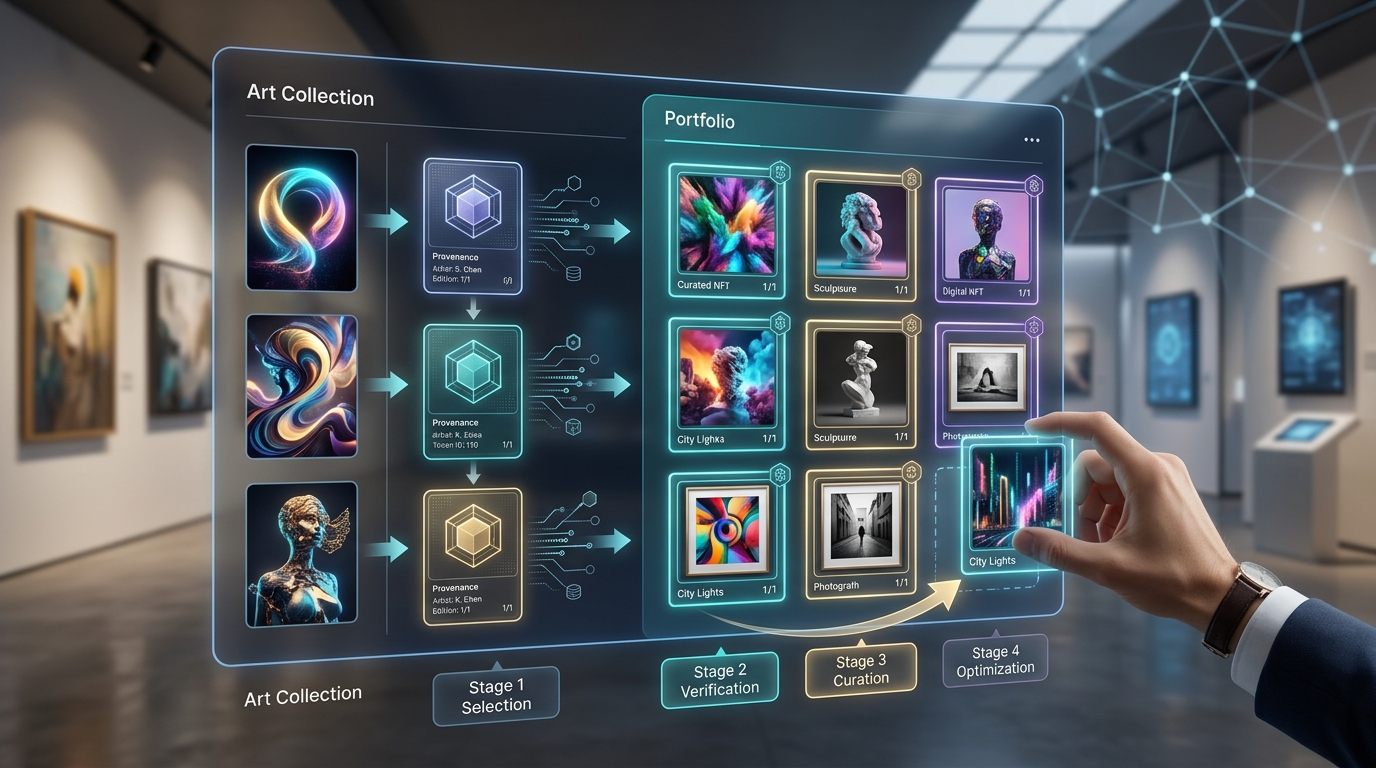
You’ve spent months perfecting your digital paintings, illustrations, or 3D designs. Now you’re ready to turn them into blockchain art and reach collectors worldwide. The technical process might seem overwhelming at first, but creating and launching NFT art is more accessible than most artists realize.
Making NFT art involves creating digital artwork in supported formats, setting up a crypto wallet, choosing a blockchain platform, connecting to a marketplace, uploading your files with metadata, and minting your work. The entire process takes a few hours for beginners and costs between $0 and $100 depending on your blockchain choice. Artists retain creative control while gaining access to global collectors and automated royalty systems.
Creating your digital artwork
Before anything else, you need artwork that exists in digital form. This is the foundation of the entire process.
Start with software you already know. Photoshop, Procreate, Blender, Illustrator, or even free tools like GIMP work perfectly. The blockchain doesn’t care which program you used. It only cares about the final file format.
Most marketplaces accept JPG, PNG, GIF, MP4, and GLB files. Some support SVG or audio formats. Check your target platform’s requirements before you finalize anything.
Resolution matters for visual quality. Aim for at least 2000 pixels on the longest side for static images. Videos should be 1080p minimum. File size limits vary by platform, but staying under 100MB keeps you safe almost everywhere.
Save your work in the highest quality possible. You can always compress later, but you can’t add detail that wasn’t captured in the original file.
“The biggest mistake new artists make is uploading low-resolution versions of their work. Collectors want to zoom in and see every brushstroke or pixel. Give them that experience.” — Digital artist with 200+ minted pieces
Setting up your crypto wallet
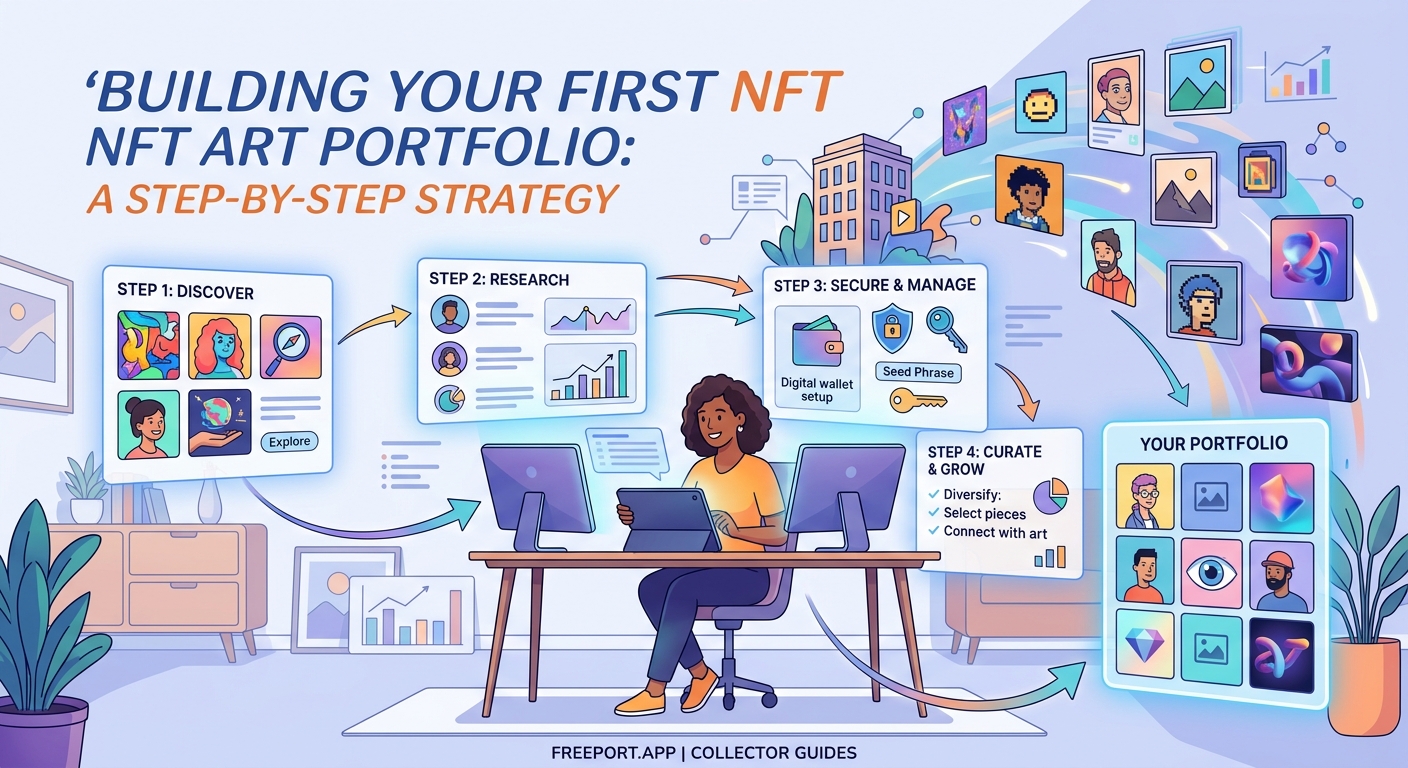
Your wallet is your identity on the blockchain. It stores your cryptocurrency and proves ownership of your art.
MetaMask is the most popular choice for beginners. It works as a browser extension and mobile app. Download it from the official website only. Scam versions exist everywhere else.
During setup, you’ll receive a 12-word recovery phrase. Write this down on paper. Store it somewhere safe. Never take a screenshot. Never email it to yourself. This phrase is the only way to recover your wallet if you lose access.
Your wallet address looks like a random string of numbers and letters starting with “0x”. This is your public identifier. Share it freely. It’s like your username.
Your private key and recovery phrase are different. Never share these with anyone. Not even platform support staff. Anyone with these can drain your wallet completely.
Fund your wallet with enough cryptocurrency to cover minting fees. The amount depends on which blockchain you choose. More on that in the next section.
Choosing your blockchain platform
Different blockchains serve different needs. Your choice affects costs, environmental impact, and which collectors can find your work.
Ethereum remains the most established option. It hosts the largest marketplaces and most serious collectors. Gas fees (transaction costs) fluctuate wildly, sometimes reaching $50 per mint during busy periods. The network switched to proof-of-stake in 2022, dramatically reducing its energy consumption.
Polygon operates as a layer 2 solution on Ethereum. Minting costs pennies instead of dollars. Many major platforms now support it. Your art still benefits from Ethereum’s security without the high fees. Artists migrating to layer 2 solutions like Polygon and Arbitrum often find better margins on their first sales.
Tezos attracts environmentally conscious artists. It uses minimal energy and charges low fees. The collector community is smaller but passionate about supporting emerging artists.
Solana offers fast transactions and low costs. Its ecosystem grew rapidly but faced network stability issues in 2022 and 2023. The community remains active and supportive of new artists.
| Blockchain | Typical Minting Cost | Energy Use | Collector Base | Best For |
|---|---|---|---|---|
| Ethereum | $15-$50 | Low (post-merge) | Largest | Established artists, high-value work |
| Polygon | $0.01-$1 | Very low | Growing fast | Beginners, experimental work |
| Tezos | $0.50-$2 | Very low | Niche, dedicated | Eco-conscious artists |
| Solana | $0.01-$0.50 | Low | Medium | High-volume creators |
Connecting to a marketplace
Marketplaces are where collectors find your work. Each platform has different features, fees, and audiences.
OpenSea supports multiple blockchains and has the highest traffic. The interface is straightforward for beginners. Platform fees sit at 2.5% of each sale.
Foundation operates on an invite or application system. The curation creates a gallery-like atmosphere. Collectors here often pay premium prices for quality work.
Objkt serves the Tezos community. It’s popular with generative artists and those exploring code-based artwork. The platform feels more experimental and community-driven.
Magic Eden started on Solana and expanded to other chains. It offers competitive fees and a clean interface.
Connect your wallet by clicking the wallet icon on your chosen platform. A popup will ask for permission. Approve it. You’re now logged in. Your wallet address is your username.
Preparing your metadata
Metadata gives your artwork context. It includes the title, description, properties, and additional details that help collectors understand your work.
Write a clear title. Avoid generic names like “Untitled #47” unless that fits your artistic concept. Make it memorable and searchable.
Your description should explain the work without over-explaining. Share your inspiration, technique, or the story behind the piece. Keep it under 500 words. Collectors want context, not an essay.
Properties and traits matter for collections. If you’re creating a series, consistent properties help collectors filter and find specific pieces. Examples include color palette, technique, or thematic elements.
Some platforms let you add unlockable content. This could be a high-resolution file, a physical print, or access to future drops. Only include this if it adds genuine value.
Minting your first NFT
Minting is the process of recording your artwork on the blockchain. This creates the token that represents ownership.
Follow these steps for a standard mint:
- Navigate to the “Create” section of your chosen marketplace
- Upload your digital file
- Fill in the title, description, and properties
- Choose your blockchain if the platform supports multiple options
- Set your royalty percentage for future sales (typically 5-10%)
- Decide between a fixed price listing, auction, or unlisted mint
- Review all details carefully
- Click the mint button and approve the transaction in your wallet
- Wait for blockchain confirmation (seconds to minutes depending on the network)
- Your NFT now exists and appears in your profile
The first time you mint on a platform, you might need to pay a one-time initialization fee. This is separate from the minting cost and only happens once per wallet per platform.
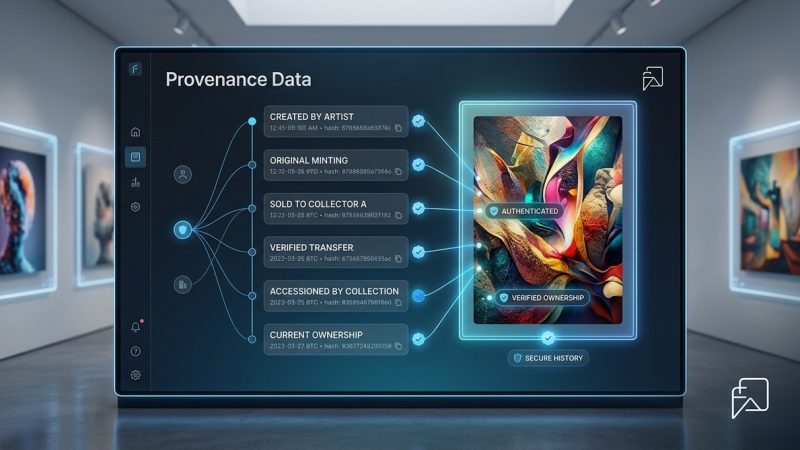
Understanding how smart contracts handle ownership and provenance helps you appreciate what happens behind the scenes during minting.
Setting your pricing strategy
Pricing your first pieces requires balancing confidence with market reality. New artists face an uphill battle for attention.
Research comparable artists. Look at creators with similar styles, experience levels, and follower counts. Check their sold items, not their listings. Anyone can list work at any price. Sales tell the real story.
Start conservatively. Your first few pieces establish your floor price. Setting them too high means no sales and no momentum. Setting them too low can undervalue your entire portfolio.
Consider these pricing approaches:
- Edition pricing: Create multiple editions of the same work at lower prices to increase accessibility
- Ascending pricing: Start low and increase prices as you build a collector base
- Fixed collection pricing: Price all pieces in a series identically to simplify decisions
- Auction starting bids: Set a minimum you’d accept and let the market decide
Many successful artists price their first 10-20 pieces between $50 and $200. This range attracts early collectors without seeming desperate or overconfident.
The royalty system for secondary sales means your pricing strategy should consider long-term value, not just initial sales.
Promoting your launch
Minting your art is only half the battle. Nobody will find it without promotion.
Build your presence before you launch. Share work-in-progress shots, explain your process, and engage with other artists. Communities form around creators who participate, not just those who sell.
Twitter remains the primary social platform for NFT art. Use relevant hashtags like #NFTart, #cryptoart, or blockchain-specific tags. Post at consistent times. Engage with other artists’ work genuinely.
Discord servers host active communities around specific platforms or art styles. Join relevant servers. Contribute to conversations. Share your work when appropriate, not constantly.
Instagram works for visual discovery. The algorithm favors consistent posting. Use stories to show your process. Reels perform better than static posts for reach.
Create a simple website or Linktree page. Centralize your marketplace links, social profiles, and contact information. Make it easy for interested collectors to find everything.
Avoid these common promotion mistakes:
- Spamming links in unrelated Discord channels
- Buying fake followers or engagement
- Only posting when you have something to sell
- Ignoring comments and messages from potential collectors
- Copying successful artists’ styles instead of developing your own voice
Understanding gas fees and timing
Gas fees are transaction costs on blockchain networks. They fluctuate based on network congestion.
On Ethereum, gas fees spike during busy periods. Weekday evenings in the US often see higher costs. Early mornings or weekends sometimes offer better rates.
Check current gas prices before minting. Websites like Etherscan show real-time fees. If costs are high, wait a few hours. Nothing requires immediate minting unless you’re participating in a timed event.
Polygon and other layer 2 solutions largely eliminate this concern. Gas fees stay consistently low regardless of timing.
Some platforms offer “lazy minting” or gasless minting. The NFT doesn’t write to the blockchain until someone purchases it. The buyer pays the gas fee. This eliminates upfront costs but might reduce perceived commitment to your work.
Calculate total costs before you commit. Factor in wallet funding, initialization fees, minting costs, and listing fees. Understanding the real cost of minting prevents surprises when you’re ready to launch.
Protecting your work and rights
Minting art on the blockchain doesn’t automatically protect you from theft or misuse. You need to take additional steps.
Add visible watermarks to preview images on social media. Make them subtle but present. This won’t stop determined thieves but discourages casual copying.
Register your copyright if your jurisdiction offers it. Blockchain records prove when you minted something, not when you created it. Traditional copyright registration provides additional legal protection.
Monitor for unauthorized copies. Services exist that scan marketplaces for stolen art. Many are free for basic monitoring. Report violations immediately through platform channels.
Understand what rights you’re granting. Most NFT sales transfer ownership of the token, not copyright of the artwork. Specify terms clearly in your description. Some artists use Creative Commons licenses. Others reserve all rights.
Smart contracts can encode some rights automatically, but legal enforceability varies by jurisdiction. Written terms in your description provide additional clarity for collectors.
Building your collector relationships
The artists who succeed long-term build genuine relationships with their collectors. This isn’t about manipulation. It’s about appreciation and communication.
Thank every collector personally. Send a message after each sale. Share your gratitude and any relevant details about the work. This simple gesture creates memorable experiences.
Offer collector benefits. This might include early access to new drops, input on future work, or exclusive content. Make collecting your art feel like joining a community, not just buying a product.
Stay in touch without being pushy. Share updates about new work, exhibitions, or milestones. Respect people’s time and attention.
Deliver on promises. If you offered unlockable content or future benefits, follow through. Your reputation is everything in a transparent ecosystem.
Some collectors become advocates. They share your work, recommend you to others, and build your reputation. Treat these relationships with extra care.
Planning your next pieces
Your first NFT shouldn’t be your last. Consistency matters more than perfection.
Develop a release schedule you can maintain. Weekly drops work for some artists. Monthly releases suit others. Match your pace to your creative process and life circumstances.
Consider creating series or collections. Related pieces attract collectors who want complete sets. This strategy works especially well for building a cohesive portfolio.
Experiment with different formats. If you started with static images, try animation. If you began with illustrations, test 3D work. Growth comes from exploration.
Track what resonates. Which pieces sell? Which get the most engagement? Use this data to inform future work without letting it dictate your entire creative direction.
Balance commercial viability with artistic integrity. Creating only what sells leads to burnout. Making only what you love without considering your audience leads to obscurity. Find your middle ground.
Common mistakes to avoid
Learning from others’ errors saves time and money. These mistakes appear repeatedly among new NFT artists.
Minting everything immediately: Not every piece deserves to be minted. Curate your work. Quality over quantity builds better long-term value.
Ignoring the community: Artists who only promote their own work get ignored. Participate genuinely in the ecosystem.
Underestimating storage concerns: Your image file needs to live somewhere permanently. Most platforms use IPFS or similar decentralized storage. Understand what happens when platforms change or shut down.
Copying trending styles exactly: Inspiration is fine. Direct copying damages your reputation and might violate others’ rights.
Giving up after slow initial sales: Building a collector base takes months or years. Persistence matters more than overnight success.
Neglecting security: Using weak passwords, ignoring two-factor authentication, or clicking suspicious links can result in stolen work or funds.
Your first mint changes everything
Creating your first NFT marks a real shift in how you think about your art. The piece now exists permanently on a global ledger. Collectors anywhere can discover it. Your work joins an ecosystem of artists, technologists, and collectors building something new together.
Start with one piece. Follow the steps above. Learn from the experience. Then create another. The technical process becomes second nature after a few attempts. Focus your energy on making meaningful work and connecting with people who appreciate it. That’s where the real opportunity lives.