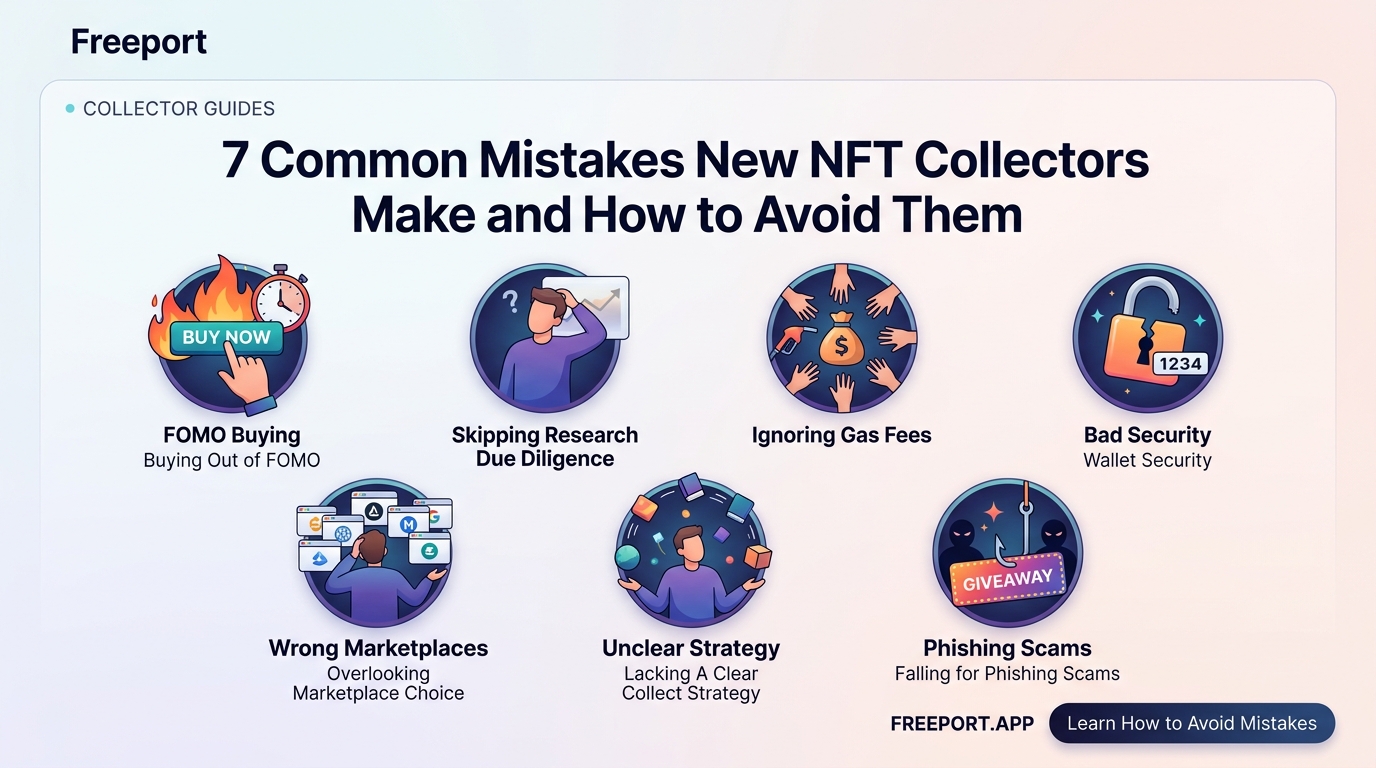
7 Common Mistakes New NFT Collectors Make and How to Avoid Them
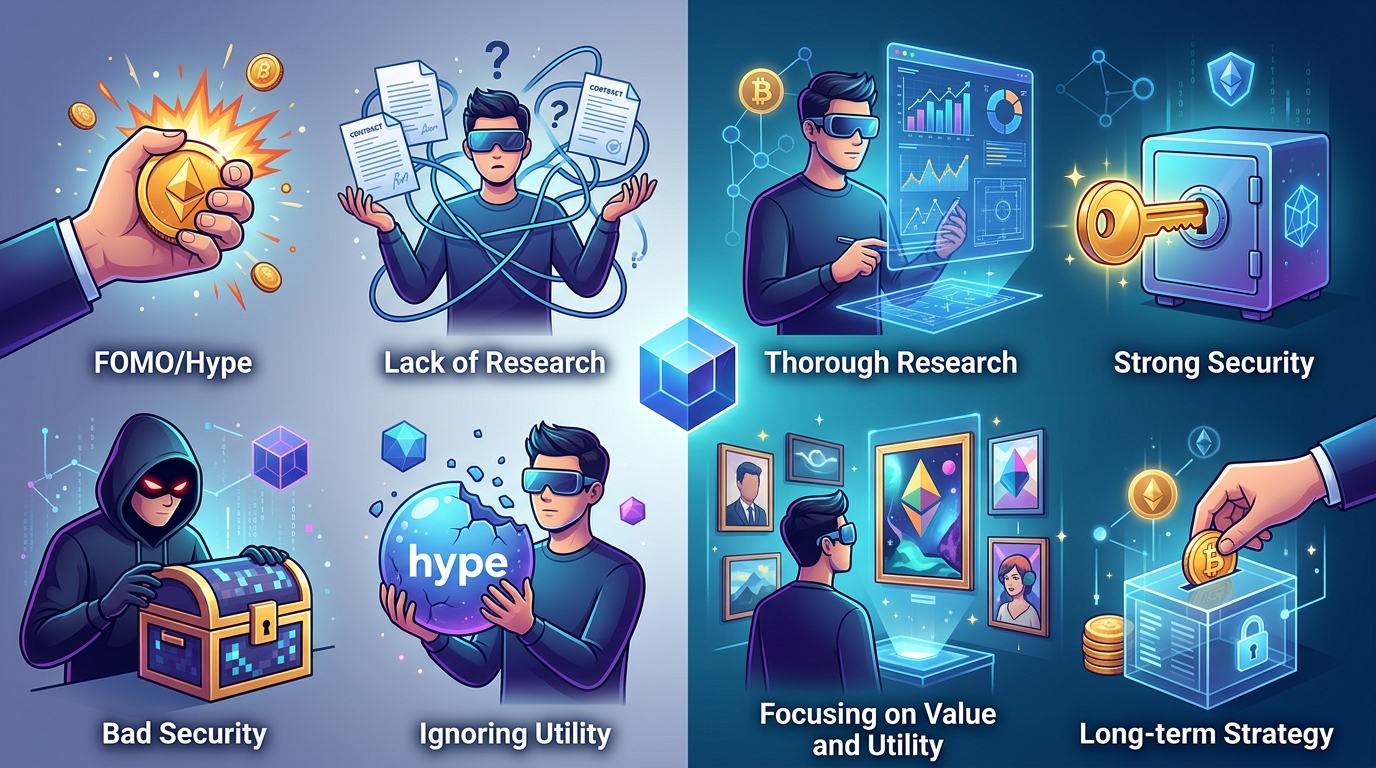
The NFT space moves fast, and new collectors often lose money before they understand the basics. A single mistake can cost you thousands of dollars or leave you holding worthless tokens. The good news? Most disasters are completely preventable once you know what to watch for.
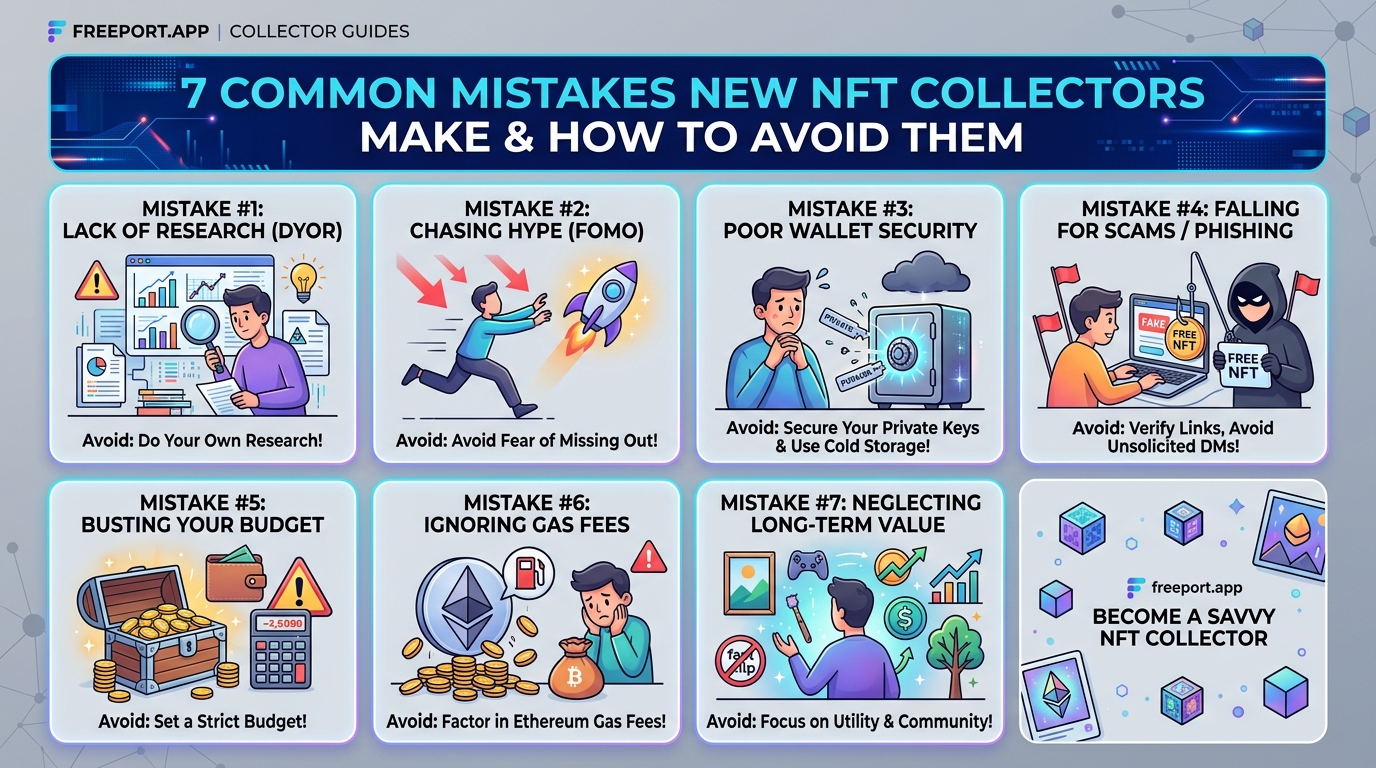
New NFT collectors commonly fall victim to preventable mistakes like buying without research, ignoring security basics, chasing hype, and misunderstanding ownership rights. This guide covers seven critical errors and provides actionable strategies to protect your investment, verify authenticity, secure your assets properly, and build a collection with lasting value instead of falling for scams or temporary trends.
Buying without researching the project
Impulse purchases kill more portfolios than market crashes.
Too many collectors see a trending project on social media and buy immediately. They skip the research phase entirely. Then they watch their purchase lose 90% of its value within weeks.
Before spending a single dollar, verify the project’s legitimacy. Check the team’s background and track record. Read the roadmap and assess whether the promises sound realistic. Look at the smart contract implementation and verify it’s been audited.
Real projects have transparent teams with public profiles. Scam projects hide behind anonymous accounts and vague promises. Real projects build communities over months. Scams appear overnight and disappear just as fast.
Study the project’s Discord or community channels. Are people asking genuine questions? Do the moderators provide helpful answers? Or does everyone just spam rocket emojis and talk about getting rich?
Check the contract address on the blockchain explorer. Verify the collection is actually on the chain it claims to be on. Confirm the total supply matches what the project advertises. Look at the holder distribution to see if a few wallets control most of the supply.
A legitimate project should have clear documentation, transparent team members, and a community focused on the art or utility rather than just price speculation.
Ignoring wallet security fundamentals
Your wallet is your vault. Treat it that way.
New collectors often use hot wallets for everything, including high-value pieces. They store seed phrases in email drafts or phone screenshots. They approve unlimited spending permissions without reading what they’re signing.
Then one day, everything disappears.
Follow this security checklist:
- Use a hardware wallet for valuable pieces worth more than $500.
- Never share your seed phrase with anyone, ever, for any reason.
- Write your seed phrase on paper and store it in a secure physical location.
- Use separate wallets for different purposes (one for minting, one for storage, one for small transactions).
- Double-check every contract interaction before signing.
- Revoke token approvals regularly using blockchain permission tools.
Hot wallets work fine for small amounts and active trading. But storing high-value digital assets requires cold storage solutions.
Test your security setup with small amounts first. Send a tiny transaction to your hardware wallet. Practice recovering it using your seed phrase on a different device. Make sure you actually know how to access your assets if something goes wrong.
Phishing attacks target NFT collectors constantly. Scammers create fake minting sites that look identical to real ones. They send Discord messages pretending to be project moderators. They offer “exclusive deals” that require connecting your wallet to malicious contracts.
Always verify URLs before connecting your wallet. Bookmark official sites and only use those bookmarks. Never click links in Discord DMs or Twitter messages.
Chasing hype instead of value
FOMO destroys more wealth than any other emotion in this space.
You see a collection pumping. Everyone’s talking about it. The floor price doubles in an hour. You panic buy at the peak. Then the hype dies, and you’re stuck holding an overpriced asset nobody wants.
This pattern repeats constantly.
Smart collectors focus on fundamentals instead of momentum. They ask whether the art actually resonates with them. They evaluate the artist’s body of work and reputation. They consider whether the project solves a real problem or creates genuine utility.
Building a valuable digital art collection requires patience and discipline. The best pieces rarely appear during feeding frenzies. They emerge during quiet periods when collectors can think clearly.
Study the artists who create lasting work. Look at blockchain artists redefining contemporary digital art and understand what makes their approach different. Notice how they build bodies of work over years, not weeks.
Price action tells you about current sentiment. It doesn’t tell you about long-term value. A piece worth owning today will likely still be worth owning in five years. A hyped project might not exist in six months.
Misunderstanding what you actually own
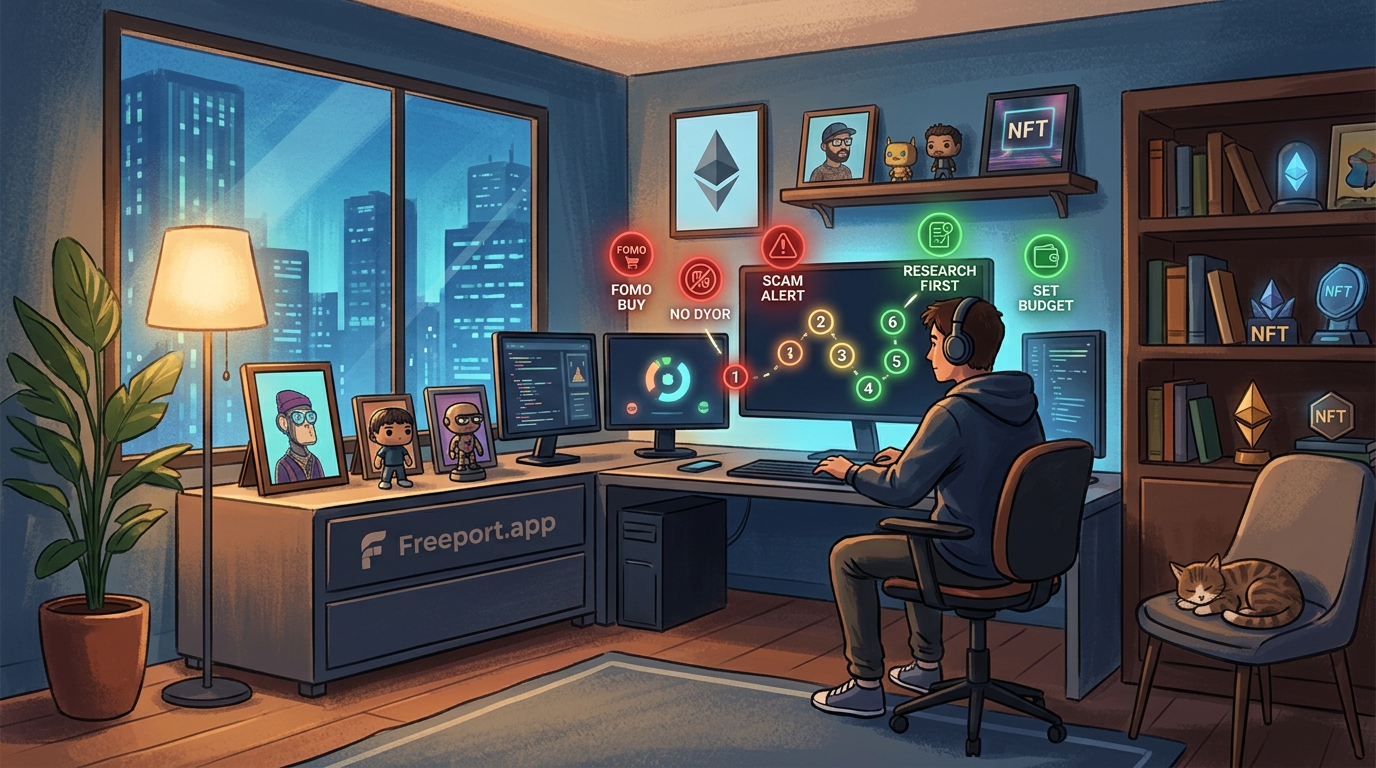
Owning an NFT doesn’t mean what most people think it means.
You don’t own the copyright unless the terms explicitly grant it. You don’t necessarily own the image file. You might not even own permanent access to the artwork if the hosting goes down.
Read the terms of service. Understand what rights transfer with the purchase. Know whether you can use the image commercially, create derivatives, or display it publicly.
Some projects grant full commercial rights. Others allow personal use only. Some restrict any reproduction. The NFT itself is just a token pointing to a file. The legal rights depend entirely on the license agreement.
Check where the actual artwork lives. Is the image stored on-chain? Or does the token just point to a URL that could disappear? Understanding what happens when platforms shut down matters more than most collectors realize.
IPFS and Arweave provide decentralized storage options. They’re more permanent than regular URLs. But even IPFS files can become unavailable if nobody pins them. Verify the storage solution before buying expensive pieces.
The blockchain only stores the token and metadata. The actual artwork usually lives elsewhere. If that elsewhere disappears, you own a token pointing to nothing.
Skipping authentication and verification
Fake NFTs flood every major marketplace.
Scammers copy popular collections and create identical-looking fakes. They use similar names with tiny spelling differences. They prey on collectors who don’t verify contract addresses.
Always check the official contract address before buying. Compare it character by character with the verified address from the project’s official website. One wrong character means you’re buying a worthless copy.
Marketplaces try to verify collections, but fakes slip through. The verification badge helps, but it’s not foolproof. Your own verification matters more.
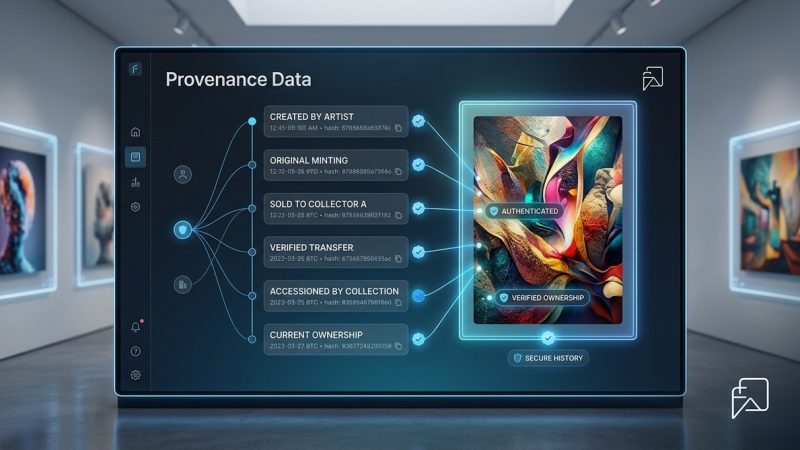
Look at the collection’s trading history. Real pieces from established collections have clear provenance. You can trace ownership back to the original mint. Fakes often have suspicious gaps or recent creation dates.
Check the seller’s other holdings and history. Legitimate collectors usually have diverse portfolios and transaction histories spanning months or years. Scammers often have new wallets with only the fake items they’re trying to sell.
Authenticating digital art before adding it to your collection requires systematic verification at every step.
| Verification Step | What to Check | Red Flag |
|---|---|---|
| Contract Address | Matches official source exactly | Similar but not identical address |
| Collection Age | Months or years old | Created recently |
| Trading Volume | Consistent history | Sudden spike from nowhere |
| Holder Count | Distributed across many wallets | Concentrated in few wallets |
| Metadata | Points to permanent storage | Uses temporary URLs |
Neglecting gas fees and hidden costs
The purchase price is just the beginning.
Gas fees can add 10% to 50% to your total cost, depending on network congestion. Marketplace fees take another 2.5% to 10%. If you’re buying on Ethereum during peak hours, you might pay $100 in gas to buy a $500 NFT.
Time your transactions strategically. Gas fees fluctuate throughout the day. They’re usually lowest on weekends and during off-peak hours in major time zones. Tools like gas trackers show you current rates and predict optimal times.
Different blockchains have vastly different fee structures. Ethereum charges the most but offers the most established ecosystem. Polygon and other layer-2 solutions reduce fees dramatically. Solana and Tezos offer even lower costs.
Understanding the real cost of minting helps you budget accurately and choose the right blockchain for your needs.
Consider these ongoing costs:
- Initial purchase gas fees
- Marketplace commission
- Transfer fees if moving to cold storage
- Listing fees if you decide to sell
- Potential royalties to the original creator
Calculate the total cost before buying. A piece listed at 0.5 ETH might actually cost you 0.6 ETH after all fees. That changes your break-even point significantly.
Falling for common scams and social engineering
Scammers have perfected their techniques.
They create fake customer support accounts on Discord and Twitter. They send urgent messages about “suspicious activity” on your wallet. They ask you to “verify” your account by entering your seed phrase on a phishing site.
Real platforms never ask for your seed phrase. Customer support never DMs you first. Urgent messages demanding immediate action are always scams.
Common scam patterns to recognize:
- Free mint announcements from fake project accounts
- Discord messages offering exclusive whitelist spots
- Emails claiming your wallet needs verification
- Websites offering to “check” if your NFTs are authentic
- Too-good-to-be-true deals on popular collections
- Requests to connect your wallet to claim prizes
Before identifying red flags every digital collector should watch for, understand that scammers exploit urgency and FOMO. They create artificial time pressure to bypass your rational thinking.
Take time with every decision. No legitimate opportunity requires you to act within minutes. If someone’s rushing you, they’re probably scamming you.
Enable two-factor authentication everywhere possible. Use unique passwords for every platform. Never reuse passwords between your email, exchange accounts, and wallet services.
Join official community channels and learn to recognize the real team members. Scammers impersonate founders and moderators constantly. Verify identities through multiple channels before trusting anyone.
Building a collection that lasts
The collectors who succeed think in years, not weeks.
They focus on artists with vision and track records. They buy work that resonates personally, not just financially. They understand that what makes digital artwork valuable in the long term has little to do with temporary hype.
Start small and learn the mechanics before committing serious money. Mint a few inexpensive pieces to understand the process. Practice sending NFTs between wallets. Get comfortable with the technology before buying expensive art.
Study the market cycles and patterns. Prices fluctuate wildly, but quality work tends to appreciate over time. Blue-chip collections maintain value during downturns because they represent genuine artistic achievement and cultural significance.
Diversify across artists, styles, and price points. Don’t put everything into one collection or one artist. Spread risk while building a portfolio that reflects your actual taste and interests.
Document your collection properly. Keep records of purchase prices, dates, and transaction hashes. Track the provenance of significant pieces. This documentation becomes valuable for insurance, taxes, and future sales.
Connect with other collectors who share your interests. Join thoughtful communities focused on art appreciation rather than just price speculation. Learn from experienced collectors who’ve navigated multiple market cycles.
The mistakes outlined here cost new collectors millions of dollars every year. But every single one is avoidable with basic knowledge and discipline. Take time to learn the fundamentals, verify everything, secure your assets properly, and focus on building a collection you’ll value regardless of market conditions.