Understanding Royalties and Resale Rights in Your Digital Art Purchases
Buying digital art feels different from traditional collecting. You own a token, but what exactly can you do with it? Can you resell it, display it commercially, or print it on merchandise? Understanding digital art resale rights protects your investment and keeps you compliant with creator intentions.
Digital art resale rights define what buyers can legally do after purchase. Most NFT purchases grant resale permission but restrict commercial use, reproduction, and derivative works. [Smart contracts](https://en.wikipedia.org/wiki/Smart_contract) automate royalty payments to original creators during secondary sales. Always review license terms before buying, reselling, or displaying digital artwork to avoid copyright violations and ensure creators receive fair compensation.
What you actually own when you buy digital art
Purchasing an NFT does not transfer copyright ownership.
You receive a verified token proving authenticity and ownership of that specific digital item. The underlying artwork, its intellectual property, and reproduction rights typically remain with the creator.
Think of it like buying a signed poster. You own that physical object and can resell it. You cannot legally print copies and sell those.
Most blockchain art sales include these basic rights:
- The right to display the artwork in your personal collection
- The ability to resell the piece on secondary markets
- Proof of provenance through blockchain records
- Access to the digital file for personal viewing
What you usually cannot do without explicit permission:
- Create merchandise featuring the artwork
- Use the image in commercial projects
- Modify the work and claim it as your own
- Reproduce copies for distribution
Some projects grant broader commercial rights. Bored Ape Yacht Club famously allows holders to create derivative products. Other collections maintain strict personal use limitations.
Always read the project’s terms of service before assuming what you can do. How smart contracts are revolutionizing art ownership and provenance explains how blockchain technology enforces these agreements automatically.
How royalties work in digital art sales
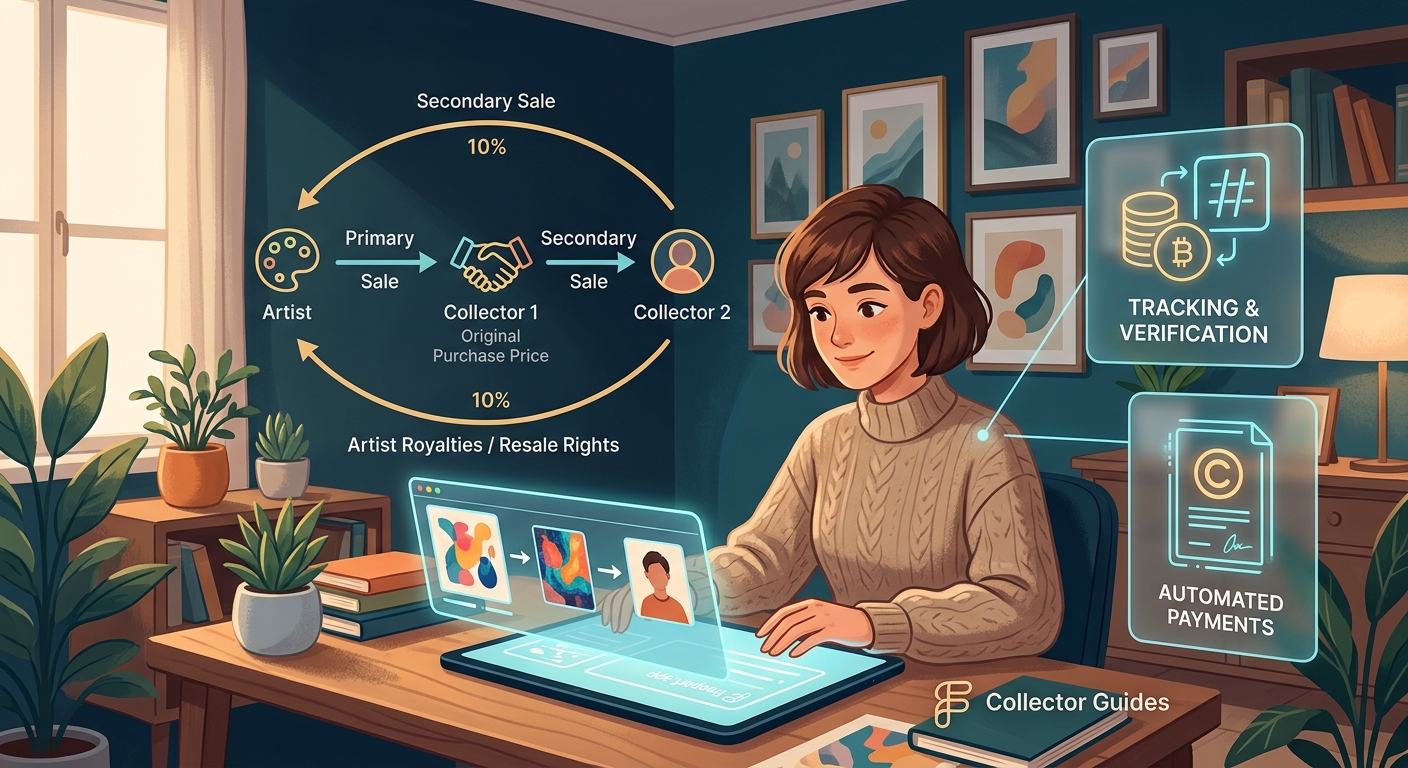
Traditional art markets rarely compensate original creators during resales. A painting might sell for millions at auction while the artist receives nothing.
Blockchain technology changed this model fundamentally.
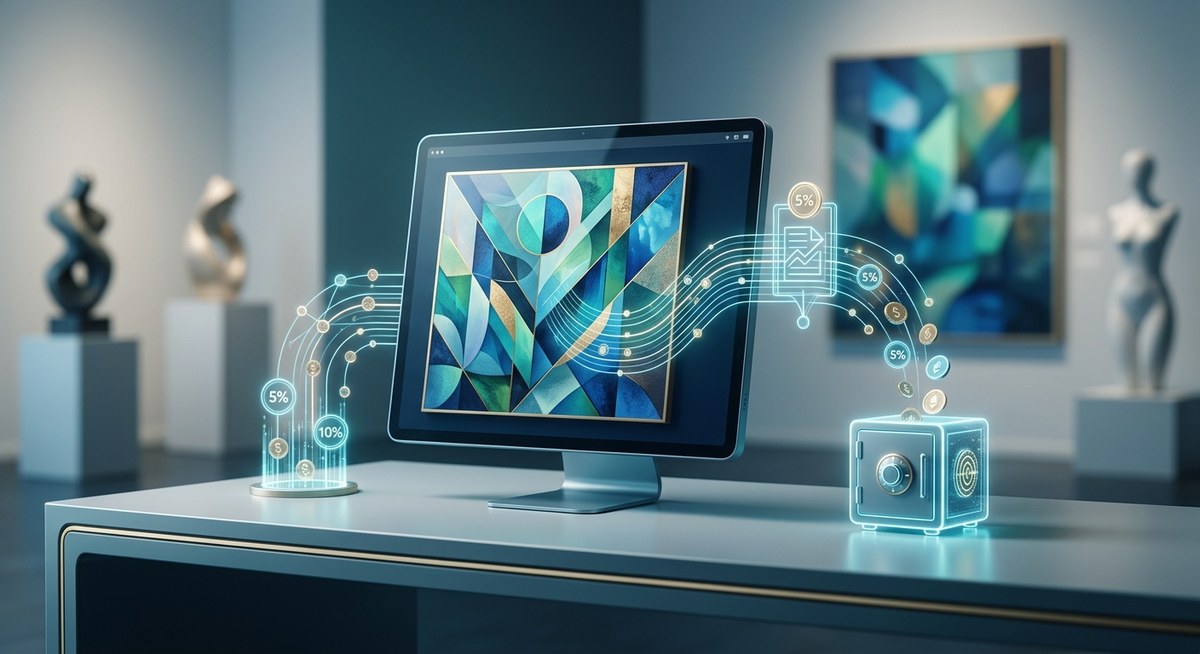
Smart contracts embed royalty terms directly into the token. When you sell a piece on a compatible marketplace, the contract automatically deducts a percentage and sends it to the creator’s wallet.
Standard royalty rates range from 5% to 10% of the sale price. Some artists set higher rates, while others waive royalties entirely to encourage trading volume.
Here’s how a typical transaction breaks down:
| Transaction Component | Percentage | Recipient |
|---|---|---|
| Sale price | 100% | Total amount |
| Creator royalty | 5-10% | Original artist |
| Platform fee | 2-5% | Marketplace |
| Seller proceeds | 85-93% | Previous owner |
Not all platforms honor on-chain royalties anymore. Some marketplaces made royalties optional to compete on fees. This sparked significant debate in the creator community.
When evaluating where to buy or sell, check whether the platform enforces creator royalties. Supporting artist-friendly marketplaces ensures creators benefit from secondary market success.
Smart contract royalties explained: protecting artist revenue in secondary sales covers the technical implementation and current enforcement challenges.
Understanding different license types
Digital art licenses vary significantly between projects and individual artists.
Personal use licenses
Most NFT purchases default to personal use. You can display the work in virtual galleries, use it as a profile picture, or showcase it in your home. Commercial exploitation remains prohibited.
Commercial rights included
Some collections explicitly grant commercial usage rights. Holders can create products, use the image in marketing, or license it to others. These rights often increase the artwork’s value significantly.
Creative Commons variants
Artists sometimes release work under Creative Commons licenses, which permit specific uses while maintaining attribution requirements. CC0 releases all rights, placing work in the public domain.
Exclusive ownership transfers
Rare agreements transfer full copyright to the buyer. These transactions cost substantially more because the creator surrenders future control and income potential.
“The biggest mistake collectors make is assuming NFT ownership equals copyright ownership. Read the license terms before you buy, not after you want to use the art commercially.” — Digital rights attorney specializing in blockchain assets
Steps to verify resale rights before buying
Protecting yourself requires due diligence before purchase.
-
Locate the project’s official terms of service. Check the project website, not just the marketplace listing. Terms may exist in multiple locations, so review all available documentation.
-
Review the smart contract metadata. Some projects encode license information directly in the token. Tools like Etherscan allow you to read contract details and verify what rights the token conveys.
-
Research the creator’s stated policies. Artists often clarify usage rights on their social media, websites, or community channels. Conflicting information should raise red flags worth investigating.
-
Check marketplace-specific terms. Platforms sometimes impose additional restrictions beyond the creator’s license. Understand both sets of rules before completing your purchase.
-
Document everything. Screenshot license terms, save website archives, and preserve proof of the rights granted at purchase time. Terms can change, and your documentation protects your interests.
-
Consult legal resources if planning commercial use. When significant money or business plans depend on specific rights, professional legal review justifies the cost.
How to authenticate digital art before adding it to your collection provides additional verification strategies for serious collectors.
Common resale rights mistakes and how to avoid them
| Mistake | Why It Happens | How to Avoid It |
|---|---|---|
| Assuming commercial rights come automatically | NFT ownership feels like total ownership | Always verify license terms explicitly |
| Ignoring platform policy changes | Marketplaces update terms without notice | Review policies before each major transaction |
| Selling on non-royalty platforms | Lower fees seem attractive | Consider creator relationships and community impact |
| Creating derivatives without permission | Excitement about ownership clouds judgment | Confirm modification rights before altering artwork |
| Missing geographic restrictions | Digital feels borderless | Some licenses vary by jurisdiction |
The most expensive mistake involves commercial exploitation without proper rights. Legal disputes can cost far more than the original artwork’s value.
Some collectors have faced cease and desist letters, lawsuit threats, or community backlash after misusing purchased art. The blockchain’s transparency means violations become public quickly.
7 red flags every digital collector should watch for before buying helps identify problematic projects before you invest.
Platform differences in rights enforcement
Where you buy and sell matters significantly for rights protection.
Ethereum-based marketplaces like OpenSea initially enforced creator royalties through smart contracts. Recent competitive pressure led some platforms to make royalties optional, allowing buyers to skip these payments.
Solana platforms took varied approaches. Magic Eden initially enforced royalties, then made them optional, then reversed course after creator backlash.
Tezos marketplaces generally maintain strong royalty enforcement as part of that ecosystem’s artist-friendly culture.
Newer platforms experiment with different models. Some use allowlists to block zero-royalty sales. Others implement hybrid systems where base royalties remain mandatory but creators can add optional tips.
As a collector, your platform choice signals your values. Supporting royalty-enforcing marketplaces benefits the broader ecosystem even when individual transactions cost slightly more.
Comparing ethereum, solana, and tezos: which blockchain offers the best roi for collectors examines how platform economics affect long-term value.
What happens when projects change their terms
Terms of service updates create gray areas for existing holders.
Generally, the rights granted at purchase time should govern your ownership. Retroactive restrictions face legal challenges, though few cases have established clear precedent.
Projects occasionally expand rights for existing holders. Yuga Labs granted commercial rights to CryptoPunks holders after acquisition, significantly increasing those assets’ utility and value.
Conversely, some projects attempted to restrict previously granted rights. Community backlash usually forces reversals, but uncertainty damages trust and prices.
Best practices for handling term changes:
- Archive original terms when you purchase
- Join project communication channels to catch updates early
- Understand whether changes apply retroactively
- Consider selling if new terms conflict with your plans
- Participate in community governance when possible
Decentralized projects with token-based governance allow holders to vote on license changes. This democratic approach provides more stability than founder-controlled terms.
Reselling art while respecting creator intent
Ethical resale practices strengthen the entire digital art ecosystem.
Pay attention to royalty settings when listing items. Even on platforms where royalties are optional, honoring creator percentages builds goodwill and supports continued artistic production.
Timing matters too. Immediately flipping purchases for profit frustrates artists and communities. Patient collecting demonstrates genuine appreciation rather than pure speculation.
Transparency about your resale intentions helps set appropriate expectations. If you buy specifically for investment, being upfront allows artists to decide whether to sell to you.
Some artists maintain collector relationships and offer future opportunities to supporters who respected their work. Short-term profit maximization can cost long-term access to desirable pieces.
When reselling, provide accurate information about rights and restrictions to buyers. Misrepresenting what someone can do with a purchase harms them and reflects poorly on you.
Building your first nft art portfolio: a step by step strategy covers ethical collecting practices alongside investment strategy.
International considerations for digital art rights
Copyright laws vary significantly across jurisdictions.
A license valid in one country might not hold the same weight elsewhere. The borderless nature of blockchain transactions creates complex legal situations.
European Union regulations provide strong creator protections through moral rights provisions. These grant artists certain inalienable rights regardless of ownership transfers.
United States copyright law focuses more on economic rights that can be transferred or licensed. Fair use provisions also create exceptions not present in many other legal systems.
Asian markets often have different expectations around derivative works and fan creations. Cultural norms may conflict with Western intellectual property frameworks.
When buying international art or planning global commercial use, consider:
- Where the artist resides and which laws govern their work
- Where you plan to use or display the artwork
- Whether the blockchain platform has terms addressing jurisdiction
- How disputes would be resolved across borders
Most NFT transactions lack explicit jurisdiction clauses. This ambiguity creates risk but also flexibility. Establishing clear agreements upfront prevents confusion later.
Protecting your rights as a buyer
Ownership verification matters as much as usage rights.
Store comprehensive documentation of your purchase, including transaction hashes, marketplace listings, and any communications with the artist. This evidence proves your legitimate ownership if questions arise.
Use secure wallets appropriate for your collection’s value. The complete guide to storage and security for high value digital assets explains hardware and software options.
Consider insurance for valuable pieces. Specialized policies now cover NFT theft, smart contract failures, and other blockchain-specific risks.
Monitor the blockchain for unauthorized transfers. Alert systems can notify you if your wallet shows unexpected activity, allowing faster response to security breaches.
Join collector communities to stay informed about emerging issues. Other holders often identify problems before they become widespread, giving you time to protect your interests.
Future developments in digital art rights
The legal framework continues evolving rapidly.
Courts are beginning to address NFT-related disputes, establishing precedents that will guide future transactions. Early cases focus on copyright infringement, trademark issues, and contract interpretation.
Technology improvements may enable more sophisticated rights management. Programmable licenses could automatically adjust permissions based on context, usage type, or time periods.
Interoperability standards would help rights transfer seamlessly across platforms. Current fragmentation creates confusion when moving pieces between ecosystems.
AI-generated art raises new questions about authorship and ownership. When algorithms create artwork, who holds the rights? These issues will require legal and community resolution.
How ai generative models are reshaping digital art authentication examines emerging authentication challenges.
Industry organizations are working toward standardized license frameworks. Common templates would reduce confusion and legal costs while protecting both creators and collectors.
Regulatory attention is increasing as digital art markets mature. Securities laws, anti-money laundering rules, and consumer protection statutes may all impact how resale rights function.
Making informed decisions about your collection
Understanding digital art resale rights empowers better collecting choices.
Prioritize pieces with clear, well-documented licenses. Ambiguity creates risk that may hurt resale value or limit your enjoyment of the work.
Consider how rights align with your goals. Pure collectors need different permissions than entrepreneurs planning commercial ventures.
Value creator relationships alongside the artwork itself. Artists who communicate clearly, honor commitments, and build strong communities tend to produce more valuable long-term holdings.
Diversify across different rights structures. Some pieces with full commercial rights, others with strong royalty commitments, and select personal-use-only works create a balanced portfolio.
What makes a digital artwork valuable in the long term analyzes factors beyond rights that drive appreciation.
Stay educated as the space develops. Following legal developments, platform changes, and community discussions keeps you ahead of issues that might affect your collection.
Your rights shape the digital art ecosystem
Every purchase decision influences how digital art markets develop. Supporting fair royalty systems and respecting creator intentions builds a sustainable environment where artists can thrive.
The flexibility of blockchain technology allows experimentation with new models. Some will succeed, others will fail, but collector participation in this evolution matters enormously.
Your collection represents more than financial assets. It documents this moment in art history, supports creative innovation, and demonstrates what you value. Understanding the rights attached to each piece lets you collect with confidence and integrity.
Start by reviewing the licenses on pieces you already own. You might discover capabilities you didn’t know you had or restrictions worth respecting more carefully. That knowledge transforms you from a passive holder into an informed participant in the digital art revolution.