Mastering Digital Art Portfolio Curation for Web3 Collectors

Digital art has transformed from static images into a dynamic, blockchain-enabled universe. As digital artists and collectors increasingly turn to Web3 platforms, understanding the art of digital portfolio curation becomes vital. Building a compelling, transparent, and accessible Web3-compatible collection not only elevates your presence but also ensures your artworks retain their value and authenticity over time. This guide walks you through essential strategies, practical steps, and expert insights to master digital art portfolio curation for Web3.
Why digital art curation matters in Web3
In the traditional art world, curation involves selecting, arranging, and presenting artworks in a way that tells a story or reflects a particular vision. In Web3, curation takes on an added layer of importance. Blockchain technology offers verifiable provenance and ownership, but it also demands careful presentation to stand out. Your digital portfolio acts as a digital gallery, showcasing your work to a global audience of collectors, enthusiasts, and institutions.
Effective curation helps establish trust, highlights your unique style or collection theme, and aligns your work within the broader blockchain art ecosystem. It also maximizes discoverability across platforms, increasing your chances of long-term recognition and value retention.
Mastering digital art curation for Web3 involves strategic selection, transparent provenance, and thoughtful presentation to build trust and showcase your work effectively on blockchain platforms, boosting long-term value and recognition.
Building blocks of a standout Web3 digital art portfolio
Creating a compelling digital art portfolio for Web3 platforms involves several core elements. These layers work together to establish credibility, appeal, and accessibility.
1. Curate with purpose and theme
Your collection should reflect a cohesive vision or narrative. Whether you focus on generative art, AI collaborations, or a specific style, clarity helps attract like-minded collectors. Curate pieces that complement each other and tell a story. This coherence makes your portfolio memorable and easier to navigate.
2. Prioritize provenance and authenticity
Blockchain technology allows for transparent provenance. Always attach verifiable ownership and creation details to each piece. Use smart contracts to embed rights, royalties, and history directly into your artworks. This transparency builds trust and reassures collectors about the authenticity and future resale rights.
3. Showcase technical details and process
Educate viewers about your creative process. Include technical insights, tools used, or generative algorithms if applicable. For example, explaining how an artwork was generated with AI or code adds depth and demonstrates your expertise. This information can be embedded in your portfolio description or as part of the artwork’s metadata.
4. Use user-friendly, blockchain-compatible platforms
Select platforms that support your needs—whether it’s a dedicated NFT marketplace, a personal Web3 website, or an integrated gallery. Ensure your portfolio is accessible across devices, supports easy navigation, and is linked to your wallet or marketplace profiles.
5. Optimize for discoverability
Implement SEO-friendly descriptions, tags, and keywords that align with your niche. Use natural language to weave keywords like “digital art portfolio curation Web3” seamlessly into your descriptions. This helps your collection surface in searches and platform algorithms.
Practical process for creating a curated Web3 digital art portfolio
Follow this step-by-step process to craft a portfolio that stands out in the Web3 environment:
-
Select your best work: Focus on quality over quantity. Choose pieces that showcase your style, innovation, and technical skill. Prioritize pieces with strong provenance and potential for appreciation.
-
Establish a clear narrative or theme: Decide on a unifying story or concept. This could be your artistic evolution, a specific project, or a genre like generative art.
-
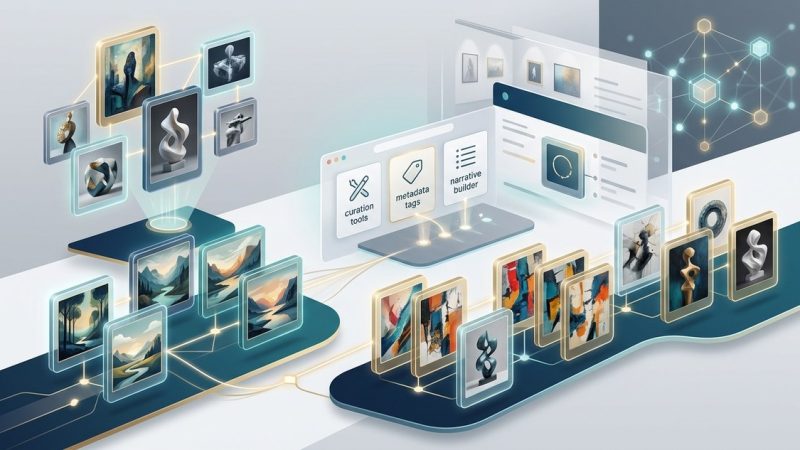
Add detailed metadata and provenance: Use blockchain tools to embed ownership history, creation details, and rights management. Consider linking your artworks to smart contracts that automate royalties.
-
Create an accessible digital showcase: Use platforms like Foundation or OpenSea for NFT listings, or build a personalized Web3 site with tools like Thirdweb. Ensure your portfolio is easy to navigate and mobile-friendly.
-
Enhance discoverability with SEO and storytelling: Write clear descriptions with embedded keywords naturally. Share your story behind each piece. Incorporate tags relevant to your art style and blockchain details.
-
Regularly update and curate: Keep your portfolio fresh. Remove weaker pieces and add new works that reflect your ongoing evolution. Engage with your community through updates and insights.
-
Engage with community and platforms: Participate in artist groups, forums, and social media channels. Cross-promote your portfolio across Twitter, Discord, and relevant Web3 galleries.
Techniques and mistakes in digital art curation
Understanding effective techniques and common pitfalls can elevate your curation game.
| Techniques | Mistakes |
|---|---|
| Cohesive theme and narrative | Overloading the portfolio with inconsistent works |
| Verifiable provenance and rights | Ignoring metadata or blockchain documentation |
| Clear storytelling for each piece | Using vague descriptions that hinder discoverability |
| Regular updates to keep content fresh | Letting your portfolio stagnate over time |
| SEO-optimized descriptions | Keyword stuffing or irrelevant tags |
| Cross-platform compatibility | Relying on a single platform or format |
“Transparency and storytelling are the backbone of a trustworthy Web3 art portfolio. When collectors see a clear narrative combined with verified provenance, they are more likely to engage and invest.” — Expert artist and blockchain enthusiast
Techniques and mistakes to avoid
In digital curation, certain practices can undermine your efforts. For example, neglecting to embed provenance data can create doubts about authenticity. Similarly, overloading your portfolio with unrelated works makes navigation confusing. Focus on quality, cohesion, and clarity.
Techniques to employ
- Use blockchain tools to automate rights management
- Incorporate multimedia (videos, process images) to deepen engagement
- Link your portfolio to your social and marketplace profiles
- Use natural language keywords for better platform discoverability
Mistakes to sidestep
- Failing to update your portfolio regularly
- Ignoring platform compatibility
- Overpromising or misrepresenting provenance
- Using vague descriptions that do not inform or attract collectors
Future-proof your digital collection
The landscape of Web3 art is constantly evolving. To stay ahead, focus on adaptable curation strategies. Keep abreast of blockchain platform upgrades, emerging marketplaces, and new standards for metadata and provenance. Building a portfolio rooted in transparency, storytelling, and technical excellence positions your work for long-term value.
Curate with intention and authenticity for Web3 success
Building and maintaining a compelling digital art portfolio in the Web3 space is an ongoing process. It requires strategic selection, detailed provenance, and thoughtful presentation. Regularly engage with your community, stay updated on technological and market developments, and continuously refine your curation approach. Your dedication will not only showcase your talent but also ensure your work’s integrity and value endure over time.
Take these insights as a practical foundation. Whether you’re just starting or refining your existing portfolio, applying these principles will help you stand out in the blockchain art ecosystem and connect meaningfully with collectors who value authenticity and innovation.