6 Questions to Ask Before Joining a Blockchain Art DAO
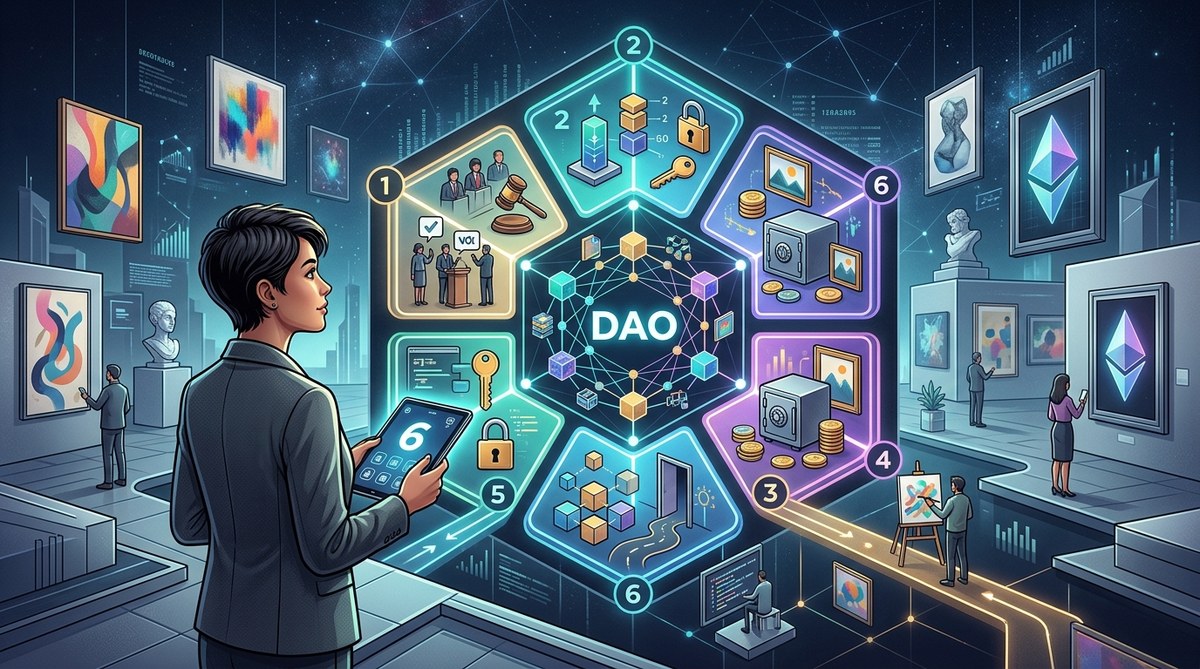
Joining a blockchain art DAO can expand your network and shape market trends, but it also carries real risks. This guide walks through the seven questions that matter most before you commit tokens or time. From treasury health to voting power and exit terms, these checks help you decide with confidence in 2026.
Joining a decentralized autonomous organization built around digital art feels a bit like walking into a gallery opening where you know every collector in the room. The conversation is electric, the shared passion is real, and the potential for discovery is everywhere. But not every DAO is created equal, and the cost of joining the wrong one goes far beyond the membership fee.
In 2026, the landscape of blockchain art has matured. The early experiments of 2021 and 2022 have given way to more structured organizations with real treasuries, real governance power, and real accountability. That maturity is a double-edged sword. It means more opportunities for artists and collectors, but it also means more sophisticated ways to lose money if you are not careful.
Before you click that “join” button, take a breath. The questions below are not meant to scare you. They are meant to give you clarity. Whether you are an artist looking for exposure or a collector seeking curated access, these seven questions will help you separate a thriving creative community from a slow-moving disaster.
1. Who Actually Controls the Treasury, and How Transparent Is It?
The first thing you need to understand is where the money lives and who can touch it. A DAO treasury is typically a multi-signature wallet, which means several people must approve a transaction before funds move. That is good. But you need to dig deeper.
Ask for the treasury address and check it on a block explorer. Look for these signs:
- A clear record of inflows and outflows
- Regular transactions that match the DAO’s stated mission
- No sudden, unexplained movements of large amounts
A healthy treasury is not necessarily one that is full. It is one that is predictable. If you see funds moving to exchanges frequently or large sums leaving without a governance proposal, that is a warning sign.
You should also look at how the treasury is diversified. A DAO that holds everything in a single token is exposed to that token’s price swings. In 2026, most serious DAOs hold a mix of stablecoins and blue-chip assets to protect against market downturns. If a DAO’s treasury is all one token and that token drops 60 percent, the organization’s ability to fund grants, exhibitions, and acquisitions vanishes overnight.
2. What Does the Voting Process Actually Look Like?
Voting is the heart of any DAO. But not all voting systems are created equal. Some use token-weighted voting, where more tokens equal more power. Others have moved toward quadratic voting, which gives individual users more influence relative to their holdings.
You need to understand:
- How proposals are created and debated
- What quorum looks like for a vote to pass
- Whether there is a delay between proposal and execution
- How much gas you will pay to vote
The bigger issue is participation. A DAO where only a handful of people vote is not a DAO. It is a plutocracy with extra steps. Look for active discussion on Discord or governance forums. Check recent proposals and see how many people actually cast votes. If the number is tiny, your voice might not matter much.
Also, pay attention to whether voting is on-chain or off-chain. Some DAOs use snapshot voting for signaling, then execute through a multi-sig. Others run full on-chain voting. Each has tradeoffs. On-chain voting is more transparent but can be expensive. Off-chain voting is cheaper but relies on trust in the snapshot system.
3. What Are the Real Benefits of Joining, and Do They Match Your Goals?
This sounds simple, but you would be surprised how many people join a DAO without asking what they actually get out of it. Do not join because everyone else is doing it. Join because the DAO offers something you cannot get anywhere else.
Common benefits include:
- Early access to new artist drops
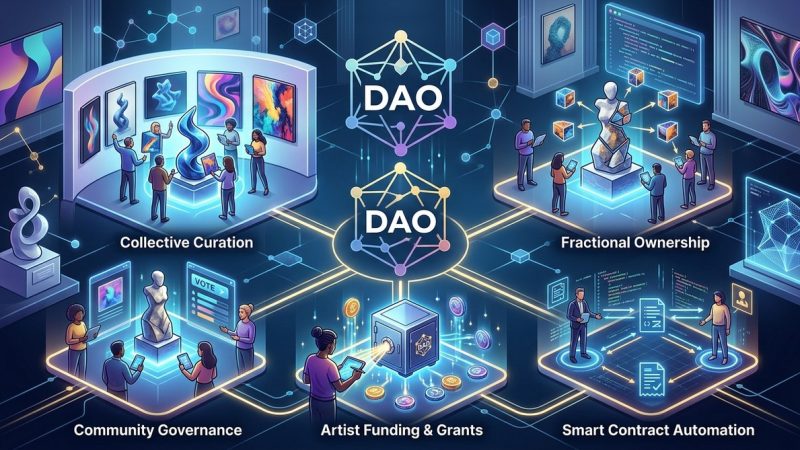
- Curation rights for exhibitions
- Shared ownership of a collection
- Networking with serious collectors and artists
- Governance power over platform decisions
Before you commit, write down what you want from the experience. Are you looking for help building a valuable digital art collection? Are you hoping to discover emerging artists before they trend? Are you more interested in the social connections than the financial returns?
Once you know what you want, check whether the DAO’s activities actually deliver it. Look at their past events, their current projects, and their roadmap. A DAO that talks a big game but has nothing to show for it is all hat and no cattle.
4. How Are Tokens Distributed, and What Happens When People Sell?
Token distribution is where a lot of DAOs get into trouble. If a small group holds a massive supply, they control the organization. That is not decentralization. That is a corporation wearing a hoodie.
Look for these red flags:
- A large percentage of supply held by founders and early investors
- No lockup period for team tokens
- Airdrops that reward whales more than active members
- No mechanism to prevent one person from buying up all the voting power
You also need to think about what happens when people sell. If the token price collapses, it can take the entire ecosystem down with it. Some DAOs have tried to address this with bonding curves or treasury-backed liquidity. Others have not, and their members paid the price.
Ask yourself: if the token dropped 80 percent tomorrow, would the DAO still function? If the answer is no, you are not joining a community. You are joining a speculative bet.
5. What Is the DAO’s Relationship With the Broader Art World?
A DAO does not exist in a vacuum. It lives within a larger ecosystem of galleries, museums, collectors, and platforms. The best DAOs build bridges to this world. They partner with traditional institutions, sponsor exhibitions, and help their members navigate the complex landscape of digital and physical art.
Consider whether the DAO has:
- Partnerships with established galleries or museums
- Relationships with artists who have a track record
- Connections to platforms like Freeport
- A presence at major art events
A DAO that exists only in Discord is a forum, not an art organization. The ones that matter are building real infrastructure and real relationships.
This is also where you want to think about the broader trends. For example, how DAOs are democratizing digital art patronage in 2026 is a topic worth understanding. It shows you which models are working and which ones are falling apart.
6. What Happens if Things Go Wrong? Understanding Exit and Dispute Mechanisms
No one joins a DAO expecting it to fail. But the best time to plan for failure is before it happens. You need to know what your options are if the DAO goes off the rails.
Questions to ask:
- Can you leave with your assets, or are they locked up?
- Is there a dispute resolution process?
- What happens if the founders disappear?
- Is there a way to recover funds sent to the wrong address?
Exit mechanisms matter more than you might think. Some DAOs have made it impossible for members to withdraw their share of the treasury. Others have been paralyzed by internal disputes, with no clear way to resolve them.
You should also consider what happens if the underlying blockchain changes. For example, if the network the DAO is built on fails, do you have a way to recover your assets? This is where understanding how smart contracts are revolutionizing art ownership becomes important.
7. Do You Actually Like the People?
This might sound like a throwaway question, but it is not. A DAO is a community before it is anything else. You are going to spend time with these people, vote on the same proposals, and share in the same victories and defeats. If you do not like them, or worse, if you do not trust them, the whole experience will be miserable.
Spend time in the Discord. Read the forum posts. See how people treat each other when things are not going well. Do they resort to personal attacks, or do they focus on the issues? Are new members welcomed, or are they treated like outsiders?
The best DAOs have a culture of respect and collaboration. They also have a sense of humor. If you can find a group of people who share your passion for digital art and treat each other with kindness, you have found something special.
The Hidden Costs Nobody Talks About
Beyond the obvious financial risks, joining a DAO has hidden costs. Time is the big one. Participating in governance takes effort. You need to read proposals, understand the issues, and cast informed votes. If you are not willing to do that, you are better off letting other people make the decisions.
There is also the emotional cost. Watching the value of your holdings fluctuate can be stressful. Seeing a proposal you supported fail can be disappointing. And if the DAO makes a bad decision, you might feel responsible even if you voted against it.
Finally, there is the opportunity cost. Every hour you spend on DAO governance is an hour you are not spending on other things. Make sure the DAO you join is worth that trade.
A Framework for Your Decision
When you are trying to decide whether a DAO is right for you, use this simple framework:
- Do your research. Read the whitepaper, explore the treasury, and check the governance history.
- Talk to current members. Ask them what they love about the DAO and what they would change.
- Start small. You do not have to go all in on day one. Join a few DAOs, see how they operate, and increase your involvement over time.
- Trust your gut. If something feels off, it probably is.
Related Resources to Guide Your Journey
If you are serious about building a digital art collection, these resources can help you make smarter decisions:
- How to Build a Thematic Digital Collection That Tells a Cohesive Story
- How to Authenticate Blockchain Art Without an Expert
- What Happens to Your Blockchain Art When a Platform Shuts Down?
- How to Spot Undervalued Digital Collections Before They Trend
- The Ultimate Guide to Evaluating Provenance in NFT Art Markets
- Why Museums Are Building Blockchain Art Collections
- The Future of Digital Art Investment in 2026
Making the Leap With Confidence
Joining a DAO is not a decision you should take lightly. It is a commitment of time, money, and energy. But it can also be one of the most rewarding things you do as a digital art enthusiast.
The key is to go in with your eyes open. Do your research, ask the hard questions, and trust your instincts. The right DAO will feel like coming home. The wrong one will feel like a mistake from the start.
Take your time. Explore your options. And when you find the community that feels right, do not be afraid to jump in with both feet. The world of blockchain art is waiting for you.