Can You Use Your Digital Collection as Collateral? A Guide to NFT-Backed Loans
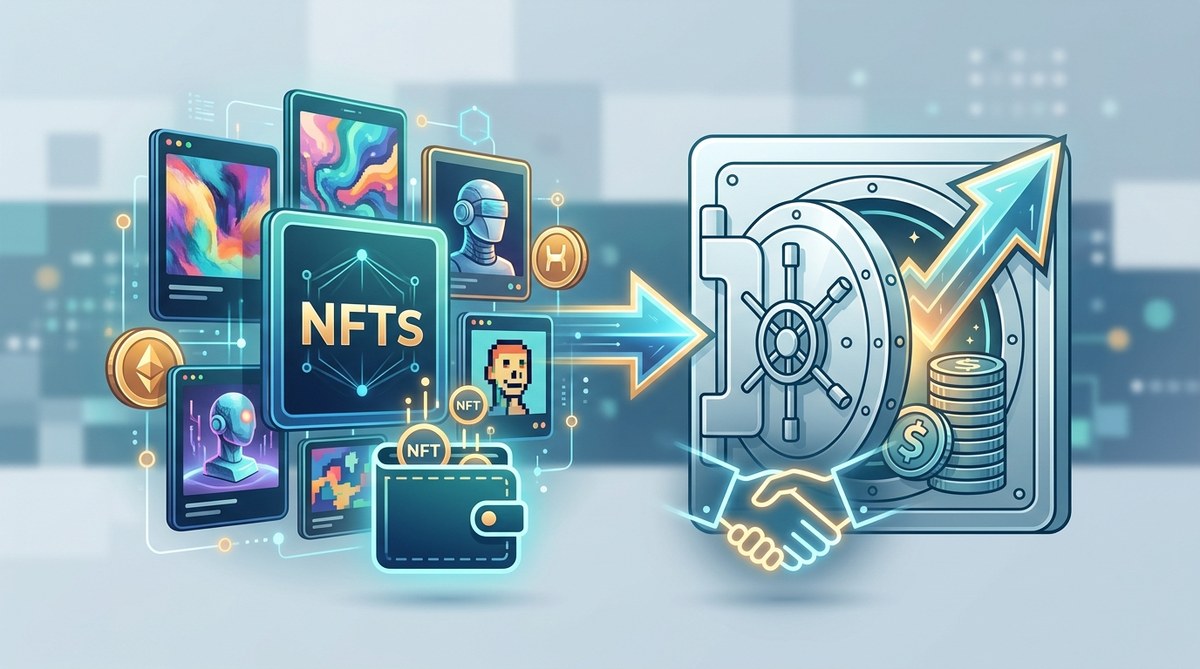
You have spent months, maybe years, building a digital art collection. You own pieces you love. But life happens. A new investment opportunity appears. You need cash for a project. Selling your favorite NFT feels wrong. You would rather keep it and still get the funds. That is exactly what NFT-backed loans make possible. Instead of letting your collection sit idle, you can put it to work as collateral. This guide walks through how these loans work, where to get them, and what to watch out for in 2026.
NFT-backed loans let you borrow stablecoins or ETH by locking your NFTs as collateral. You keep ownership and can reclaim your assets after repayment. Loan to value ratios typically range from 20% to 40%. Interest rates vary by platform and collection rarity. Choose peer to peer or peer to protocol lending based on your risk tolerance. Always check liquidation terms and floor price volatility before committing.
What Exactly Are NFT-Backed Loans?
An NFT-backed loan is a secured loan where you deposit one or more non fungible tokens into a smart contract as collateral. In return, you receive a crypto loan, usually in ETH, USDC, or DAI. The lender holds your NFT in escrow until you repay the loan plus interest. If you default, the lender keeps the NFT. If you repay on time, you get full control back. This model mirrors traditional secured lending but uses blockchain rails.
The key difference from selling? You never give up ownership. Your NFT stays in your wallet address (though locked in a contract). When you repay, the lock releases. That matters for collectors who want to hold long term but need short term liquidity. In 2026, the market has matured. More platforms accept blue chip collections like CryptoPunks, Bored Apes, and generative art from artists like Tyler Hobbs or Dmitri Cherniak. Some platforms even accept lesser known collections with strong community backing.
How the Process Works Step by Step
The mechanics are straightforward. Here is a typical flow:
- Choose a lending platform that supports your NFT collection. Options include NFTfi, Arcade, BendDAO, and newer entrants like Zharta or Pine.
- Connect your wallet and select the NFT you want to use as collateral. The platform will estimate its floor price and offer a loan to value (LTV) ratio.
- Set loan terms including principal amount (usually up to 30-40% of floor value), interest rate (often 10-20% APR), and duration (7 days to 90 days common).
- Approve the smart contract to temporarily lock your NFT. You will sign a transaction to transfer custody to the protocol.
- Receive the loan directly into your wallet. You can use the funds for anything.
- Repay the loan plus interest before the deadline. Once confirmed, the smart contract releases your NFT back to you.
- If you miss repayment, the lender can claim the NFT. Some platforms offer grace periods or extensions, but do not rely on that.
Two Main Lending Models: Peer to Peer vs Peer to Protocol
The table below breaks down the differences between the most common lending structures in 2026.
| Model | How It Works | Pros | Cons |
|---|---|---|---|
| Peer to Peer (P2P) | Borrower and lender match directly on a marketplace. You list your NFT with desired loan terms; a lender accepts. | More flexibility on rates and duration. You can negotiate with lenders. Often lower fees. | Slower to get funded. Your NFT may sit if terms are unattractive. Counterparty risk if lender is unreliable (rare but possible). |
| Peer to Protocol (P2P2) | A pool of lenders funds loans automatically. Protocol sets LTV and interest based on demand. You get instant funding if your NFT qualifies. | Instant liquidity. No need to wait for a match. Standardized terms. Higher capital efficiency for lenders. | Fixed rates and terms. Less room to customize. Liquidation can happen faster if floor price drops. Protocol may have governance risks. |
Both models work well. P2P suits collectors who want to negotiate terms and have patience. P2P2 suits those who need cash now and accept standard conditions. In 2026, many collectors use a mix of both depending on the NFT and urgency.
Pros and Cons of Using Your NFT as Collateral
Pros
- You retain ownership and potential upside. If your NFT appreciates while the loan is active, you benefit.
- No credit check. Your NFT is the only requirement.
- Tax efficient. In many jurisdictions, borrowing is not a taxable event. Selling would trigger capital gains.
- Flexible use of funds. You can reinvest, pay bills, or even buy more NFTs.
Cons
- Liquidation risk. If the floor price of your NFT falls below a certain threshold, the protocol may liquidate your collateral.
- Interest rates can be high compared to traditional loans.
- Limited to liquid collections. Obscure or illiquid NFTs are hard to borrow against.
- Smart contract risk. A bug could lead to loss of assets. Always audit the platform’s history.
Expert advice: Do not borrow more than 20% of your NFT’s floor value if the collection has high volatility. That buffer protects you from sudden price swings. A 30% LTV on a stable collection like Art Blocks is safer than a 25% LTV on a speculative PFP project.
Key Risks Every Borrower Should Understand
NFTs are volatile. A loan that looks safe today can turn dangerous tomorrow. Here are the main risks to watch:
- Floor price crash – If the floor drops below the liquidation threshold, you lose your NFT. Set price alerts and consider adding extra collateral if possible.
- Smart contract vulnerabilities – Platforms like NFTfi and BendDAO have undergone audits, but no code is perfect. Use established protocols.
- Oracle manipulation – Some platforms rely on price oracles. If the oracle is compromised, your loan could be unfairly liquidated.
- Regulatory uncertainty – In the US, the SEC is still shaping rules for crypto lending. Know that your loan may be subject to future regulations.
- Locked liquidity – While your NFT is collateral, you cannot sell or transfer it. If you need to exit urgently, you must first repay the loan.
Choosing the Right Platform in 2026
Not all platforms are equal. Consider these factors when picking where to borrow:
- Accepted collections – Does the platform support your specific NFT? Some only accept top tier projects.
- Loan to value ratios – Higher LTV means more cash but more risk. Aim for 20-30% for safety.
- Interest rate and fees – Compare APR plus any origination fees. P2P platforms often have lower rates but longer waiting times.
- Reputation and audits – Check if the platform has been audited by firms like Trail of Bits or Certik. Look at community feedback.
- Liquidation mechanics – Understand the grace period and any auctions involved. Some platforms give you 24 hours to top up, others liquidate instantly.
If you are new, start small with a lower value NFT from a reputable collection. Learn the repayment process before using your prized generative art piece. You can also explore fractional ownership models to borrow against a portion of an NFT.
The Bigger Picture: Keeping Your Collection Alive
Using your digital collection as collateral is not about losing control. It is about making your assets work for you. In 2026, more collectors treat their NFTs as productive capital rather than static art. The ability to borrow against them opens doors to new investments, real estate, or simply covering expenses without selling.
Remember that each loan is a contract. Respect the terms. Monitor floor prices. Have a repayment plan. If you stay disciplined, NFT-backed loans can be a powerful tool to grow your portfolio while holding onto the pieces you love.
Take the time to research platforms. Read community forums. Test with a small amount. Your collection deserves to be more than just a screensaver. It can be a financial asset that supports your goals. Treat it that way, and you will never have to choose between holding your favorite art and accessing the liquidity you need.