Floor Price vs. Trait Rarity: Which Metric Actually Predicts Long-Term Value
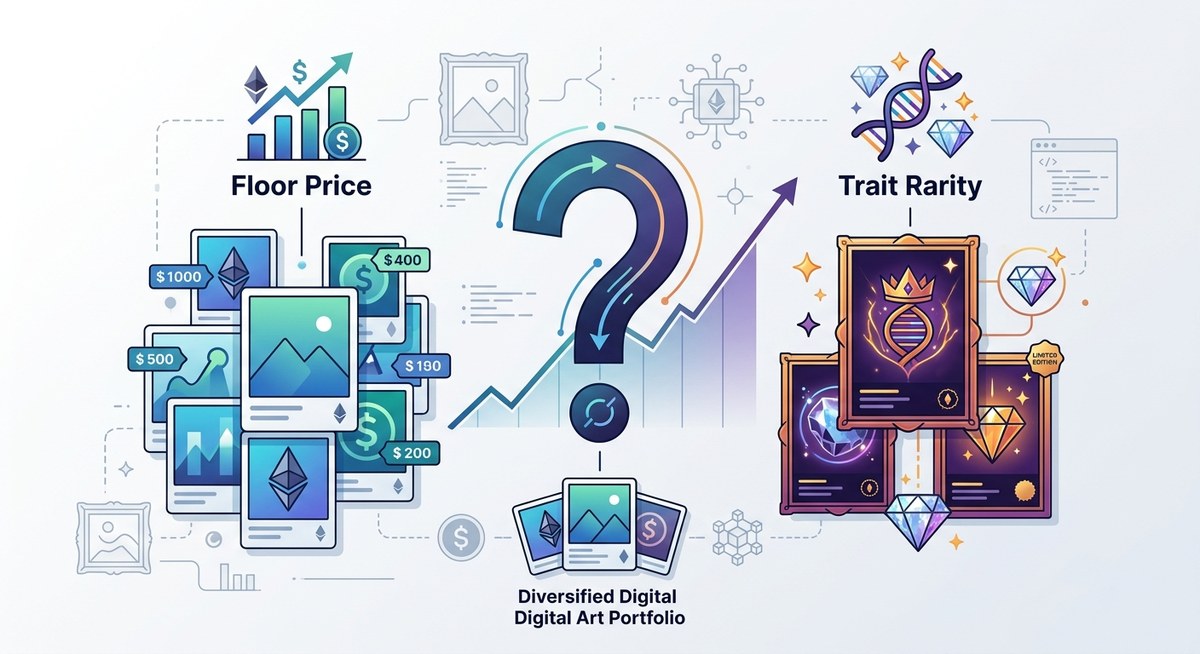
NFT investing can feel like navigating a maze. Prices fluctuate wildly, and understanding what truly indicates long-term value remains a challenge. Two key metrics often debated are the NFT floor price and trait rarity. Which one offers a clearer picture of an NFT’s future worth? In this guide, we will unpack these metrics, compare their strengths, and provide practical steps to help you make smarter investment choices.
Understanding NFT floor price and trait rarity
Before diving into which metric holds more predictive power, it’s essential to clarify what each one measures.
What is NFT floor price?
The floor price represents the lowest price at which an NFT from a specific collection is available for sale. Think of it as the collection’s entry point on the market. It often acts as a quick benchmark for the collection’s overall market health. When the floor price rises, it suggests increased demand or perceived value. Conversely, a dropping floor can signal waning interest or market downturns.
What is trait rarity?
Trait rarity measures how uncommon specific features are within an NFT collection. For example, a rare color palette, unique accessory, or special background might make an NFT more desirable to collectors. Rarity is often visualized through rarity rankings or scores, illustrating how scarce certain traits are compared to others in the same collection.
Why these metrics matter
Both metrics are used to gauge an NFT’s worth, but they serve different purposes. The floor price offers a snapshot of immediate market sentiment, while trait rarity hints at an NFT’s long-term collectability and potential appreciation.
Comparing the predictive power of floor price versus trait rarity
When trying to determine which metric better forecasts an NFT’s future value, consider the following factors.
The role of floor price
The floor price reflects current market demand. A rising floor often signals that collectors are willing to pay more, possibly driven by hype or market trends. However, it can be volatile and susceptible to manipulation or short-term speculative bubbles. For example, during a hype cycle, the floor might spike temporarily without long-term backing.
The influence of trait rarity
Rarity contributes to an NFT’s desirability over time. Collectors and investors often seek rare traits because they are less common and potentially more valuable. Historically, NFTs with rare attributes tend to appreciate more steadily, especially if the collection maintains strong community interest. Rarity also helps differentiate NFTs in crowded markets, making them more appealing for long-term holding or resale.
Which metric predicts long-term value?
Research suggests trait rarity tends to be a more reliable indicator of appreciation over time. While the floor price can indicate short-term demand, it may not sustain growth if market sentiment shifts. Rarity, on the other hand, taps into intrinsic desirability that isn’t just tied to fleeting trends.
“An NFT with rare traits often holds its value better during downturns because collectors perceive its unique features as inherently valuable,” notes blockchain analyst Jane Doe.
Practical considerations
- Market cycles can distort the floor price, making it less reliable for predicting long-term worth.
- Rarity scores are more stable and less prone to manipulation, especially when combined with community engagement and project fundamentals.
- Combining metrics yields better insights. For example, an NFT with rare traits and a stable or rising floor price signals strong potential.
How to leverage these metrics in your NFT strategy
To maximize your chances of investing in NFTs with lasting value, follow these steps:
1. Assess trait rarity
Start by analyzing collection-specific rarity rankings. Tools like Rarity.tools or OpenSea’s rarity ranking can help identify NFTs with uncommon attributes. Look for NFTs with high rarity scores within a collection, as these often appreciate better over time.
2. Monitor floor price trends
Track the collection’s floor price through platforms like NFT Floor Price or CryptoSlam. Look for consistent or upward trends rather than sudden spikes, which may be temporary.
3. Combine both insights
Select NFTs that feature rare traits and are supported by a stable or increasing floor price. This combination indicates both intrinsic desirability and current market confidence.
4. Stay informed on community and project fundamentals
Rarity and floor price are important, but they should be complemented by a project’s community strength, roadmap, and developer activity. Engaged communities often sustain long-term interest.
5. Avoid common pitfalls
Be wary of relying solely on floor price or rarity. Market hype, pump-and-dump schemes, and short-term trends can distort these metrics.
Techniques and mistakes in evaluating NFT metrics
| Technique | Mistake |
|---|---|
| Using rarity scores to identify undervalued NFTs | Ignoring market demand and liquidity |
| Tracking floor price over time | Focusing only on short-term spikes |
| Combining rarity with project fundamentals | Overlooking community engagement or developer activity |
| Relying solely on floor price for valuation | Assuming it predicts long-term appreciation |
| Ignoring rarity in collections with low liquidity | Rarity is less meaningful if NFTs are seldom traded |
Practical tips for long-term NFT investing
- Diversify your holdings across different collections and attribute types.
- Research the project’s background—team, community, roadmap—beyond metrics.
- Watch for market cycles and avoid emotional buying during hype peaks.
- Set clear exit strategies based on your long-term goals.
- Stay updated with technological developments that influence market dynamics.
Clarifying the long-term prediction puzzle
While NFT floor price provides a pulse on current demand, trait rarity offers insights into an NFT’s unique appeal and potential for appreciation. Combining these metrics, along with fundamental project analysis, creates a more robust framework for predicting long-term value.
“For investors, understanding the intrinsic qualities that make an NFT rare combined with market behavior helps in making informed decisions,” advises digital art strategist Alex Kim.
Building your NFT investment approach
Applying these insights requires patience and diligence. Start by identifying NFTs with rare features within reputable collections. Keep an eye on how their floor prices evolve and evaluate whether the collection’s community, utility, or reputation supports long-term growth. Use the tools mentioned to gather data and cross-reference findings.
Remember, no single metric guarantees success. The smart move is to blend multiple signals—trait rarity, market trends, project fundamentals—to craft a resilient investment strategy.
Final thoughts for steady growth in the NFT space
NFTs with rare traits tend to hold up better over time, especially when supported by a healthy market and engaged community. Keeping a balanced view that considers both intrinsic qualities and current demand can help you navigate market fluctuations and find promising assets. As the NFT landscape continues to mature, developing a nuanced approach will serve you well. Keep learning, stay curious, and invest with confidence.