How to Verify a Digital Artwork’s Authenticity Using On-Chain Provenance Tools
You are standing in front of a digital piece that could be the centerpiece of your collection. The price tag is serious. The gallery representative says the provenance is flawless. But in the world of digital art, a handshake and a PDF certificate are not enough. The difference between a genuine masterpiece and a clever forgery often comes down to one thing: the blockchain record. On-chain provenance is the most reliable way to verify digital artwork authenticity provenance, and it is available to anyone with an internet connection. This guide will show you exactly how to use it.
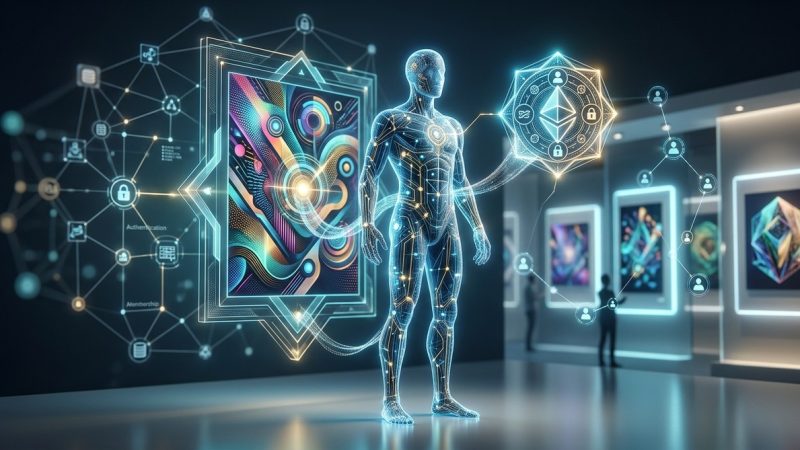
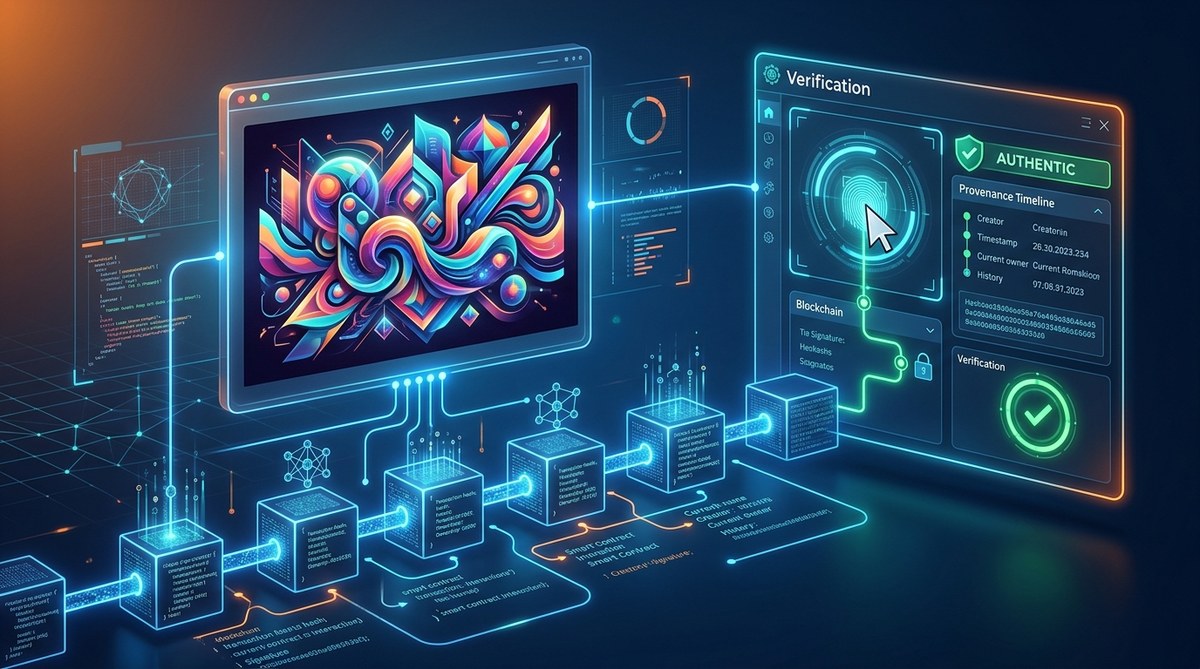
On-chain provenance uses a blockchain’s immutable ledger to track every transfer of a digital artwork from the moment it is minted. You can verify a piece’s authenticity by checking the original minter’s wallet, the smart contract address, the transaction history, and the metadata hash. These steps take less than ten minutes and require no special software beyond a block explorer.
Why On-Chain Provenance Matters More Than a Paper Trail
The traditional art world relies on paperwork that can be lost, forged, or disputed. A painting might have a certificate of authenticity that is itself a fake. Digital art solves this problem by default, but only if you know where to look. When an artist mints a token on a blockchain like Ethereum, the network records the creation event permanently. That record includes the artist’s wallet address, the exact time of minting, and a link to the artwork’s metadata.
Think of on-chain provenance as a public notary that never takes a day off. Every time the artwork changes hands, that transaction is added to the chain. You can trace the entire ownership history back to the original creator. For a museum curator or an institutional investor, this level of transparency is a game changer. It removes the guesswork from authentication.
The Practical Process: 3 Steps to Verify Digital Artwork Authenticity Provenance
You do not need to be a blockchain developer to run a provenance check. The process breaks down into three clear steps. Follow these in order, and you will have a complete picture of any digital artwork’s history.
Step 1: Identify the token contract and the artwork’s token ID.
Every NFT lives under a smart contract address on a blockchain. You can find this information on the marketplace listing, the artist’s website, or the project’s official page. Look for a string that starts with “0x” followed by 40 hexadecimal characters. That is the contract address. The token ID is usually a number that identifies the specific piece within that collection. Write both down.
Step 2: Use a block explorer to read the transaction history.
Open a block explorer like Etherscan (for Ethereum) or Solscan (for Solana). Paste the contract address into the search bar. Navigate to the “Token” tab and enter the token ID. You will see a list of every transaction involving that token: minting, transfers, sales, and burns. Pay close attention to the “From” and “To” addresses. The first “From” address in the list is the original minter. If that address matches the artist’s known wallet, you have a strong signal of authenticity.
Step 3: Verify the metadata hash matches the artwork.
Most NFTs include a field called “tokenURI” that points to a file stored on IPFS or Arweave. That file contains the artwork’s metadata, including a cryptographic hash of the image. You can fetch the metadata and compare the hash against the actual file. Tools like Freeport.app automate this comparison for you. If the hashes match, the digital file has not been tampered with since it was minted.
Expert advice from a digital art conservator: “Always check the ‘creator’ field inside the smart contract. Some scammers mint copies that look identical but use a different contract address. The original artist’s contract will have a verified name or a known wallet. If the contract is anonymous and less than a month old, treat it as a red flag.”
What to Look For When Scanning a Provenance Record
When you scan a provenance record, you are looking for specific data points that confirm authenticity. Here is a checklist of items to verify:
- The original minter’s wallet address matches the artist’s public wallet
- The mint date aligns with the project’s launch date (not after)
- The token has a clear, unbroken chain of custody between owners
- The metadata hash resolves to the correct image file
- The smart contract is verified on the block explorer (look for a checkmark or verified badge)
- The royalty percentage (if any) matches what the artist typically sets
If any of these items are missing or look suspicious, do not proceed with the purchase until you get answers.
Common Verification Mistakes and How to Avoid Them
Even experienced collectors make errors when they first start using on-chain tools. The table below outlines the most frequent mistakes and the correct approach for each one.
| Mistake | What Happens | How to Fix It |
|---|---|---|
| Trusting a screenshot of a block explorer | Scammers can fake screenshots easily | Always open the block explorer yourself and paste the contract address directly |
| Checking only the current owner’s wallet | The current owner could be a middleman hiding the real seller | Trace the chain back to the original minter, not just the last transfer |
| Ignoring the tokenURI metadata | The artwork on the marketplace might be a copy while the real file is different | Fetch the metadata hash and compare it to the image you are buying |
| Assuming all blockchains are equally secure | Some smaller chains have fewer verification tools and lower security | Stick to Ethereum, Solana, or Polygon for high-value purchases |
| Forgetting to check for royalty enforcement | Some contracts do not include creator royalties, which can affect future resale value | Read the smart contract code or use a tool that displays the royalty percentage |
The Role of Smart Contracts in Long-Term Provenance
A smart contract is the backbone of any NFT’s provenance. It defines the rules for ownership, transfers, and royalties. When you verify digital artwork authenticity provenance, you are essentially auditing the smart contract’s history. The contract itself is immutable, which means no one can go back and change the record of who owned the artwork and when.
This is a huge improvement over physical art, where provenance gaps of fifty years or more are common. With blockchain, the record is continuous from block one. For more on how these contracts are changing ownership structures, read about how smart contracts are revolutionizing art ownership and provenance.
Tools That Make Verification Easy in 2026
The blockchain ecosystem has matured significantly. You no longer need to write code or run command-line scripts to check provenance. Several user-friendly tools now handle the heavy lifting:
- Block explorers (Etherscan, Solscan, Polygonscan)
- Dedicated NFT verification platforms like Freeport.app
- Browser extensions that automatically flag suspicious tokens
- Metadata validators that compare image hashes
Each of these tools serves a different purpose. Block explorers give you raw transaction data. Verification platforms package that data into a readable report. Browser extensions add a layer of protection when you are browsing marketplaces. Metadata validators catch the most sophisticated scams where the token is real but the image has been swapped.
For a deeper look at how institutions are adopting these tools, check out why museums are building blockchain art collections.
How to Handle Edge Cases in Provenance Verification
Not every digital artwork follows a clean provenance path. Here are some edge cases you might encounter and how to handle them.
The artwork was minted on a platform that no longer exists.
If the minting platform shut down, the on-chain record still exists on the blockchain. You can find the contract address through archive services or by searching the artist’s known wallet on a block explorer. The platform’s closure does not erase the provenance.
The token was transferred through a mixer or privacy protocol.
Some collectors use privacy tools to obscure their wallet addresses. This does not break the provenance chain, but it does make it harder to identify the actual owners. In this case, focus on the original minter and the most recent transfer. The middle transactions may be private, but the endpoints are still visible.
The metadata file is stored on a centralized server that went offline.
If the tokenURI points to a server that no longer responds, the artwork may still be authentic, but the metadata is lost. You can check if the file was archived on IPFS or Arweave by searching the hash in a decentralized storage gateway. If no archive exists, the artwork’s provenance is incomplete, and you should factor that into your valuation.
Red Flags That Should Stop You Cold
Some signals are so dangerous that you should walk away from a purchase immediately. Watch for these red flags:
- The contract address was created less than 24 hours ago
- The original minter’s wallet has no other activity or history
- The tokenURI points to a free file hosting service instead of IPFS or Arweave
- The current owner refuses to provide the contract address and token ID
- The marketplace listing shows a different image than the one in the metadata
If you see any of these, trust your instincts. There are plenty of authentic pieces on the market. You do not need to take unnecessary risks.
How Provenance Verification Protects Your Investment
When you buy a digital artwork, you are not just buying a JPEG. You are buying a piece of the blockchain’s history. The provenance record is what gives the artwork its value on the secondary market. A piece with a clean, verifiable provenance will always command a higher price than one with gaps or uncertainties.
Institutions like museums and investment funds now require on-chain provenance reports before they will even consider an acquisition. If you plan to sell your collection in the future, having a complete provenance record will make the sale much smoother. Buyers will not have to do their own detective work.
For more on how these standards are evolving, see how blockchain art provenance is reshaping insurance and valuation standards.
A Final Look at the Verification Workflow
Here is a summary of the entire verification process in a bulleted list for quick reference:
- Locate the smart contract address and token ID from the listing or artist page
- Open a block explorer and paste the contract address
- Navigate to the token’s transaction history
- Confirm the original minter matches the artist’s known wallet
- Fetch the tokenURI metadata and compare the image hash
- Check for a clean chain of custody with no suspicious transfers
- Verify the contract includes the expected royalty terms
- Use a verification platform to generate a formal provenance report
Building Trust in Digital Art Through Transparent Provenance
The art world has always struggled with trust. Buyers worry about forgeries. Sellers worry about stolen works. Insurers worry about gaps in history. Blockchain provenance solves all of these problems at once. It creates a permanent, public, and verifiable record that anyone can check.
As a collector, you have the power to demand this transparency. Every time you verify digital artwork authenticity provenance before a purchase, you are setting a standard for the entire market. You are telling sellers that you will not accept guesswork. You are telling artists that their work will be protected. And you are telling future buyers that the pieces in your collection are exactly what they claim to be.
The next time you find a digital artwork that catches your eye, take ten minutes to run these checks. You might discover that the piece has a rich history you did not expect. Or you might catch a scam that would have cost you thousands. Either way, you will be making an informed decision. That is the real value of on-chain provenance.