Tokenized Masterpieces: How to Value a Blockchain Artwork Without a Provenance Record
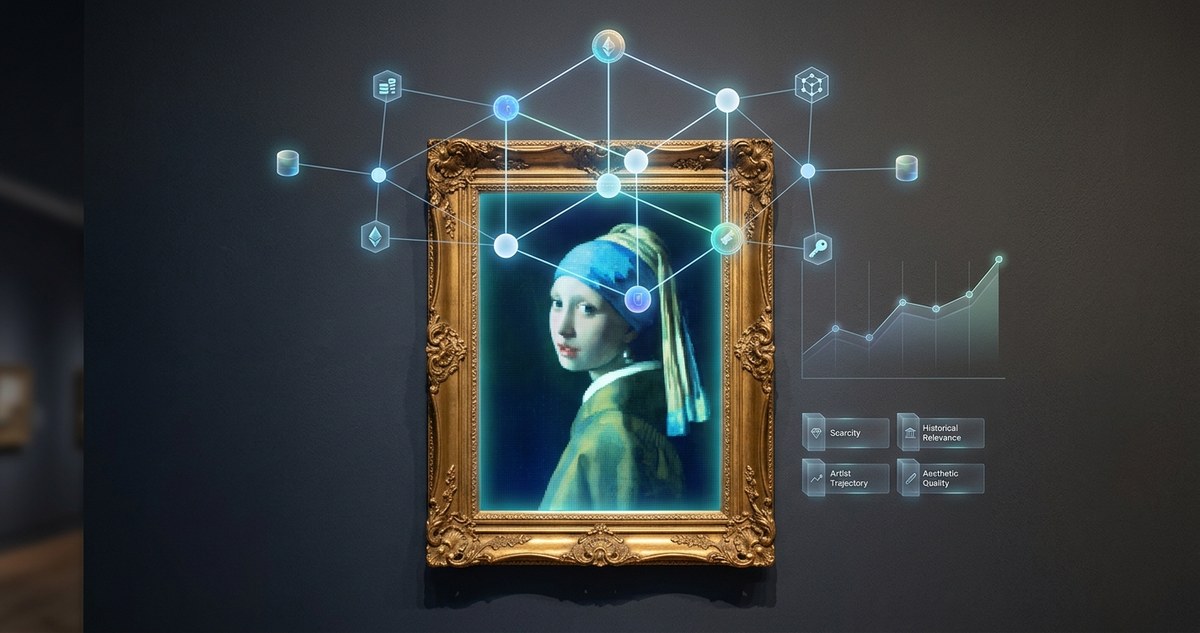
You found a tokenized artwork you love, but its ownership history is a blank slate. No prior sales records. No collector lineage. No exhibition trail. In the traditional art world, that missing provenance would be a dealbreaker. On the blockchain, it is a puzzle you can solve with different tools.
Provenance has always been the gold standard for art valuation. It proves authenticity, establishes rarity, and links a piece to respected collectors. But when you are dealing with a tokenized masterpiece that was minted directly on-chain or transferred through anonymous wallets, that paper trail evaporates. The good news? Blockchain technology leaves its own forensic footprint. You just need to know where to look.
Valuing blockchain art without traditional provenance requires shifting your focus from ownership history to on-chain data. Smart contract behavior, creator wallet age, secondary market liquidity, and community consensus can replace a missing paper trail. This guide walks you through five practical methods to assess a tokenized artwork’s worth using the evidence the blockchain provides.
Why Traditional Provenance Falls Short in Web3
A physical painting’s provenance is a chain of handshakes, receipts, and catalog entries. It tells you who owned it, where it hung, and how it moved through the market. Blockchain art bypasses that system entirely. A generative NFT might be minted directly from an artist’s smart contract and sold to a pseudonymous wallet. There is no gallery intermediary, no auction house stamp, no documented exhibition history.
That does not mean the artwork lacks value. It means the value signals live in different places. The blockchain records every interaction: minting timestamp, transfer events, wallet addresses, royalty payments, and even metadata changes. These data points form a new kind of provenance one that is machine-readable, transparent, and often more trustworthy than a physical paper trail.
The Five Pillars of Blockchain Art Valuation Without Provenance
When you cannot rely on a collector’s pedigree, you evaluate the artwork through five alternative lenses. Each one provides a piece of the pricing puzzle.
1. Creator Reputation and Wallet History
The artist’s on-chain behavior matters more than their biography. Start by examining the wallet address that minted the token. How long has it been active? Does it have a history of successful drops? Has the artist completed previous collections that maintained or grew in value?
Check if the creator wallet is verified on platforms like OpenSea or Rarible. Look for associated social accounts, Discord communities, or a personal website that has been active for more than a year. A creator who has been building in public since 2021 or earlier carries more weight than someone who appeared last month.
Also examine the artist’s smart contract deployment history. Multiple successful contracts suggest technical competence and staying power. A single contract with no updates could indicate a one-off project.
2. Minting and Transfer Patterns
The way an artwork was minted tells you about its scarcity and authenticity. Use a block explorer like Etherscan to check the minting transaction. Look for these signals:
- Minted in a numbered edition from a verified contract? That suggests intentional scarcity.
- Was the artwork transferred to multiple wallets shortly after minting? This could indicate wash trading or genuine collector interest. Cross-reference the receiving wallets for other high-value holdings.
- Does the artwork have a long holding period between transfers? Longer holding times often correlate with higher conviction from collectors.
3. Smart Contract Features
The token’s underlying code can reveal value drivers that provenance would normally explain. Read the contract’s metadata if it is publicly available. Look for embedded royalty mechanisms, unlockable content, or dynamic features that evolve over time.
Some contracts include provenance-related data directly in the metadata, such as a link to the artist’s signature, a timestamped creation video, or a cryptographic hash linking the digital file to a physical counterpart. These features act as self-contained provenance.
4. Secondary Market Signals
Without a sales history, you can still gauge demand through current market behavior. Check the artwork’s listing history on major marketplaces. Look for:
- Number of active listings for the same edition.
- Price floor across listings.
- Wash trading indicators, such as the same wallet buying and selling the same token repeatedly.
- Bid activity on auction-style listings.
A token with multiple serious bids or a narrow spread between the lowest and highest listing price suggests organic demand. Wide spreads or zero bids signal uncertainty.
5. Community and Curation Signals
The most overlooked valuation tool is community consensus. Check if the artwork has been featured in curated collections on platforms like Highlight.xyz or Zora. Has it been included in a museum’s digital collection? Museums are building blockchain art collections for a reason they see long-term cultural value.
Look for mentions in Discord servers, Twitter threads, or newsletters focused on digital art. A piece that gets discussed by knowledgeable collectors carries a premium over one that exists in isolation.
A Practical Process for Pricing an Unknown Token
When you sit down to evaluate a blockchain artwork without provenance, follow this numbered process. It keeps you objective and prevents emotional attachment from inflating your estimate.
- Pull the on-chain data. Use a block explorer to get the minting timestamp, creator wallet, and transfer history. Record every wallet address involved.
- Score the creator. Assign points for wallet age, previous project completions, community engagement, and technical verification. A score below 3 out of 10 is a red flag.
- Analyze the smart contract. Check for rarity features, royalty mechanisms, and embedded provenance data. Note any metadata that links the token to a physical artwork or authenticated event.
- Survey the secondary market. Record the number of active listings, price range, and bid activity. Calculate the average listing price and the median holding period.
- Evaluate community signals. Search for the artwork or collection name in collector forums, curated lists, and museum announcements. Count how many independent sources reference it.
- Apply a risk discount. If the creator score is low and community signals are absent, discount your valuation by 40 to 60 percent. If both are strong, you can use the market average as a baseline.
Common Valuation Mistakes and How to Avoid Them
Even experienced collectors make errors when provenance is missing. Here are the most frequent pitfalls and the correct approaches.
| Mistake | Why It Hurts | Correct Approach |
|---|---|---|
| Relying only on floor price | Floor price can be manipulated by wash trading. | Cross-reference floor price with bid history and wallet analysis. |
| Ignoring creator wallet age | New wallets can be throwaway accounts used for scams. | Only trust creators with wallets active for at least six months. |
| Treating all transfers as sales | Transfers between personal wallets are not market activity. | Distinguish between wallet transfers and marketplace sales. |
| Overvaluing edition size | Small editions are not always intentional; they may reflect low demand. | Compare edition size to actual minted supply and secondary listings. |
| Skipping community research | A piece can look valuable on paper but have zero cultural traction. | Verify community interest before committing to a valuation. |
When Missing Provenance Is Actually a Positive Signal
Here is the counterintuitive part. Sometimes a missing provenance record is a feature, not a bug. If an artwork was minted directly by a respected artist and never traded, that could mean it was held by an early collector who believed in the long-term value. Long holding periods correlate with higher eventual sale prices in many asset classes.
Similarly, if the artwork was part of a curated drop that required whitelisting or a lottery system, the absence of a sales history might simply reflect that the original owner never needed to sell. In those cases, the token’s scarcity is genuine and its value may be understated by market data alone.
Tools to Gather On-Chain Evidence
You do not need to be a developer to pull blockchain data. These tools give you the information you need:
- Etherscan for Ethereum tokens. Check the token’s transaction history and contract interactions.
- Solscan for Solana-based artworks.
- Dune Analytics for custom dashboards that track specific collections or artists.
- NFTGo for market data including wash trading detection and holder concentration.
- Context.app for visual analysis of NFT transfers and wallet clustering.
Use at least two tools to verify any data point. Blockchain data is reliable, but your interpretation of it needs cross-checking.
The Role of Authentication in a Provenance-Free World
When provenance is missing, authentication becomes even more critical. That might sound backward, but think about it this way: if you cannot trace who owned the artwork, you must be absolutely sure the artwork is what it claims to be.
Check if the token’s metadata points to a decentralized storage solution like IPFS or Arweave. If the image or file is stored on a centralized server, it could be changed or lost. Decentralized storage is a strong signal of long-term viability.
Also verify that the token’s contract address matches the official contract used by the artist or project. Scammers sometimes mint copies that look identical but point to a different contract. Use the artist’s verified social media or website to confirm the contract address.
Building Your Confidence as a Collector
The more blockchain art you evaluate, the better your intuition becomes. Start with lower-value pieces where the stakes are smaller. Practice pulling data, comparing signals, and making valuation calls. Over time, you will develop a mental database of what a strong on-chain profile looks like.
If you want a deeper framework for building a collection from scratch, read our guide on how to build a valuable digital art collection from scratch in 2026. It covers wallet strategy, diversification, and when to trust your own analysis over market hype.
When to Walk Away
Not every token deserves a valuation. Some signals are so negative that you should pass entirely. Walk away if:
- The creator wallet is less than 30 days old.
- The smart contract has no verified source code.
- The token’s metadata points to a dead or inaccessible URL.
- Multiple copies of the same token exist on different contracts.
- The community is silent or hostile when asked about the piece.
Trust your gut. If the data feels thin, the risk is real.
Valuing the Art Beyond the Token
Finally, remember that a blockchain artwork is still art. The on-chain data tells you about scarcity, authenticity, and market behavior. It does not tell you if the piece moves you or if it represents a meaningful creative contribution.
Some of the most valuable digital artworks in 2026 are ones that early collectors bought purely because they believed in the artist’s vision, not because the provenance was pristine. That human judgment still matters. Use the data to inform your decision, but let your taste guide your collection.
Putting It All Together for Your Next Purchase
The next time you see a tokenized masterpiece with a blank history, run it through the five pillars. Check the creator’s wallet history. Study the minting pattern. Read the smart contract. Survey the market. Listen to the community. Apply a risk discount if needed.
That process will never give you the certainty of a perfect provenance record, but it will give you something better: a data-backed understanding of what you are buying and why it might hold value. In a market built on transparency, the blockchain itself becomes your provenance. You just have to know how to read it.