Fractional Ownership Is Changing Digital Collecting Forever

You’ve seen a digital artwork sell for millions. You know it’s valuable. But what if you could own just a piece of it instead of the whole thing?
That’s exactly what fractional ownership digital assets makes possible. It’s changing who gets to participate in high-value collecting, how creators monetize their work, and what it means to truly own something in the digital world.
Fractional ownership lets multiple investors own shares of a single digital asset through blockchain tokenization. This model lowers barriers to entry, increases liquidity, and democratizes access to high-value NFTs and digital art. Understanding how smart contracts govern ownership rights, revenue distribution, and governance is essential for collectors entering this emerging market in 2026.
What fractional ownership means for digital collectors
Traditional art collecting has always been exclusive. A single Beeple piece might cost six figures. One rare CryptoPunk could run into the millions.
Fractional ownership breaks that barrier.
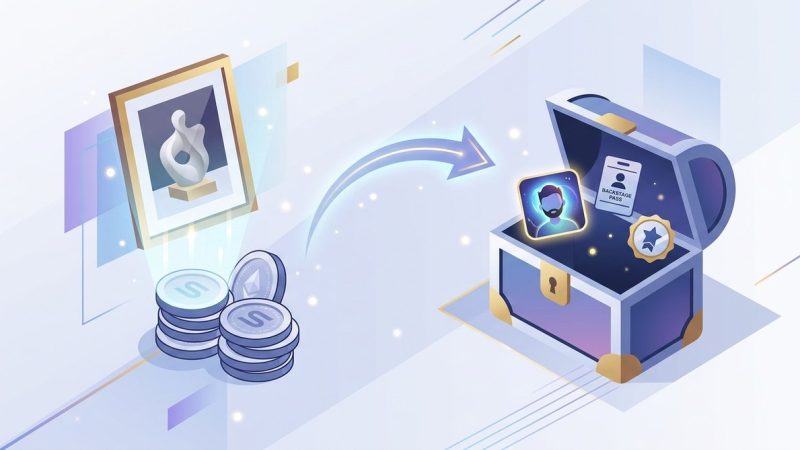
Instead of one person buying an entire NFT, the asset gets divided into tokens. Each token represents a percentage of ownership. Ten people might own 10% each. A hundred collectors could hold 1% shares.
The blockchain tracks every share. Smart contracts govern ownership rights automatically. No paperwork. No middlemen taking cuts.
This isn’t just about affordability. It’s about liquidity too.
When you own a fraction, you can sell your share without waiting for someone to buy the whole piece. The market for smaller stakes is naturally larger. More potential buyers means faster transactions.
How tokenization creates divisible ownership
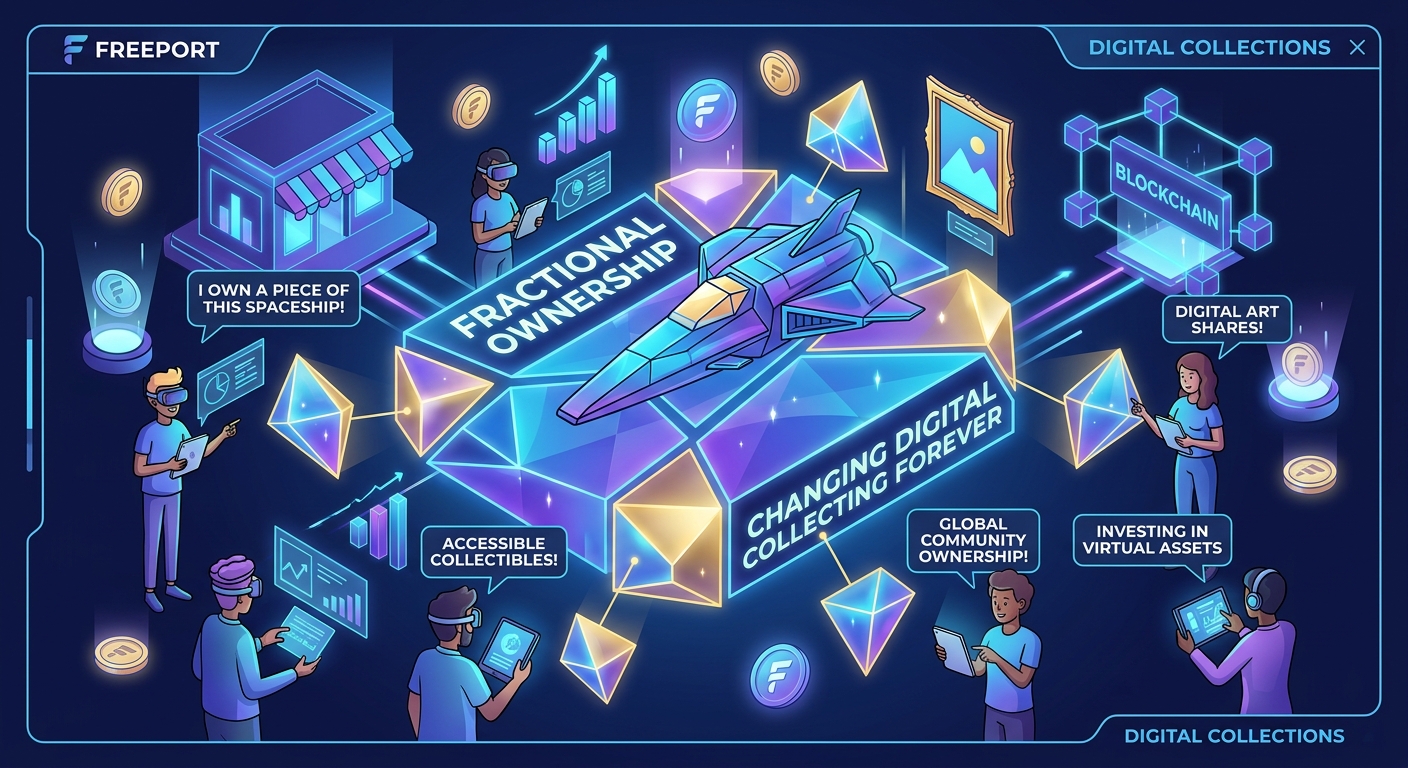
Tokenization is the technical backbone of fractional ownership digital assets.
Here’s how it works in practice.
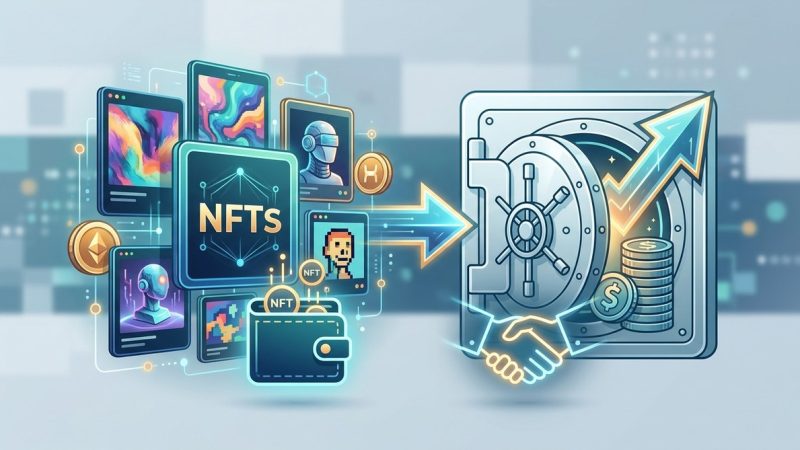
An NFT owner decides to fractionalize their asset. They lock the original NFT into a smart contract vault. That contract then mints fungible tokens, each representing a fraction of the whole.
If the contract creates 1,000 tokens, each one equals 0.1% ownership. These tokens trade on decentralized exchanges just like any other cryptocurrency.
The original NFT stays locked until a specific condition is met. Usually that’s when one party acquires enough tokens to trigger a buyout. Sometimes it’s a community vote to sell the whole piece.
The beauty is transparency. Every transaction lives on the blockchain. You can verify ownership history, trading volume, and current holders at any time.
Understanding how to authenticate digital art becomes even more important when you’re buying fractions. You need to verify both the underlying asset and the smart contract managing the shares.
Why collectors are choosing shared ownership
The appeal goes beyond just splitting costs.
Fractional ownership creates portfolio diversification that wasn’t possible before. Instead of putting $10,000 into one NFT, you can spread that across ten different pieces. Your risk drops. Your exposure to different artists and styles increases.
Community plays a role too.
When you own shares alongside other collectors, you become part of a group with aligned interests. Some platforms build governance features into their contracts. Token holders vote on exhibition opportunities, licensing deals, or when to sell.
Think of it like being on a board of directors for a single artwork.
Revenue sharing adds another dimension. If a fractionalized NFT generates income through licensing, exhibitions, or derivative rights, the smart contract can distribute proceeds to all token holders proportionally.
Museums building blockchain collections sometimes partner with fractional ownership platforms. This lets the public invest in pieces that institutions display, creating new funding models for cultural organizations.
The step-by-step process for buying fractional shares
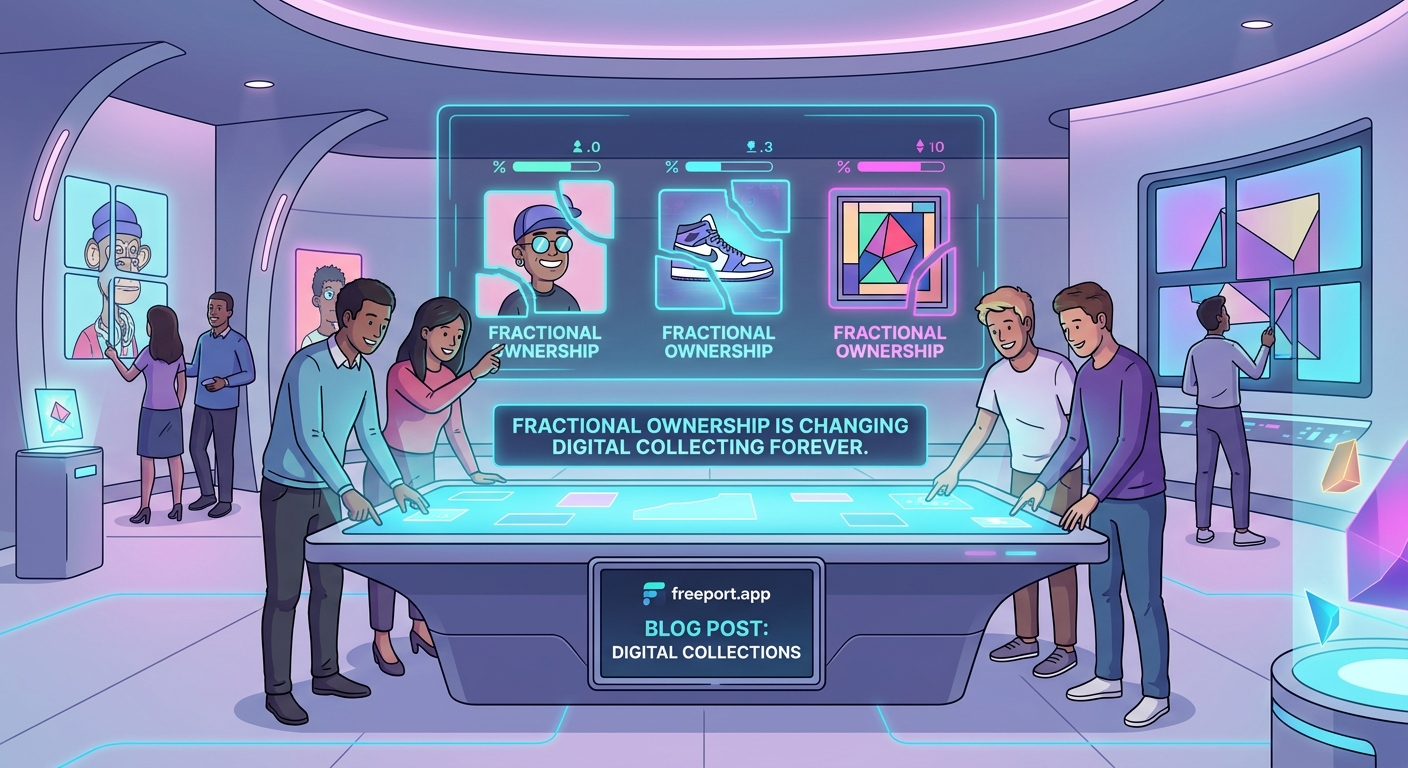
Getting started is more straightforward than you might think.
-
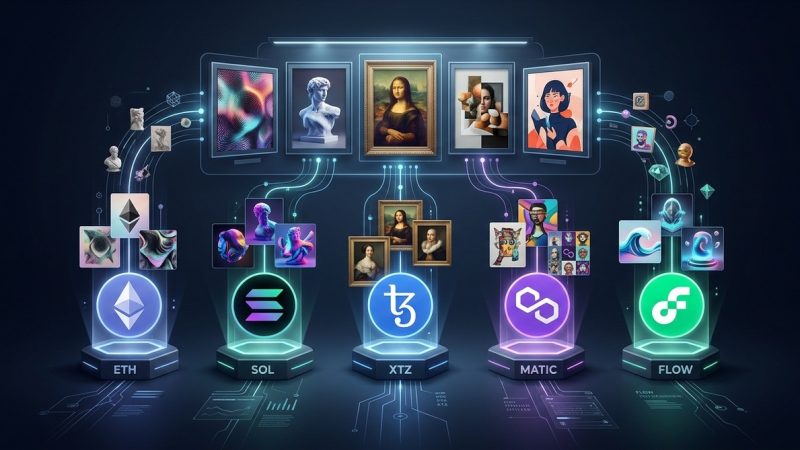
Set up a compatible wallet. You’ll need a Web3 wallet that supports the blockchain where your target asset lives. MetaMask works for Ethereum-based fractions. Phantom handles Solana assets.
-
Fund your wallet with cryptocurrency. Most fractional platforms require payment in ETH, SOL, or stablecoins like USDC. Buy crypto on an exchange and transfer it to your wallet.
-
Research available fractionalized assets. Platforms display collections available for fractional purchase. Look at the underlying NFT’s provenance, the artist’s reputation, and trading history.
-
Review the smart contract terms. Before buying, understand the buyout threshold, governance rights, and any fees. Some contracts charge management fees. Others take a cut when you sell.
-
Purchase your tokens. Connect your wallet to the platform and execute the trade. The tokens appear in your wallet immediately after the transaction confirms.
-
Monitor your investment. Track floor prices, trading volume, and any governance proposals. Participate in votes if the contract allows it.
-
Sell when ready. List your tokens on the same platform or compatible DEXs. Liquidity varies by asset, so popular pieces trade faster than obscure ones.
Building a valuable collection from scratch often starts with fractional positions. You learn the market without committing huge capital upfront.
Platforms making fractional ownership accessible
Several platforms have emerged as leaders in this space.
Fractional.art pioneered the model on Ethereum. They let NFT owners vault their assets and mint ERC-20 tokens representing shares. The platform includes built-in governance and auction mechanisms.
Unicly combines fractional ownership with AMM liquidity pools. When you fractionalize an NFT, you can also provide liquidity for trading. This creates deeper markets for the tokens.
NFTX takes a different approach. Instead of fractionalizing individual pieces, they create fungible tokens backed by pools of similar NFTs. Think of it as an index fund for digital collectibles.
Tessera (formerly Fractional) focuses on high-value pieces. Their platform includes sophisticated governance tools and institutional-grade custody.
Each platform has different fee structures, supported blockchains, and governance models. Some charge minting fees. Others take transaction percentages. Always read the documentation before committing funds.
Rights and responsibilities of fractional owners
Owning a fraction doesn’t mean owning the whole thing. Your rights are limited and defined by the smart contract.
Here’s what you typically get and what you don’t.
What you own:
– A tradable token representing a percentage of the asset
– Proportional claim to any revenue the NFT generates
– Voting rights on governance decisions (if included)
– Potential profit if the asset appreciates and you sell your tokens
What you don’t own:
– The ability to display the NFT as your profile picture
– Commercial licensing rights (unless the contract specifies otherwise)
– The power to unilaterally sell the underlying asset
– Exclusive bragging rights to ownership
Some contracts grant display rights to all token holders. Others reserve them for whoever holds the largest stake. Read the terms carefully.
Understanding artist compensation models helps you evaluate whether fractional ownership respects creator royalties. Good platforms honor secondary sale royalties even on token trades.
Common pitfalls and how to avoid them
Fractional ownership digital assets comes with specific risks.
Illiquidity traps happen when you buy tokens for an obscure piece nobody wants. You’re stuck holding shares you can’t sell. Stick to recognized artists and established collections when starting out.
Smart contract vulnerabilities can lock funds or enable exploits. Only use platforms with audited contracts. Check for security reports before investing.
Governance deadlock occurs when token holders can’t agree on major decisions. Some contracts require supermajorities to sell. If consensus fails, the NFT stays locked indefinitely.
Fee stacking reduces returns. Between platform fees, blockchain gas costs, and potential management charges, your profits can get eaten away. Calculate total costs before buying.
Regulatory uncertainty remains a wild card. Some jurisdictions might classify fractional tokens as securities. That could trigger compliance requirements or trading restrictions.
| Risk Type | Warning Signs | Protection Strategy |
|---|---|---|
| Illiquidity | Low trading volume, unknown artist | Buy established pieces with active markets |
| Smart contract bugs | Unaudited code, new platform | Use platforms with security audits |
| Governance issues | Vague voting rules, no quorum requirements | Read governance docs before buying |
| Hidden fees | Unclear fee structure, multiple charges | Calculate all-in costs including gas |
| Regulatory risk | Platform lacks legal clarity | Understand your local securities laws |
Watching for red flags becomes even more important with fractional assets. The added complexity creates more opportunities for problems.
Tax implications you need to understand
Fractional ownership creates unique tax situations.
In most jurisdictions, buying tokens counts as a taxable event if you use cryptocurrency. Selling tokens triggers capital gains or losses. Receiving revenue distributions might count as income.
The IRS treats each crypto-to-crypto trade as a taxable swap. That means exchanging ETH for fractional tokens creates a tax obligation even if you haven’t cashed out to fiat.
Some countries classify fractional tokens as securities. Others treat them like commodities. The distinction affects how gains get taxed and what reporting requirements apply.
Keep detailed records of every transaction. Note the date, amount, token price, and any fees. Tax software designed for crypto can help, but fractional tokens might not integrate smoothly yet.
Consult a tax professional familiar with digital assets. The rules are evolving, and getting it wrong can be expensive.
How fractional ownership affects market dynamics
Breaking assets into pieces changes how markets behave.
Price discovery becomes more efficient. With more participants trading smaller amounts, the market can respond faster to new information. A major exhibition or artist announcement affects token prices almost immediately.
Volatility can increase in the short term. Smaller trades happen more frequently, creating more price movement. But over longer periods, fractional ownership might actually stabilize values by broadening the holder base.
The relationship between token price and underlying NFT value isn’t always straightforward. Sometimes tokens trade at a premium because of liquidity benefits. Other times they discount because of governance uncertainty.
Blue-chip collections maintaining value often see successful fractionalization. Established pieces with proven track records attract more fractional investors than speculative new drops.
Arbitrage opportunities emerge. If tokens trade below fair value relative to the whole NFT, someone might buy enough to trigger a buyout and capture the spread.
The future of shared digital ownership
Fractional ownership digital assets is still early. The models we see today will evolve.
Interoperability between platforms will improve. Right now, tokens from one platform don’t easily move to another. Cross-chain bridges and standardized contracts will fix that.
Integration with DeFi protocols is already happening. You can use fractional tokens as collateral for loans. You can provide liquidity in automated market makers. You can stake tokens for yield.
Hybrid models combining physical and digital assets are emerging. A gallery might fractionalize ownership of both an NFT and the physical print. Token holders get rights to both.
Institutional adoption will bring sophistication. Funds specializing in fractional digital assets will create index products, derivatives, and structured notes. This adds complexity but also legitimacy.
Generative art on the blockchain presents interesting fractionalization opportunities. Long-form generative projects with limited outputs become natural candidates for shared ownership.
Regulatory clarity will eventually arrive. As governments define how fractional tokens fit into existing securities laws, compliant platforms will offer more protection and legitimacy.
“Fractional ownership doesn’t just lower the price of entry. It fundamentally changes the relationship between collectors and art. You’re not just buying an investment. You’re joining a community of people who share your taste and values.”
Comparing fractional ownership to traditional collecting
The differences go beyond just price points.
Traditional NFT ownership gives you complete control. You decide when to sell, how to display it, and whether to license it. You bear all the risk and capture all the upside.
Fractional ownership trades some control for accessibility and diversification. You can’t make unilateral decisions. But you also don’t need six figures to participate in blue-chip collecting.
Emotional attachment works differently too. Owning 100% of something creates a stronger personal connection than owning 1%. But being part of a community of fractional owners can create its own sense of belonging.
Traditional galleries bridging to blockchain sometimes offer fractional models for physical works too. The digital infrastructure makes it easier to implement.
Exit strategies vary significantly. Selling a whole NFT requires finding one buyer willing to pay your price. Selling fractional tokens means finding buyers for smaller amounts, which usually happens faster but might require price discovery.
Storage and security considerations
Fractional tokens live in your wallet just like any other crypto asset.
That means the same security principles apply. Use hardware wallets for significant holdings. Enable two-factor authentication on any hot wallets. Never share your seed phrase.
Proper storage and security practices become even more important when you hold multiple fractional positions across different platforms.
The underlying NFT sits in a smart contract vault. You don’t control that directly. The platform manages custody. This creates counterparty risk if the platform fails or gets hacked.
Check whether platforms use multi-signature wallets for vault management. Look for insurance coverage. Understand what happens if the platform shuts down.
Some platforms let token holders vote to move the underlying NFT to a different vault. This provides an escape hatch if the original platform becomes unreliable.
Making your first fractional investment
Start small and learn as you go.
Pick a piece you genuinely appreciate, not just one you think will pump. Fractional ownership works best when you care about the art itself, not just the speculation.
Research the artist’s background and market history. Blockchain artists redefining digital art often have pieces available for fractionalization. Established names provide more stability.
Read the smart contract documentation. Understand the buyout mechanism, fee structure, and governance rights. Don’t invest in anything you don’t fully comprehend.
Start with an amount you can afford to lose. Treat it as an education expense. You’ll learn how the platforms work, how tokens trade, and how governance functions.
Track your investment but don’t obsess over daily price movements. Fractional ownership works best as a medium to long-term strategy.
Connect with other token holders if the platform has a community. You’ll gain insights and make the experience more enjoyable.
When fractional ownership makes sense
Not every digital asset benefits from fractionalization.
High-value pieces with established markets work best. A $500,000 NFT has a natural audience for fractional ownership. A $500 piece probably doesn’t.
Assets with revenue potential are ideal candidates. If an NFT generates licensing income, exhibition fees, or derivative rights, fractional owners can share those returns.
Pieces with strong communities benefit from shared ownership. When collectors feel connected to each other and the artist, governance becomes more meaningful.
What makes collections blue-chip often correlates with successful fractionalization. Proven track records attract fractional investors.
Avoid fractionalizing assets you want complete control over. If you plan to use an NFT as your identity or want exclusive commercial rights, whole ownership makes more sense.
Building a fractional portfolio strategy
Diversification matters even more with fractional assets.
Spread investments across different artists, styles, and platforms. Don’t put everything into one fractionalized piece or one platform’s tokens.
Mix fractional positions with whole NFT ownership. This gives you both the accessibility of fractions and the control of complete ownership.
Consider different time horizons. Some fractional investments might be long-term holds waiting for buyouts. Others could be shorter-term trades capturing momentum.
Balance speculation with genuine appreciation. Own fractions of art you actually like, not just pieces you think will pump.
Rebalance periodically. If one position grows to dominate your portfolio, consider trimming it. If something underperforms consistently, cut your losses.
Set clear goals for each investment. Know whether you’re buying for potential appreciation, revenue sharing, community participation, or portfolio diversification.
The democratization of digital collecting
Fractional ownership digital assets represents more than just a financial innovation.
It’s about access. Someone with $100 can now participate in markets that previously required six-figure commitments. A student in Manila can own a piece of digital art history alongside a hedge fund manager in New York.
It’s about education too. Fractional ownership lets newcomers learn the market without catastrophic risk. You can make mistakes with small positions and develop expertise over time.
The model creates new relationships between artists and collectors. Instead of selling to one wealthy buyer, creators can build communities of hundreds or thousands of fractional owners. That creates ongoing engagement and support.
Platforms are experimenting with giving fractional owners exclusive perks. Early access to new drops, private Discord channels, or voting rights on future projects. The tokens become membership passes, not just investments.
This shift mirrors broader trends in ownership models. We’ve seen it in real estate crowdfunding, venture capital syndicates, and sports team ownership. Blockchain technology just makes it more efficient and transparent for digital assets.
Your path forward in fractional ownership
The landscape will keep evolving. New platforms will launch. Existing ones will add features. Regulations will clarify.
But the core concept remains powerful. Fractional ownership digital assets makes high-value collecting accessible to anyone with an internet connection and a wallet.
Start by observing. Browse platforms. Read smart contracts. Join communities. Learn how experienced collectors evaluate opportunities.
When you’re ready, make a small investment. Experience the process firsthand. See how governance works. Feel what it’s like to own a fraction of something valuable.
Build knowledge gradually. Each position teaches you something. Each platform has quirks. Each artist community has its own culture.
The barriers that kept you out of elite collecting are coming down. The question isn’t whether fractional ownership will reshape digital collecting. It already has. The question is whether you’ll participate in that transformation.