Are Cryptographic Signatures Enough? How Biometric Authentication Is Securing High-Value NFT Vaults
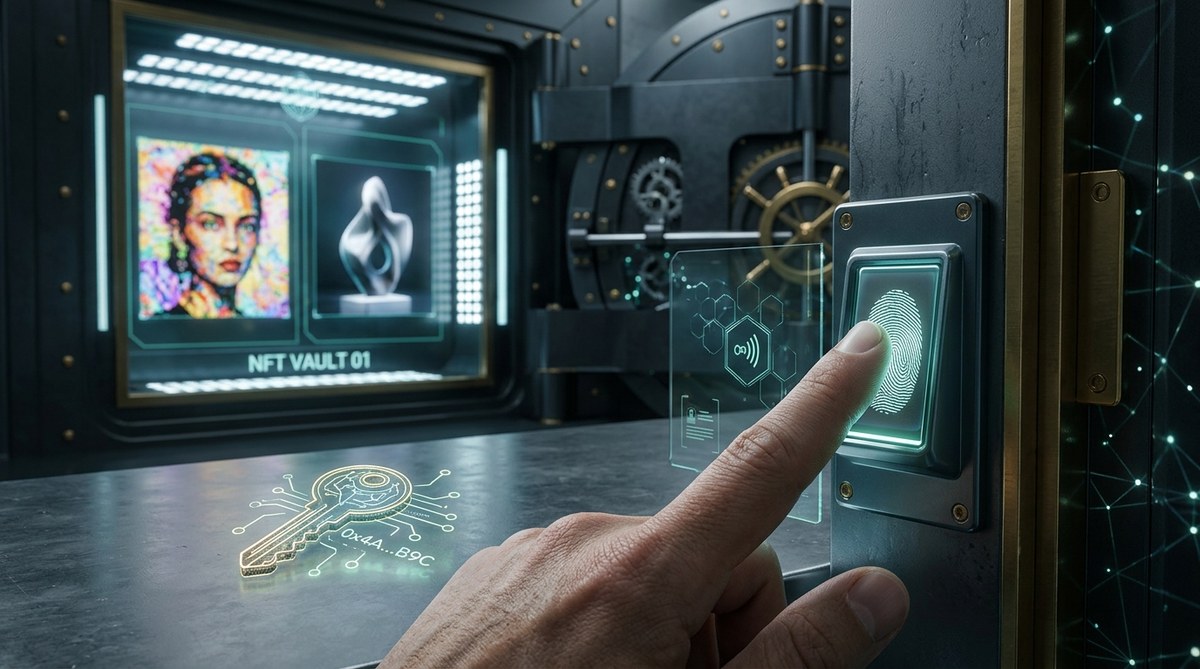
Your most expensive NFT is only as safe as the string of characters that controls it. That feels wrong, doesn’t it? A single seed phrase, a private key stored in a screenshot, a hardware wallet left on a desk. One mistake, one phishing link, one lost piece of paper, and your digital art collection vanishes. Cryptographic signatures are elegant math, but they rely entirely on human behavior. And humans make mistakes. That is the gap biometric authentication is designed to close.
Cryptographic signatures alone cannot protect your NFT vault from the most common threat: a compromised private key. Biometric authentication adds a physical, unforgeable layer that ties access to your unique body. This guide explains why seed phrases are the weakest link, how fingerprint and facial recognition secure high-value transactions, and what the future of self-custodial security looks like in 2026.
Why Your Seed Phrase Is the Weakest Link
Think of your private key as the master key to a bank vault. If someone copies that key, they own everything inside. No alarm, no second lock, no guard. That is the reality of standard self-custody. Your seed phrase, that 12 or 24 word mnemonic, is the same key written in plain English.
The problem is not the cryptography. Elliptic curve digital signature algorithms (ECDSA) are mathematically sound. The problem is the human layer. People store seed phrases in Google Docs, take photos of them, type them into phishing sites, or lose them entirely. A 2025 report from Chainalysis estimated that over $1.5 billion in crypto assets were lost or stolen due to compromised private keys, not broken algorithms.
Biometric authentication NFT security solves this by making the “key” something you are, not something you know or something you have. Your fingerprint, your face, your iris. These cannot be phished, copied from a screenshot, or guessed.
How Biometric Authentication Actually Works for NFT Vaults
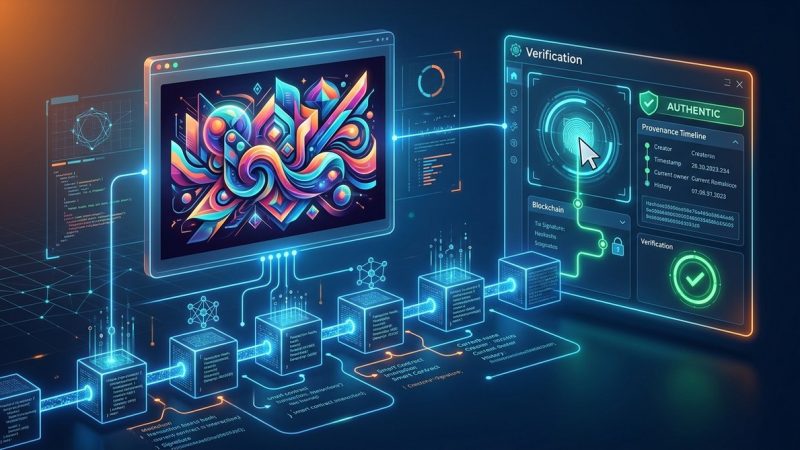
You might be wondering how a fingerprint scanner talks to a blockchain. The answer is secure enclave technology combined with multi-party computation (MPC). Here is the simplified flow:
-
Enrollment: Your biometric data (a mathematical representation called a template, not your actual image) is captured and stored in a secure, isolated chip on your device. This chip never exposes the raw data to the internet.
-
Challenge: When you want to sign a transaction to move an NFT, the vault software sends a cryptographic challenge to the secure chip.
-
Verification: You present your live biometric (fingerprint, face scan). The chip compares it against the stored template. Only a match unlocks the private key material stored inside that same chip.
-
Signature: The chip signs the transaction using the private key that never leaves the secure enclave. The signed transaction is broadcast to the blockchain.
The critical detail is that the private key never exists in a form that can be copied or stolen. It is generated inside the secure chip and stays there. Even if someone hacks your phone, they cannot extract the key. They would need your physical finger and physical device at the same time.
The Four Pillars of Biometric NFT Security
| Security Layer | What It Protects Against | Real World Example |
|---|---|---|
| Secure Enclave (TPM/SE) | Remote extraction of private key | Apple’s Secure Enclave or Titan security chips |
| Liveness Detection | Spoofing with photos or recordings | Infrared face scan that detects blood flow |
| Multi-Factor Binding | Device theft without biometrics | Phone + fingerprint required for any transfer |
| Rate Limiting | Brute force attempts | After 5 failed attempts, the chip wipes itself |
This table shows why biometric authentication NFT security is not just a gimmick. Each layer addresses a specific attack vector that pure cryptographic wallets leave open.
Common Mistakes Collectors Make (And How Biometrics Fix Them)
- Storing seed phrases in a password manager or cloud storage. Biometric vaults eliminate the need for a seed phrase altogether.
- Using the same wallet across multiple devices. Biometric binding ties the key to one specific device.
- Falling for “verify your wallet” phishing scams. A biometric prompt cannot be tricked by a fake website because the secure chip only responds to local hardware signals.
- Losing a hardware wallet. With biometric recovery, your identity can regenerate the wallet on a new device through a decentralized recovery network, not a backup phrase.
Setting Up Your First Biometric Vault: A Practical Guide
If you are ready to move your high-value NFTs into a biometric secured vault, here is a straightforward process.
-
Choose a compatible device. Look for smartphones or dedicated hardware wallets with a dedicated secure element chip (Apple iPhone with Secure Enclave, Android with Titan chip, or devices like the Ledger Stax or Trezor Safe).
-
Install a biometric enabled wallet app. Options include Freeport for NFT specific vaults, or general purpose wallets that support passkeys and WebAuthn standards.
-
Register your biometric. Follow the on-screen prompts to scan your fingerprint or face. The device will guide you through multiple angles to build a robust template.
-
Set a fallback method. Most systems allow a secondary PIN or a second enrolled biometric (like a different finger) in case of injury.
-
Transfer a test NFT first. Send a low-value token to your new vault address. Confirm you can sign a transaction using your biometric before moving your entire collection.
-
Migrate your high-value assets. Once the test passes, transfer your blue-chip NFTs into the vault.
“The biggest lie in crypto security is that a 24 word seed phrase is safe. It is not. It is a single point of failure written in human language. Biometric wallets are the first real solution to the ‘key management problem’ that has plagued blockchain since its inception.” – Dr. Amelia Chen, Cryptographic Security Researcher at Stanford
What About Privacy? Does Biometric Authentication Mean My Data Is on the Blockchain?
This is the most common concern, and it is a valid one. Nobody wants their fingerprint hash stored permanently on a public ledger. The good news is that biometric authentication NFT security does not work that way.
Your biometric template never leaves your device. The blockchain only sees the cryptographic signature output. The verifier (the NFT marketplace, the smart contract, the exchange) only sees a valid signature. They have no way to know whether that signature was generated by a biometric scan or a typed private key.
In technical terms, the biometric step happens off-chain in a trusted execution environment (TEE). The on-chain component remains purely cryptographic. Your biometric data is as private as the PIN on your debit card.
The Future of Vault Security in 2026 and Beyond
We are already seeing the next evolution. Multi-biometric wallets that require both a fingerprint and a voice sample for high-value transfers. Continuous authentication that monitors your typing pattern or gait to ensure the person holding the device is still you. And decentralized recovery networks that use zero-knowledge proofs to restore access without a seed phrase.
These technologies are moving from experimental to production. Major custodians like Coinbase and Gemini now offer biometric options for institutional accounts. The consumer hardware market has followed. Every flagship smartphone sold in the US in 2026 includes a secure element chip capable of biometric wallet operations.
For collectors holding six or seven figure digital art portfolios, the question is no longer “should I use biometrics?” It is “can I afford not to?”
Protecting Your Legacy Starts With Your Identity
Your collection represents years of curation, research, and investment. A single stolen private key can undo all of that in minutes. Biometric authentication does not replace cryptography. It wraps it in a layer that is uniquely, physically yours. The math handles the signature. Your fingerprint handles the permission.
Start with one NFT. Move it to a biometric vault. Sign a transaction. Feel the difference between typing a password and using your own identity. That feeling is real security. That is the standard your collection deserves.