Why Layer 3 Protocols Are Unlocking Real-Time Generative Art on the Blockchain
Generative artists have spent years hitting a wall. You write a beautiful algorithm, deploy it on-chain, and then wait. And wait. The transaction finalizes, the piece mints, but the real-time spark is gone. The blockchain was never built for speed. It was built for trust.
That changes now.
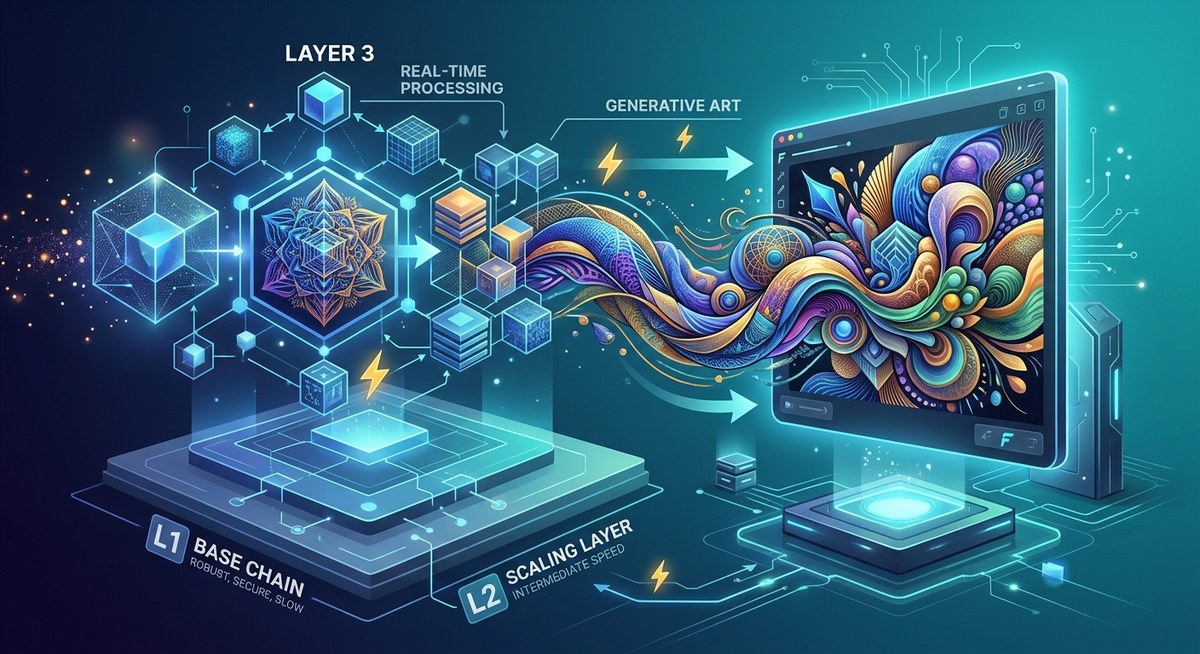
Layer 3 protocols are rewriting the rules for generative art on the blockchain. They let you run computation off the main chain, verify results instantly, and deliver interactive art that responds in real time. For the first time, on-chain generative art can feel as immediate as a local script.
Layer 3 protocols are purpose-built networks that sit on top of Layer 2 solutions, offering dedicated execution environments for complex computations. For generative artists, this means real-time rendering, near-zero gas fees for iterations, and verifiable randomness without clogging the base layer. L3 is the missing link between creative freedom and blockchain security.
Why Layer 1 and Layer 2 Still Fall Short for Generative Art
Layer 1 blockchains like Ethereum prioritize decentralization and security. That is great for settling a trade. It is terrible for running a loop that generates 10,000 variations of a Perlin noise pattern.
Layer 2 solutions like Arbitrum and Optimism batch transactions and reduce fees. They help with cost, but they still inherit the same fundamental bottleneck. Every step of your generative algorithm must be confirmed by the network before the next step can begin. You cannot stream frames. You cannot accept real-time mouse input. You cannot update a piece based on live data without paying for every state change.
Layer 3 protocols solve this by creating a dedicated execution layer. Think of it as a private canvas where your algorithm runs freely, and only the final output or periodic checkpoints get anchored to the main chain.
How Layer 3 Protocols Actually Work for Generative Art
Layer 3 is not a single technology. It is a design pattern. Here is how it applies to generative art on the blockchain.
Dedicated Compute Environments
Instead of running your generative script on the global EVM, you deploy it on an L3 network that is optimized for your specific task. This network can have its own gas model, its own block time, and its own randomness source.
For example, a project using Arbitrum Orbit can spin up a custom L3 chain where each block confirms in under 100 milliseconds. Your algorithm generates a new frame, the L3 chain validates it, and the result is available to the viewer almost instantly.
Verifiable Randomness Without Oracles
Generative art relies on randomness. On L1, you often need an oracle or a VRF (Verifiable Random Function) contract, which adds cost and latency. L3 protocols can embed randomness directly into the block production process. Each new block on your L3 chain can include a provably fair random seed that your algorithm consumes.
This means every generated output is verifiably random without relying on an external service. Collectors can confirm that the piece was not pre-determined.
State Channels for Interactive Art
Some L3 implementations use state channels. You and a viewer open a channel, your algorithm runs inside it, and only the final state settles on-chain. This is perfect for interactive installations where a viewer’s movement or voice input changes the artwork in real time.
The channel closes, the final image or parameters are recorded on L1, and you have a permanent record of an interactive session that was fully on-chain.
A Practical Comparison of Approaches
Here is how different blockchain layers stack up for a typical generative art project that generates one unique image per minute.
| Approach | Confirmation Time | Cost per Iteration | Real-Time Interaction | Verifiable Randomness |
|---|---|---|---|---|
| L1 (Ethereum) | 12-15 seconds | $5-$50 | No | Yes, but expensive |
| L2 (Arbitrum) | 1-2 seconds | $0.10-$0.50 | Limited | Yes |
| L3 (Orbit) | < 100 ms | < $0.01 | Yes | Yes, built-in |
| Off-chain (IPFS) | Instant | Free | Yes | No |
The table makes it clear. L3 protocols offer the best balance of speed, cost, and verifiability for generative art that needs to feel alive.
What This Means for Your Generative Art Pipeline
If you are building a generative art project today, here is how to think about L3 integration.
- Identify the real-time component. Is your art static, dynamic, or interactive? Static pieces can stay on L1 or L2. Dynamic and interactive pieces benefit from L3.
- Choose an L3 framework. Look at Arbitrum Orbit, zkSync Hyperchains, or custom app-chains built on Cosmos SDK. Each has different trade-offs for speed and finality.
- Deploy your algorithm on the L3 chain. Write your generative script in Solidity, Rust, or a domain-specific language supported by the L3 environment.
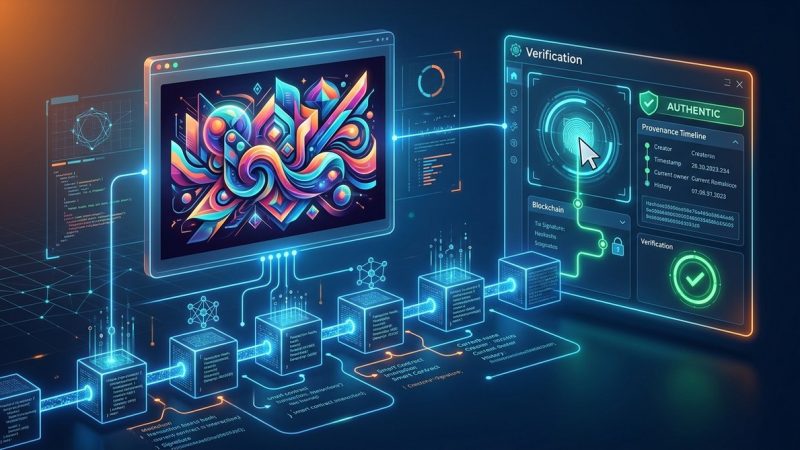
- Anchor outputs to L1. Use a bridge contract that records the final state, the seed, and the timestamp on Ethereum or your preferred L1. This gives collectors the security of the main chain with the speed of L3.
- Build the front-end experience. Your gallery or minting page reads directly from the L3 chain for real-time previews, then waits for the L1 confirmation for the official record.
“The biggest shift I have seen in five years is L3. It finally lets me treat the blockchain like a canvas instead of a bottleneck. My generative scripts run at native speed, and the collector still gets the full provenance trail.” – Ana K., generative artist and smart contract developer
Common Mistakes When Moving to L3
Developers new to Layer 3 protocols for generative art often make these errors.
- Forgetting that L3 chains can be ephemeral. If your L3 chain shuts down, the intermediate states disappear. Always anchor critical data to L1.
- Using L3 for everything. Static metadata and simple ownership records do not need L3. Save it for the heavy computation.
- Ignoring the bridge security. The bridge between L3 and L1 is a single point of failure. Audit it carefully.
- Assuming L3 randomness is free. It is cheaper than L1 VRFs, but it still costs something. Budget accordingly.
The Road Ahead for L3 and Generative Art
By 2026, several major generative art platforms have already adopted L3 infrastructure. Collectors are starting to expect real-time previews and interactive elements as standard features. The artists who learn L3 now will have a significant advantage in the next wave of on-chain creativity.
If you are curious about how other artists are pushing these boundaries, check out our list of 7 blockchain artists redefining contemporary digital art in 2026. For a deeper look at how smart contracts handle the ownership side, read our guide on how smart contracts are revolutionizing art ownership and provenance.
Your Next Steps as a Generative Artist on L3
Layer 3 protocols are not a theoretical upgrade. They are live, they are accessible, and they are transforming what is possible with generative art on the blockchain. Start by forking an existing L3 example, deploy a simple Perlin noise generator, and watch the confirmation times drop from seconds to milliseconds. That feeling of immediacy is the future of on-chain art.
The canvas is no longer limited by the block time. Go build something that moves.