5 Breakthrough Compression Techniques Reducing On-Chain Storage Costs for Generative Artists
Generating digital art on blockchain platforms has opened up exciting creative avenues. However, storing complex generative art data directly on-chain presents a significant challenge. Large file sizes drive up transaction costs and storage fees, making it less sustainable for artists and developers. Fortunately, there are innovative compression techniques that can dramatically reduce data footprint without sacrificing art quality. In this guide, we’ll walk through effective methods to optimize on-chain storage for generative art projects.
Understanding the importance of compression in on-chain generative art
Blockchain networks are designed for security and decentralization, not for storing large files. When artists or developers embed their artwork directly into smart contracts or NFTs, they face high costs due to data size. Compression techniques help by shrinking the data needed to recreate the art. This not only cuts expenses but also enhances the scalability and accessibility of blockchain art projects.
By applying these methods, creators can focus more on artistic innovation instead of worrying about storage limitations. The goal is to balance visual fidelity with data efficiency, ensuring artworks are both beautiful and economical to host.
Core compression strategies for on-chain storage
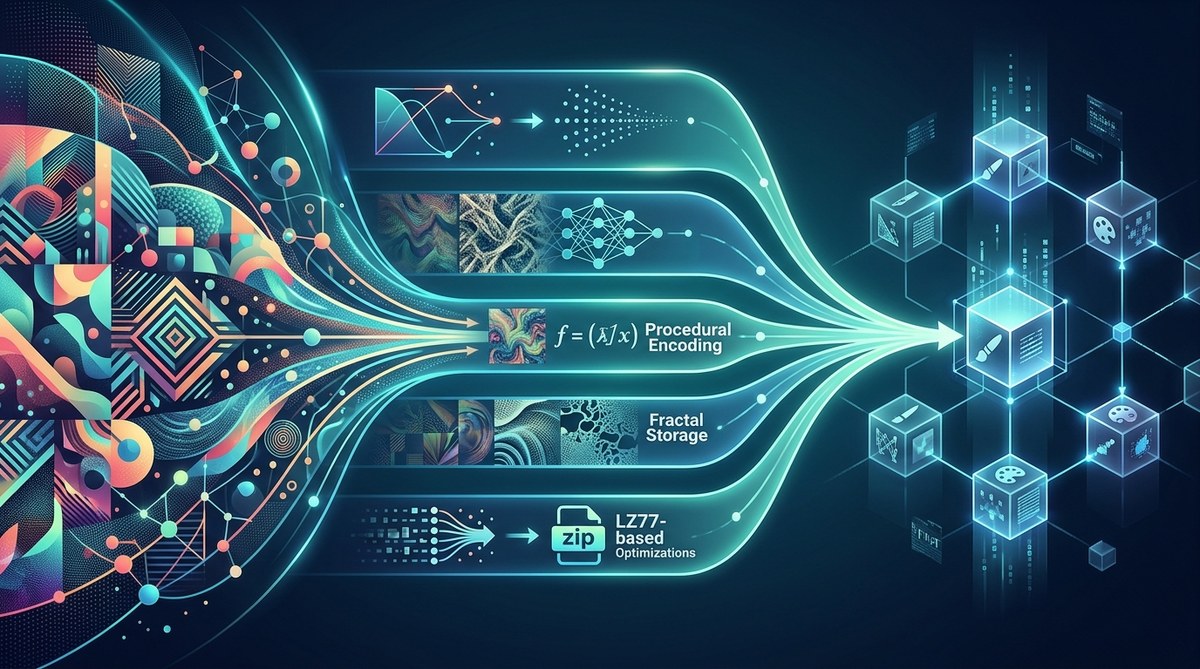
There are several approaches to compress data for blockchain use. Here are some of the most impactful techniques:
1. Data encoding and format optimization
Choosing the right data formats is crucial. Instead of raw image or code data, opt for compact formats like SVGs for vector art or WebP for raster images. These formats have built-in compression, reducing file sizes significantly. For generative algorithms, consider encoding parameters as minimal JSON objects or binary data to streamline storage.
2. Algorithmic data compression
Applying algorithms like Huffman coding or run-length encoding can effectively minimize repetitive data. For example, in generative art scripts, repetitive code snippets or patterns can be compressed. This is especially useful when storing seed data or procedural parameters that generate the artwork dynamically.
3. Use of off-chain storage with on-chain references
One of the most practical methods involves storing the bulk of the art data off-chain, such as on decentralized storage networks like IPFS or Arweave. The blockchain then only contains a cryptographic hash or a small pointer to the stored data. This keeps on-chain data minimal while preserving data integrity and provenance. It is highly recommended for large or complex generative works.
4. Data deduplication and modular design
Breaking down art assets into reusable modules or components allows for deduplication. Instead of storing full assets each time, store shared components once and reference them across multiple works. This approach reduces overall storage needs, especially in collections or series.
5. Dynamic on-chain generation
Instead of storing entire images or datasets, store minimal seed data and algorithms to generate the artwork on demand. This method relies on smart contracts executing code to recreate the art when viewed. It shifts storage from static data to code and parameters, drastically decreasing on-chain size.
Practical process: how to implement compression in your generative art projects
- Assess your data: Identify what portions of your art are most data-heavy. Focus on images, scripts, or parameters that can be optimized.
- Choose suitable formats: Convert images to SVG or WebP. Encode parameters as binary or compressed JSON.
- Offload large files: Upload high-resolution or complex data to IPFS or Arweave, then embed only the content hash or link in your smart contract.
- Apply data compression algorithms: Use Huffman coding or run-length encoding on repetitive data within your scripts.
- Modularize assets: Break larger assets into smaller, reusable modules to avoid duplication.
- Implement on-chain generation: Store minimal seed data and algorithms that recreate the artwork dynamically during display or interaction.
By following these steps, you can dramatically reduce on-chain storage costs while maintaining high visual and functional quality.
Common pitfalls and how to avoid them
| Technique | Mistake | How to avoid it |
|---|---|---|
| Data encoding | Using uncompressed image formats | Always convert to SVG or WebP for vector or raster images |
| Off-chain storage | Relying solely on on-chain data | Use IPFS or Arweave links to minimize on-chain size |
| Algorithmic generation | Storing full images | Store minimal seed data and generate images dynamically |
| Deduplication | Repeating similar assets | Break assets into shared modules and reference them |
| Compression algorithms | Over-compressing leading to data loss | Test compression levels to balance size and quality |
“The key to effective on-chain storage is balancing data reduction with the preservation of artistic intent. Using off-chain storage combined with smart coding practices provides the best results.” — Digital art blockchain expert
Mistakes to watch for when applying compression techniques
- Over-compression can cause artifacts or loss of detail, reducing the artwork’s visual appeal.
- Neglecting data integrity when referencing off-chain assets might lead to broken links or lost provenance.
- Ignoring the cost of decompression algorithms if used on-chain can increase computational expenses.
- Forgetting to test compressed data across different devices ensures consistent viewing experiences.
- Underestimating future scalability needs; starting with minimal compression might limit future expansion or updates.
Maintaining quality while reducing storage costs
Balancing quality and efficiency is essential. Focus on compressing only non-essential data while keeping core visual or interactive elements intact. Dynamic generation is especially effective for complex generative art because it leverages algorithms rather than static files, pushing the boundary of what is feasible on-chain.
Final thoughts: making on-chain generative art sustainable
Adopting these compression techniques allows artists and developers to push creative boundaries without inflating costs. Combining smart data formats, off-chain storage, and algorithmic generation makes blockchain-based art more sustainable and accessible. Remember to test each method thoroughly to find the right mix for your project.
By applying these strategies, you can turn ambitious generative projects into practical, cost-effective blockchain assets. Keep experimenting with different combinations to optimize both performance and artistic expression. This approach ensures your digital creations remain vibrant and viable within the evolving Web3 landscape.