Layer 2 Solutions: How They’re Making Digital Art More Accessible
Gas fees killed your enthusiasm for minting that first NFT, didn’t they? You’re not alone. Thousands of digital artists have watched their profits evaporate into transaction costs, sometimes paying more to mint a piece than they earn from the sale. Layer 2 solutions changed that equation entirely.
Layer 2 solutions for digital art process transactions off the main blockchain, reducing gas fees by up to 95% while maintaining security. These technologies enable artists to mint affordably, collectors to buy without prohibitive costs, and creators to earn sustainable royalties. Popular options include Polygon, Arbitrum, and Optimism, each offering different speed and cost advantages for blockchain art transactions.
Understanding Layer 2 Technology for Artists
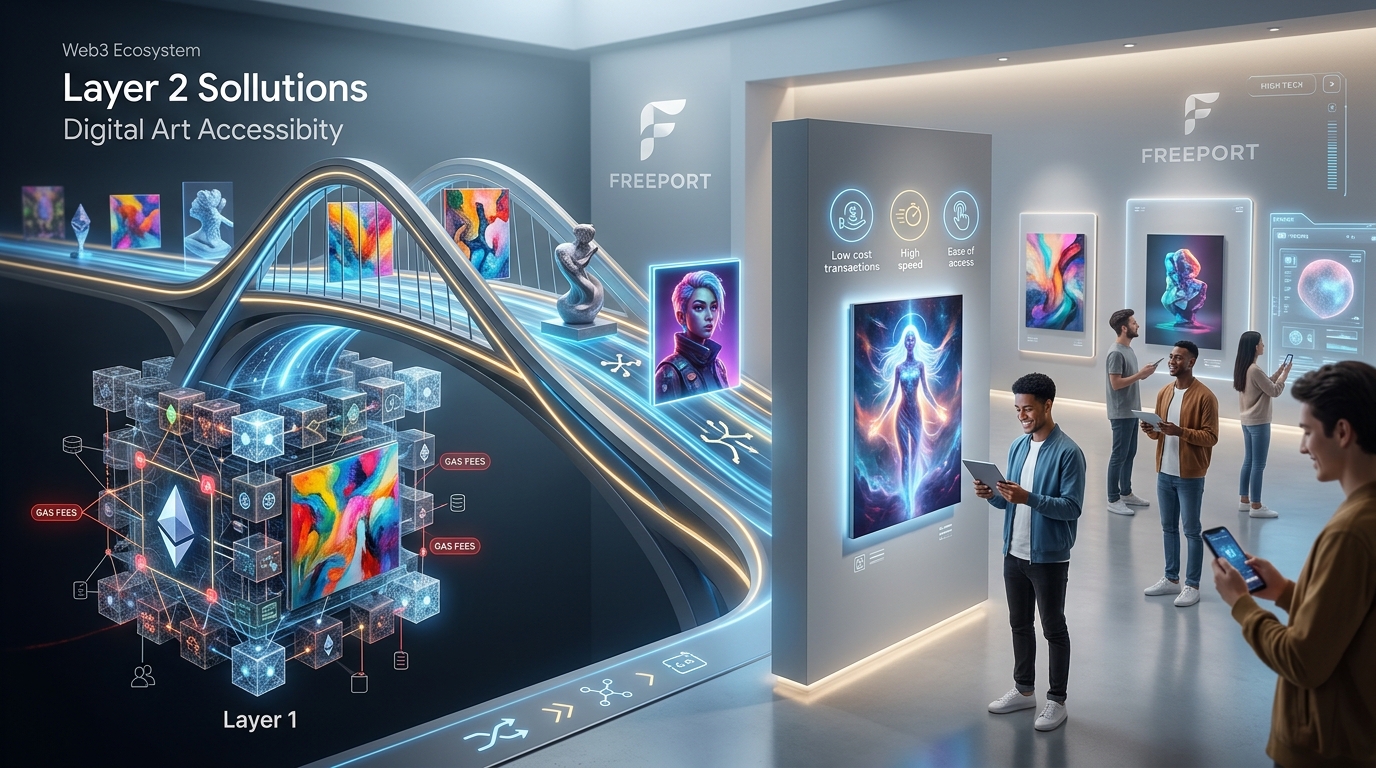
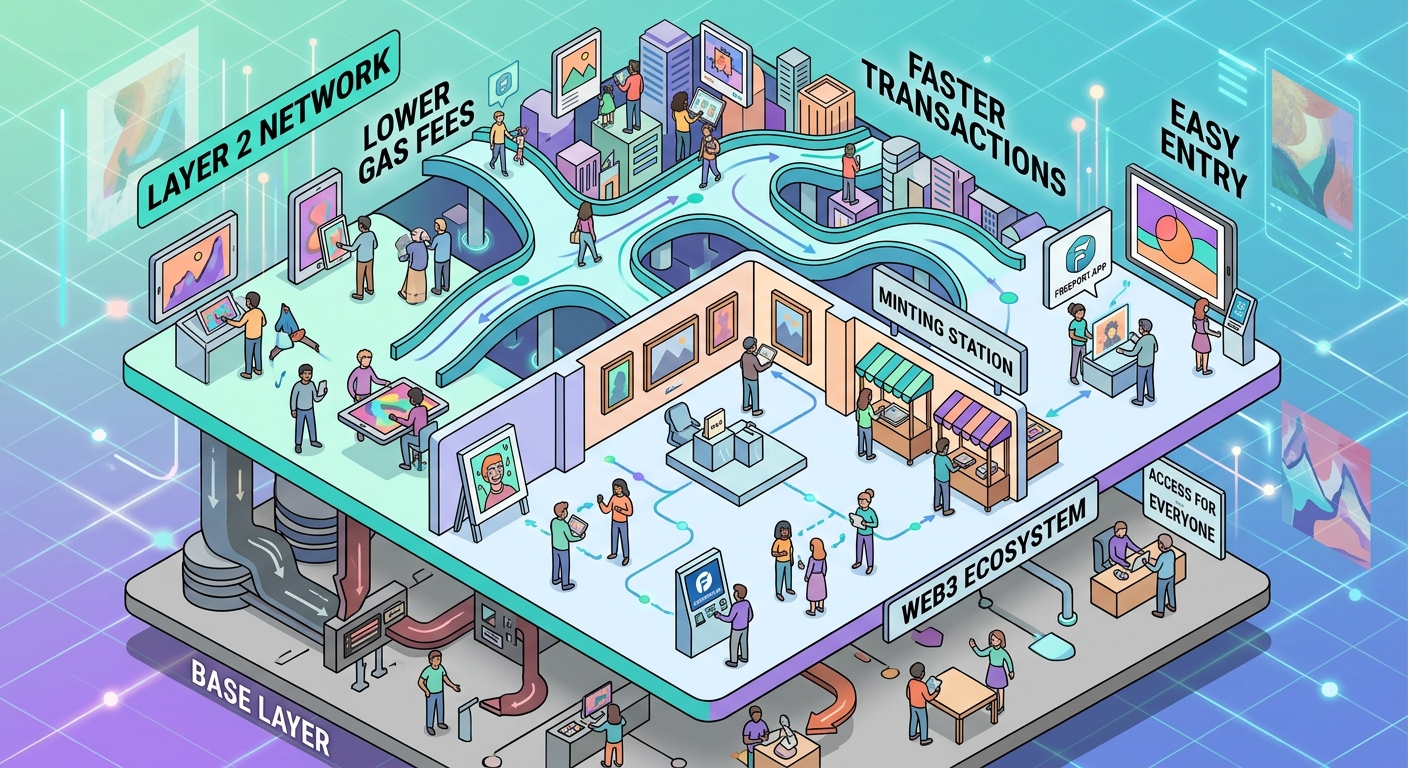
Layer 2 solutions sit on top of base blockchains like Ethereum. Think of them as express lanes on a highway.
The main blockchain (Layer 1) handles security and final settlement. Layer 2 handles the heavy lifting of processing transactions. When you mint or trade art on Layer 2, the network bundles hundreds of transactions together, then records them as a single entry on Layer 1.
This bundling creates massive cost savings. A transaction that costs $50 on Ethereum mainnet might cost $0.50 on Polygon or Arbitrum.
Security stays intact because Layer 2 solutions inherit protection from the main chain. Your artwork ownership gets verified by the same robust system, just more efficiently.
Why Traditional Blockchain Costs Block Creativity
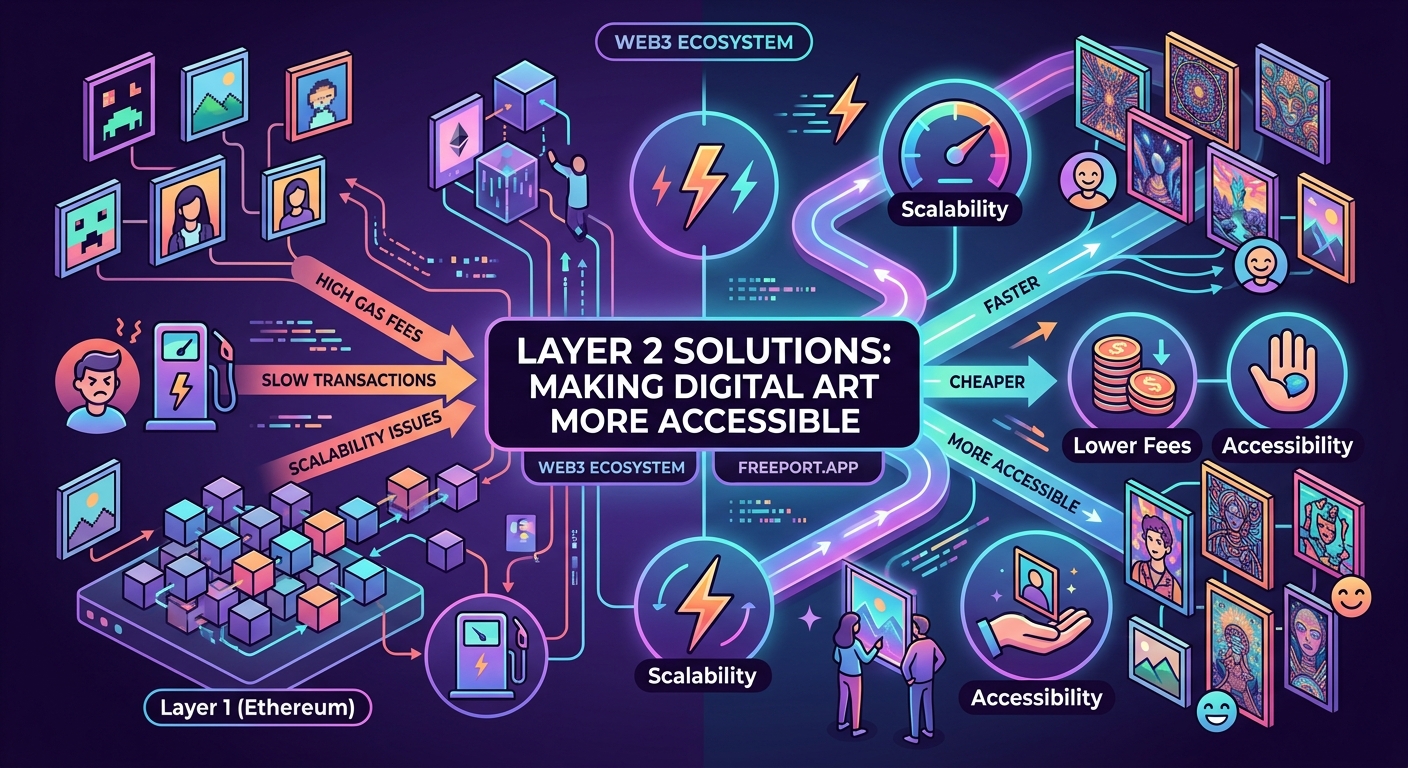
Ethereum mainnet gas fees fluctuate wildly. During network congestion, minting a single NFT can cost $100 or more.
Artists face impossible math. If you price a piece at $200 and pay $80 in gas to mint it, then another $40 when a collector buys it, your margin shrinks to $80 before platform fees.
Emerging creators get hit hardest. Established artists with large followings can absorb these costs. New voices struggle to break even.
Collectors face similar barriers. Buying a $50 artwork with $60 in transaction fees makes no economic sense. The barrier to entry pushes casual buyers away, limiting market growth.
Understanding royalties and resale rights in your digital art purchases becomes more practical when transaction costs don’t eat your margins.
Popular Layer 2 Networks for Digital Art
Different Layer 2 solutions serve different needs. Here’s what matters for artists and collectors:
Polygon processes transactions in seconds with fees under $0.01. It uses a proof-of-stake sidechain model. Major platforms like OpenSea and Rarible support Polygon minting. The network handles high volume smoothly, making it ideal for collections with many pieces.
Arbitrum offers full Ethereum Virtual Machine compatibility. Transactions cost roughly 90% less than mainnet. It uses optimistic rollups, assuming transactions are valid unless challenged. Settlement takes about a week when moving assets back to Layer 1.
Optimism uses similar technology to Arbitrum with slightly different security trade-offs. Fees stay consistently low. Several art-focused platforms have built exclusively on Optimism.
zkSync leverages zero-knowledge proofs for maximum security. Transactions finalize faster than optimistic rollups. The technology is newer but gaining traction among security-conscious creators.
Each network requires its own wallet setup and bridge transactions. Most support standard wallets like MetaMask with simple network switching.
How to Mint Your First Piece on Layer 2
Follow these steps to mint affordably:
-
Choose your Layer 2 network based on where your audience collects. Check which platforms support each network.
-
Bridge funds from Ethereum mainnet to your chosen Layer 2. This one-time transaction has a gas fee, but subsequent minting costs pennies.
-
Connect your wallet to a Layer 2-compatible marketplace. Ensure the platform displays the correct network in your wallet.
-
Upload your artwork and metadata. Layer 2 minting works identically to mainnet minting from a user perspective.
-
Confirm the transaction. You’ll pay a small fee, typically under $1, and your NFT mints within seconds.
-
List your piece for sale or transfer it as needed. All subsequent transactions benefit from low Layer 2 costs.
The complete guide to minting your first fine art NFT covers additional technical details for first-time creators.
Cost Comparison Across Networks
Real numbers tell the story better than theory:
| Network | Minting Cost | Transfer Cost | Sale Transaction | Settlement Time |
|---|---|---|---|---|
| Ethereum Mainnet | $30-$150 | $20-$80 | $25-$100 | Immediate |
| Polygon | $0.01-$0.50 | $0.01-$0.20 | $0.02-$0.30 | 2-3 minutes |
| Arbitrum | $0.50-$3 | $0.30-$2 | $0.40-$2.50 | 7 days to L1 |
| Optimism | $0.40-$2.50 | $0.25-$1.50 | $0.35-$2 | 7 days to L1 |
| zkSync | $0.20-$1 | $0.15-$0.80 | $0.25-$1.20 | 1-2 hours |
These figures fluctuate with network activity but illustrate the dramatic savings. An artist minting a 100-piece collection saves thousands of dollars using Layer 2.
Security Considerations Artists Must Know
Layer 2 solutions maintain strong security, but understanding the mechanisms matters.
Optimistic rollups like Arbitrum assume transactions are valid. A challenge period allows disputes. This creates a withdrawal delay when moving assets back to mainnet. For everyday trading, this doesn’t affect you. For large sales where you want immediate mainnet settlement, factor in the wait.
Zero-knowledge rollups like zkSync prove transaction validity cryptographically. No challenge period exists. Withdrawals process faster. The technology is more complex, which means fewer platforms support it currently.
Sidechains like Polygon use their own consensus mechanism. They’re technically separate blockchains that bridge to Ethereum. Security depends partly on the sidechain’s validator set, not just Ethereum’s network.
None of these approaches compromise your ownership rights. How smart contracts are revolutionizing art ownership and provenance explains how blockchain records protect creators regardless of which layer processes transactions.
Platform Support and Marketplace Options
Major marketplaces have embraced Layer 2:
-
OpenSea supports Polygon for gasless minting and trading. The platform automatically detects your network and displays relevant listings.
-
Rarible offers both Polygon and Ethereum options. Creators choose their preferred network during the minting process.
-
Foundation recently added Layer 2 support for invited artists. The platform prioritizes curation over volume.
-
Zora built its protocol to work across multiple networks. Artists deploy collections on their chosen Layer 2.
-
Manifold provides creator tools that work seamlessly across networks. You can mint on one Layer 2 and bridge to others.
Some platforms remain mainnet-only, particularly those focused on high-value art where gas costs represent a small percentage of sale prices. Why museums are building blockchain art collections explores how institutions approach network selection.
Common Mistakes and How to Avoid Them
Artists new to Layer 2 make predictable errors:
Bridging too little ETH. Calculate your needs before bridging. Multiple small bridges waste money on repeated gas fees. Bridge enough for 20-30 transactions at once.
Ignoring network compatibility. An NFT minted on Polygon doesn’t automatically appear in Ethereum mainnet wallets. Buyers need to add the Polygon network to see their purchases.
Assuming instant withdrawals. Moving assets from Layer 2 back to mainnet takes time on optimistic rollups. Plan ahead for sales where buyers want mainnet delivery.
Neglecting metadata storage. Layer 2 solutions don’t automatically solve storage costs. Your image and metadata still need hosting, preferably on decentralized systems like IPFS or Arweave.
Mixing networks carelessly. Sending Polygon NFTs to an Ethereum-only wallet address can make them inaccessible. Always verify network compatibility before transfers.
7 common mistakes new NFT collectors make and how to avoid them covers additional pitfalls from the buyer’s perspective.
Royalty Implementation on Layer 2
Creator royalties work differently across Layer 2 solutions. The technology supports them, but enforcement varies by marketplace.
Smart contracts on Layer 2 can encode royalty percentages just like mainnet contracts. When someone resells your work, the contract automatically routes your percentage to your wallet.
The challenge comes from marketplace compliance. Some platforms honor on-chain royalties. Others treat them as optional. This isn’t a Layer 2 limitation but a broader NFT ecosystem issue.
Artists should:
- Set royalties in your smart contract during minting
- Choose platforms with strong royalty enforcement policies
- Clearly communicate royalty expectations to collectors
- Consider platforms that use creator-controlled smart contracts
Smart contract royalties explained: protecting artist revenue in secondary sales provides detailed guidance on maximizing royalty income.
Moving Between Networks Safely
Sometimes you’ll need to bridge NFTs between networks. Maybe a collector wants mainnet settlement, or you’re moving to a platform on a different Layer 2.
Bridges connect different blockchains. They lock your NFT on one network and mint a wrapped version on another. The original stays locked until you bridge back.
Official bridges from Layer 2 projects offer the most security. Polygon Bridge, Arbitrum Bridge, and Optimism Gateway are maintained by their respective teams.
Third-party bridges like Hop Protocol and Across support multiple networks with faster transfers. They carry slightly higher risk but offer convenience.
Never use unknown bridges. Scammers create fake bridging sites to steal assets. Always verify URLs and use bookmarks for legitimate bridges.
Cross-chain bridges: moving your digital art collection between blockchains safely walks through the technical process step by step.
Environmental Impact and Sustainability
Layer 2 solutions dramatically reduce energy consumption compared to proof-of-work blockchains.
Ethereum’s merge to proof-of-stake already cut energy use by 99%. Layer 2 solutions amplify this benefit by processing more transactions with the same base-layer security.
A single Ethereum mainnet transaction might consume as much energy as several hours of household electricity use. That same transaction on Polygon uses a fraction of the energy.
For artists concerned about environmental impact, Layer 2 provides a practical path forward. You can create and sell blockchain art without the carbon footprint that plagued early NFTs.
Some Layer 2 networks go further. Polygon has committed to carbon negativity through offset purchases and green initiatives. Celo focuses on mobile-first blockchain access with environmental sustainability as a core value.
Building Your Collector Base on Layer 2
Lower costs benefit collectors as much as creators. You can build a following by making your work accessible.
Price pieces affordably knowing transaction costs won’t eat profits. A $20 artwork makes sense on Layer 2. On mainnet, the same piece becomes uneconomical.
Offer editions instead of one-of-ones. Layer 2 costs make limited editions viable. You can mint 50 copies of a piece for less than one mainnet mint.
Engage with Layer 2-native communities. Platforms like Zora and Lens Protocol have active creator communities. Participating builds visibility.
Consider airdrops and giveaways. Low transaction costs make it feasible to send free pieces to engaged followers. This builds loyalty and spreads awareness.
How to build a valuable digital art collection from scratch in 2026 offers strategies collectors use to find emerging artists on Layer 2.
Technical Requirements and Wallet Setup
Getting started requires minimal technical knowledge.
You need a Web3 wallet like MetaMask, Rainbow, or Coinbase Wallet. These work across multiple networks with simple configuration.
Adding a Layer 2 network to MetaMask takes 30 seconds. You can add networks manually or let platforms add them automatically when you connect your wallet.
You’ll need a small amount of ETH on your chosen Layer 2. Bridge funds from mainnet or buy directly on some exchanges. Crypto.com, Binance, and Coinbase support direct withdrawals to several Layer 2 networks.
Most Layer 2 transactions require native tokens for gas. Polygon uses MATIC, but many platforms cover gas fees for users. Arbitrum and Optimism use ETH, simplifying the process.
Storage and security best practices for high-value digital collections covers wallet security essentials every artist should implement.
Future Developments in Layer 2 Technology
The technology continues improving. Several developments will impact digital artists:
zkEVM rollups bring zero-knowledge proof security to full Ethereum compatibility. Polygon and zkSync are racing to perfect this technology. It combines the best of both approaches.
Native account abstraction will simplify wallet management. Users won’t need to manage gas tokens separately. Transactions will feel more like traditional app experiences.
Cross-layer 2 communication will enable direct transfers between different Layer 2 networks without bridging back to mainnet. This reduces friction and costs further.
Improved data availability solutions will lower costs even more. Technologies like EIP-4844 (proto-danksharding) will make Layer 2 transactions cheaper by optimizing how data gets stored.
These improvements will make blockchain art more accessible to mainstream audiences. The technical barriers continue falling.
Real Artist Success Stories
Artists who adopted Layer 2 early saw immediate benefits.
Sarah Chen minted her generative art collection on Polygon for under $50 total. The same collection would have cost over $3,000 on mainnet. She sold 80% of pieces within two weeks, pricing them affordably at $25 each.
Marcus Rodriguez built a following by releasing weekly editions on Arbitrum. Low costs let him experiment with different styles without financial pressure. His collector base grew from 12 to over 400 in six months.
The Collective DAO pooled resources to mint a collaborative piece on Optimism. Twenty artists contributed, and Layer 2 costs made the complex smart contract economically viable.
7 blockchain artists redefining contemporary digital art in 2026 profiles additional creators using Layer 2 to build sustainable practices.
Choosing the Right Layer 2 for Your Work
Your choice depends on several factors:
Audience location matters most. If your collectors primarily use OpenSea, Polygon makes sense. If they’re on platforms like GMX or Treasure, Arbitrum fits better.
Transaction volume influences network selection. High-volume creators benefit most from the absolute lowest fees. Polygon typically wins here.
Settlement speed matters for certain use cases. If you need fast finality for time-sensitive drops, zkSync or Polygon work better than optimistic rollups.
Platform support often decides for you. If your preferred marketplace only supports one Layer 2, that’s your answer.
Community presence shouldn’t be underestimated. Active communities on specific networks can accelerate your growth more than marginal cost differences.
You’re not locked into one choice forever. Many artists maintain presence across multiple networks, meeting collectors where they already spend time.
Practical Tips for Daily Operations
Managing Layer 2 workflows becomes second nature with practice.
Keep separate wallets for different networks if you work across multiple Layer 2 solutions. This prevents confusion and reduces error risk.
Batch operations when possible. Mint multiple pieces in one session. List several works at once. This minimizes time spent on transaction management.
Monitor gas prices even on Layer 2. While always low, timing large operations during off-peak hours saves additional pennies that add up.
Document your processes. Note which networks you’ve used, bridge transaction hashes, and withdrawal initiation dates. This helps troubleshoot issues and track your activity.
“Layer 2 solutions didn’t just reduce my costs. They changed my entire creative practice. I can experiment freely, release work regularly, and build relationships with collectors without constantly calculating whether each piece justifies the gas fees.” – Jamie Park, digital artist
Why Layer 2 Matters for Art Accessibility
The real impact goes beyond cost savings. Layer 2 solutions democratize blockchain art creation.
Artists in countries with weaker currencies can participate. When minting costs $0.50 instead of $50, global creators compete on artistic merit rather than financial resources.
Collectors can build meaningful collections without wealth. Someone can own 20 diverse pieces from emerging artists for the same cost as one mainnet transaction.
Experimentation becomes viable. Artists can test styles, release frequent work, and iterate based on feedback without burning through savings.
The technology removes gatekeeping. You don’t need gallery representation, institutional backing, or wealthy patrons to establish a blockchain art practice. You need creativity and an internet connection.
Layer 2 solutions: why ethereum artists are migrating to polygon and arbitrum examines the broader migration trends and what they mean for the ecosystem.
Making Layer 2 Work for Your Art Practice
Start small. Mint one piece on Polygon or Arbitrum. Experience the speed and cost difference firsthand.
Connect with other artists using Layer 2. Join Discord communities, follow creators on social platforms, and participate in collaborative drops.
Educate your existing audience. If you have collectors on mainnet, explain why you’re expanding to Layer 2. Most will appreciate the accessibility improvements.
Track your economics. Calculate what you save monthly using Layer 2. Reinvest those savings into creating more work or marketing your practice.
Stay informed about developments. Layer 2 technology evolves constantly. Following project updates helps you leverage new features as they launch.
The barrier to entry for blockchain art has never been lower. Layer 2 solutions transformed an expensive, exclusive space into an accessible platform for creators worldwide. Your work deserves to be seen without prohibitive costs standing in the way.