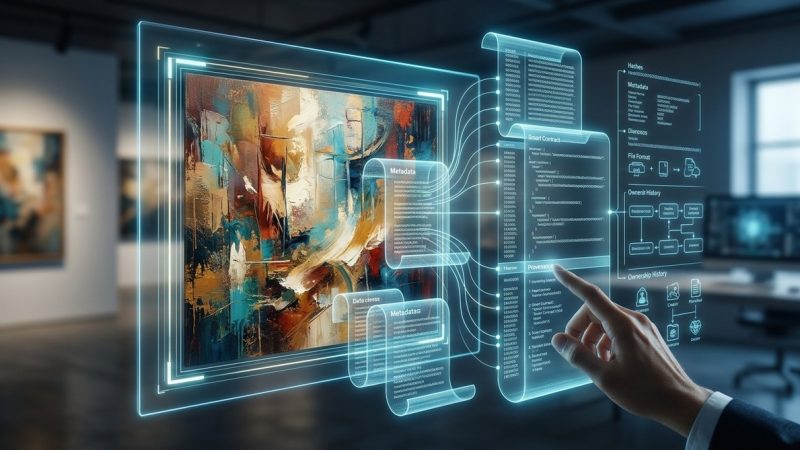
Interoperability in Web3: Moving Your Digital Art Across Platforms
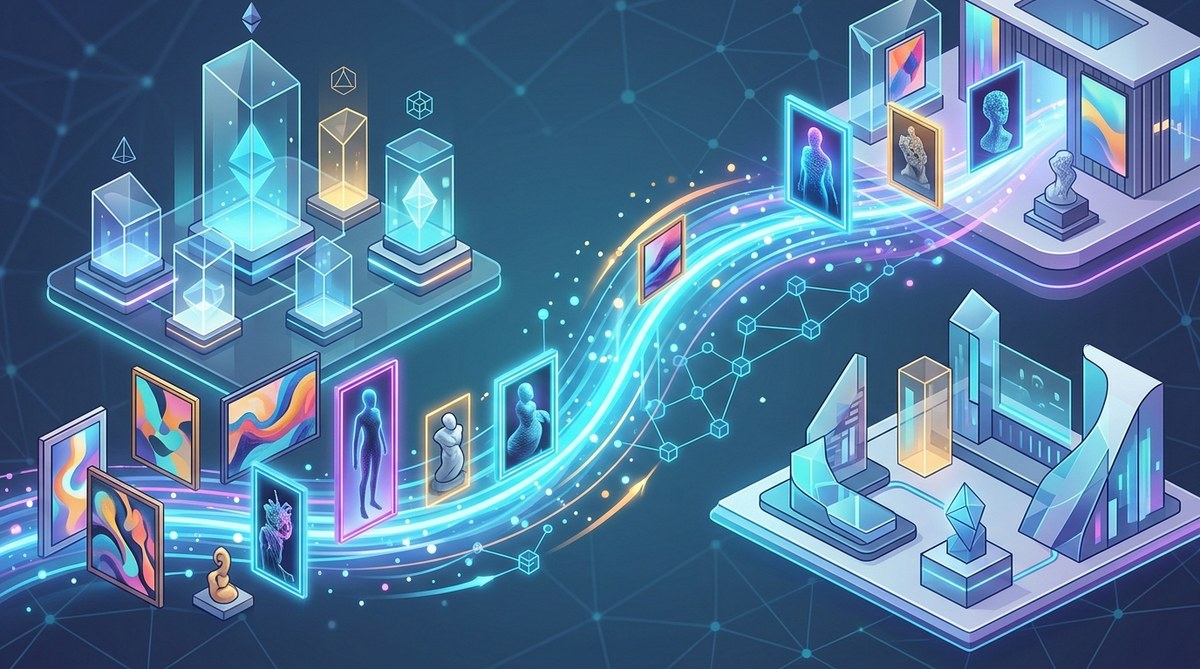
Your digital art collection lives on Ethereum, but a collector wants to buy it on Solana. A gallery invites you to exhibit in a metaverse built on Polygon. Your favorite marketplace just announced they’re migrating to a new chain. Without web3 interoperability, each of these scenarios becomes a headache, or worse, impossible.
Web3 interoperability lets digital artists and collectors move assets between different blockchains, manage portfolios across platforms, and access broader markets. It relies on cross-chain bridges, token standards, decentralized storage, and smart contract compatibility. Understanding these tools helps you future-proof collections, reduce platform dependency, and maintain true ownership regardless of where your art lives.
What Web3 Interoperability Actually Means
Interoperability is the ability for different blockchain networks to communicate and share data. Think of it like being able to send an email from Gmail to Outlook without any friction.
In the digital art world, this means your NFT minted on one blockchain can be viewed, traded, or displayed on another. Your wallet can hold assets from multiple chains. Your smart contracts can execute actions that span different networks.
Without interoperability, each blockchain becomes a walled garden. Artists must choose one platform and stick with it. Collectors need separate wallets for each chain. Galleries can’t showcase work from multiple ecosystems in one space.
The technology solving this problem comes in several forms. Cross-chain bridges transfer assets between networks. Universal token standards create compatibility. Decentralized storage systems ensure your art files remain accessible regardless of which chain holds the ownership record.
Why Artists and Collectors Need Cross-Chain Capabilities
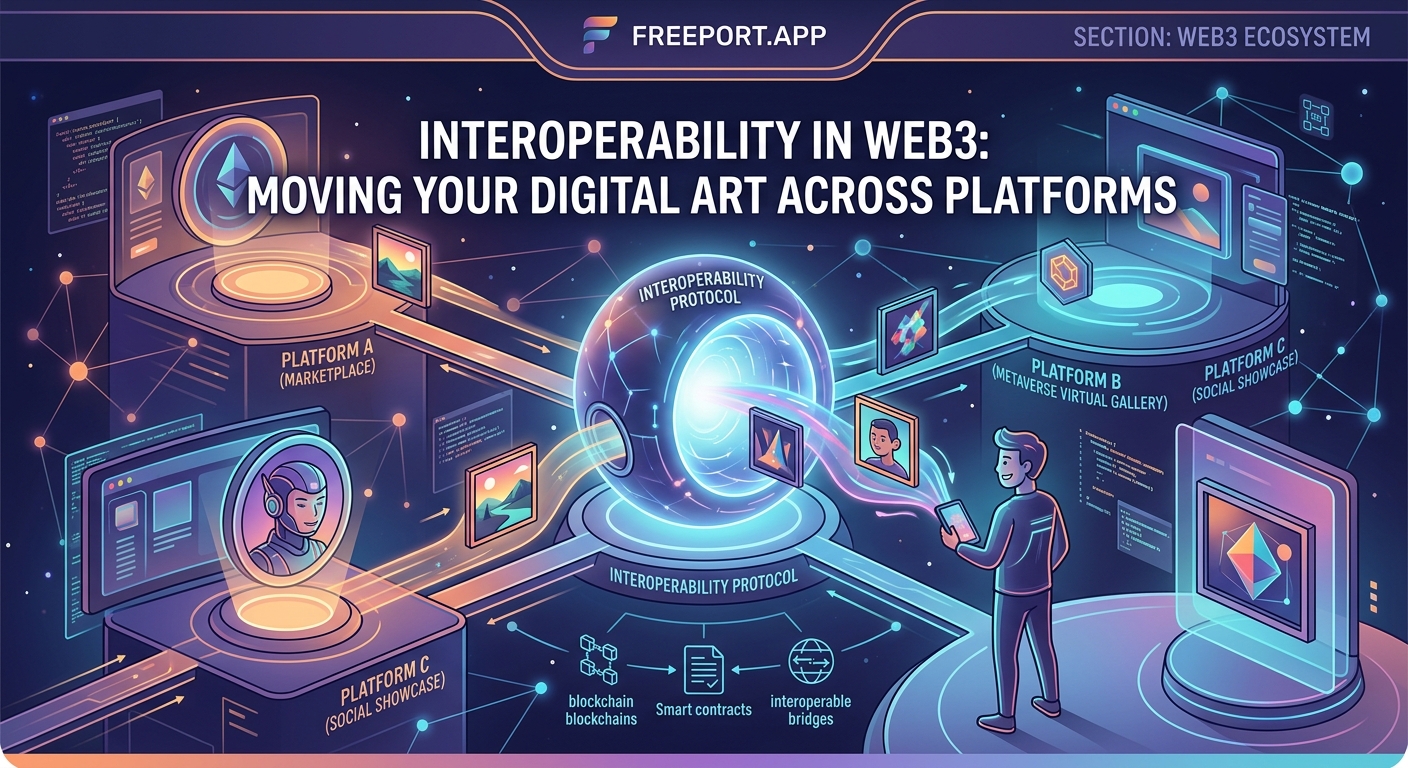
Platform lock-in is a real risk. When you mint exclusively on one blockchain, you’re betting that platform remains relevant, affordable, and accessible.
Markets shift. Gas fees fluctuate. User bases migrate. A blockchain that’s popular today might lose developer support tomorrow. What happens to your work when platforms change or shut down becomes a pressing question.
Interoperability provides insurance against these risks. You can:
- Move collections to chains with lower transaction costs
- Access buyers who prefer different blockchain ecosystems
- Participate in opportunities across multiple platforms
- Maintain ownership even if your original minting platform disappears
- Display work in virtual galleries built on various networks
Consider a practical example. You minted a series on Ethereum in 2021 when gas fees were manageable. By 2023, transaction costs made it prohibitively expensive for emerging collectors to buy your work. With interoperability tools, you could bridge those pieces to a layer 2 solution with lower fees, expanding your potential market without abandoning the Ethereum ecosystem entirely.
How Cross-Chain Bridges Work for Digital Art
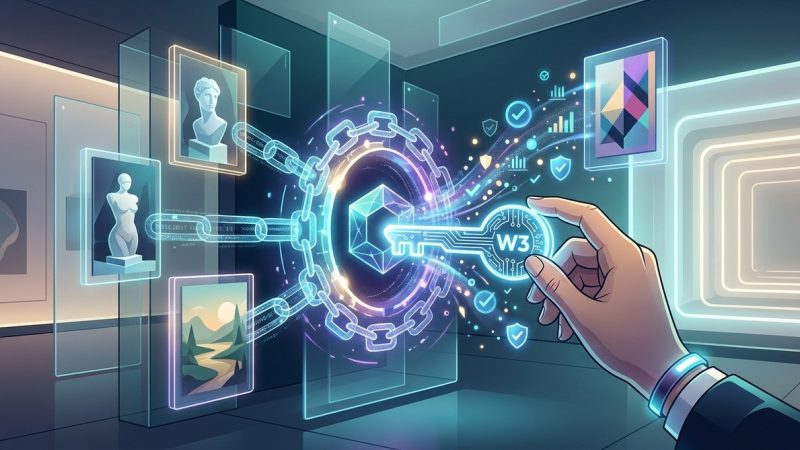
Bridges are protocols that lock assets on one blockchain and mint equivalent representations on another. The process preserves ownership while enabling cross-chain movement.
Here’s the basic flow:
- You initiate a bridge transaction from your wallet
- The bridge protocol locks your NFT in a smart contract on the source chain
- The protocol mints a wrapped or bridged version on the destination chain
- You receive the bridged asset in your wallet on the new chain
- When you want to return, the process reverses
The original asset remains locked until you bridge back. This prevents duplication and maintains scarcity.
Different bridge types serve different needs. Trusted bridges rely on a central authority to validate transfers. They’re faster but require trusting that entity. Trustless bridges use smart contracts and validator networks. They’re more decentralized but often slower and more expensive.
For artists, understanding how to move your collection safely between blockchains becomes essential when opportunities arise on different chains.
“The ability to move assets between chains without losing provenance or ownership history is what separates true digital ownership from platform-dependent licensing. Your art should go where you need it to go.” – Anonymous blockchain developer
Token Standards That Enable Compatibility
Standards create common languages between blockchains. When different chains support the same token standards, assets become more portable.
ERC-721 pioneered NFT standards on Ethereum. It defines how unique tokens should behave, how ownership transfers, and how metadata connects to assets. Other chains adopted compatible standards, creating a foundation for interoperability.
ERC-1155 added multi-token support, letting one contract manage both fungible and non-fungible tokens. This standard works well for artists releasing editions alongside one-of-ones.
Newer standards address specific needs. ERC-4907 adds rental functionality. ERC-2981 standardizes royalty payments across platforms. Each improvement makes cross-platform compatibility more robust.
When chains support compatible standards, wrapped assets maintain their core properties. Your NFT’s metadata, ownership history, and smart contract functions travel with it across bridges.
Storage Solutions That Work Across Chains
Your NFT’s ownership record lives on a blockchain. The actual image, video, or 3D file usually lives elsewhere. Where that file lives determines how interoperable your art truly is.
Centralized servers create dependency. If the hosting company fails, your NFT becomes a broken link. Platform-specific storage ties your art to one ecosystem.
Decentralized storage systems solve this problem. IPFS uses content addressing, meaning files are identified by their content, not their location. Any node can serve the file. Arweave provides permanent storage with a one-time fee.
When you store art files on decentralized systems, they remain accessible regardless of which blockchain holds the ownership token. You can bridge an NFT to a new chain, and the artwork itself stays intact and viewable.
This separation of ownership record and asset storage is fundamental to true interoperability. The blockchain tracks who owns what. The storage layer ensures what they own remains accessible forever.
Managing Multi-Chain Portfolios
Once you start working across chains, portfolio management becomes more complex. You need tools that aggregate assets from multiple networks into one view.
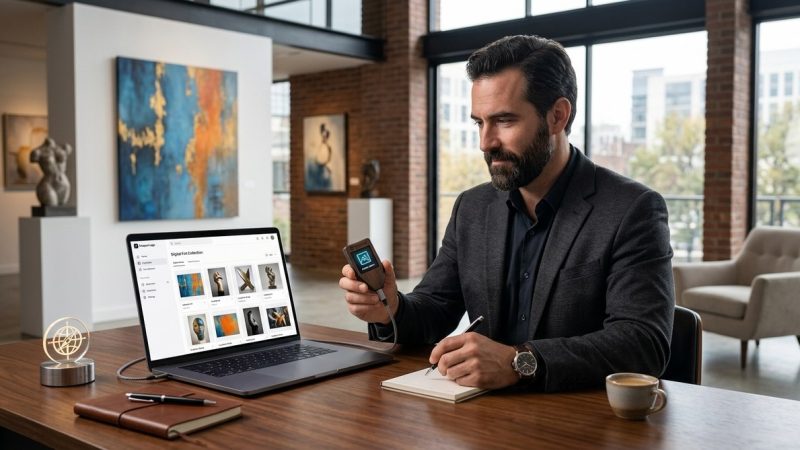
Modern Web3 wallets support multiple chains. MetaMask, Rainbow, and Phantom can switch between networks. You connect to Ethereum, then switch to Polygon or Arbitrum without changing wallets.
Portfolio trackers pull data from various blockchains. They show your complete collection, calculate total value, and track floor prices across chains. Some integrate with tax software, automatically categorizing transactions for reporting.
| Tool Type | Purpose | Interoperability Benefit |
|---|---|---|
| Multi-chain wallets | Hold assets from different blockchains | Single interface for all holdings |
| Portfolio aggregators | Track value across networks | Unified view of total collection |
| Cross-chain DEXs | Trade between different chains | Access liquidity everywhere |
| Universal galleries | Display art from any blockchain | Showcase complete body of work |
For collectors building valuable portfolios across multiple chains, these tools transform chaos into clarity.
Practical Steps for Moving Art Between Chains
Moving your first piece across chains feels intimidating. The process gets easier with practice.
-
Research the destination chain. Understand its fee structure, security model, and ecosystem. Make sure it supports the features your art needs.
-
Choose a reputable bridge. Look for audited protocols with track records. Check if they’ve experienced hacks or exploits. Read reviews from other artists who’ve used them.
-
Test with low-value assets first. Bridge a less valuable piece before moving your entire collection. Confirm the process works as expected and you understand each step.
-
Verify metadata preservation. After bridging, check that your artwork’s description, properties, and attributes transferred correctly. Some bridges handle metadata better than others.
-
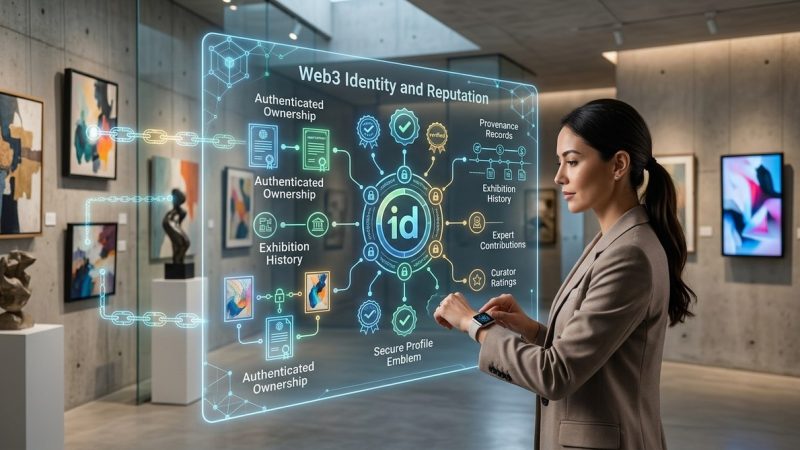
Document the bridge transaction. Save transaction hashes from both chains. This creates a provenance trail showing when and how the asset moved.
-
Update your portfolio records. Note which pieces live on which chains. Keep track of bridge contracts and wrapped token addresses.
-
Inform collectors and galleries. If you’re moving pieces that others hold or display, communicate the change. Provide updated contract addresses and viewing instructions.
The process varies by bridge and blockchain combination. Some bridges offer simple interfaces where you connect your wallet, select an asset, choose a destination, and confirm. Others require more technical steps.
Gas fees differ significantly between chains. Factor these costs into your decision. Sometimes staying on one chain makes more financial sense than bridging.
Common Interoperability Challenges and Solutions
Bridges occasionally fail. Transactions get stuck. Assets don’t appear on the destination chain immediately. Understanding common issues helps you avoid panic.
Slow confirmations happen when networks are congested. Your bridge transaction might take hours instead of minutes. Most bridges provide status trackers. Check these before assuming something went wrong.
Metadata loss occurs when bridges don’t properly transfer NFT attributes. Before bridging valuable work, verify the bridge supports full metadata transfer. Some require manual re-upload on the destination chain.
Incompatible standards create friction. Not every chain supports every token type. Research compatibility before attempting transfers. Some bridges automatically convert between standards, others don’t.
Security risks exist with every bridge. Hacks have drained millions from poorly secured protocols. Use bridges that have undergone multiple audits. Never bridge more value than you can afford to lose.
Liquidity fragmentation splits your collection’s market. When pieces live on different chains, potential buyers on each chain only see part of your work. This can reduce overall visibility and sales.
Solutions include:
- Using bridges with insurance funds that cover losses from exploits
- Keeping detailed records of all bridge transactions
- Maintaining presence on chains where you have significant holdings
- Educating your audience about which chains hold which pieces
- Using aggregator platforms that display work from multiple chains
The Role of Layer 2 Networks in Interoperability
Layer 2 solutions build on top of existing blockchains, inheriting their security while adding speed and lower costs. They’re becoming central to the interoperability story.
Polygon, Arbitrum, and Optimism all connect back to Ethereum. Assets can move between these L2s and Ethereum’s main chain relatively easily. The shared security model creates natural interoperability.
For artists, L2s offer practical benefits. You can mint on an L2 with minimal fees, then bridge to Ethereum mainnet when selling to collectors who prefer that chain. Many artists are migrating to these solutions for exactly this flexibility.
Some L2s are developing their own ecosystems. zkSync, StarkNet, and others are attracting developers building art platforms, galleries, and marketplaces. As these ecosystems grow, interoperability between L2s becomes as important as L1 to L2 bridges.
The technology is evolving toward a multi-chain future where assets flow freely between layers. Artists who understand these systems position themselves to take advantage of opportunities across the entire landscape.
Future-Proofing Your Digital Art Practice
Web3 interoperability is still maturing. Standards are evolving. New bridges launch regularly. Protocols improve security and efficiency.
Building an interoperable practice means making strategic choices now that won’t lock you into obsolete systems later.
Mint on chains with strong developer communities and clear upgrade paths. Ethereum’s longevity comes partly from its robust development ecosystem. Smaller chains might offer better terms today but lack resources for long-term evolution.
Use decentralized storage from the start. Don’t rely on platform-specific hosting. Store your work on systems designed for permanence.
Build relationships with collectors across multiple chains. Don’t limit your market to one ecosystem. Understanding what different collector communities value helps you position work effectively across chains.
Stay informed about emerging standards. When new token standards gain adoption, consider how they might benefit your practice. Early adoption of useful standards can differentiate your work.
Document everything. Keep records of which pieces live where, how they moved, and why. This documentation becomes part of your work’s provenance and helps future collectors understand your artistic decisions.
Building Across Blockchain Boundaries
Web3 interoperability transforms digital art from platform-dependent files into truly portable assets. You’re not locked into one blockchain’s fate. Your collectors can access your work regardless of their preferred ecosystem. Your portfolio can span multiple chains while remaining coherent and manageable.
The technology continues improving. Bridges become more secure. Standards become more universal. Tools become more user-friendly. Artists who learn these systems now will have advantages as the space matures.
Start small. Bridge one piece. Set up a multi-chain wallet. Track assets across two blockchains. Each step builds understanding that compounds over time. Your future self, managing a thriving practice across multiple chains, will thank you for learning these fundamentals today.